
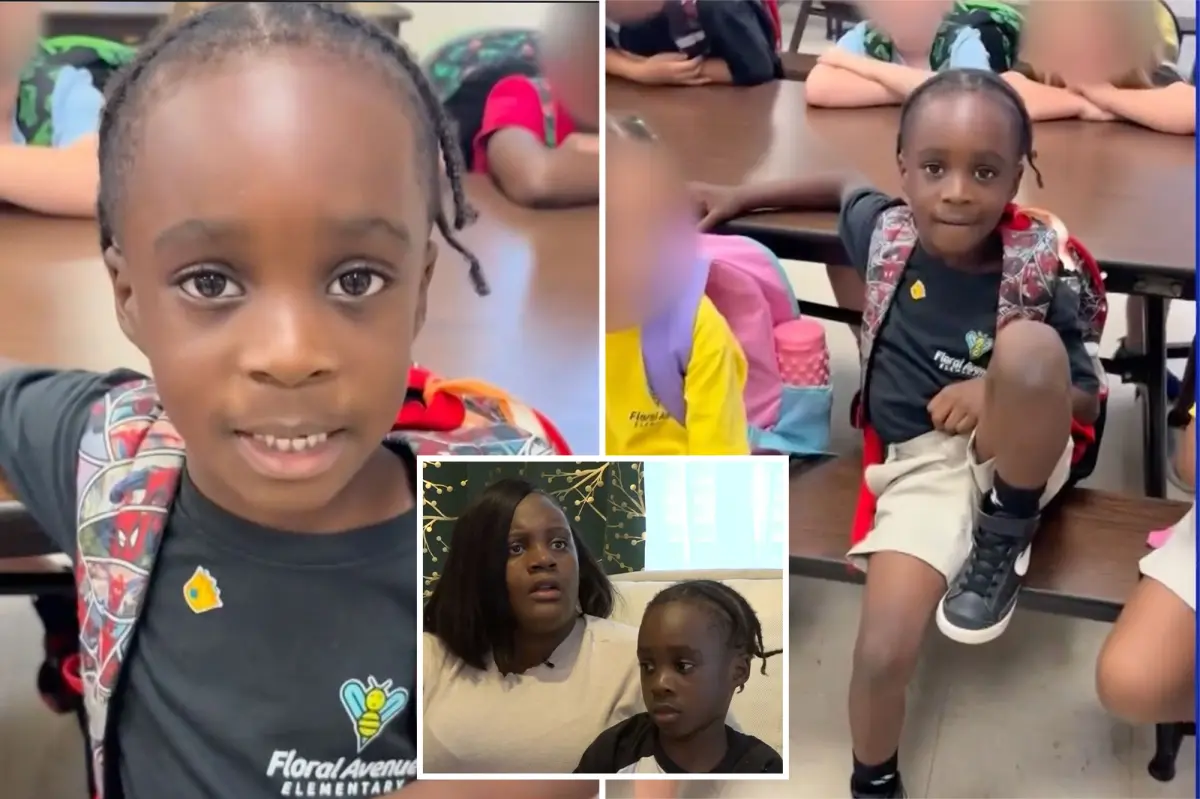
In a disturbing incident that has sparked widespread outrage, a teacher at Floral Avenue Elementary School in Bartow, Florida, is under investigation after singing a racially insensitive version of the “Happy Birthday” song to a 6-year-old Black student during a classroom celebration. The event, which occurred on September 29, 2025, has drawn sharp criticism from the boy’s mother, who described the lyrics as humiliating and racist. Polk County Public Schools has confirmed it is reviewing the matter, highlighting tensions around cultural sensitivity in public education. As details emerge, the case underscores ongoing challenges in addressing bias in school environments.
The Incident Unfolds in the Classroom
The controversy began on a Monday morning in a first-grade classroom at Floral Avenue Elementary School, a public school serving around 600 students in Polk County, located about 50 miles southeast of Orlando. Legend Whitaker, a 6-year-old Black boy known for his bright smile and love of learning, was the center of attention as his classmates gathered to mark his birthday. According to a video recorded by the teacher and later shared with Legend’s family, the group first sang the traditional “Happy Birthday” song, a standard ritual in elementary schools across the country.
What followed, however, deviated sharply from convention. The teacher, whose identity has not been publicly disclosed, turned to Legend Whitaker and asked, “Would you like the funny song now that I sing to you?” The boy nodded in agreement, unaware of the lyrics to come. The teacher then launched into an altered version of the tune, belting out: “Happy Birthday to you. You live in the zoo, you look like a monkey, and you smell like one, too.” As the words echoed through the room, several students giggled, and the teacher concluded by instructing the class, “Give him a clap, everybody!”
The video, approximately 30 seconds long, captured the entire exchange. Legend’s initial smile faded into visible discomfort, though he clapped along with his peers. The teacher, a veteran educator described by colleagues as popular and dedicated, sent the footage directly to Legend Whitaker’s mother, Desarae Prather, via email that afternoon. Prather, a single mother working in customer service, opened the message expecting a heartwarming memento. Instead, she was met with what she immediately recognized as a derogatory trope rooted in historical racism against Black people, evoking painful stereotypes that compare individuals to animals.
Eyewitness accounts from the classroom, corroborated by Desarae Prather’s review of the video, indicate no immediate backlash from other students or staff present. The school’s principal was not in the room, and the celebration proceeded as part of a routine end-of-day activity. Floral Avenue Elementary, part of the Polk County Public Schools district, prides itself on a diverse student body, with nearly 70% of students identifying as minorities, including a significant Hispanic and Black population. Incidents like this are rare but have occurred in Florida schools amid broader national conversations on equity and inclusion following high-profile cases of racial insensitivity.
🚨A 6-year-old Black boy, Legend Whitaker, was humiliated by his white teacher on his birthday when she sang a "funny" song comparing him to a monkey.
— The Age Of Genz (@TheAgeOfGenZ) October 2, 2025
His classmates laughed. The teacher even filmed it and sent it to his mom.
This is not a joke. This is racism. pic.twitter.com/FETmN9fYcZ
The lyrics in question—”You live in the zoo, you look like a monkey, and you smell like one, too”—mirror a crude playground rhyme that has circulated for decades, often dismissed as harmless teasing but widely condemned when directed at children of color. Experts in child psychology note that such comments, even if intended as jokes, can inflict lasting emotional harm, particularly in a setting where teachers hold authority. Legend Whitaker, who had been excited about turning 6, later confided to his mother that the song made him feel “different” from his friends, a sentiment that has kept him out of school since the incident.
Mother’s Fierce Response and Call for Accountability
Desarae Prather’s reaction was swift and unyielding. Upon watching the video, she confronted the teacher via phone that evening, demanding an explanation. The conversation, which Prather described as evasive, left her unsatisfied and prompted her to escalate the matter to the school administration the next day. “I couldn’t believe what I was hearing,” Desarae Prather told local reporters. “This wasn’t funny. It was humiliating my son in front of his entire class. No child should go to school and feel like they can’t trust their teacher without being hit with racial slurs.”
In interviews with CBS affiliate WTSP and other outlets, Prather elaborated on the personal toll. As a Black woman raising her son in a predominantly white-led educational system, she has long advocated for her child’s safety. Legend, she said, came home unusually quiet that day, asking why the teacher called him a monkey. “I don’t like stuff like that,” Legend Whitaker shared in a brief on-camera statement, his small voice carrying the weight of confusion and hurt. Desarae Prather fears long-term trauma: “My son is going to be traumatized for life. This is going worldwide now, and it shouldn’t have happened.”
Read : Black Swan Removed from Stratford-upon-Avon After Aggressive Behavior Toward Local Mute Swans
By Tuesday, September 30, Prather had drafted a formal letter to the Polk County School Board, outlining her grievances and issuing clear demands. She requested a written apology from the teacher to both Legend Whitaker and the family, immediate disciplinary action up to and including termination, and professional counseling services for her son through the district. Additionally, she announced plans to transfer Legend to another school, citing a loss of faith in the current environment. To facilitate this, she temporarily moved him to a different classroom within Floral Avenue, though he has yet to return as of October 4.
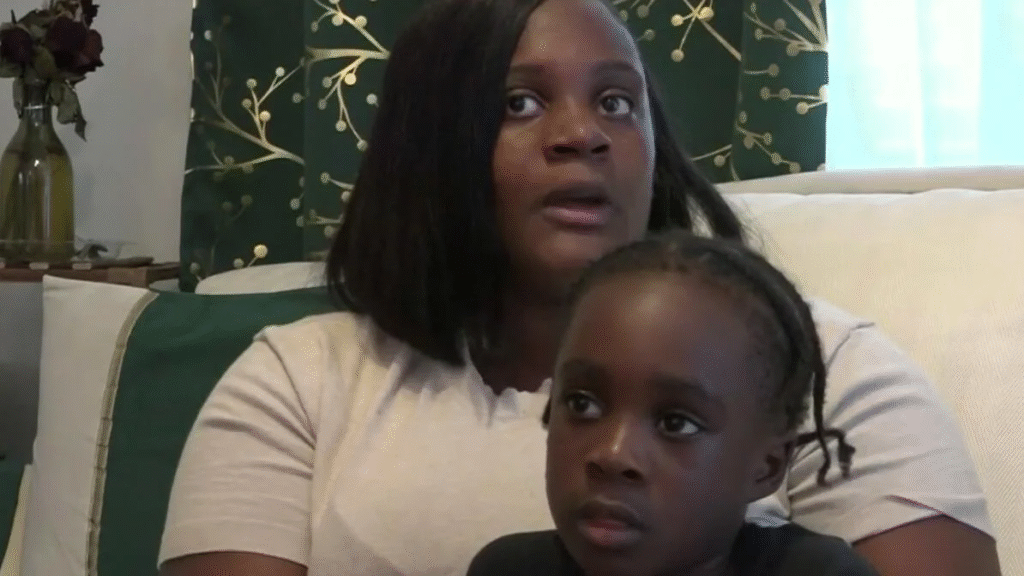
Prather’s advocacy has resonated beyond her family. She has connected with local civil rights groups, including the NAACP’s Polk County chapter, which issued a statement condemning the incident as “a clear example of unchecked bias in our schools.” Social media amplified her story, with hashtags like #JusticeForLegend trending locally and garnering thousands of shares. Prather emphasized that her fight is not just personal: “That goes for any kid, not just my child. We need accountability so this doesn’t happen again.”
Her demands highlight a pattern in educational misconduct cases. In Florida alone, similar complaints have risen 15% since 2023, according to state education department data, often tied to inadequate training on cultural competency. Prather, who grew up in the area, reflected on her own school experiences: “I don’t really like racism, and to know where we came from—our ancestors labeled like that—it hurts on a deep level.”
School District Steps In Amid Broader Scrutiny
Polk County Public Schools acted quickly upon learning of the video, though specifics remain limited due to the ongoing probe. On September 30, the district posted a statement on its official Facebook page, acknowledging the concerns: “PCPS has been made aware of a video of a teacher singing to an elementary school student and his classmates. This is now being reviewed by district staff and our human resources department.” A follow-up clarification added, “We understand and share the concerns about the teacher’s actions and judgment.
As a public school system, we serve students and families of all cultures and backgrounds; we expect our employees to always keep that in mind as they interact with others.” As of October 1, the teacher had not been placed on administrative leave, a decision that drew criticism from Prather and online commentators. Stephanie Yocum, president of the Polk Education Association—the local teachers’ union—defended the educator in a statement to media, noting her long tenure and popularity among students. “She has worked with the district for a long time and is well-regarded,” Yocum said.
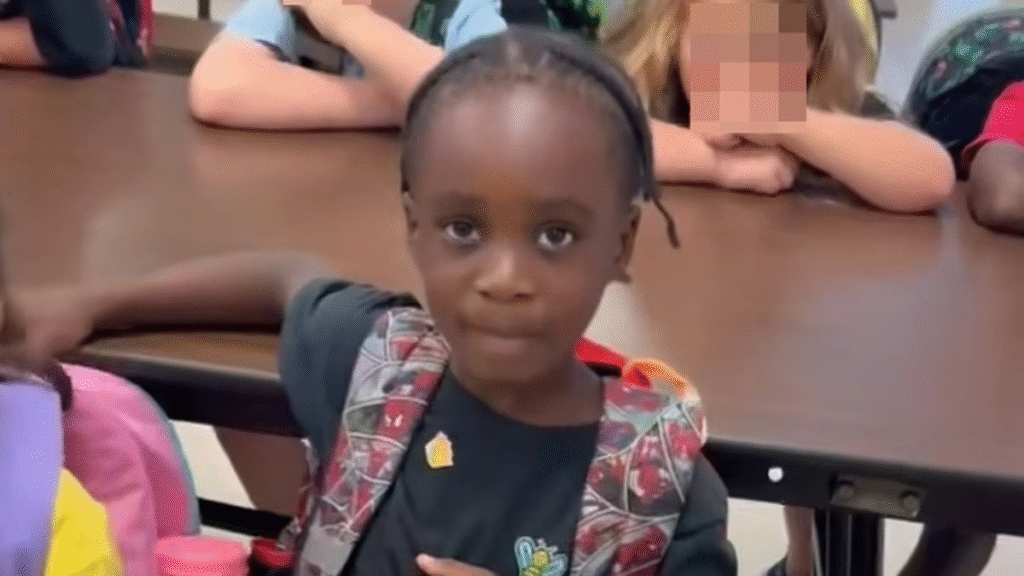
However, Yocum condemned the lyrics as inappropriate and revealed that the teacher has faced death threats since the video surfaced, prompting police involvement to ensure her safety. The investigation, led by the district’s human resources team, involves interviews with the teacher, students, and staff, as well as a review of school policies on classroom conduct. Polk County Superintendent John DiMare has not commented personally but directed inquiries to the district’s equity office, which handles bias complaints. Under Florida law, such probes must conclude within 30 days, potentially leading to reprimands, suspension, or dismissal if violations are substantiated.
The incident has ripple effects across the school. Parents at Floral Avenue Elementary held an impromptu meeting on October 2, voicing support for Prather while calling for mandatory anti-bias workshops. District-wide, officials are auditing similar videos from birthday celebrations to prevent recurrences. Broader implications extend to Florida’s polarized education landscape, where debates over critical race theory and diversity training have intensified under recent state legislation.
As the investigation progresses, all eyes are on Polk County Public Schools to deliver justice. Prather remains resolute: “I feel like she should own up to her actions and get fired because that’s unacceptable.” For Legend Whitaker, the focus is healing—counseling sessions are scheduled, and his new school placement is in process. This case serves as a stark reminder that fostering inclusive spaces requires vigilance, especially from those entrusted with shaping young minds.