
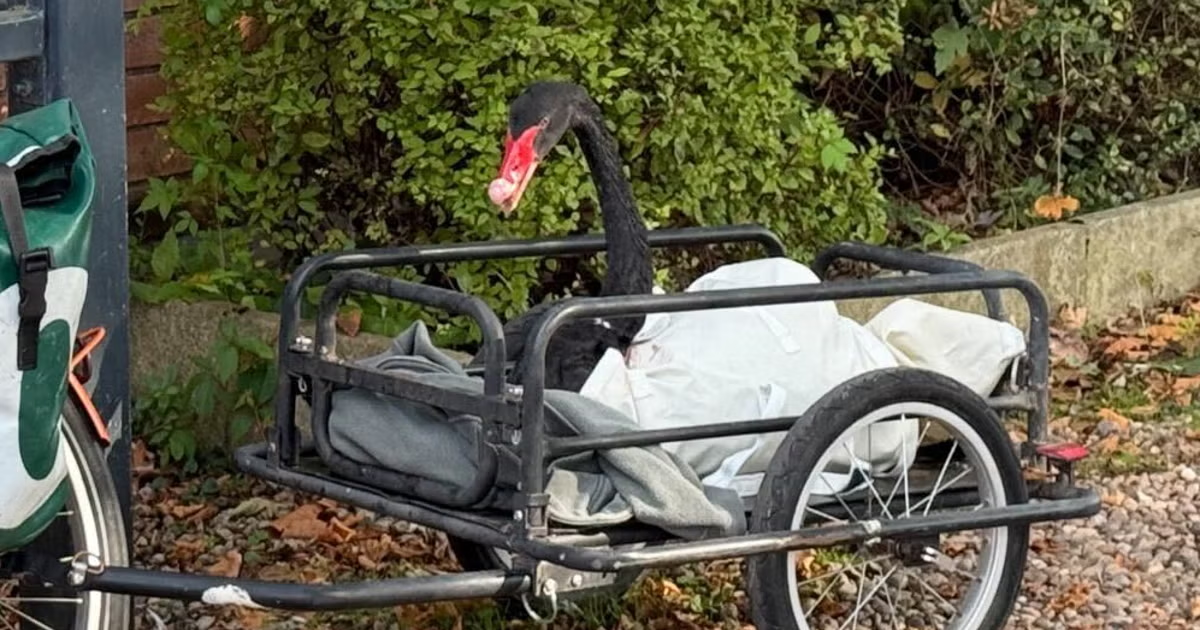
In a move that has left residents of the historic town of Stratford-upon-Avon both relieved and nostalgic, a notorious black swan known locally as Reggie has been captured and removed from the River Avon. The bird, which arrived mysteriously nine months ago, had become a symbol of unexpected drama amid the town’s serene swan population. Dubbed “Mr Terminator” for its bullying tactics, Reggie targeted the area’s iconic mute swans, disrupting nesting sites and even attempting to drown competitors. Swan warden Cyril Bennis, a fixture in the community for 45 years, executed the capture on Tuesday, September 30, 2025, citing the need to protect the native birds. Reggie is now en route to a new home at the Dawlish Waterfowl Centre in Devon, where he will join other black swans.
This incident underscores the delicate balance of wildlife management in a town synonymous with Shakespearean tranquility. The removal comes after weeks of escalating conflicts that drew national attention. Bennis, who consulted with David Barber, the King’s Swan Master, determined that intervention was essential to prevent further harm. “It needed to move on,” Bennis stated matter-of-factly, emphasizing the swan’s incompatibility with the local ecosystem. As Stratford-upon-Avon grapples with the void left by its feathered celebrity, questions linger about Reggie’s origins and the broader implications for urban wildlife conservation.
The Arrival of Reggie: From Exotic Visitor to Local Icon
Reggie’s story began in early January 2025, when the striking black swan first glided into view on the River Avon, a waterway immortalized in Shakespeare’s works and home to hundreds of elegant mute swans. Native to Australia, black swans are rare sights in the UK, and Reggie’s sudden appearance sparked immediate fascination. Standing out with its glossy ebony feathers and vivid red bill against the white plumage of the mute swans, the newcomer quickly captured the imagination of locals and tourists alike.
Cyril Bennis, the volunteer swan warden whose tenure spans nearly half a century, recalls the initial buzz with fondness. “It was very exciting to have a black swan appear,” he said. Residents dubbed the bird Reggie, and social media posts proliferated, showcasing photos of the swan preening near Bancroft Basin or gliding past the Royal Shakespeare Theatre. Within weeks, Reggie had eclipsed even the Bard in local lore. “Everybody fell in love with him,” Bennis noted. “He became more popular than William Shakespeare himself.”
The swan’s charisma was undeniable. Tour guides incorporated Reggie into their narratives, pointing out the bird as a living embodiment of the town’s penchant for the dramatic. Families picnicking along the riverbanks cooed over its majestic form, and amateur photographers vied for the perfect shot. For a town that draws over five million visitors annually to its Shakespearean heritage sites, Reggie offered a fresh, photogenic diversion from the usual Elizabethan fare.
Yet, beneath the allure, subtle signs of tension emerged. Black swans, while visually stunning, are not indigenous to British waters. Their nomadic tendencies and distinct behaviors—such as more assertive territorial claims—set them apart from the more docile mute swans, which have been protected under the Crown since the 12th century. Bennis monitored the situation closely, logging daily observations as part of his routine patrols. At first, interactions were peaceful; Reggie foraged alongside the locals, occasionally indulging in the bread tossed by well-meaning visitors despite warnings against such feeding practices.
Read : 350 Elephants Died in Botswana’s Okavango Delta: Toxic Algae Responsible
As spring unfolded, Reggie’s presence coincided with the mute swans’ breeding season. Pairs began nesting on the river’s islands and banks, a ritual that draws crowds eager to witness cygnets hatching. Reggie, however, showed no deference to these traditions. Early skirmishes involved minor chases, where the black swan would flap its wings aggressively to ward off curious juveniles. Locals dismissed these as youthful exuberance, but Bennis, with his decades of experience, sensed a shift. “Swans are very interesting animals, but the mute swans are very different from the black swans,” he observed.
Read : Land of Wonders: Discovering Australia’s Premier Travel Spots
By midsummer, Reggie’s fame peaked. Merchandise featuring cartoonish depictions of the swan popped up in local shops, and a makeshift fan club formed on community forums. The bird’s routine swims became must-see events, with onlookers lining the bridges. This period of adulation masked the underlying ecological strain. The River Avon’s ecosystem, already pressured by tourism and pollution, relies on the stability of its mute swan population for biodiversity indicators. Reggie’s integration, while entertaining, introduced variables that experts like Barber would later deem unsustainable.
In retrospect, Bennis reflected on the bittersweet irony. “It’s the best thing for him,” he said of the impending relocation. “He’ll have so many mates he’ll be saying ‘why in heaven’s name did I spend nine months in Stratford-upon-Avon?'” For the town, those nine months transformed a fleeting anomaly into an enduring anecdote, blending whimsy with the harsh realities of wildlife coexistence.
Escalating Conflicts: Terror and Turmoil on the Avon
What began as a charming anomaly devolved into outright chaos over the final three to four weeks of Reggie’s stay. The swan’s aggressive tendencies, once overlooked as quirks, intensified into deliberate acts of dominance that threatened the mute swans’ safety and the river’s harmony. Eyewitness accounts painted a picture of a feathered tyrant, earning Reggie his infamous moniker, “Mr Terminator.”
The tipping point arrived in late September, when Reggie targeted a established mute swan pair with a young cygnet. In a brazen display, the black swan muscled into their territory near the river’s weir. Using its powerful wings and beak, Reggie launched a sustained attack on the male mute swan, driving it from the nest and forcing it into retreat downriver. The cygnet, barely fledged, was collateral damage—chased away and left vulnerable to predators. Reggie then turned his attentions to the female, attempting to claim her as a mate in what Bennis described as a bid for “hanky panky” integration.
“We didn’t want any hanky pankies or integration going on with regards to the mute swan,” Bennis explained, underscoring the risks of crossbreeding. Such unions could produce hybrid offspring ill-suited to the local environment, further complicating conservation efforts. But Reggie’s aggression extended beyond romance. Reports surfaced of the swan attempting to drown rival mutes by pinning them underwater during confrontations—a tactic observed in stressed wild populations but rare in urban settings.
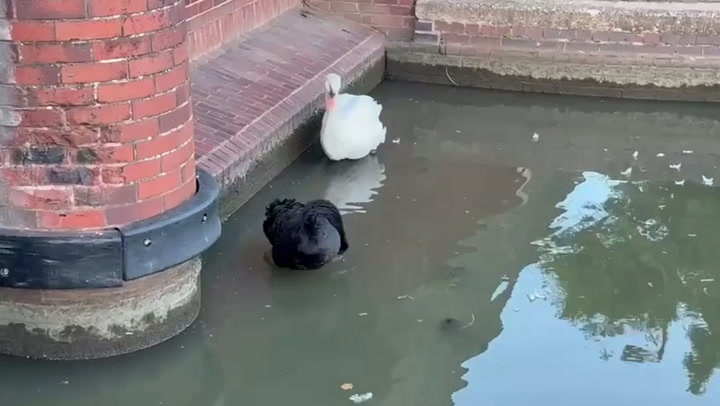
Tourists bore the brunt of the fallout. Picnickers reported near-misses as Reggie charged boats and benches, hissing and flapping in defense of perceived intrusions. One resident recounted a chaotic scene: “He’s terrorised everyone else but we love him, so it will be sad to see him go, but it’s probably better for the river that he’s gone.” The incidents disrupted the town’s idyllic vibe, with families opting for safer viewing spots and guides rerouting tours.
Bennis’s logs documented over a dozen such episodes in the fortnight leading to capture. “The darkest side of our Mr Terminator happened when he started to muscle in on a pair of our residents with a young cygnet and then things got a bit nasty,” he detailed. “He kicked out the male and the cygnet. He tried to take over its territory with the other female.” The warden’s consultations with Barber confirmed the severity: black swans’ bolder dispositions often clash in confined spaces like the Avon, where space is at a premium.
Public reaction split along lines of affection and pragmatism. While some decried the removal as overreach—”He’s just being a swan!” one forum post lamented—others praised the swift action. The mute swans, symbols of royal grace under the Sovereign’s prerogative, hold cultural weight in Stratford. Any threat to them resonates deeply, evoking historical edicts from the likes of Henry II.
Ecologically, the episode highlights urban wildlife challenges. The Avon supports around 200 mute swans, monitored via annual counts. Reggie’s incursion stressed this flock, potentially delaying migrations and reducing breeding success. Bennis, ever the steward, weighed intervention carefully. “I was going to be damned if I did and damned if I didn’t,” he admitted. Ultimately, the imperative to safeguard natives prevailed, averting a cascade of disruptions.
As news spread, the story transcended local bounds, appearing in national outlets and sparking debates on exotic species in the wild. Reggie’s reign of terror, though brief, exposed the fragility of managed ecosystems in tourist hubs.
Capture and Relocation: A Bittersweet Farewell
The operation to remove Reggie unfolded with the precision of a well-rehearsed drama on Tuesday morning, under overcast skies that mirrored the town’s mixed emotions. Cyril Bennis, armed with a large net and years of instinct, positioned himself along the riverbank near Holy Trinity Church. The swan, sensing the trap, put up a fierce resistance—lunging and splashing in a flurry that left Bennis with a “little bit sore” chest from the exertion.
“It’s time for him to be removed from the river,” Bennis declared post-capture, as he gently bagged the exhausted bird. Reggie was transported to a local veterinary clinic for a health check, confirming no injuries from his escapades. The exam revealed a robust specimen, likely escaped from a private collection or aviary, given the scarcity of wild black swans in Europe.
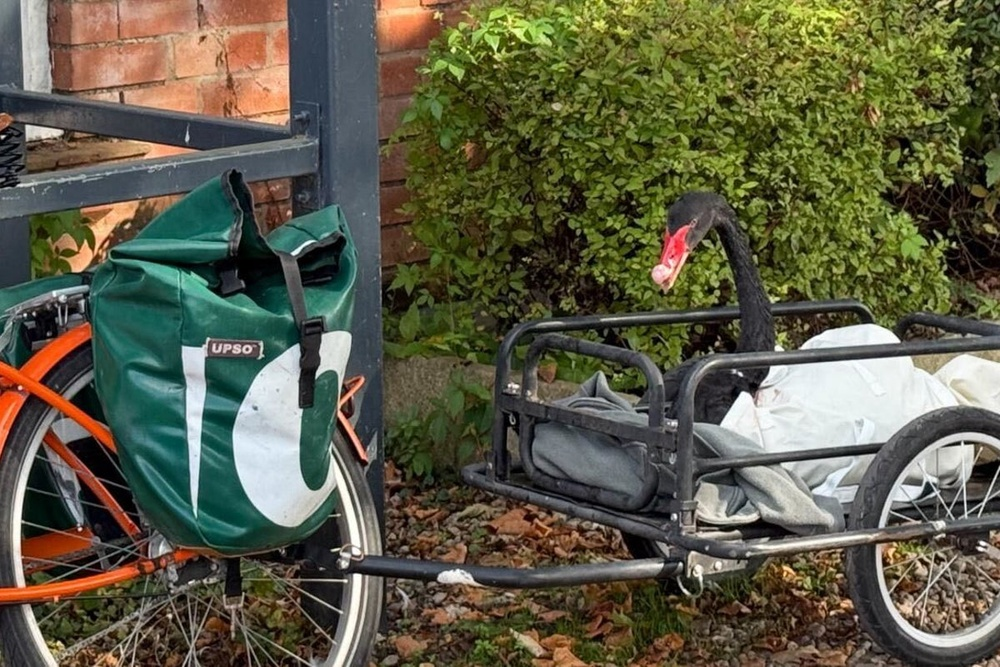
Relocation to the Dawlish Waterfowl Centre was arranged swiftly, thanks to coordination with the centre’s warden. “I’ve been talking to the Dawlish warden about it and it has been agreed to take him,” Bennis said. “I am so grateful and relieved as I didn’t want him to go just anywhere.” In Devon, Reggie will integrate into a flock of his own kind, reducing the isolation that fueled his aggression. The centre, a sanctuary for waterfowl, offers ample space and companionship—ideal for rehabilitation.
Post-removal, the Avon has reverted to quietude. “Today the river is quiet and [the mute swans] are just relaxing,” Bennis observed. “It’s like a play out of Shakespeare, things are calm and it’s just settling down.” The displaced male mute has returned to his territory, and nesting pairs report fewer disturbances. Early signs suggest improved foraging for cygnets, a boon for the population.
Community sentiment leans toward acceptance. While some mourn the loss of a quirky mascot—”We love him so it will be sad,” echoed a resident—most acknowledge the necessity. Bennis, reflecting on his 45 years, views it as duty fulfilled. “I’m sure His Majesty the King will be very pleased now that we got one rogue black swan out of the way of our mute swans.”
Broader lessons emerge for wildlife authorities. Incidents like Reggie’s prompt reviews of escape protocols for exotic birds and bolster calls for expanded sanctuaries. In Stratford, the event has galvanized support for Bennis’s patrols, with donations pouring in for equipment. As autumn sets in, the town turns its gaze to the mute swans’ graceful routines, a reminder of nature’s enduring poise amid fleeting tempests.
Reggie’s saga, though resolved, lingers as a cautionary tale: even in paradise, intruders can upend the peace. For now, the Avon flows on, its white sentinels unchallenged, while in Devon, a black swan settles into new waters—perhaps pondering his Shakespearean exile.