
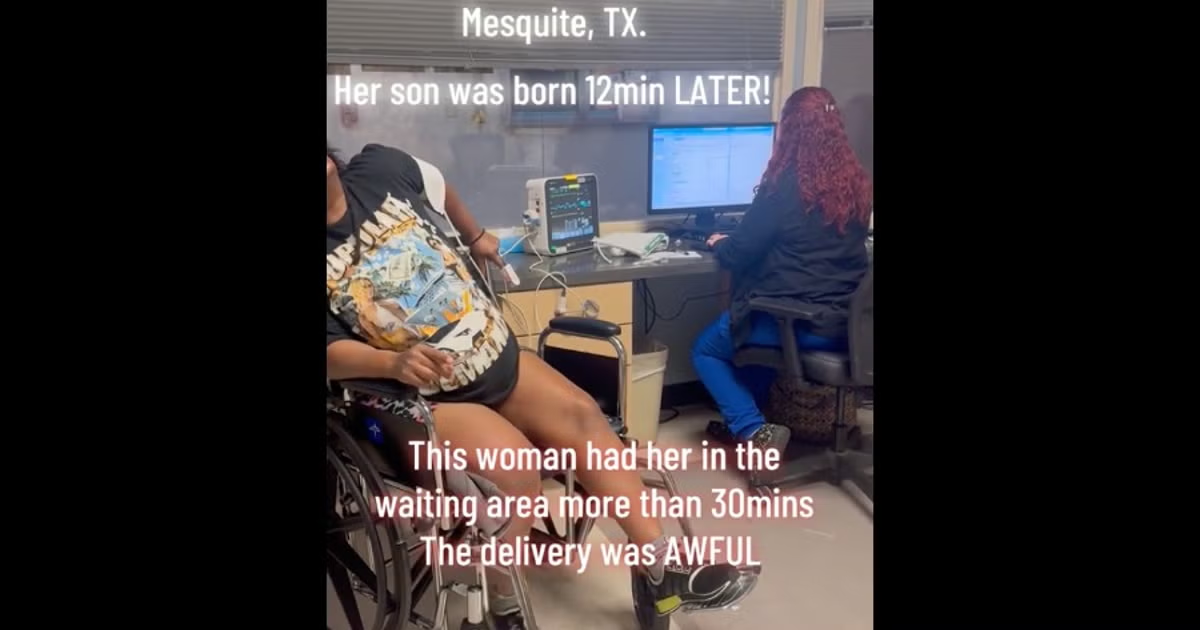
A viral TikTok video capturing a Black woman in extreme labor pain while seemingly being ignored by hospital staff in Texas has ignited widespread outrage, intensified concerns about racial disparities in maternal care, and prompted the woman’s family to pursue legal action. The incident, which unfolded at Dallas Regional Medical Center earlier this month, struck a nerve nationwide because it mirrors longstanding fears voiced by many Black mothers who say their concerns are too often dismissed in medical settings.
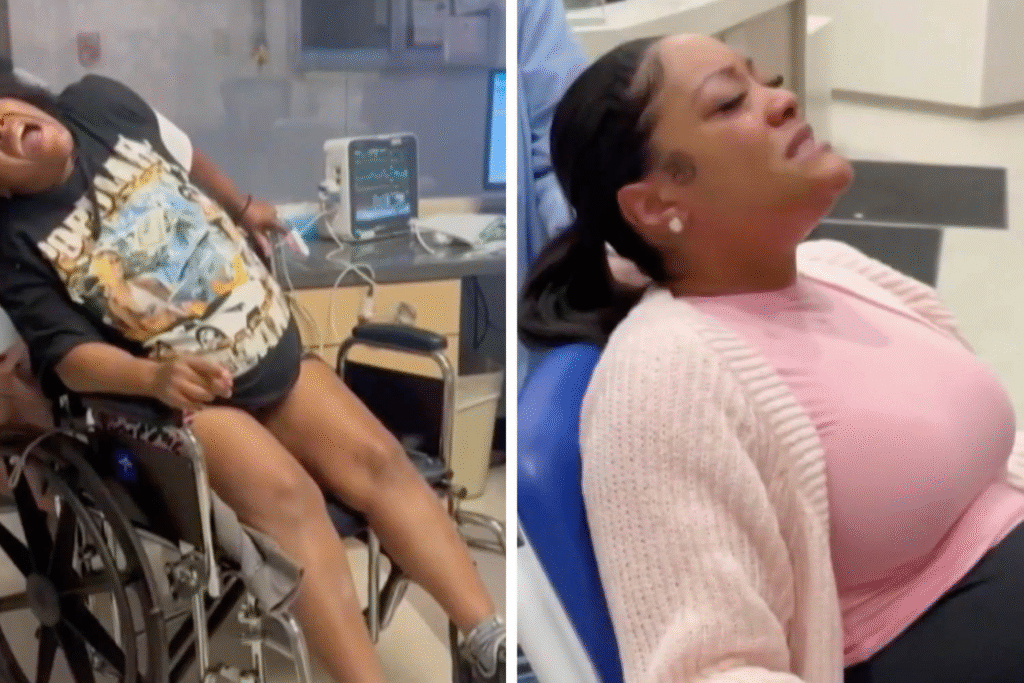
The footage shows 26-year-old Kiara Jones writhing in pain, screaming that her baby is coming, while a nurse continues typing intake questions on a computer. Kiara Jones gave birth just minutes after the recording was taken, underscoring how urgently she required attention. The video’s rapid spread reflects both the shock of the moment and the broader public recognition that maternal health inequities remain a pressing and deeply troubling American reality.
The Viral Incident and the Family’s Account
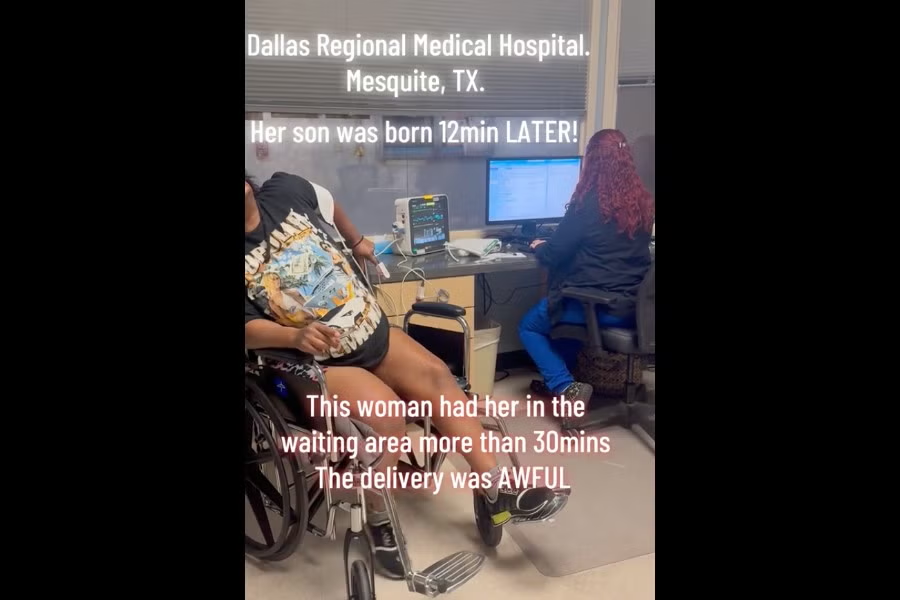
The now widely circulated video, recorded on November 11 by Jones’ mother, Kash Manuel, shows Kiara Jones sitting in a wheelchair, twisting in pain and crying out, “Right now!” when asked for her due date. Despite her obvious distress and her mother’s repeated pleas for urgent help, the nurse on duty continues reading off intake questions, requiring paperwork to be completed before moving Jones to a delivery space.
According to Manuel, they had already waited thirty minutes in the lobby before reaching this point, even though Kiara Jones had called ahead to warn staff that she was in active labor. Her son was delivered just twelve minutes after the video was filmed, a fact that highlights how critical her condition had been at the time staff appeared to hesitate. In a separate TikTok post, Manuel described a series of obstacles from the moment they arrived.
She says nurses initially redirected them from the emergency room entrance to the front of the hospital despite Kiara Jones’ clear signs of imminent delivery. Even as Jones repeatedly screamed that her baby was coming, she was required to sign paperwork before staff would respond, a delay that has fueled outrage from medical professionals and mothers alike who say this behavior contradicts standard labor protocols.
⚠️ Graphic Language ⚠️
— Ben Crump (@AttorneyCrump) November 15, 2025
A Black mother in labor, doubled over in pain, met with paperwork instead of urgent care. A Texas mother says her daughter was allegedly left in a waiting area at a Mesquite hospital for 30+ minutes despite screaming the baby was coming.
Can we honestly… pic.twitter.com/R869ihJssq
Manuel’s accusation that the staff did not seem to care about Black women or their babies has resonated widely, especially among Black mothers who have long voiced similar concerns about discriminatory treatment in healthcare settings. Her statement that she had “read about this stuff all the time” before witnessing it firsthand captures a painful truth: many families experience medical neglect or dismissal, but incidents rarely gain national attention unless documented on video.
Public Reaction and Legal Response
The public outcry was immediate, particularly among healthcare workers who condemned the staff’s inaction. Nurses online stated that screaming, writhing, and the inability to answer intake questions are routine signs of active late-stage labor that should trigger an expedited response rather than bureaucratic processing. Many commenters described the nurse’s behavior as medical racism, arguing that the footage illustrated the dangerous disparities faced by Black women seeking maternal care.
Read : 17-Year-Old Tracy Haynes Jr. Arrested for Shooting at Wilmer-Hutchins High School in Dallas
Several healthcare professionals emphasized that they had never seen a woman in fully active labor required to wait rather than being rushed directly into a delivery suite. The family has since retained Chicago-based civil rights firm Romanucci and Blandin, whose attorneys have said they are exploring legal remedies due to growing concerns about unequal treatment in care delivery.
Their public statement noted that the incident raises broader questions about how patients of color are treated in crisis situations, and that the behavior captured in the video exemplifies a troubling pattern. Online supporters have urged the family to pursue legal accountability, arguing that negligence of this nature could have resulted in severe complications or loss of life. The hospital has said it is internally reviewing the incident but has declined to provide details, citing patient privacy laws.
The footage has also caught the attention of Texas lawmakers, including Representative Rhetta Bowers, who stated that the case was personally significant to her as a Black mother and that it points to the urgent need for stronger oversight and reforms. Her response reflects a growing political recognition that maternal health disparities, particularly for Black women, must be addressed at both state and federal levels. The combination of viral video evidence, legal involvement, and political scrutiny has ensured that this incident will not be dismissed as an isolated misunderstanding.
A Broader Crisis in Black Maternal Health
While the incident at Dallas Regional Medical Center is shocking, it is not occurring in a vacuum. Data from 2021 and 2022 shows that the maternal mortality rate for Black women in the United States was approximately 2.6 times higher than that of white women, a gap that has persisted for decades.
Read : Bride-to-Be Viciously Attacked by Stranger While Leaving Dallas Club After Bachelorette Party
Experts say these disparities cannot be explained by socioeconomic factors alone; they are deeply tied to structural racism, inequitable access to medical resources, and ongoing biases that lead to Black women being taken less seriously when expressing pain or reporting symptoms. As Dr. Amanda Williams of the March of Dimes noted, while the COVID-19 pandemic initially elevated maternal risk for all women, the return to post-pandemic norms saw the rapid re-emergence of disparities that specifically and disproportionately affect women of color.
Cases like Kiara Jones’ are emblematic of what many Black women describe as a dangerous pattern of being dismissed or doubted in moments when timely care is critical. Numerous studies have shown that medical professionals often underestimate the pain levels of Black patients or assume that their symptoms are less severe. These biases can delay treatment during labor, pregnancy complications, and emergency medical events, creating preventable health crises.
In the Dallas Regional Medical Center case, Kiara Jones’ inability to immediately answer intake questions, her visible distress, and her urgent statements that her baby was coming should have been interpreted as medical emergencies. Instead, video evidence appears to show protocol being applied rigidly and without regard for the immediate medical reality—a situation that countless women in similar circumstances have described but rarely been able to document so clearly.
The reaction to the video demonstrates that many Americans, particularly Black mothers, see themselves reflected in Jones’ ordeal. From celebrity mothers to everyday patients, stories of dismissal, delayed response, and unaddressed pain have repeatedly surfaced in recent years. The fact that Kiara Jones survived the ordeal and delivered her baby safely does not diminish the severity of the experience. Observers argue that her case highlights how easily such situations could escalate to tragedy.
Advocates say this is why continued public pressure, policy changes, and accountability measures are essential to ensure that these patterns do not continue. As the investigation continues and the family pursues legal options, the case has become a national example of how vital equitable maternal care is and how quickly negligence can occur when medical staff fail to treat a patient’s pain as legitimate.
For many, the viral footage is painful to watch not only because of the suffering it shows, but because it echoes a long history of inequities that remain deeply entrenched in the U.S. healthcare system. The voices of mothers, healthcare professionals, lawmakers, and advocates in the aftermath of the incident all point to the same conclusion: a system that allows such a situation to unfold requires urgent and sustained change.
Điều này đồng nghĩa với việc nếu bạn nạp 1 triệu đồng, bạn có thể nhận thêm 1 triệu đồng nữa để tham gia các trò. 888slot Đây là cơ hội tuyệt vời để tân binh mới có thể làm quen và trải nghiệm nhiều dịch vụ tại đây mà không lo mất quá nhiều vốn ban đầu. TONY02-03H