
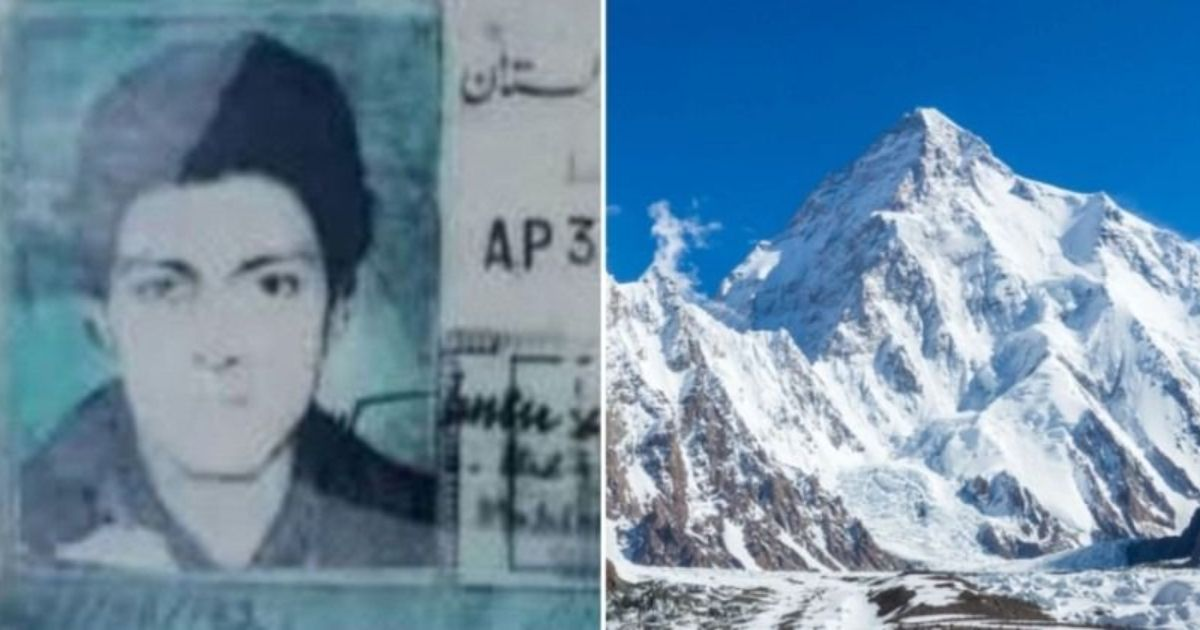
In a haunting yet deeply human story, the body of Nasiruddin, missing for nearly three decades, has been discovered in a state of remarkable preservation near the edge of the melting Lady Meadows glacier in Northern Pakistan.
His remains, still clothed and carrying identification, tell a tale of tragedy, endurance, and the unexpected ways in which the Earth’s changing climate is reshaping our connection to the past. While the discovery offers closure for his family, it also underscores the devastating consequences of global warming on the world’s frozen landscapes.
A Disappearance That Shook a Family and a Village
Back in 1997, life in a remote village in Pakistan’s Kohistan district took a sudden and heartbreaking turn. Nasiruddin and his brother had fled to the mountains after a dispute erupted in their community. What began as an escape to safety quickly turned into a fight for survival in the unforgiving high-altitude wilderness.
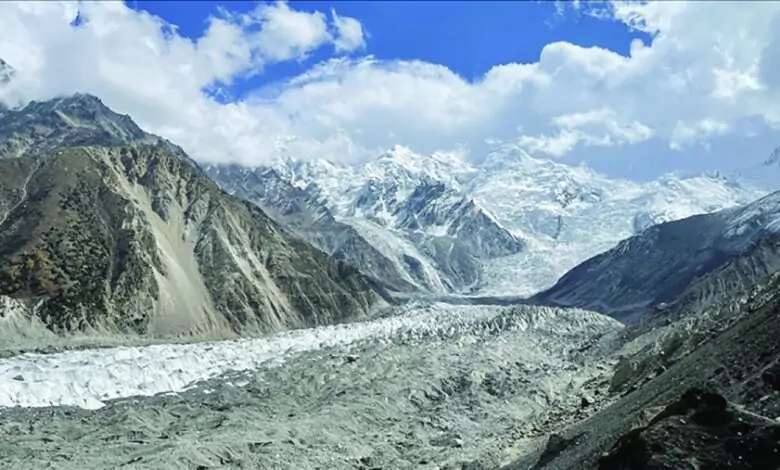
His brother managed to return, but Nasiruddin never did. Trapped in the harsh and icy terrain, he vanished into the vast white expanse. Unbeknownst to anyone, he had fallen into a deep crevasse in the Lady Meadows glacier—a grave of ice that would hold him for almost thirty years.
For his family, the years that followed were a relentless cycle of hope and grief. They searched tirelessly, often returning to the glacier in the faint hope of finding a clue, a remnant of clothing, or even a sign that would explain his fate. But each expedition ended the same way—with nothing.
Read : Switzerland’s Blatten Village Buried Under Mud After Birch Glacier Partially Collapses
Time moved on, the seasons changed, and the family had to accept the painful reality that Nasiruddin was gone forever. In their hearts, they mourned him, performing rituals and prayers to honor his memory. Yet the mystery of his disappearance lingered like an unhealed wound. That wound was reopened—and unexpectedly mended—on July 31 of this year, when a shepherd making his way across the melting glacier stumbled upon something unusual.
Read : Exploring the Majestic Beauty of Franz Josef Glacier: New Zealand
It was not a rock, nor a pile of snow, but the frozen figure of a man. The shepherd’s shock turned to astonishment as he saw that the body was intact, the clothing preserved, and the face eerily untouched by decay. In his pocket was an identification card, confirming that this was indeed Nasiruddin, finally found after nearly 30 years.
The Frozen Time Capsule and the Role of Climate Change
The condition of Nasiruddin’s remains was nothing short of extraordinary. His clothes were neither shredded nor badly worn. His features, though bearing the marks of his final moments, were still recognizable. It was as if he had simply lain down to rest. This preservation was due to the unique properties of glaciers, which act as natural deep freezers, slowing decomposition to a near halt.
The Lady Meadows glacier had entombed him in its ice, sealing him away from the elements and microorganisms that would normally break down a human body. But the reason he was discovered now, and not years earlier, is far from natural. The glacier is melting at an accelerated rate, a direct consequence of climate change.
The Kohistan district, where the Himalaya, Hindu Kush, and Karakoram mountain ranges converge, has long been one of Pakistan’s coldest and iciest regions. It boasts an extraordinary number of glaciers—more than 13,000, the largest concentration outside the polar regions. Yet in recent decades, rising global temperatures have begun to strip these ice masses away.
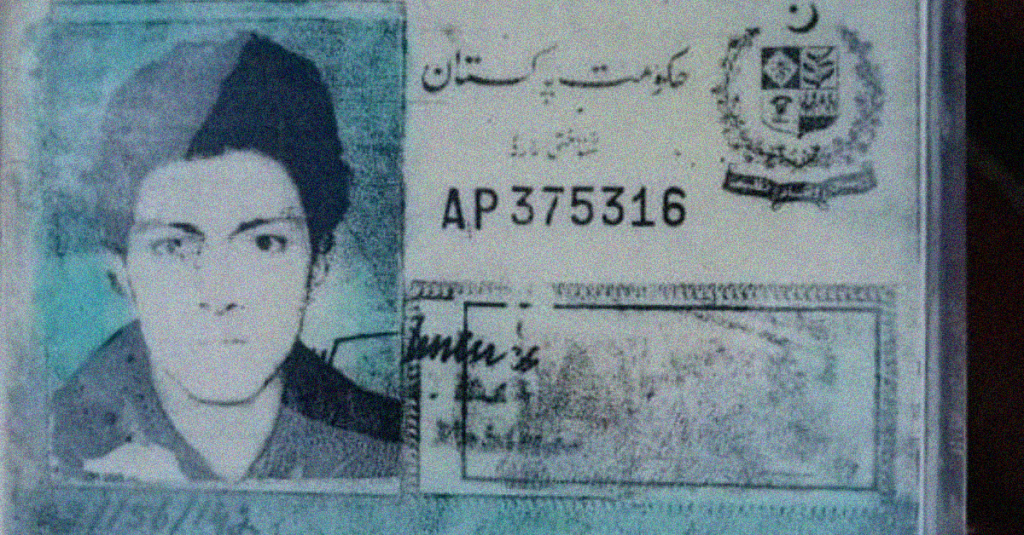
Increased melting has exposed long-hidden layers of ice, revealing both geological history and human tragedies frozen in time. In Nasiruddin’s case, it meant the slow, steady retreat of the glacier eventually brought his resting place closer to the surface, until the ice could no longer hold him.
This is not an isolated incident. Around the world, melting glaciers have been yielding human remains long thought lost. In Peru, for example, the mummified body of an American climber missing for 22 years was found in 2023 after severe ice melt. In the Alps, mountaineers have come across the bodies of hikers, soldiers, and skiers who perished decades ago. These finds solve mysteries and reunite families with answers—but they are bittersweet gifts from a planet in distress.
Climate scientists warn that the rapid melting of glaciers is a symptom of a much larger problem. Not only does the meltwater contribute to rising sea levels and flash floods, but it also releases microorganisms—viruses and bacteria—that have been trapped for decades or even centuries. These ancient pathogens could pose serious risks to human and animal health. The discovery of preserved bodies is therefore just one facet of a far more complex and dangerous transformation.
The Human Story Behind the Ice
For Nasiruddin’s family, the discovery has brought an unexpected sense of closure. After 28 years of uncertainty, they finally know where he was and what became of him. The return of his body allows for proper funeral rites, something many families of missing persons never get the chance to do. The grieving process can now enter a different stage—one marked by acceptance rather than unanswered questions.
Yet the emotional impact goes beyond his relatives. For the people of Kohistan, the story is a reminder of the treacherous beauty of their homeland. The mountains that surround them are both a source of life and a keeper of secrets. They provide water, shelter, and resources, but they also conceal dangers that can claim lives in an instant.
The story also resonates on a more universal level. Across cultures and continents, human beings are bound by a shared need to remember and honor those who are lost. When the ice gives up its dead, it forces us to confront the fragility of life, the unpredictability of nature, and the way the Earth’s changing climate is altering even the most ancient and seemingly unchangeable landscapes.
Nasiruddin’s return is also a stark example of how personal histories are being shaped by global forces. His disappearance was a private tragedy; his discovery is part of a planetary crisis. The same processes that brought his body back into the world are reshaping coastlines, displacing communities, and threatening ecosystems worldwide. It is a sobering intersection of the intimate and the immense.
The Lady Meadows glacier, once a symbol of permanence and endurance, is now a testament to change—both human and environmental. As it continues to recede, who knows what else it might reveal? More bodies? Relics from past centuries? Geological records of the Earth’s climate? Each revelation will carry its own weight, its own blend of fascination and dread.
For now, Nasiruddin’s story stands as a reminder that climate change is not only about graphs, statistics, and distant ice sheets. It is about people—about families and communities whose lives are touched in unexpected and often heartbreaking ways. His nearly three-decade journey from life to ice to discovery mirrors our planet’s own journey from stability to an uncertain future.
In the end, his return from the glacier is both a gift and a warning. A gift, because his family can finally lay him to rest. A warning, because the forces that freed him are the same ones that are reshaping our world at an unprecedented pace. The ice is melting, the past is emerging, and the future is rushing toward us faster than we might be ready to face.