

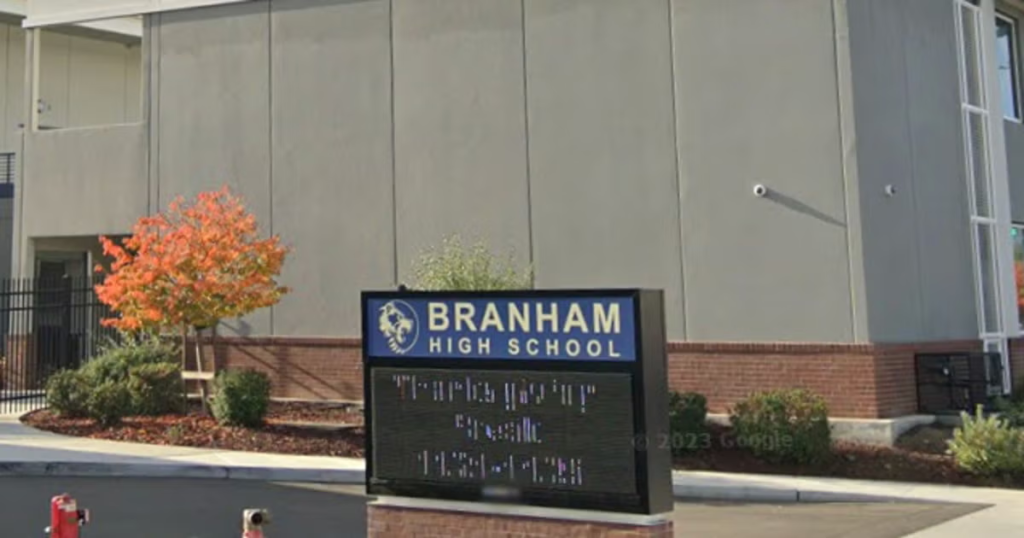
The circulation of a photograph showing eight Branham High School students lying in the shape of a swastika on the school’s football field has triggered a profound sense of shock across San Jose and the broader Bay Area Jewish community. Posted originally on social media by a Branham student on 3 December, the image was accompanied by an antisemitic quote attributed to Adolf Hitler, intensifying alarm and outrage among viewers.
The post quickly spread across platforms, with a screenshot gaining significant traction on Reddit, where hundreds of comments reflected both disbelief and deep concern. Although Instagram removed the post and suspended the associated account by the following morning, the damage to community trust and emotional wellbeing had already been done.
Local residents, Jewish organizations, and education advocates have since expressed worry over rising displays of hate symbols among youth and the broader cultural forces that may be influencing students. Within the school community itself, the incident has created a moment of reckoning, prompting urgent questions about historical awareness, student accountability, and the responsibility of educational institutions to actively confront antisemitism.
Response of School Leadership and District Officials
In a written statement issued to the media, Branham High School principal Beth Silbergeld confirmed that the image had been reported through an anonymous tip line shortly after it appeared online. She emphasized that the district could not legally disclose the students’ identities or provide specific details on disciplinary actions due to federal privacy laws. Still, she acknowledged the seriousness of the situation and stated unequivocally that the behavior captured in the photo does not reflect the values upheld by the majority of students or their families.
Her remarks underscored a broader concern that such incidents, even when orchestrated by a small group of individuals, can inflict disproportionate harm on classmates, families, and community members. According to Silbergeld, many within the school were “rightly appalled” by the act, and she pledged that administrators and faculty would learn from this moment and work toward strengthening unity on campus.
The Campbell Union High School District reiterated this stance in its own communications, expressing firm condemnation of antisemitism and any form of hate targeting marginalized or minority groups. District leaders stressed that public schools must serve as inclusive spaces where all students, including Jewish students, feel safe, valued, and protected from acts intended to demean or intimidate them.
Read : Six Gray Whales Found Dead in San Francisco Bay Area Region
In the aftermath of the incident, the district began coordinating with several community organizations to help address harm and guide subsequent educational efforts. Representatives highlighted that while the students’ actions were disturbing, they also presented an opportunity to engage in meaningful instruction aimed at preventing similar behavior in the future. The school district’s openness to collaboration suggested an intention to move beyond punitive measures and to engage directly with the underlying causes that enable such hateful displays to occur.
Read : Capturing the Charms of Poland: Top Ten Selfie Spots for Cultural Enchantment
The process of evaluating accountability and appropriate intervention remains ongoing, with school officials balancing confidentiality requirements and the need to restore trust. Statements released by the administration reflect a careful blend of regret, condemnation, and commitment to proactive change. The leadership continues to face public scrutiny, and families within the district await further evidence that tangible steps will follow the initial expressions of concern. The emphasis on unity and professional responsibility hints at a broader district objective: to reinforce core values of respect and inclusion that may have been shaken by the episode.
Reaction from Bay Area Jewish Community and Advocacy Groups
The incident rapidly reverberated outside San Jose, reaching Jewish organizations throughout the Bay Area who expressed alarm at both the imagery and the use of Hitler’s words in the caption accompanying the photograph. The Bay Area Jewish Coalition (BAJC), a grassroots organization dedicated to safeguarding Jewish residents and combating discrimination, was among the first to speak publicly about the deep emotional impact the incident had triggered.
BAJC spokesperson Tali Klima described the photograph as both “shocking and heartbreaking,” noting that children invoking a genocidal dictator’s rhetoric reflects a perilous lack of understanding about the historical weight of such symbols. According to Klima, the pride and premeditation evident in arranging a human swastika on school property compounded community distress and amplified the sense of vulnerability among Jewish students and families.
Maya Bronicki, BAJC’s education lead, pointed to systemic issues in local and national curricula, particularly the insufficient coverage of Holocaust history and the meaning behind hate symbols like the swastika. She argued that the incident illustrates the consequences of gaps in instruction, noting that without guidance, some young people may fail to grasp the profound pain associated with such imagery.
Bronicki stressed that education plays a crucial role in shaping a generation that is aware, compassionate, and firmly opposed to hatred. She expressed confidence that meaningful change is possible if the district adopts comprehensive, sustained measures to teach students about the historical and contemporary dangers of antisemitism. In her view, empowering students with accurate knowledge and empathetic perspectives is essential to fostering a school culture where every minority group is seen as deserving of respect and equal dignity.
Other community groups, including the Anti-Defamation League (ADL) and the Jewish Community Relations Council of the Bay Area (JCRC), also voiced concern and offered assistance. Both organizations have long-standing experience working with educational institutions to address hate incidents, develop robust curriculum materials, and facilitate restorative conversations. Their involvement highlights the broader regional network mobilizing in response to the event, as well as a recognition that antisemitic ideologies do not emerge in isolation.
Recent national reports have documented increases in student exposure to extremist content online, including platforms where hate speech and extremist symbols circulate widely among youth. Advocates note that schools must adapt to this accelerating digital landscape by equipping students with critical thinking skills, empathy-based education, and explicit lessons on the consequences of hateful conduct. Within the broader Bay Area, many parents and community leaders spoke of feeling unsettled by the knowledge that local students could participate in a display so evocative of violence, genocide, and bigotry.
Some expressed fears that the incident reflects a growing normalization of antisemitic tropes among younger generations. Even if the students involved intended the photograph as a misguided joke or attempt at social media shock value, Jewish residents stressed that the imagery cannot be divorced from history or the lived experiences of families with direct connections to Holocaust survivors. The community response thus underscored a collective insistence on accountability, education, and meaningful efforts to prevent the recurrence of such painful acts.
The Role of Holocaust Education and the Path Forward
Across interviews and public statements, one theme has emerged consistently: the urgent need for improved Holocaust education and instruction about hate symbols within local schools. For organizations like BAJC and ADL, the Branham High School incident demonstrates why educational institutions must go beyond minimal curriculum requirements and incorporate thorough, nuanced, and age-appropriate lessons on the historical context of symbols like the swastika.
Read : Fake Dentist Exposed in Bay Shore Area After Patients Left With Facial Paralysis and Nerve Damage
Present-day students are growing up in a media environment saturated with memes, misinformation, and extremist rhetoric, often without the guidance needed to decode these symbols or understand their historical origins. Education specialists argue that high schools must respond by integrating lessons that combine historical facts with ethical reflection, ensuring that students not only learn about historical atrocities but also understand the contemporary relevance of those lessons.

Administrators and advocacy groups appear to be aligned on the belief that substantive education can act as a long-term safeguard against future incidents. The district’s commitment to partnering with BAJC, ADL, and JCRC signals a willingness to develop structured programs addressing both the emotional harm caused by the incident and the broader cultural conditions that enable such behavior. These efforts may include workshops for students and teachers, curriculum revisions, and the creation of safe spaces for dialogue among affected students.
Such initiatives have been implemented successfully in other districts facing similar challenges, with notable improvements in student awareness and reductions in hate-related incidents reported in many cases. Educators emphasize that restorative practices, when thoughtfully designed, can help address both accountability and healing. The intent is not solely punitive but also corrective, aimed at guiding students toward a deeper understanding of why their actions matter.
In situations like this, restorative dialogues may involve facilitated conversations among students, teachers, and members of affected communities, allowing those harmed to articulate their experiences and those responsible to grapple with the impact of their actions. Supporters of these methods argue that they can be highly effective in school environments when combined with clearly defined disciplinary policies. Ultimately, the path forward for Branham High School and the Campbell Union High School District will require sustained commitment rather than one-time interventions.
The community affected by this incident has made clear that trust must be restored through consistent, visible action. The collaboration between the district and Jewish advocacy organizations marks the first step in a longer process aimed at strengthening the school’s cultural foundations and ensuring that such displays of hate do not reoccur. As educators and community members continue to reflect on the incident, the emphasis remains on building a future in which students develop not only academic knowledge but also the values of empathy, responsibility, and respect essential for navigating a diverse society.
I will immediately snatch your rss feed as I can not in finding your email subscription link or newsletter service. Do you’ve any? Kindly permit me recognize so that I could subscribe. Thanks.
Just downloaded the jjwinapk app. So far, so good – pretty easy to navigate. Gonna give it a proper run tonight. Hoping for some wins! Get the app, guys jjwinapk!