
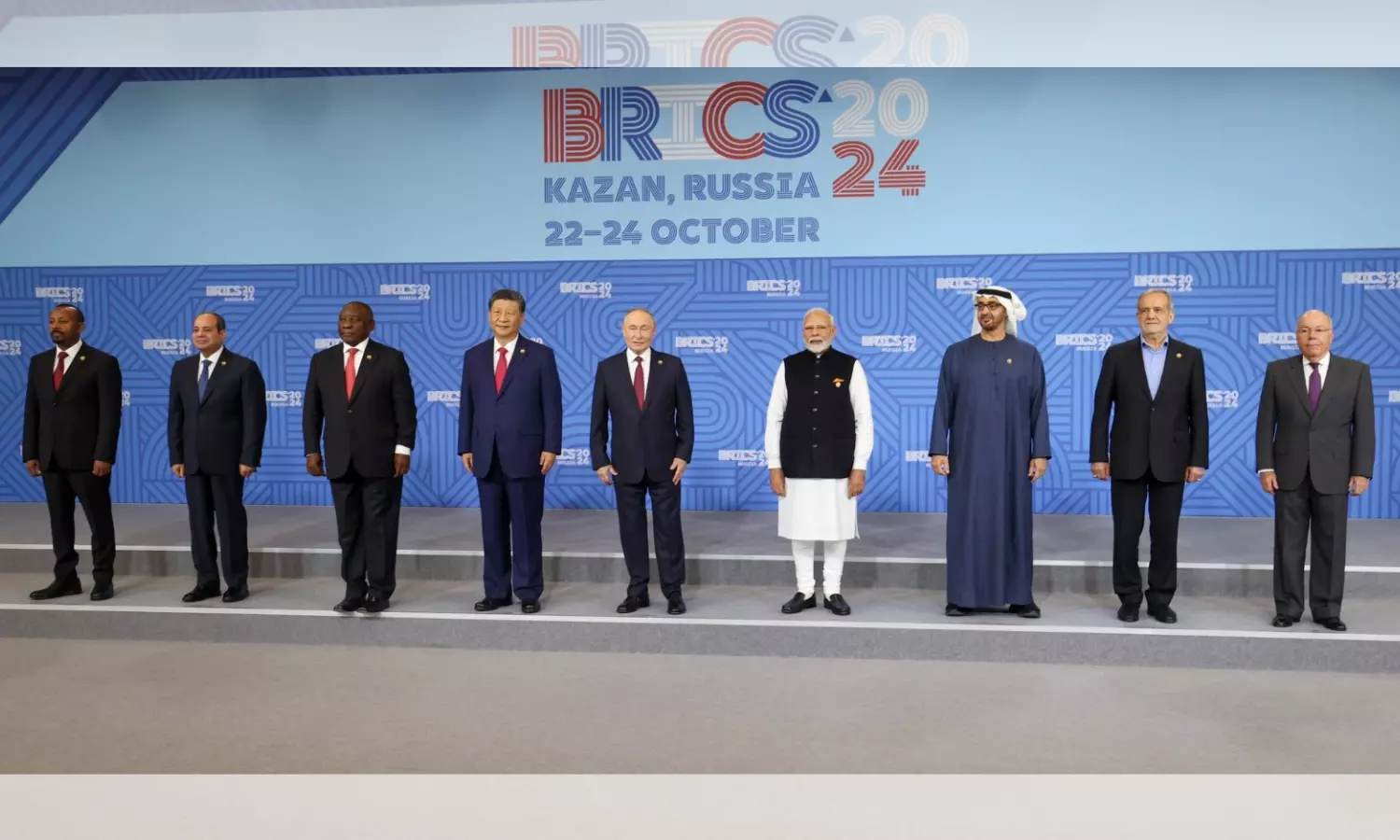
While several nations have signed up to participate in the multibillion-dollar project, two major BRICS members, India and Brazil, have now decided against joining. India has maintained a clear stance of non-participation, citing strategic and economic concerns.
The Belt and Road Initiative (BRI), China’s flagship global development strategy, has garnered a mix of support and skepticism since its inception.
Recently, Brazil followed suit, marking a significant setback for China’s efforts to expand the BRI influence across the BRICS bloc. Brazil’s refusal to formally join the BRI, led by President Luiz Inácio Lula da Silva’s government, represents a carefully considered decision influenced by economic, political, and strategic considerations.
Brazil’s Reasons for Opting Out of China’s BRI
Brazil’s decision to abstain from the BRI wasn’t taken lightly, as it reflects a nuanced approach to fostering diplomatic and economic ties with China. Special presidential adviser Celso Amorim emphasized that Brazil aims to strengthen its relations with China without formally committing to BRI membership.

Amorim mentioned that while Brazil seeks to cooperate with Chinese investors, it intends to do so on its terms, selectively choosing areas for investment that align with Brazil’s priorities. As Brazil considers its infrastructure and trade policies, it is cautious about committing to long-term projects under BRI that may not yield immediate or assured benefits.
Read : Brazil’s Chamber of Deputies Moves to Equate Abortion with Homicide: A Controversial Decision
According to Amorim, Brazil’s government has identified specific national projects as priorities, with some expected to involve Chinese investment. However, Brazil prefers to adopt a “synergy” model, allowing BRI-related investment without a formal accession contract.
This approach enables Brazil to maintain flexibility in managing its infrastructure and trade policies without getting bound by the conditions of the BRI. It also ensures that Brazil retains control over which projects it pursues, accommodating its national interests above all else.
Read : Elon Musk’s X Returns to Brazil After Paying $5 Million Fine
Brazil’s stance underscores its determination to avoid dependence on any single country’s economic policies. The BRI has been subject to criticism, with concerns around the potential for debt dependency and possible negative impacts on the autonomy of participating nations.
By not formally joining the initiative, Brazil demonstrates a desire to engage in bilateral relations without the constraints that might come from adhering strictly to the BRI framework.
Strategic Considerations Behind Brazil’s Decision
Beyond economic concerns, Brazil’s decision is shaped by geopolitical and diplomatic factors. Reports indicate that officials within Brazil’s economy and foreign affairs ministries were opposed to the idea of joining the BRI, especially considering potential diplomatic consequences.
Brazil’s decision reflects a keen awareness of shifting global alliances and the potential impact of aligning too closely with one global power. Notably, Brazil expressed concerns that joining the BRI might strain its relationship with the United States, especially if a future administration adopts a more isolationist or protectionist stance.
With Donald Trump potentially running for re-election in the U.S., Brazilian officials are mindful of the complexities a BRI endorsement could create in maintaining balanced ties with both Washington and Beijing.

The reluctance to formally join the BRI also signals Brazil’s awareness of BRICS’ evolving dynamics. As BRICS expands with new members, including Egypt, Ethiopia, Iran, Saudi Arabia, and the United Arab Emirates, Brazil seems intent on maintaining autonomy within this diverse group.
This decision could allow Brazil to sustain constructive relations within BRICS without appearing to be aligned solely with China’s developmental model.
In a global landscape marked by tensions between major powers, Brazil’s decision is strategically significant, helping the country preserve diplomatic flexibility while balancing its position within the BRICS framework.
Furthermore, Brazil’s strategic approach underscores a trend seen within other Latin American countries as well, as they weigh the benefits of Chinese investment against possible long-term constraints.
By opting out of formal BRI participation, Brazil reflects a broader regional caution in engaging with China’s infrastructure initiatives, an attitude influenced by experiences in other countries where BRI projects have sparked controversy due to concerns about debt sustainability.
The Future of Brazil-China Relations Beyond BRI
Brazil’s refusal to join the BRI does not signal a break in relations with China. Instead, it reveals a desire to forge an independent path that includes selective cooperation with China on mutually beneficial terms.
Celso Amorim highlighted that Brazil is looking for ways to “take the relationship with China to a new level,” albeit outside of the BRI framework.
This is a testament to Brazil’s intent to sustain positive relations with China, recognizing the potential for economic collaboration without needing to enter into binding agreements that could limit Brazil’s future policy decisions.

The strategic partnership Brazil envisions includes encouraging Chinese investments aligned with Brazil’s infrastructure goals but without compromising on national interests. Brazil’s approach could also serve as a model for other countries that seek to engage with China without committing to long-term BRI agreements.
China’s President Xi Jinping’s scheduled visit to Brazil in November 2023 may bring additional clarity to Brazil-China relations. It offers an opportunity for both countries to outline a more tailored form of collaboration, perhaps setting a precedent for other countries within the BRI orbit.
Brazil’s move away from BRI membership also highlights a critical juncture for China as it seeks to expand the BRI in the face of diverse responses from potential partners. While some countries have signed on enthusiastically, others, like India and now Brazil, are more cautious.
This trend suggests that China may need to adapt its approach, allowing more flexible and customized engagement with nations that share common goals but prefer not to be bound by formal BRI membership.
By respecting Brazil’s decision to maintain autonomy, China could pave the way for a more versatile BRI framework that is attractive to countries with similar reservations.