

In a case that has drawn widespread attention for its escalation from a minor fee dispute to felony destruction, 32-year-old Breanna Haynes of Louisville, Kentucky, faces serious charges following an altercation at a local Little Caesars pizzeria. The incident, which occurred over seven months ago, resulted in more than $1,000 in property damage and highlights tensions in customer service interactions at fast-food establishments. Authorities released details last week, prompting discussions on impulse control and the costs of unchecked frustration.
The Incident: A $1 Dispute Turns Destructive
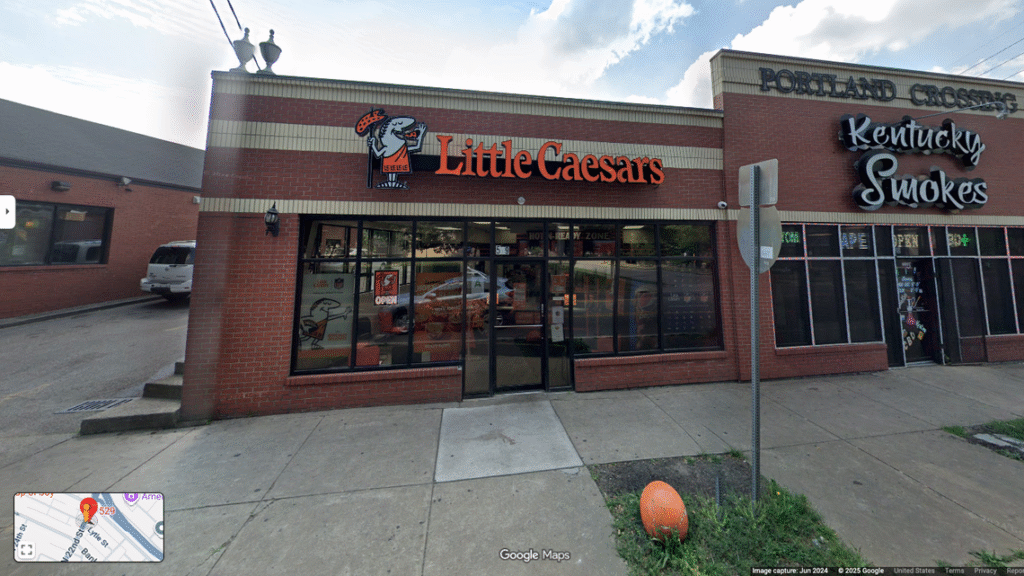
The confrontation unfolded on January 24, 2025, at the Little Caesars location on North 22nd Street in Louisville’s Portland neighborhood. According to court documents and police reports, Breanna Haynes had placed a phone order for pickup earlier that day. Upon arriving to collect her food, she requested an additional packet of dipping sauce beyond the standard complimentary one provided with the meal.
A store employee informed her that the extra sauce would incur a $1 charge, a standard upcharge at the chain to cover supply costs. This revelation reportedly triggered an immediate and intense reaction from Haynes. Surveillance footage, reviewed by investigators, captured her shoving multiple items off the front counter in a fit of anger. Among the damaged property was a custom-built computer stand and the point-of-sale register system, which sustained significant structural harm.
Police affidavits describe Haynes as “creating a disturbance” that disrupted operations and endangered staff. She allegedly knocked over trays, condiment dispensers, and other countertop equipment before fleeing the scene on foot. The total estimated damage exceeded $1,000, primarily from the irreparable harm to the register setup, which required full replacement. No injuries were reported among employees, though the sudden outburst left workers shaken, as noted in the initial police report filed that evening.
Little Caesars, known for its budget-friendly “Hot-N-Ready” pizzas, maintains a policy of charging for supplemental items like extra sauces to manage ingredient expenses. This practice is common across quick-service restaurants, where complimentary portions are calibrated to order sizes. In this case, the fee—equivalent to a small fraction of a typical $6 pizza—escalated into a felony-level event, underscoring how routine policies can intersect with personal stressors.
Read : Liam Hutchinson Banned from All UK Boots Stores for 10 Years After £107,000 Shoplifting Spree
Investigators identified Haynes through the store’s security video, which provided clear visuals of the 32-year-old during the two-minute rampage. The footage shows her entering the store calmly, engaging briefly with staff, and then abruptly toppling items in a sweeping motion across the counter. Responding officers arrived shortly after her departure but were unable to locate her that night. The case was forwarded to detectives for further review, citing the value of the damage as grounds for a criminal mischief investigation.
Read : More Than 10,000 Sea Turtle Eggs Rescued from Mexico’s Beach Ahead of Hurricane Beryl
This event occurred amid a typically quiet shift at the Portland-area outlet, a community hub in a working-class neighborhood where residents rely on affordable dining options. The store, one of several Little Caesars franchises in Jefferson County, had no prior history of similar disruptions, per local police records. The January timing aligned with post-holiday financial strains for many households, though no specific motives beyond the sauce charge were cited in official statements.
Arrest and Court Proceedings: Seven Months to Accountability
Breanna Haynes’ arrest came nearly seven months later, on September 25, 2025, following a renewed push by Louisville Metro Police to clear backlog cases involving property crimes. Detectives revisited the surveillance evidence and cross-referenced it with local databases, leading to her apprehension without incident at her residence in the Shawnee neighborhood. She was booked into the Louisville Metro Department of Corrections on a warrant for first-degree criminal mischief, a Class D felony in Kentucky carrying potential penalties of up to five years in prison and fines up to $10,000.
During her arraignment the following day in Jefferson District Court, Judge Jennifer Wilcox ordered Breanna Haynes to have no contact with the Little Caesars location or its employees. Bail was set at $2,500, which she posted the same afternoon, allowing her release pending further hearings. Her next court appearance is scheduled for October 2, 2025, where prosecutors will present evidence including the video and damage assessments from the franchise owner.
Court records indicate Haynes appeared emotional during processing, with her mugshot reflecting visible tears—an uncommon detail that has fueled speculation in preliminary reports. She has no prior felony convictions listed in public databases, though misdemeanor traffic offenses appear in her history from 2023. Prosecutors emphasized the premeditated nature of the destruction, arguing that the counter sweep targeted high-value equipment deliberately.
The delay in arrest stemmed from resource constraints at the police department, which prioritized violent crimes amid a 15% rise in property offenses in Louisville during early 2025. “We take these cases seriously, but volume dictates timelines,” a department spokesperson stated in a brief comment to local media. The franchise, operated by a regional operator under Ilitch Holdings, cooperated fully by providing repair invoices totaling $1,237 for the register and ancillary fixes.
Under Kentucky law, first-degree criminal mischief applies when damage to property exceeds $1,000 and involves intent to impair its use. If convicted, Haynes could face restitution orders, community service, or probation alternatives, depending on mitigating factors presented by her defense. Legal experts note that first-time offenders in non-violent property cases often receive deferred sentences, but the public nature of the video evidence may influence sentencing toward stricter measures.
Public Backlash and Broader Context: Echoes of Customer Frustrations
News of Haynes’ arrest spread rapidly online, igniting debates on social media platforms about customer etiquette and fast-food pricing. Posts on X (formerly Twitter) amassed thousands of views within hours, with users sharing clips from the surveillance video and opining on the absurdity of the escalation. One viral thread, viewed over 10,000 times, quipped, “A dollar for sauce? Worth $1K in therapy, apparently,” capturing the mix of humor and criticism in reactions.
Reddit’s r/Louisville subreddit featured a dedicated thread with dozens of comments, ranging from sympathy for economic pressures—”Inflation hits everyone hard”—to condemnation of the violence: “No excuse for trashing a worker’s space over pennies.” Local news outlets reported no formal statements from Haynes or her representatives, but community leaders in Portland urged de-escalation training for service industries.

This case mirrors a pattern of customer-service flare-ups in the quick-service sector. In July 2022, a New York City french fry shop saw a brawl erupt over a $1.25 extra dipping sauce fee, resulting in assaults and arrests. More recently, in February 2025, a drive-thru altercation in California over upcharged condiments led to misdemeanor charges against two patrons. Data from the National Restaurant Association indicates a 20% uptick in reported customer aggression since 2023, attributed to rising costs and post-pandemic stress.
Little Caesars, with over 4,000 U.S. locations, has faced scrutiny for its no-frills model, where extras like sauces add up quickly. Corporate guidelines require charging for additional portions to maintain profitability margins, which hover at 5-7% for independents. Industry analysts suggest such incidents, while rare, cost chains millions annually in repairs and lost productivity.
In Louisville, where median household income lags national averages by 12%, these disputes underscore affordability challenges. Advocacy groups like the Kentucky Restaurant Association advocate for clearer menu disclosures on fees to prevent misunderstandings. Meanwhile, mental health experts point to underlying factors like financial anxiety, recommending outlets like community cooling-off programs.
As Haynes’ case progresses, it serves as a stark reminder of the thin line between frustration and felony. For businesses, bolstering security—cameras are standard, but panic buttons lag—and staff training could mitigate risks. For consumers, the lesson is clear: a momentary lapse can lead to lasting consequences. The October 2 hearing may bring more clarity, but the video’s circulation ensures this $1 saga lingers in public memory.
I found your weblog website on google and verify a few of your early posts. Continue to keep up the very good operate. I simply further up your RSS feed to my MSN Information Reader. Looking for ahead to reading extra from you later on!…