
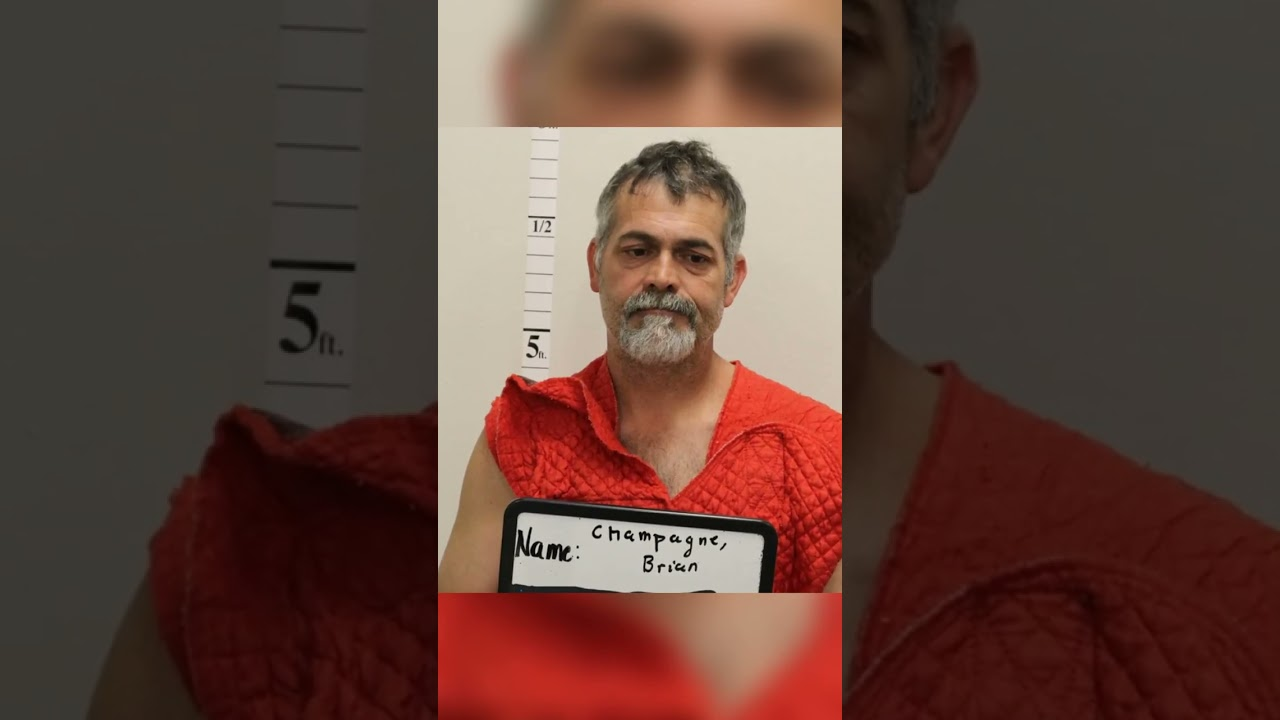
A bizarre and deeply disturbing incident in the United States has resulted in the arrest of 47-year-old Brian Champagne after an alleged confrontation that escalated from a demand for a soft drink into threats of extreme violence. Authorities in Seymour, Missouri, say Champagne attempted to force his way into a woman’s bedroom, harassed her and her family, and issued explicit threats to kill her son after being denied a Pepsi.
The incident, which reportedly unfolded inside a shared residence, has raised serious concerns about personal safety, domestic boundaries, and the unpredictable nature of aggressive behavior, even when sparked by seemingly trivial disputes. Champagne now faces a charge of first-degree stalking and remains in custody as the legal process moves forward.
The case has drawn attention not only because of its unusual trigger but also due to the severity of the alleged threats and actions involved. According to law enforcement accounts and statements provided by the victim, what began as an argument quickly became a frightening situation involving intimidation, attempted forced entry, and verbal threats of murder. Video evidence, police reports, and witness statements form the basis of the charges now pending against Champagne in Wright County.
The Incident and Police Response
The confrontation reportedly occurred on the evening of Wednesday, January 28, when the victim contacted local police shortly before 7:30 p.m. local time, seeking immediate assistance. She told authorities that Brian Champagne was behaving aggressively inside the residence and that she feared for her safety and the safety of her son. Officers were dispatched to the scene in Seymour, Missouri, where they encountered a tense and volatile situation.
According to police reports, Champagne was described as uncooperative and argumentative upon their arrival. Officers attempted to question him and de-escalate the situation, but he allegedly challenged their presence, repeatedly asking why they were being “rude” to him and questioning why the woman involved was being treated like a “criminal.” Law enforcement noted that Champagne’s demeanor made it difficult to manage the situation calmly and efficiently.
The victim informed police that Champagne had attempted to initiate a physical fight with her son. Although no physical contact ultimately occurred, she said she had to step in to separate the two men to prevent the situation from turning violent. More alarmingly, she alleged that Champagne tried to enter her bedroom without permission, an act she described as both threatening and invasive. She claimed to have video evidence supporting this assertion, which reportedly shows Champagne outside her bedroom door demanding a Pepsi.
In the video, Brian Champagne can allegedly be heard issuing explicit threats, including statements that he would beat the victim’s son and kill him. These verbal threats, combined with his alleged attempt to force entry into a private bedroom, significantly escalated the seriousness of the incident in the eyes of investigators. Police considered the threats credible enough to warrant immediate action, leading to Champagne’s arrest at the scene.
Read : Why People Are Trolling Deepinder Goyal For Launching “Pure Veg Fleet” ???
After the confrontation, the individuals involved reportedly retreated to separate areas of the home. The victim later told police that she allowed Champagne’s mother to enter her room to retrieve a Pepsi, apparently in an effort to calm the situation and bring the incident to an end. While this act may seem unusual, it underscores the chaotic and pressured environment the victim said she was trying to manage while waiting for police assistance.
Video Evidence, Allegations, and Legal Charges
Central to the case against Brian Champagne is the existence of video footage that the victim claims documents his behavior during the incident. According to police summaries, the clip shows Champagne aggressively demanding the soft drink while standing outside the victim’s bedroom. Investigators say the recording captures him making explicit threats of serious bodily harm and death toward the victim’s son, language that significantly influenced the decision to pursue felony charges.
Champagne has been charged with first-degree stalking under Missouri law, a serious offense that can carry substantial penalties if a conviction is secured. First-degree stalking generally involves knowingly engaging in conduct that causes emotional distress and involves threats or actions that place the victim in reasonable fear of death or serious physical injury. Prosecutors appear to believe that Champagne’s alleged behavior, including the threats recorded on video and his attempted entry into a private bedroom, meets this legal threshold.

Law enforcement sources indicated that Brian Champagne’s conduct toward the victim and her son was not limited to a single verbal outburst but constituted a sustained pattern of harassment over the course of the incident. His repeated demands, aggressive posture, and refusal to comply with officers’ instructions contributed to the perception that he posed an immediate risk.
The victim’s account also highlighted the emotional toll of the encounter. She reportedly told police that she feared the situation could turn deadly, particularly after Brian Champagne made repeated statements about killing her son. Even in the absence of physical contact, authorities emphasized that credible threats alone can justify serious criminal charges when they instill genuine fear and are supported by evidence.
Following his arrest, Brian Champagne was transported to the Wright County Jail, where he is being held on a $5,000 bond. Court records indicate that a hearing has been scheduled for Monday, February 2, at which time a judge will review the charges, bond conditions, and any preliminary evidence presented by prosecutors.
Unanswered Questions and Ongoing Proceedings
Despite the detailed allegations outlined in police reports, several key aspects of the case remain unclear. Court documents do not explain the nature of the relationship between Brian Champagne and the victim, nor do they clarify why they appeared to be sharing the same residence at the time of the incident. It is also not specified how long Champagne had been staying at the home or under what circumstances he was there.
Another unresolved detail concerns the age of the victim’s son, information that was not included in the initial police statement. This omission leaves open questions about the level of vulnerability involved and whether additional charges could be considered depending on further findings. The presence of Champagne’s mother in the home has also raised questions, as authorities have not explained why she was there or what role, if any, she played prior to the confrontation.
As the case moves through the legal system, investigators may seek to clarify these issues through further interviews and evidence review. Prosecutors will likely rely heavily on the video footage described by the victim, along with testimony from responding officers and any witnesses who may have observed Champagne’s behavior. Defense counsel, if appointed or retained, may challenge the interpretation of events, the context of the video, or the severity of the alleged threats.
The incident has sparked broader discussion about how quickly domestic disputes can escalate and how law enforcement evaluates threats that arise from seemingly minor triggers. While the demand for a Pepsi may appear trivial on the surface, authorities have emphasized that the underlying issue is not the soft drink itself but the alleged pattern of intimidation, attempted forced entry, and explicit threats of murder.
For now, Brian Champagne remains in custody as he awaits his scheduled hearing. The court will determine whether the evidence supports moving the case forward to trial and whether any additional conditions should be imposed to protect the victim and her family. Until those proceedings take place, many details remain subject to legal review, but the incident stands as a stark example of how rapidly a situation can spiral into criminal behavior when aggression and threats are involved.