
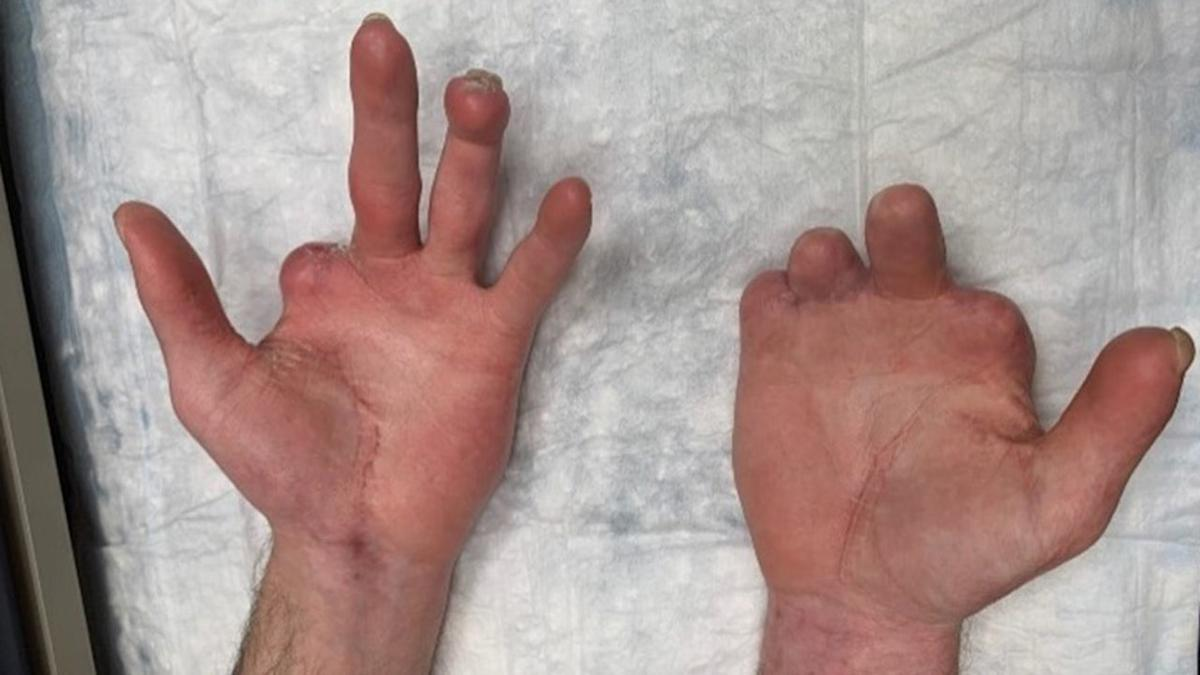
The horrifying incident unfolded at a Kroger store in Bloomfield Township, Michigan, in 2020. Brian Mierendorf, a 37-year-old HVAC technician and pipefitter, was performing his duties when a defective refrigeration system malfunctioned. It released R22—a refrigerant that had already been banned by the Environmental Protection Agency due to its toxicity and harmful effects on the ozone layer.
Mierendorf, committed to protecting customers, attempted to contain the leak and prevent a disaster. But in the process, the system violently exploded into his hands, causing injuries so severe that most of his fingers were later amputated.
The aftermath of the accident was devastating both physically and emotionally for Mierendorf and his family. Over the next few months, he underwent 25 surgeries in an effort to repair the damage caused by the chemical explosion. Despite the extensive medical interventions, the damage was irreversible.
The incident didn’t just cost him the use of his hands—it shattered the life he once knew. With his career in jeopardy and his physical independence significantly impaired, Mierendorf was forced to rebuild his life from the ground up.
Negligence and Corporate Accountability
During the trial that followed, Mierendorf’s legal team, led by attorney Jon Marko of Marko Law, presented a compelling case against Kroger. They argued that the grocery giant had failed in its duty of care by not maintaining its refrigeration systems properly. More concerning was the allegation that Kroger had not documented any maintenance, repairs, or inspection records related to the faulty unit that ultimately caused the explosion.
The courtroom heard that the company had neglected to complete an incident report until two years after the accident—a delay that underscored the company’s lack of urgency and responsibility. The absence of timely documentation raised serious questions about Kroger’s internal safety protocols and its regard for the wellbeing of workers and customers alike.
Mierendorf’s legal team contended that Kroger essentially had “a ticking time bomb” inside their store, and that it was only a matter of time before tragedy struck. The fact that this happened in the middle of the day, in front of the meat department, while the store was open to the public, only made the danger more egregious.
According to Marko, instead of acknowledging their negligence, Kroger’s defense attempted to shift blame onto Mierendorf, criticizing him for acting in a way they described as “outside of his responsibility.” But for the jury, it was clear that Mierendorf had acted heroically, risking his life to protect others.
The verdict came as a powerful statement. The jury awarded Brian Mierendorf over $75.6 million—a record-breaking sum that reflects not just the physical injuries he sustained but also the emotional, psychological, and financial toll he and his family have endured. This decision serves as a stark reminder that companies must be held accountable when they fail to prioritize safety and transparency.
The Human Cost Behind the Headlines
Beyond the courtrooms and legal arguments, this case is deeply human. Brian Mierendorf was not a faceless employee. He was a husband, a father, and a skilled tradesman who took pride in his work. The injuries he sustained were life-changing. Losing most of his fingers has rendered many daily activities extremely difficult, if not impossible. Simple actions—tying a shoelace, holding a fork, hugging a child—have become challenging or out of reach entirely.

Photographs shared publicly, including those posted on GoFundMe, show Mierendorf surrounded by his supportive family. But the expressions in those images also hint at a lingering grief for the life that was stolen from him. The physical pain was compounded by emotional trauma, a sense of helplessness, and the enormous burden placed on his loved ones. In many ways, the explosion didn’t just injure one man; it rippled across an entire family unit, altering their daily realities and long-term hopes.
The $75.6 million verdict will certainly help with medical bills, rehabilitation, and providing some financial security. But no amount of money can return what was taken. Mierendorf’s sacrifice—a selfless act made in a moment of danger—deserves to be remembered not just in legal documents but as a testament to human courage.
A Message to Corporate America
What happened to Brian Mierendorf is a sobering lesson for corporations across America. When profit is prioritized over safety, when equipment maintenance is ignored, and when accountability is delayed or avoided altogether, the consequences can be disastrous. Kroger is a massive company with the resources to ensure top-tier safety standards in every store. The fact that such an incident could occur at one of their locations speaks volumes about systemic negligence.
Jon Marko, Mierendorf’s attorney, emphasized this point in his post-verdict statement: “The verdict sends a clear message to Kroger that Brian’s actions should be commended, and that Brian literally gave up his hands in the line of duty at the expense of himself and his family.” This sentiment reflects the widespread frustration with how often frontline workers are put at risk, whether in grocery stores, warehouses, or construction sites.
The ruling against Kroger sets a precedent that may encourage other injured workers or their families to come forward and seek justice. It also pressures companies to review their safety practices and make meaningful changes before accidents happen—not after. Transparency, regular inspections, safety training, and a culture of accountability are not optional—they are essential.

As Brian Mierendorf begins the long process of healing and adjusting to a new way of life, his story is already making waves across the country. It serves not just as a personal tragedy, but as a rallying point for worker advocacy groups, safety reformers, and policymakers pushing for stronger regulations in workplaces.
One possible outcome of this landmark case is increased attention on the dangers of refrigerants like R22, which has been banned yet still exists in legacy systems. Workers in HVAC and other industries must be given clear guidelines, training, and protective gear when handling such hazardous substances. Moreover, businesses using outdated or banned chemicals must be required by law to upgrade their systems and face consequences if they fail to comply.
Mierendorf’s legal victory also shines a light on the need for fair treatment of injured workers. Insurance coverage, compensation, and access to mental health support are critical areas where many injured workers are left behind. Brian’s story highlights how vital legal representation can be in ensuring justice is served, but not all workers have access to such resources. That imbalance must be addressed through stronger labor protections and support networks.
The story of Brian Mierendorf is one of pain, courage, and perseverance. His brave attempt to protect others came at an unimaginable cost. While the legal victory cannot undo the damage done, it does bring a measure of justice and acknowledgement for his sacrifice. It also sends a powerful message: corporations must be held to the highest standards when it comes to the safety of their employees and customers.
This case is not just about a chemical leak or a broken pipe. It’s about how we value human life, how we define heroism, and how we ensure that such tragedies never happen again. Brian Mierendorf may have lost much that day, but in holding a corporation accountable, he has ensured that his story will serve as a catalyst for change—one that protects future workers and saves lives.
Gümüşpala su kaçak tespiti Profesyonel su kaçağı tespiti, gelişmiş termal görüntüleme teknolojisi kullanır. https://www.americanmlbforum.com/read-blog/5332