

For more than a quarter of a century, Brian Pippitt lived behind prison walls for a murder he consistently said he did not commit. Convicted in 2001 for the 1998 killing of convenience store clerk Evelyn Malin in rural Minnesota, Pippitt spent 26 years navigating a justice system that repeatedly rejected his claims of innocence.
His release, authorized by the Minnesota Board of Pardons following a rare and sweeping finding by the state Attorney General’s Conviction Review Unit, marks one of the most significant wrongful conviction developments in Minnesota in recent years. While his freedom is now secured, his legal battle to fully clear his name continues, underscoring both the gravity of his ordeal and the systemic issues raised by his case.
The circumstances surrounding Pippitt’s release are exceptional. Since the Conviction Review Unit was established in 2021, it has examined more than a thousand applications, yet only a handful have led to recommendations for exoneration. Pippitt’s case is the first in which the unit concluded that a still-incarcerated individual should be fully exonerated. That finding, paired with a unanimous decision to commute his life sentence, represents an extraordinary acknowledgment by state authorities that a profound miscarriage of justice occurred.
The Murder of Evelyn Malin and the Case Against Pippitt
Evelyn Malin, an elderly convenience store clerk, was found dead on February 24, 1998, inside the apartment attached to her store. She had been beaten and strangled, and the crime shocked the small community. Investigators soon focused on a theory that five men, including Brian Pippitt, broke into the store intending to steal beer and cigarettes and killed Malin during the burglary. Pippitt was arrested in 1999 and later convicted of first-degree murder, receiving a life sentence.
From the outset, the prosecution’s case relied heavily on witness testimony rather than physical evidence. Several co-defendants testified against Pippitt after receiving favorable plea deals or sentencing considerations. Their accounts became the backbone of the state’s narrative, even though they were inconsistent in key details. A jailhouse informant also claimed that Pippitt confessed while in custody, a type of testimony that has since drawn increased scrutiny nationwide due to its unreliability.
Despite the seriousness of the allegations, no forensic evidence directly tied Pippitt to the crime scene. Investigators recovered fingerprints, hair, and other material from the apartment, but none matched him. Nevertheless, prosecutors argued that the lack of physical evidence did not outweigh the testimony they presented. Jurors ultimately accepted that argument, and in 2001 Pippitt was convicted.
Read : Top 10 Most Handsome K-drama Actors Ruling Hearts Worldwide
In the years that followed, Pippitt pursued appeals, maintaining that he had been wrongfully convicted. Each effort failed. Courts upheld the verdict, and the case appeared settled. As time passed, witnesses recanted or expressed doubts, but those developments did not initially lead to relief. For Pippitt, the result was decades of incarceration despite persistent claims of innocence.
A Rare Review and a Stunning Admission of Error
The turning point came with the creation of the Minnesota Attorney General’s Conviction Review Unit, an independent body tasked with re-examining claims of wrongful conviction. When the unit took up Pippitt’s case, it conducted a comprehensive review of trial transcripts, police reports, forensic evidence, and witness statements. The findings were striking.
The unit concluded that the prosecution’s case was deeply flawed. Central witnesses were deemed unreliable, particularly those who testified in exchange for reduced charges or lighter sentences. Two of those witnesses later recanted their testimony entirely, calling into question the integrity of the narrative presented to the jury. The jailhouse informant’s claim that Pippitt confessed was found to conflict with other evidence and lacked credibility.
Investigators also revisited the physical theory of the crime. According to prosecutors, five men smashed a basement window, climbed into the apartment, committed a violent assault, and left without leaving behind blood, fibers, or disturbance to items stored beneath the window. An outside expert reviewed a reenactment video produced by the Minnesota Bureau of Criminal Apprehension and concluded that the scenario was implausible. The absence of forensic evidence, combined with the logistical improbability of the state’s theory, undermined the original conviction.
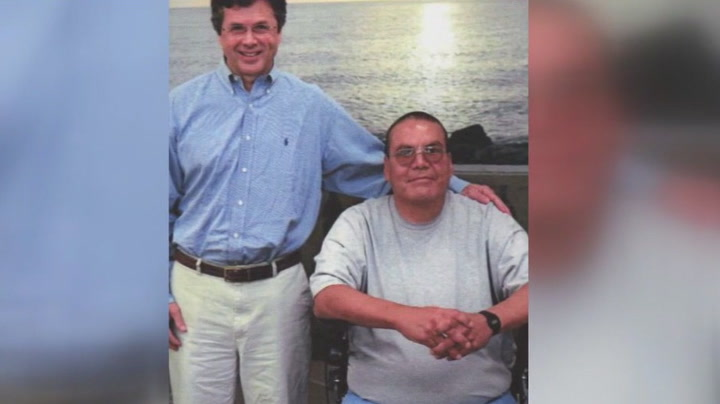
The review further found that Pippitt’s trial attorney failed to mount an effective defense. Key aspects of the prosecution’s case went largely unchallenged, and alternative explanations were not meaningfully explored. Taken together, these deficiencies led the Conviction Review Unit to a rare and decisive conclusion: Brian Pippitt did not commit the murder of Evelyn Malin and should be fully exonerated.
Based on this finding, the Minnesota Board of Pardons voted to commute Pippitt’s life sentence, paving the way for his release. The decision marked an extraordinary acknowledgment by state authorities that the justice system had failed in this case. For Pippitt, it was the first tangible validation of claims he had made for more than two decades.
Life After Prison and the Ongoing Fight for Exoneration
Although Pippitt’s release represents a profound milestone, it does not mark the end of his legal journey. He is being freed on parole, and his conviction remains formally intact. The process of overturning that conviction continues in Aitkin County Court, where Pippitt seeks full exoneration. Until that happens, his record will still reflect a murder conviction, a reality that carries significant legal and social consequences.
During his years in prison, Pippitt sought ways to maintain purpose. He helped establish a dog training program for inmates, an initiative that allowed incarcerated individuals to work with animals and develop skills. Those efforts, combined with his unwavering pursuit of justice, became central to his identity behind bars. He has said that his belief in the eventual emergence of truth sustained him through years of confinement.
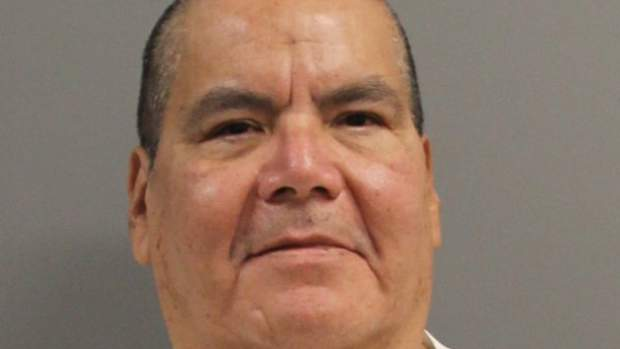
Now 63, Pippitt faces the challenge of rebuilding a life after decades of incarceration. Many of his relatives and friends have died during his imprisonment, and the world he is reentering is vastly different from the one he left in the late 1990s. Despite those losses, he has expressed simple hopes for the future, including spending time outdoors, reconnecting with surviving family members, and eventually getting a dog of his own.
His case also carries broader implications. Wrongful convictions have increasingly come under scrutiny across the United States, prompting reforms such as conviction integrity units and expanded access to post-conviction review. Pippitt’s release highlights both the importance of such mechanisms and the profound human cost of delayed justice. Spending 26 years in prison for a crime he did not commit represents not only a personal tragedy but also a systemic failure with lasting consequences.
As Pippitt steps into freedom, his focus remains on clearing his name completely. Full exoneration would acknowledge officially what the Conviction Review Unit has already concluded: that he was wrongfully convicted. For Pippitt, that outcome is not merely symbolic. It is essential to restoring his reputation, securing potential compensation, and achieving a measure of closure after decades defined by confinement and legal struggle.
Brian Pippitt’s story stands as a stark reminder of the fallibility of the criminal justice system and the enduring impact of wrongful convictions. His release after 26 years underscores the necessity of rigorous review, accountability, and the willingness of institutions to admit error. While his freedom is now a reality, the final chapter of his case has yet to be written, and the pursuit of full justice continues.
PPHWin, huh? Sounds promising! I’m always looking for good recommendations. What’s the verdict on this one, guys? I’ll be over here checking out pphwin.