
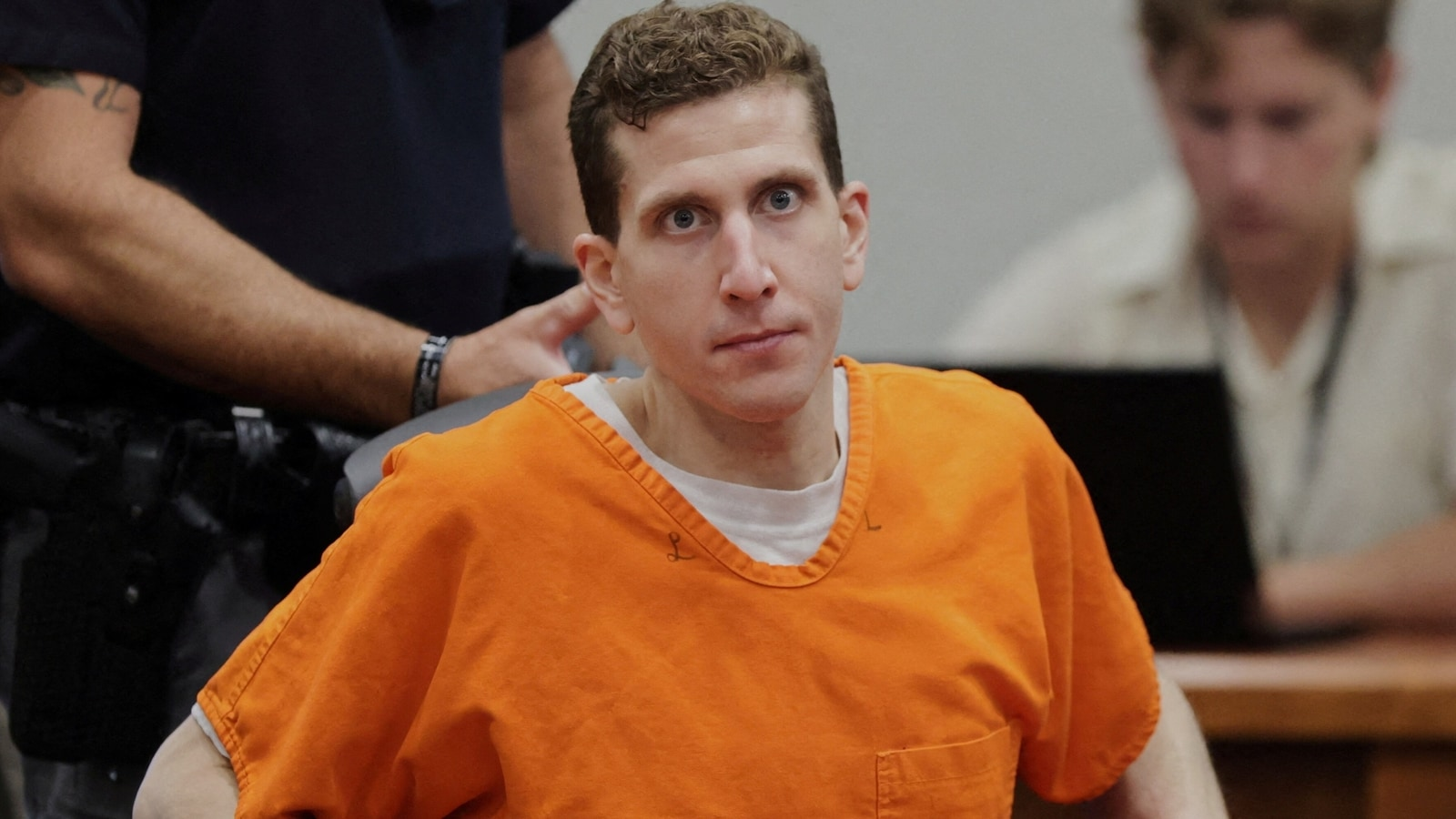
In one of the most disturbing revelations to emerge after the sentencing of Bryan Kohberger, newly released police documents shed light on the accused killer’s unsettling behavior in the weeks before the brutal murders of four University of Idaho students.
Among the most chilling details was a Tinder conversation in which Bryan Kohberger asked a woman what she thought was the “worst way to die” — and then named the very brand of military knife later connected to the killings. These revelations, while not all corroborated with hard evidence, paint a portrait of a man whose interest in death and domination seemed to intensify shortly before the November 13, 2022 murders.
The shocking quadruple homicide — which claimed the lives of Kaylee Goncalves, Madison Mogen, Xana Kernodle, and Ethan Chapin — left a university town shaken and a nation horrified.
As investigators began piecing together the psychological and behavioral patterns of the man responsible, these early warning signs revealed just how deeply disturbing his actions had been leading up to the night of violence. The case has reignited discussions about missed red flags and the terrifying unpredictability of people hiding dark intentions in plain sight.
A Sinister Tinder Encounter
The account of Bryan Kohberger’s Tinder conversation with a woman identified only as “C” provides a haunting glimpse into the killer’s premeditated mindset. In March 2024, months after Kohberger had been arrested and charged, police followed up on a tip provided by this woman. She claimed to have matched with Kohberger on the dating app in either September or October of 2022 — just weeks before the killings.
Their conversation initially revolved around a murder that had occurred in her town, but quickly turned dark. Kohberger asked her about her favorite horror movies, to which she responded that she enjoyed the Rob Zombie adaptations of Halloween. From there, Bryan Kohberger steered the conversation into far more disturbing territory. He asked her what she believed to be the “worst way to die.” She replied, saying she thought it would be a knife.
In a response that now seems eerily foreshadowing, Bryan Kohberger allegedly asked her something like, “like a Ka Bar?” — referencing a specific brand of military-style knife. That same brand would later be tied to the murders through the discovery of a Ka Bar knife sheath found at the crime scene next to the body of Madison Mogen.
Read : Bryan Kohberger Labeled ‘Shower-Hogging Weirdo’ Who Calls Mom Daily for Hours by Fellow Inmates
Though the actual murder weapon has never been recovered, the sheath was one of the key pieces of physical evidence used to link Kohberger to the crime.
"If you hadn't attacked them in their sleep in the middle of the night like a pedophile, Kaylee would have kicked your f***ing ass." Olivia Goncalves received applause at the end of her statement. It was powerful. #BryanKohberger pic.twitter.com/xAAJg1OlIu
— Cathy Russon (@cathyrusson) July 23, 2025
The woman later told police she stopped responding to Bryan Kohberger because his questions made her deeply uncomfortable. She no longer had access to the Tinder account, and there was no record of her having called the FBI tip line prior to the murders, which meant police could not fully corroborate her story. Nonetheless, the timing and details were significant enough to be included in the official investigation files.
Other Alarming Warnings and Encounters
The Tinder exchange wasn’t the only red flag to emerge from the newly released case documents. Another deeply troubling tip came from a woman identified as “H,” a dancer at a club who claimed she gave Bryan Kohberger a private dance sometime between 2018 and 2019. During that interaction, the woman alleged that Kohberger talked about “wanting to kill people.”
She recounted that he appeared to be talking to himself while she danced and made disturbing remarks about murder. When she jokingly asked who he wanted to kill, he reportedly responded, “Whoever I want.” Bryan Kohberger also instructed her to look him directly in the eyes during the entire dance and asked invasive questions about her personal life, such as what car she drove and where she lived.
Though the dancer also had no hard evidence to support her account, she recognized Kohberger from media reports following his arrest and contacted the police, expressing her concerns and recounting the conversation that had left her feeling deeply uneasy years earlier. As with the Tinder tip, investigators could not independently verify the claims, but they became part of the broader understanding of Kohberger’s alarming behavior.
Adding further concern were internal communications among Bryan Kohberger’s colleagues at Washington State University, where he was a teaching assistant in the criminology department. Text messages between professors in September 2022 revealed discussions about his inappropriate behavior toward female students.
One professor noted that they may need to stage “an intervention” due to complaints that Kohberger had offended several young women. These conversations suggest that there was discomfort around his demeanor and behavior even in academic settings.
A Mind Obsessed With Power and Violence
The image emerging from these documents is one of a man who was not only fascinated by death and violence but also seemingly seeking control and dominance over others — especially women. Another former teaching assistant, referred to as “L,” told police that Bryan Kohberger had tried to leverage his authority as a TA to inappropriately interact with female students. He also mentioned that Kohberger frequently expressed a desire for a girlfriend, and that this topic came up regularly in their conversations.
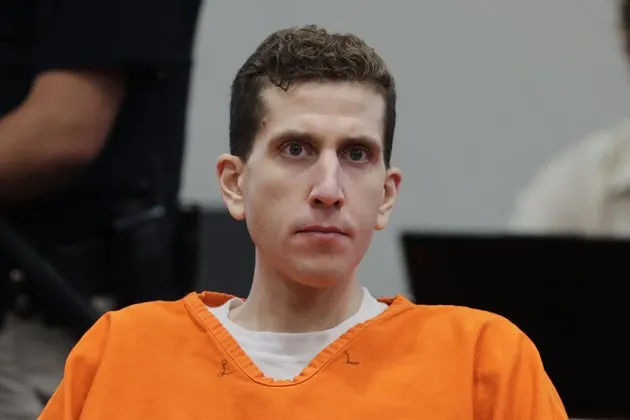
The obsession with having control — emotionally, intellectually, or physically — appeared to be a central feature of Kohberger’s personality. That trait, combined with his interest in crime and criminology, is now being viewed in an entirely new light. His studies, once seen as academic pursuits, now seem disturbingly close to obsession. His proximity to crime scene analysis, psychological profiling, and forensic evidence likely gave him a twisted sense of confidence and knowledge in planning and carrying out the murders.
On the night of November 13, 2022, Bryan Kohberger allegedly used that knowledge to enter the off-campus residence shared by the four students. According to investigators, he murdered them using a knife — likely the same type he referenced in his Tinder conversation — before fleeing and leaving behind crucial DNA evidence on the knife sheath. That evidence would eventually lead to his arrest and conviction.
Despite an extensive investigation, there remains no clear motive for the murders. Bryan Kohberger had no known personal or social connection to the victims. During his sentencing hearing, he declined to speak, offering no explanation, no apology, and no insight into his reasoning. Prosecutors stated there was no evidence of sexual assault, further deepening the mystery behind his intent.
Victims’ families addressed Bryan Kohberger directly in the courtroom, denouncing him as a “psychopath” and “hollow vessel.” Their anguish was intensified by the lack of any stated motive or remorse. They spoke of their children’s dreams, their kind hearts, and the lives they were robbed of — all while Kohberger stared blankly ahead.
Now sentenced to four consecutive life terms, Kohberger will spend the rest of his life in prison. Yet for many, the question of why still hangs in the air, unanswered and haunting. The chilling accounts from women who encountered him before the murders provide disturbing insight into a mind perhaps always on the edge — but tragically, never stopped in time.