
A recent legal battle over the meaning of “boneless wings” has ended—at least for now—in favor of Buffalo Wild Wings, and the restaurant chain wasted little time turning the courtroom outcome into a marketing moment. After a federal judge dismissed a consumer lawsuit claiming the popular menu item was misleadingly named, the company publicly celebrated the decision and promoted a buy-one-get-one-free deal on its boneless wings.
The legal dispute centered on whether the term “boneless wings” falsely suggested that the product was made from traditional chicken wings that had been deboned rather than from breaded pieces of chicken breast. While the lawsuit sparked widespread discussion about food labeling and consumer expectations, the court ultimately found the claim insufficient to proceed. The chain’s swift promotional response highlights how legal rulings can intersect with branding, marketing strategy, and public perception in the competitive restaurant industry.
The Lawsuit and the Question of What “Boneless Wings” Really Are
The legal challenge began when a customer filed a class-action lawsuit alleging that Buffalo Wild Wings had misled diners through the way it labeled and marketed its boneless wings. The complaint argued that the menu item was not, in fact, a deboned version of a traditional chicken wing but instead consisted of breaded pieces of chicken breast meat, similar in structure and preparation to a chicken nugget. According to the filing, the name created the impression that customers were purchasing wings that had been modified to remove bones rather than a different form of chicken entirely.
At the center of the case was the broader issue of consumer expectations. The plaintiff contended that reasonable customers could interpret the term “boneless wings” literally, believing the dish originated from actual wing portions that had undergone a deboning process. From this perspective, labeling the product otherwise could be considered deceptive advertising or misrepresentation under consumer protection laws.
The complaint also referenced state statutes governing fraud and deceptive business practices, arguing that the chain’s marketing violated legal standards intended to protect consumers from misleading claims. Buffalo Wild Wings, however, took a different stance, asserting that the name “boneless wings” functions as a widely understood culinary term rather than a literal description of preparation.
The company argued that in everyday language, many menu items are named based on style or presentation rather than strict anatomical origin. According to its legal argument, customers are familiar with the idea that boneless wings resemble traditional wings in flavor and format—typically served with sauce and accompanied by dipping options—but are made from different cuts of meat. The chain also pointed to other menu items, such as vegetable-based “wings,” to illustrate that consumers generally understand such terminology as descriptive rather than literal.
The presiding judge ultimately agreed with the restaurant’s reasoning, concluding that the lawsuit lacked sufficient grounds to proceed. In dismissing the case, the court determined that a reasonable consumer would not interpret boneless wings as reconstructed, deboned traditional wings.
Read : Over 140,000 kg of Oil-Soaked Sand Removed from Sentosa Beach in Singapore
Instead, the name was deemed part of common culinary language. The decision emphasized that not every technically inaccurate phrase amounts to deception if consumers broadly understand its intended meaning. The ruling effectively halted the case, though the plaintiff was granted the opportunity to amend the complaint and present additional evidence.
The legal outcome reflects ongoing tensions in food marketing, where descriptive terminology often blends culinary tradition with branding convenience. Similar disputes have arisen over plant-based products labeled as meat alternatives or menu names that reference familiar dishes without replicating their exact composition. In this instance, the court’s reasoning suggests that consumer understanding, shaped by common usage and context, plays a central role in determining whether a term is misleading.
Buffalo Wild Wings Turns a Court Victory into a Marketing Opportunity
Following the dismissal of the lawsuit, Buffalo Wild Wings quickly moved to frame the legal decision as both a validation of its branding and a reason for celebration. The company posted a message on social media affirming that its boneless wings would continue to be called by that name, signaling confidence in the court’s interpretation. Rather than limiting its response to a simple statement, the chain paired its message with a promotional offer encouraging customers to mark the occasion by ordering the disputed menu item.
The buy-one-get-one-free boneless wings deal became the centerpiece of the company’s celebratory campaign. The timing of the promotion drew attention, as it appeared just days after the ruling was announced. While it remained unclear whether the offer was newly introduced or part of an existing promotional schedule, the connection between the legal victory and the marketing push was unmistakable.
By linking the court’s decision to a consumer incentive, the chain transformed a potentially contentious legal episode into a lighthearted promotional moment. This approach reflects a broader strategy commonly employed by major restaurant brands when responding to public controversies or legal developments.
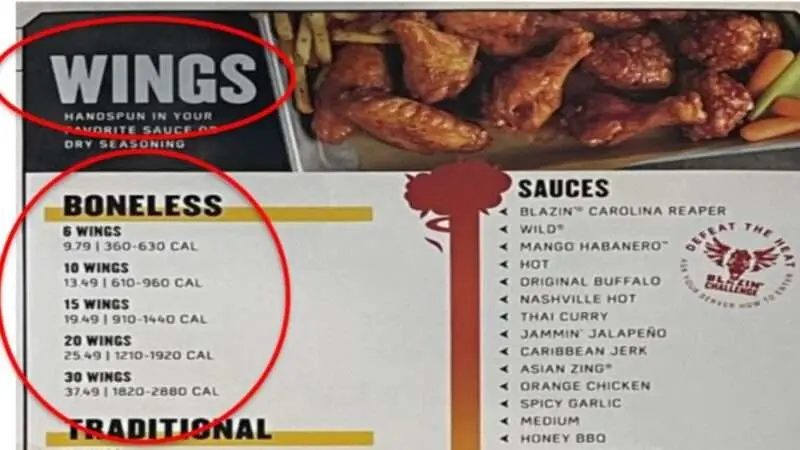
Rather than allowing negative publicity to shape public perception, companies often attempt to redirect attention toward positive engagement. Promotional deals serve as a practical mechanism for doing so, inviting customers to participate in the brand narrative while reinforcing product familiarity. In this case, the focus on boneless wings themselves—rather than any other menu item—underscored the company’s confidence in both its branding and customer loyalty.
The promotional messaging also leaned into humor and wordplay, echoing the tone often seen in corporate social media communication. By adopting a playful stance toward the lawsuit’s dismissal, the company framed the issue as settled and uncontroversial, encouraging customers to view the matter as a minor dispute rather than a serious allegation. This type of communication strategy reflects evolving expectations around corporate voice, particularly in digital spaces where informal and witty messaging can generate engagement.
From a business perspective, the timing of the promotion likely offered additional advantages beyond publicity. Discounted offers can drive traffic to physical locations, boost sales volume, and create opportunities for customers to purchase additional items such as beverages or side dishes. In the competitive casual dining market, limited-time promotions often function as both marketing tools and revenue drivers. By tying the deal to a widely discussed legal outcome, Buffalo Wild Wings effectively leveraged existing public interest to amplify the campaign’s reach.
What the Ruling and Promotion Mean for Customers
For customers, the immediate and most tangible impact of the lawsuit’s dismissal was the availability of a promotional deal centered on boneless wings. Buy-one-get-one-free offers represent a familiar marketing tactic within the restaurant industry, but in this instance, the promotion carried added symbolic significance. It served not only as a discount but also as an invitation for customers to participate in the company’s celebratory narrative following the court’s decision.
Read : Horrifying! Nearly 100 Buffaloes Die Drowning in Chobe River After Stampede Triggered by Lions
Beyond the promotional pricing, the ruling itself has implications for how consumers interpret menu terminology more broadly. The court’s reasoning reinforces the idea that common culinary language does not always align with literal definitions. Diners frequently encounter menu items that reference traditional dishes, ingredients, or preparation methods without adhering strictly to those origins. Terms such as “style,” “inspired,” or even familiar dish names may function primarily as indicators of flavor profile or presentation rather than precise composition.
This understanding can influence how customers approach food labeling in the future. The case highlights the importance of context, familiarity, and cultural norms in shaping expectations. When a term becomes widely accepted within everyday usage, courts may view it as part of shared understanding rather than a factual claim requiring literal accuracy. For diners, this underscores the value of examining menu descriptions and ingredient lists when clarity matters, particularly for dietary preferences or restrictions.
At the same time, the case illustrates how consumer lawsuits can prompt broader public conversations about transparency in food marketing. Even when a claim does not succeed legally, it can draw attention to labeling practices and encourage businesses to consider how their products are presented. In some instances, companies respond to such scrutiny by providing additional descriptions or clarifications to avoid confusion. While Buffalo Wild Wings maintained its existing terminology, the public discussion surrounding the lawsuit demonstrates that naming conventions remain subject to interpretation and debate.
Customers may also benefit indirectly from the competitive dynamics that emerge from such controversies. When brands receive heightened attention—whether through legal challenges, media coverage, or viral discussion—they often respond with promotions designed to attract or retain patrons. These offers can provide short-term savings while reinforcing brand visibility. In this sense, public disputes sometimes translate into consumer incentives, even when the underlying issue is unrelated to pricing.
The broader takeaway for diners is that menu terminology often reflects a combination of culinary tradition, marketing creativity, and consumer familiarity. Legal challenges may arise when these elements appear to conflict, but outcomes depend heavily on how courts interpret reasonable expectations. In the aftermath of this particular ruling, customers encounter a familiar scenario: a widely recognized menu item continuing under its established name, accompanied by a promotional offer designed to encourage renewed interest and engagement.