

In a devastating incident that shook a community in Wuhan, China, a young man’s life was changed forever when his flatmate’s E-Bike Battery Explosion, leaving him with catastrophic injuries.
The explosion and the events that followed not only led to severe burns and trauma but also exposed deep emotional and moral questions about responsibility, negligence, and human suffering.
The Tragic Incident: E-Bike Battery Explosion
Du Junhao, a 22-year-old student from Wuhan City College, had everything to look forward to. As a third-year student, he was nearing graduation and had plans to open his own furniture installation business.
He shared an apartment with his schoolmate Li Jiajun, with whom he had become close over the course of their studies. The two had rented a flat together, and in addition to their academic work, they took on part-time jobs to make ends meet.
One of the jobs was working as a delivery driver, which Li did using an electric bicycle. Li Jiajun rented the bike for a monthly fee of 300 yuan (approximately US$40) to help with his delivery work.
However, despite repeated warnings from Du about the dangers of charging the e-bike battery indoors, Li Jiajun insisted on doing so. Du had expressed concerns over the safety of charging the battery inside their flat, especially given the high risk of fire associated with lithium-ion batteries, a common issue with such devices.
Tragically, Du’s fears became a reality. On a seemingly ordinary morning at 6 a.m., the electric bike battery caught fire while it was charging. The fire released toxic gas into the apartment, and the situation quickly escalated.
Li Jiajun, who was sleeping near the flat’s main door, woke up to the smoke and, realizing the danger, rushed to escape. However, in his panic, Li made a fateful decision—he fled the apartment and locked the door behind him, leaving Du trapped inside.
Read : NATO Accuses China of Aiding Russia’s War on Ukraine
Du, still inside the flat, was unable to escape the inferno. The locked door made it impossible for him to flee, and for approximately 30 seconds, he was exposed to the flames and smoke. The fire continued to blaze while Du fought in vain to open the door. Eventually, the fire department arrived, but by then, the damage had already been done.
The Horrific Aftermath: Life-Altering Injuries
Du Junhao was rushed to the hospital, suffering from third-degree burns covering 90% of his body. His injuries were so severe that his respiratory tract was also damaged by the toxic smoke, which caused further complications.
In the days that followed, Du’s condition remained critical, and the medical team struggled to stabilize him. Over the course of the next several months, Du underwent a series of skin graft surgeries to treat the burns, a painful and long process that would mark the rest of his life.
Two fingers on Du’s left hand were amputated as a result of the injuries, and his entire body was covered in bandages as doctors worked tirelessly to repair the damage. The physical pain Du endured was compounded by the emotional toll of the incident.
He had been a promising young man, full of hopes for the future. But in a matter of moments, everything changed. His dreams of starting a furniture business, of graduating with his peers, of enjoying his youth, all seemed like distant memories.
Du’s family, devastated by the injury to their son, was thrust into a financial and emotional crisis. His parents borrowed money from friends and family to fund his treatment, which amounted to a staggering 2.8 million yuan (US$380,000).
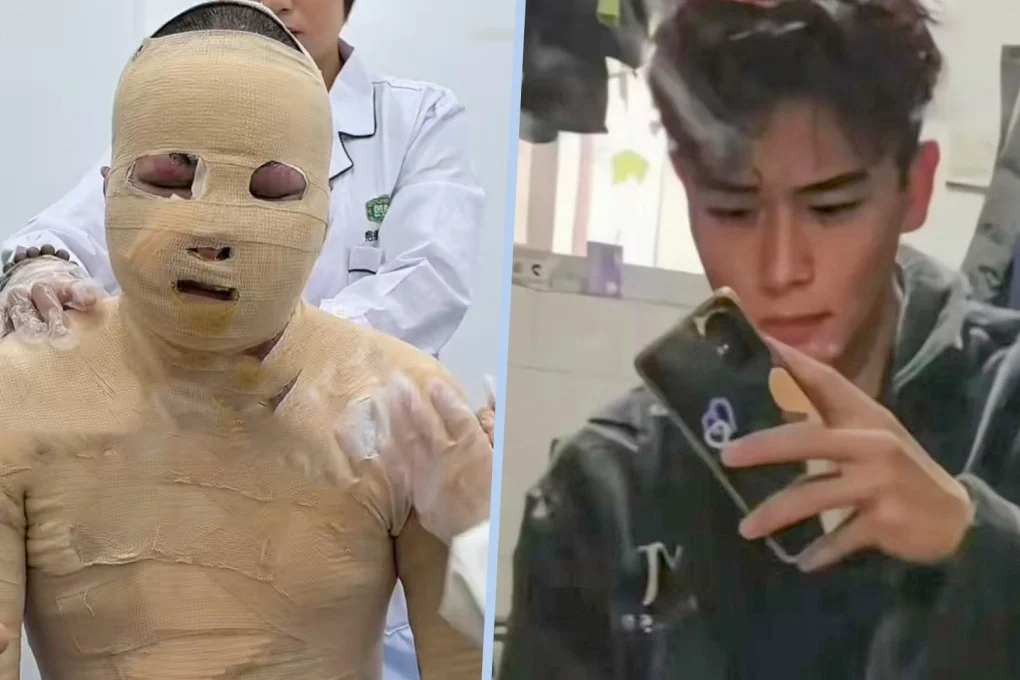
The financial burden of their son’s recovery was overwhelming, and while they received 2.6 million yuan in donations from the online community, it wasn’t enough to cover all the expenses, especially with daily living costs continuing to add up.
The emotional pain of watching their son suffer was made worse by the feeling of betrayal. Li Jiajun, who Du had considered a friend, fled the scene and locked the door, condemning Du to suffer alone in the burning apartment.
This callous action led Du to question whether he could ever forgive his former roommate. In a statement, Du expressed that he could never forget what happened. “My life is not just mine,” Du said, reflecting on the sacrifices his parents had made to save him.
Du’s parents, who had already endured much hardship, were now fighting to keep their son alive. His father had to undergo five rounds of surgery, donating his own skin to help with Du’s grafts. Despite the immense emotional and financial toll, Du’s family held onto the hope that their son could recover, even as they knew the road ahead would be long and uncertain.
Legal and Moral Consequences: Justice and Accountability
The incident has not only left Du physically and emotionally scarred but also raised serious questions about legal and moral responsibility. Du’s family sought justice by taking Li, the landlord, and the manufacturer of the electric bike battery to court. They hoped for accountability and compensation for the immense suffering Du had endured.
However, the legal response has been far from satisfactory. Li Jiajun, who was detained by authorities for negligence causing serious injury, was charged with a crime that could carry a sentence of up to three years in prison under Chinese law. While the legal system took action, many felt that it was not enough to compensate for the lifelong damage caused by Li’s actions.
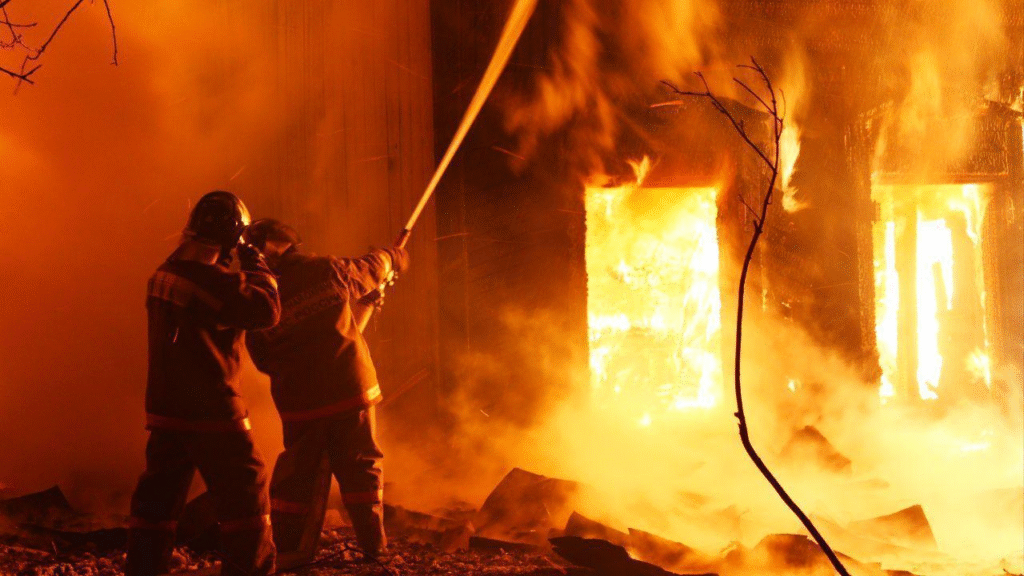
Li Jiajun’s family, meanwhile, has offered minimal financial support, with a compensation payment of only 10,000 yuan (US$1,400). They claimed that they were too poor to provide more, but for Du and his family, this sum was a far cry from what was needed to cover his medical expenses and the long-term care he would require. The family’s frustration with the legal system and the lack of meaningful compensation has only deepened their sense of injustice.
The emotional weight of this tragedy has been compounded by the response from Li Jiajun and his family. While Du has made it clear that he cannot forgive his former roommate, he has also expressed his desire to rebuild his life, despite the immense trauma he has endured.
He hopes that in time, he will be able to resume his studies, finish his degree, and even get his life back on track. His dream of starting a business still lingers, though it remains uncertain whether he will ever be able to pursue it.
Du’s experience has highlighted the hidden dangers of electric bikes, which are increasingly popular in China, particularly in urban areas. While these bikes provide a convenient and eco-friendly mode of transportation, their batteries pose significant safety risks, especially when improperly charged.
This tragedy has sparked widespread concern over the safety of lithium-ion batteries and raised questions about the responsibilities of both manufacturers and users in preventing such accidents.
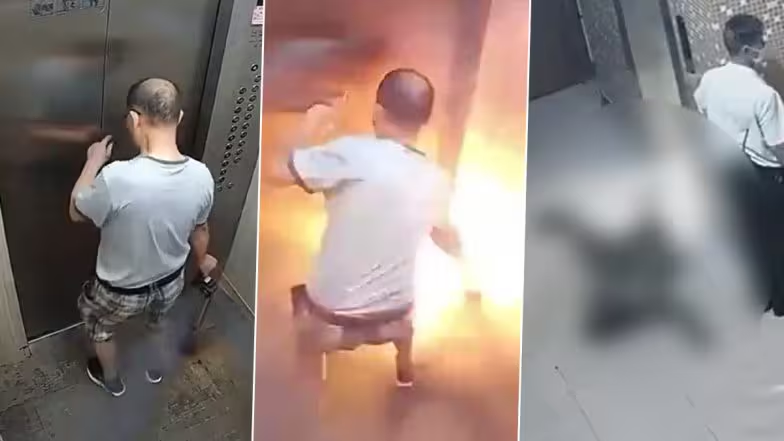
Despite the horrors he has faced, Du remains resilient. He has found solace in small things, such as adopting a pet dog to provide some emotional comfort. He is also receiving treatment at a Chinese scar repair center, where he is working toward regaining his physical health.
His hopes of returning to his studies and eventually taking graduation photos with his peers offer a glimpse of the future he once dreamed of—a future that now seems uncertain, but not entirely impossible.
For Du’s parents, however, the most important thing is simple: “As long as he can live, we will look after him,” said Du’s father, summing up the family’s enduring hope and love. Despite the overwhelming pain and suffering, they are committed to supporting their son as he navigates a new chapter of his life, one marked by both unimaginable hardship and a determination to rebuild.
In the end, the story of Du Junhao is one of resilience in the face of tragedy, of family sacrifice, and of the enduring quest for justice in a world where responsibility is too often overlooked.
It is a reminder that the actions of one person can have devastating consequences for another—and that, sometimes, the hardest battles are not fought in courtrooms or hospitals, but within the heart.