
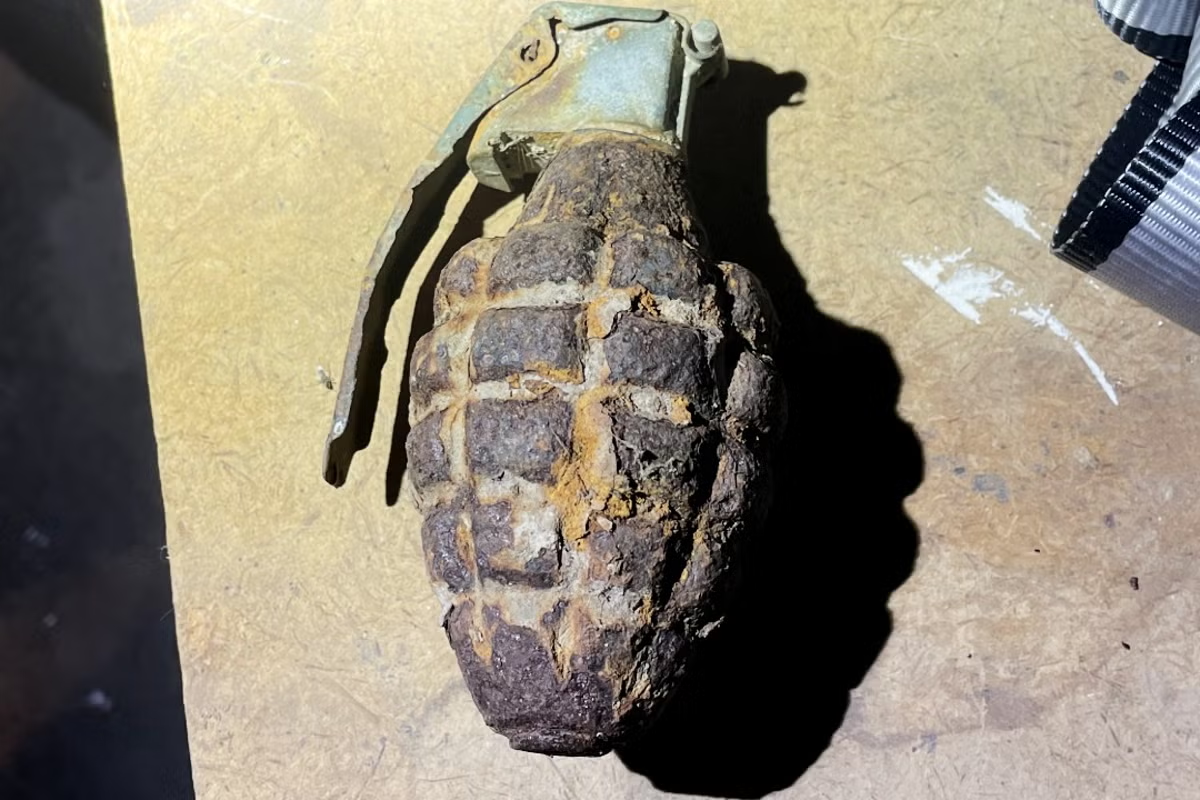
In a startling incident that underscores the lingering dangers of historical military remnants, a 3-year-old boy in the rural town of Hartline, Washington, discovered a live World War II-era hand grenade in his family’s front yard on Tuesday, September 30, 2025. The child, whose identity has not been released to protect his privacy, picked up the rusted device and carried it inside his home on the 600 block of Willard Street, handing it to his parents around 6:45 p.m. local time.
The parents immediately recognized the potential hazard and dialed 911, prompting a rapid response from local authorities and state bomb technicians. No injuries occurred, but the event has reignited discussions about unexploded ordnance buried in American soil decades after the war’s end. The Grant County Sheriff’s Office confirmed the grenade was functional and disposed of it safely later that evening, leaving residents to ponder how such a relic ended up in an ordinary suburban yard.
Hartline, a tight-knit community of approximately 180 residents nestled in Grant County—midway between Seattle and Spokane—rarely makes headlines for anything beyond its agricultural roots and annual events like the Hartline Harvest Festival. With a population that has hovered around 200 for years, the town relies on wheat farming and small-scale ranching, its quiet streets lined with modest homes and vast fields.
The discovery has shaken this serene backdrop, serving as a reminder that even in remote areas far from major battlefields, echoes of global conflicts persist. Authorities have launched an informal inquiry into the grenade’s origins, but early assessments suggest it had been exposed to the elements for an extended period, possibly decades.
The Discovery: An Innocent Find Turns Alarming
The sequence of events unfolded with the innocence typical of a toddler’s curiosity. According to the Grant County Sheriff’s Office, the boy was playing unsupervised in the front yard of his family’s single-story home when he spotted the partially buried object protruding from the soil near a cluster of shrubs. Described by deputies as corroded and weathered, the grenade measured about five inches in length, its olive-drab paint chipped away by time and weather. Unaware of its lethal potential, the child grasped it by the handle and marched indoors, presenting it to his mother as a newfound treasure.
The parents’ reaction was swift and composed. The mother, upon examining the item, noted its unusual weight and the faint markings etched into its surface—indicators she later recalled from a vague memory of wartime stories passed down from grandparents. Rather than panicking, she placed the grenade on a stable surface away from the family’s living areas and contacted emergency services. Dispatchers advised the family to evacuate the home and maintain a safe distance, a precaution that prevented any immediate risk. Deputies arrived within 15 minutes, securing the perimeter of the property and cordoning off Willard Street to traffic.
This front-yard setting is particularly jarring in Hartline, where yards often double as play areas for children and gathering spots for neighbors. The 600 block, a residential stretch flanked by gravel roads and irrigation ditches, sees little foot traffic beyond local farmers and school buses from the nearby Almira-Coulee/Hartline School District. The boy’s father later told investigators that the family had lived at the address for over five years without incident, routinely gardening and hosting barbecues in the very spot where the grenade lay hidden. Soil samples taken post-removal revealed no other munitions, but the event has prompted the family to reconsider routine yard maintenance.
Read : Whittier: A Town of Only One Building Established by the U.S. Army During World War II
Eyewitness accounts from neighbors, shared informally with deputies, painted a picture of normalcy shattered. One resident, a retired farmer living two doors down, recalled seeing the boy playing earlier that afternoon but thought nothing of it until sirens pierced the evening calm. “Kids dig up all sorts of junk out here—old bottles, rusted tools—but this? It’s like stepping back in time,” he remarked to arriving officers. The sheriff’s office emphasized in its initial report that the child’s actions, while risky, were not negligent; young children lack the capacity to discern danger in such artifacts.
Authorities’ Response: Expertise Averts Disaster
The Grant County Sheriff’s Office mobilized a multi-agency effort upon receiving the 911 call, underscoring the gravity of handling live explosives. Patrol deputies, trained in basic hazardous materials protocols, established a 100-yard exclusion zone around the home and notified the Washington State Patrol’s Bomb Disposal Unit based in Spokane. The unit, equipped with specialized tools including X-ray scanners and remote robotic arms, dispatched a two-person team that arrived on scene by 7:30 p.m.
Bomb technicians conducted an on-site assessment, confirming the device as a Mark 2 fragmentation grenade—a standard-issue U.S. military hand grenade from World War II, designed to hurl shrapnel over a 15-meter kill radius upon detonation. Produced in the millions during the 1940s, these “pineapple” grenades featured a serrated cast-iron body for maximum fragmentation and a 4-5 second fuse delay.
Despite its age and corrosion, the internal fuze mechanism remained intact, rendering it viable. “The grenade was of a type used during the Second World War and had clearly been exposed to the elements for some time,” the sheriff’s office stated in an official release. Technicians neutralized the pin and transport-securing wire before encasing it in a blast-resistant container for removal.
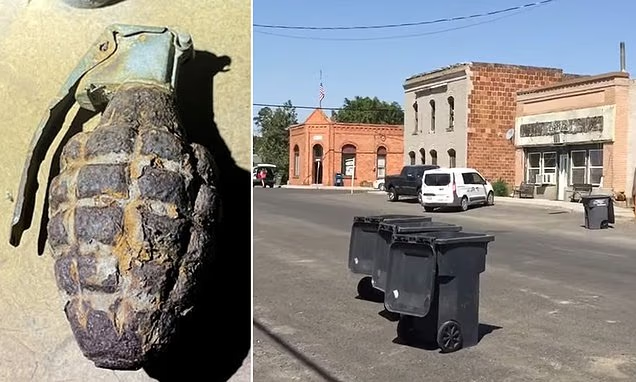
By 9:00 p.m., the team relocated the grenade to a remote desert expanse north of Hartline, approximately 10 miles from town. There, under controlled conditions, they initiated a low-yield detonation, reducing the device to inert fragments. Acoustic sensors monitored the blast, ensuring no secondary hazards like underground gas lines were affected. The operation concluded without complications, and the family was cleared to return home by midnight. Grant County Undersheriff Ryan Spurling commended the parents’ quick thinking, noting in a press briefing, “Their calm response likely prevented a tragic outcome. We’re grateful no one was hurt.”
This coordinated effort highlights the robust infrastructure for explosive incidents in rural Washington. The Washington State Patrol’s bomb squad, part of the state’s Hazardous Device Unit, responds to about 200 calls annually, many involving legacy munitions from training exercises or wartime storage. In Grant County alone, deputies handle a handful of such discoveries each year, often tied to the region’s history as a former Army airfield site during the war. Post-incident, the sheriff’s office vacuumed the yard for trace residues and advised soil testing, though preliminary results showed no contamination.
Unanswered Questions and Public Safety Lessons
While the immediate threat has been eliminated, the grenade’s presence in Hartline raises probing questions about provenance and persistence. Investigators speculate it could stem from a long-forgotten military surplus dump, a veteran’s personal effects discarded decades ago, or even drift from nearby Wilson Creek, site of a WWII-era bombing range. Grant County, with its expansive federal lands managed by the Bureau of Reclamation, has yielded similar finds over the years—shell casings, practice bombs, and once, a buried mortar round unearthed during roadwork.
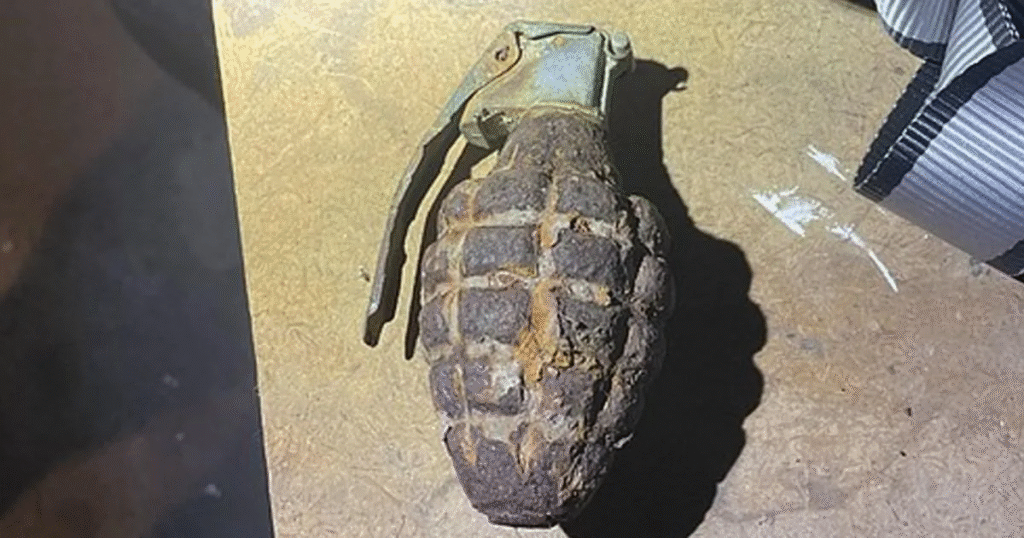
“It’s not known how the grenade ended up in the family’s front yard, nor how long it had been there,” the sheriff’s office acknowledged, committing to a deeper probe involving historical records and metal detector surveys. This case echoes a pattern of unexploded ordnance surfacing nationwide. Just this May, in Westlake, Ohio, a homeowner discovered two WWII-era projectiles and a Japanese hand grenade in his basement during renovations, necessitating a full evacuation and disposal.
The U.S. Department of Defense estimates over 11 million acres of contaminated land from past munitions, with thousands of items recovered annually by the Unexploded Ordnance Center of Excellence. In Washington state, proximity to former bases like Larson Air Force Base amplifies risks, though Hartline’s isolation makes this find anomalous.
For residents, the incident delivers stark safety imperatives. Authorities urge anyone encountering suspicious metal objects to avoid contact, mark the location, and call 911 immediately—never attempting removal or transport. The Grant County Sheriff’s Office plans community workshops on recognizing wartime relics, partnering with the local fire department to distribute educational flyers. Parents in Hartline have already formed an informal watch group, vowing closer supervision of outdoor play. As Undersheriff Spurling put it, “History doesn’t always stay buried, but with vigilance, we can keep our communities safe.”
The Hartline grenade saga, though resolved peacefully, serves as a poignant cautionary tale. In a nation still reckoning with its wartime legacy, such discoveries remind us that the past can detonate without warning. For the young boy at its center, the episode may fade into a family anecdote, but for his town, it etches a new chapter of preparedness amid the wheat fields.
I precisely wished to appreciate you once more. I do not know the things that I could possibly have followed without the entire strategies provided by you over such concern. It truly was the frightful situation in my circumstances, but looking at this expert way you resolved that took me to jump for contentment. I am happier for this guidance and thus sincerely hope you find out what an amazing job you were putting in teaching the others all through your website. Most probably you’ve never got to know all of us.
Your place is valueble for me. Thanks!…