

Cameron Smotherman’s scheduled appearance at UFC 324 came to an abrupt and alarming halt on Friday morning when the 28-year-old bantamweight collapsed moments after successfully making weight. The incident unfolded during the official weigh-ins at T-Mobile Arena in Las Vegas and immediately drew concern from officials, fellow fighters, and observers across the mixed martial arts community.
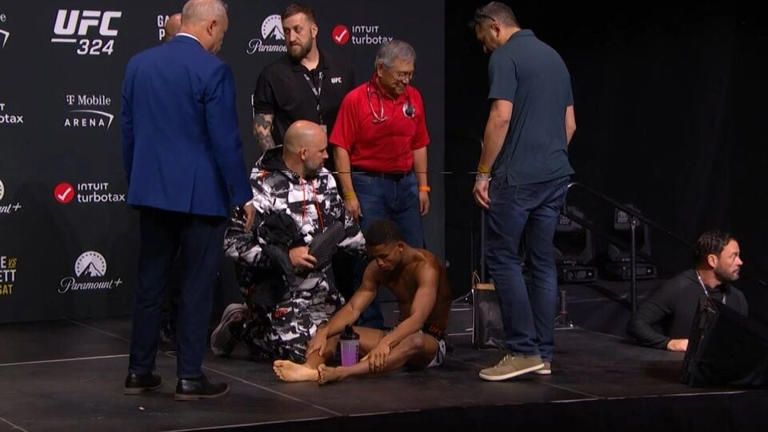
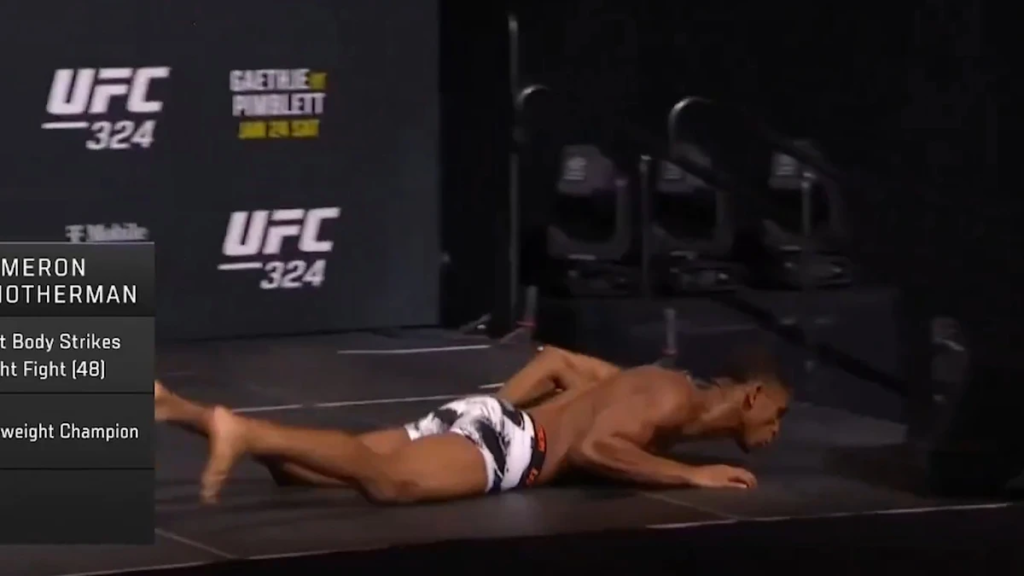
Smotherman, who had stepped on the scale and registered 135.5 pounds, appeared visibly unsteady as he exited the platform. Within seconds, he lost consciousness and fell forward onto the stage, prompting swift intervention by UFC staff and medical personnel stationed nearby. The weigh-in collapse led to the cancellation of Smotherman’s bout against Ricky Turcios, which had been scheduled as a three-round bantamweight contest on the preliminary card of Saturday’s event.
While Smotherman regained consciousness shortly after the fall and was escorted away for further medical evaluation, the UFC has not disclosed additional information regarding his condition. The episode has once again placed a spotlight on the risks associated with extreme weight-cutting practices, an enduring and controversial aspect of professional mixed martial arts.
The Weigh-In Incident and Immediate Medical Response
Smotherman entered the weigh-ins appearing to meet the formal requirements of the bantamweight division, a category capped at 136 pounds for non-title fights. His official mark of 135.5 pounds indicated that he had successfully completed his cut, but the physical toll was evident almost immediately. As he stepped off the scale, his posture appeared unstable, and he struggled to maintain balance before collapsing face-first onto the stage floor.
UFC personnel reacted within moments. Medical staff rushed to Smotherman’s side, ensuring that he was stabilized and assessed on-site before being escorted away from the weigh-in area. According to those present, he regained consciousness quickly, a fact that provided some immediate reassurance. However, the seriousness of the incident led the promotion to remove him from competition, prioritizing medical clearance over proceeding with the bout.
Smotherman did not appear later that day at the ceremonial weigh-ins, an event typically held for fans and media that serves as a promotional showcase rather than an official measurement. His absence underscored the severity of the situation and confirmed that his fight would not go forward. The UFC subsequently announced that his matchup with Ricky Turcios had been scrapped entirely, effectively removing both fighters from the card.
Holy shit Cameron Smotherman just passed out at the UFC 324 weigh ins…
— MarkusB (@markusbthegoat) January 23, 2026
He looks extremely drained here so there’s no doubt this was a terrible weight cut for him.
pic.twitter.com/NWklK8gqym
At the time of the incident, Smotherman was preparing for his fourth appearance under the UFC banner. Holding a professional record of 12 wins and 6 losses, he had been working to establish consistency within the highly competitive bantamweight division. The weigh-in collapse represents a significant interruption in that trajectory and raises questions about his immediate health and future readiness to compete.
Impact on the UFC 324 Card and Fellow Fighters
The cancellation of the Smotherman–Turcios bout marked one of several weigh-in complications affecting UFC 324. While Smotherman’s situation involved a medical emergency, other fighters encountered issues related to missing weight, a recurring challenge across multiple divisions.
Read : 15 Former NCAA Players Among 26 Charged in US-China Basketball Game-Rigging Scheme
Former flyweight champion Deiveson Figueiredo came in over the bantamweight limit, while flyweight contender Alex Perez also failed to make weight. In accordance with UFC policy, both fighters were fined 25 percent of their purses. Despite the infractions, their bouts are still expected to proceed as scheduled, pending agreements from their opponents and medical clearance. These contrasting outcomes highlight the discretionary nature of weigh-in enforcement, where missed weight does not automatically result in cancellation, while medical concerns necessitate immediate withdrawal.
For Ricky Turcios, the cancellation represented a lost opportunity to compete. A former winner of The Ultimate Fighter reality series, Turcios had been slated to appear on the preliminary card in a bout that could have influenced his standing within the division. With Smotherman removed for medical reasons, Turcios is now expected to be taken off the card entirely rather than reassigned a replacement opponent.
The broader UFC 324 event remains intact and continues to generate significant anticipation. The card is headlined by an interim lightweight title fight between Liverpool’s Paddy Pimblett and Justin Gaethje, one of the promotion’s most high-profile matchups of the year. While headline bouts often dominate attention, incidents like Smotherman’s collapse tend to resonate deeply within the sport, reminding audiences of the physical risks that exist beyond the cage itself.
Weight-Cutting Practices and Ongoing Scrutiny in MMA
Smotherman’s collapse has renewed scrutiny on weight-cutting practices, an issue that has long been debated within mixed martial arts. Fighters across the UFC are required to officially weigh in the morning before competition, often after undergoing rapid and extreme methods to shed pounds in the days and hours leading up to the event. These practices typically involve dehydration, calorie restriction, and sauna use, all aimed at reaching a divisional limit that may be significantly below an athlete’s normal walking weight.
While fighters generally rehydrate and regain weight before stepping into the cage, the weigh-in process itself can pose acute health risks. Collapses, hospitalizations, and, in rare cases, long-term medical consequences have been documented across various promotions. Smotherman’s incident fits within this broader pattern, reinforcing concerns raised by medical professionals and athletic commissions.
The UFC has acknowledged the issue in the past, implementing measures such as early morning weigh-ins and monitoring by athletic commissions. However, critics argue that these steps fall short of comprehensive reform. Proposals such as additional weight classes, hydration testing, or stricter penalties for excessive cutting have been discussed but not universally adopted.
In Smotherman’s case, the absence of detailed information about his medical condition has left room for speculation, though the promotion’s decision to cancel his fight indicates a cautious approach. The incident underscores the delicate balance between competitive preparation and athlete safety, a balance that remains difficult to regulate in a sport where weight advantages are perceived as critical to success.
As UFC 324 proceeds, Smotherman’s collapse stands as one of the defining moments of the event’s build-up, even as attention shifts toward the marquee fights scheduled for Saturday night. The long-term implications for Smotherman’s career, as well as for the UFC’s ongoing handling of weight-cutting concerns, remain to be seen.