
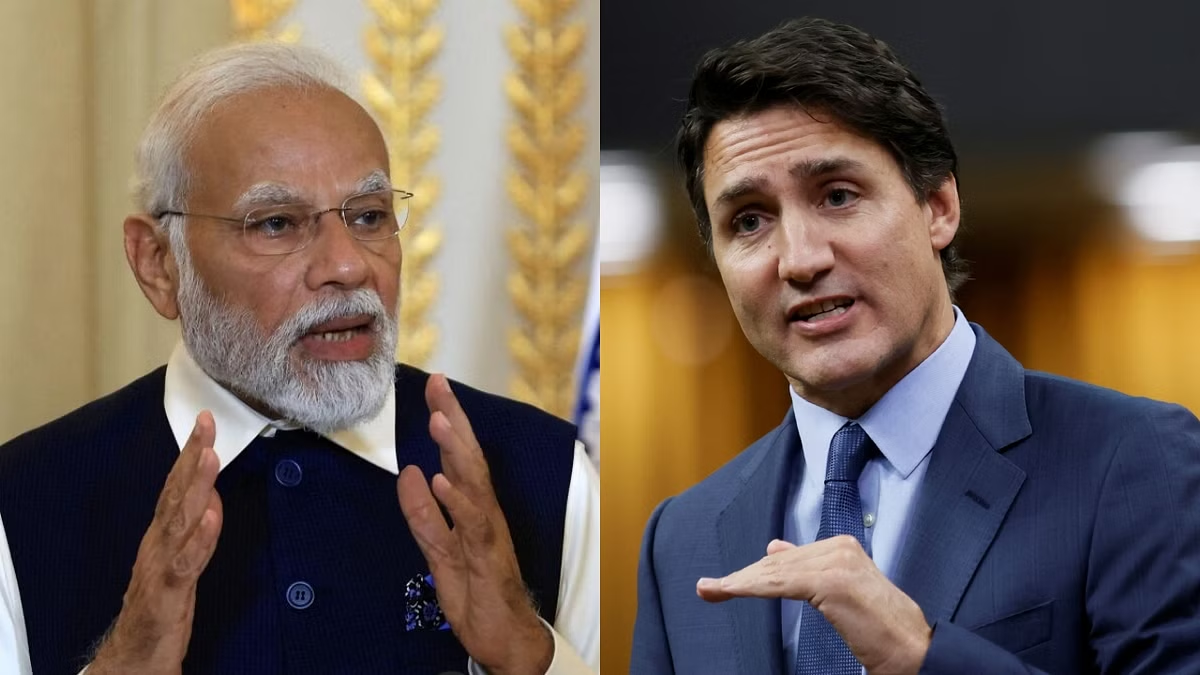
Canada and India are currently facing one of the most significant diplomatic standoffs in their history, with accusations of criminal activities fueling the conflict. This blog delves into the escalation of tensions, focusing on Canada’s decision to expel six Indian diplomats after police tied Indian agents to serious crimes against Sikh separatists in the country.
In a dramatic escalation of diplomatic tensions between Canada and India, Canada announced the expulsion of six Indian diplomats, including the high commissioner, on Monday.
This move followed accusations by Canadian authorities that Indian government agents were involved in homicides, harassment, and acts of violence targeting Sikh separatists on Canadian soil. The decision to expel these diplomats marks a new chapter in the strained relationship between the two nations, which has worsened significantly over the past year.
Canadian Prime Minister Justin Trudeau’s accusations against the Indian government were based on what he called “credible information,” suggesting Indian agents were behind the assassination of Hardeep Singh Nijjar, a prominent Sikh separatist, in British Columbia in June 2023.
According to Trudeau, the Indian government had engaged in “supporting criminal activity” in Canada, including murders, extortion, and violent acts targeting members of the South Asian community. Trudeau further stated that it was unacceptable for any democracy to engage in such behavior on foreign soil, particularly against its citizens.
Read : India Expels Six Canadian Diplomats After Withdrawing Indian Envoy to Canada
This prompted the Royal Canada Mounted Police (RCMP) to disclose ongoing investigations into the involvement of Indian agents in “serious criminal activity” in Canada. The RCMP’s decision to go public was driven by the significant threat to public safety posed by the actions of these agents.
Read : Car Theft Capital of the World: Canada Ranks First with One Car Stolen Every Five Minutes
The expulsion of the diplomats was seen as a necessary step after Canadian authorities claimed they had gathered clear and concrete evidence implicating six individuals as being involved in the Nijjar case and other criminal activities.
India’s Retaliation and Rejection of Accusations
India was quick to respond to the diplomatic expulsions, taking a similar step by expelling six Canadian diplomats, including the acting High Commissioner Stewart Ross Wheeler.
India’s Ministry of External Affairs released a statement categorically rejecting the accusations made by Canada, calling them “preposterous” and a “deliberate strategy of smearing India for political gains.” The Indian government denied any involvement in the assassination of Nijjar, calling the claims “absurd” and lacking factual evidence.
India further expressed outrage at the public statements made by the Canadian government, labeling them as an attempt to malign its reputation on the global stage.

The Indian Ministry insisted that Canada had not shared any concrete evidence with India since Trudeau’s initial allegations in September 2023. Despite Canadian authorities’ claims that evidence had been presented directly to Indian government officials, India maintained its stance, demanding that any allegations must be backed by facts.
The diplomatic tit-for-tat has not only damaged relations between the two countries but also created a ripple effect in international diplomacy. The growing dispute has sparked concerns among other nations, particularly in the West, which share close ties with both Canada and India.
The US, for example, had previously accused an Indian government official of involvement in a conspiracy to kill a Sikh separatist, Gurpatwant Singh Pannun, on American soil. This was part of a broader concern that India’s intelligence operations may be extending into foreign territories to target individuals perceived as threats to the Indian state.
The Implications of the Khalistan Movement
At the heart of the conflict lies the long-standing and controversial Khalistan movement. The movement seeks to create a separate Sikh homeland, which would include parts of India’s Punjab state.
While the campaign has long been outlawed in India, the idea still garners sympathy among some members of the Sikh diaspora, particularly in countries like Canada, the UK, and the US, where activists enjoy greater freedom to express their support for secession from India.
Hardeep Singh Nijjar, the man whose assassination triggered the diplomatic crisis, was a vocal advocate of the Khalistan movement. A Canadian citizen, Nijjar’s activism had made him a prominent figure in the Sikh community in Canada, but he was also a wanted man in India, where authorities had labeled him a terrorist.
His death, carried out by masked gunmen outside a Sikh temple in Surrey, British Columbia, sent shockwaves through the community and raised questions about the role foreign intelligence agencies may have played in his assassination.
Canada’s response to Nijjar’s killing has been shaped by its stance on free speech and political activism, which allows movements like Khalistan to operate without significant interference, as long as they do not engage in violent acts.
However, India has long criticized Canada’s leniency towards pro-Khalistan activists, accusing the country of harboring extremists who pose a threat to Indian national security.
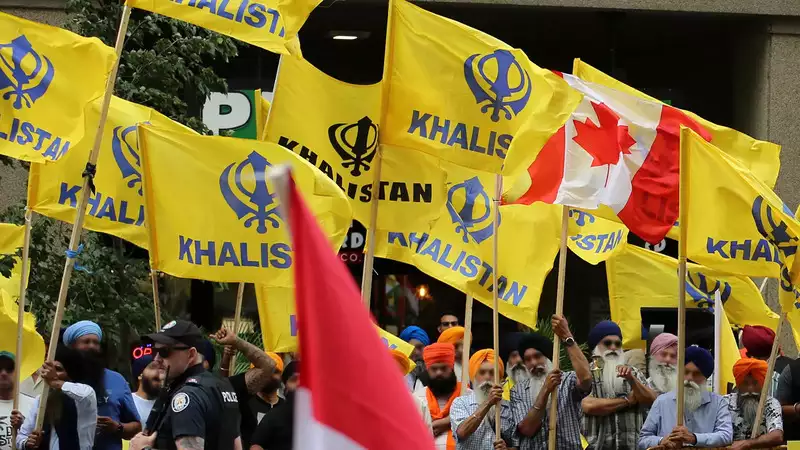
The Khalistan issue, therefore, remains a deeply contentious topic between the two nations. While India views the movement as a dangerous separatist threat, Canada sees it as part of its broader commitment to protect freedom of expression and political dissent. This fundamental disagreement has fueled the current crisis, with both countries refusing to back down from their respective positions.
The expulsion of diplomats and the subsequent accusations of serious criminal activity have brought Canada and India’s diplomatic relations to a breaking point. What began as an investigation into the murder of a prominent Sikh separatist has now evolved into a full-blown diplomatic standoff, with both nations trading expulsions and accusations.
While Canada maintains it has credible evidence linking Indian government agents to crimes on Canadian soil, India continues to reject these allegations as politically motivated.
The implications of this standoff go beyond Canada and India, as other nations with large Sikh diaspora communities are watching closely to see how the situation unfolds.
For now, the Khalistan movement remains a key point of contention between the two countries, with no resolution in sight. As both sides dig in their heels, the world is left to wonder whether these diplomatic expulsions are just the beginning of a larger geopolitical conflict.