
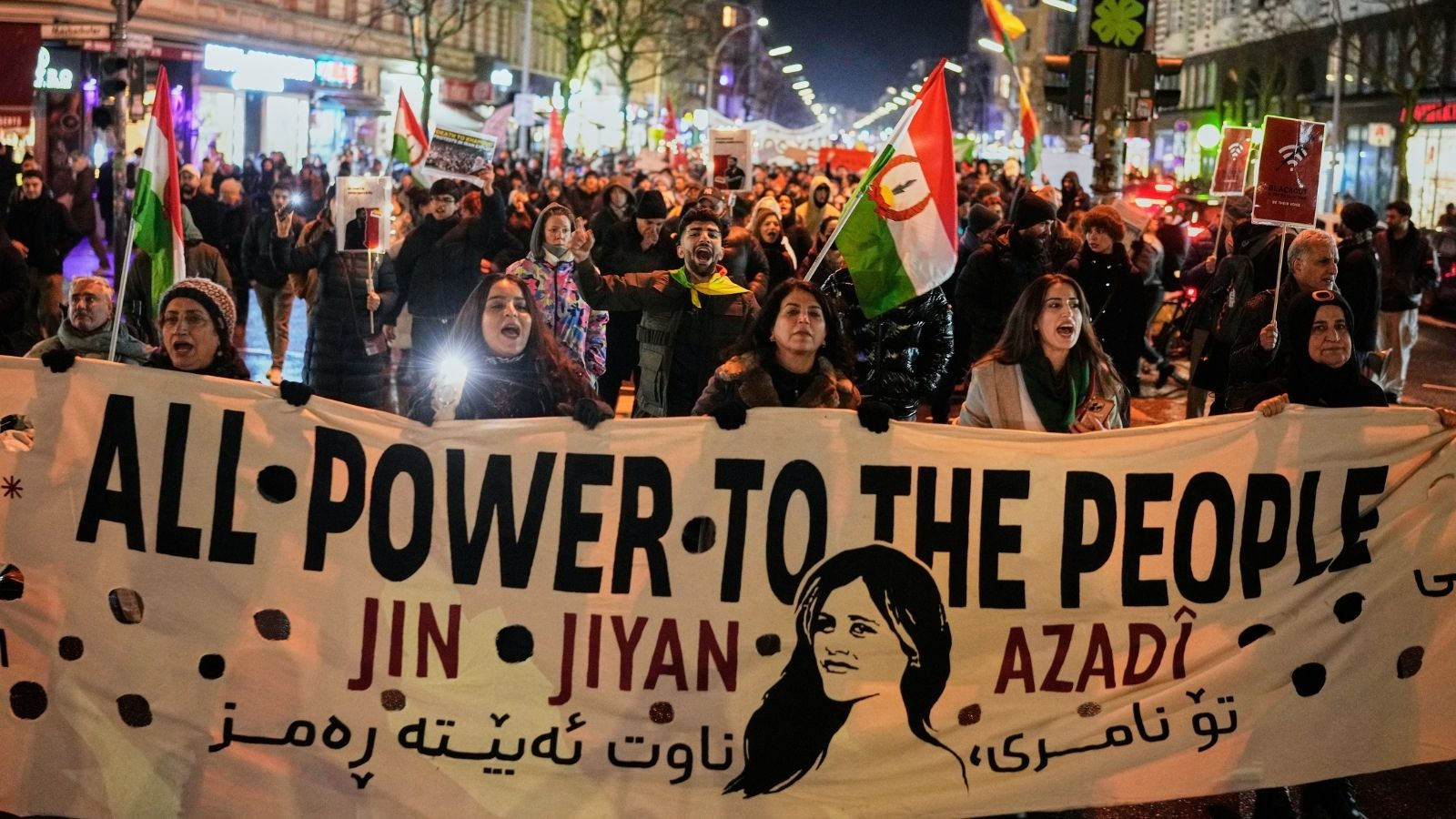
Canada’s Foreign Affairs Minister Anita Anand has confirmed that a Canadian citizen has been killed in Iran, attributing the death directly to the actions of Iranian authorities as the country continues to witness widespread anti-government protests. The confirmation comes amid one of the most violent periods of internal unrest in Iran in recent years, with demonstrators taking to the streets to protest economic collapse, political repression, and longstanding human rights abuses.
Anand’s statement, released publicly, underscored both Canada’s grief over the loss of life and its condemnation of the Iranian government’s handling of the protests, which have reportedly claimed thousands of lives since erupting late last year. The announcement marks a significant escalation in Canada’s public stance on the unfolding crisis in Iran. While Global Affairs Canada had earlier acknowledged awareness of a Canadian citizen’s death in the country, the explicit attribution of responsibility to Iranian authorities represents a firmer diplomatic position.
The lack of detailed information about the victim reflects both the sensitivity of the situation and the difficulty of verifying facts amid a severe information blackout inside Iran. Nevertheless, the killing has drawn renewed attention to the scale of violence accompanying the protests and the broader international implications of Iran’s internal turmoil.
Canada’s Response and the Death of a Citizen Abroad
Anita Anand’s statement confirming the death was notable for its clarity and tone. She expressed condolences to the victim’s family and confirmed that Canadian consular officials are in contact with relatives in Canada to provide support during what she described as an extremely difficult time. While the government has refrained from releasing the victim’s name, age, or the precise circumstances surrounding the death, Anand’s assertion that the killing occurred “at the hands of the Iranian authorities” leaves little ambiguity about Ottawa’s assessment of responsibility.
The decision to withhold personal details reflects standard diplomatic practice in cases involving fatalities abroad, particularly when families request privacy or when security concerns remain unresolved. It also highlights the limitations faced by foreign governments attempting to investigate incidents inside Iran, where access for independent observers and foreign diplomats is heavily restricted. Canada, which closed its embassy in Tehran in 2012, relies on indirect channels, allied governments, and international organizations to gather information about events on the ground.
Anand’s condemnation went beyond the individual case, situating the death within the broader context of Iran’s response to mass demonstrations. She characterized the protests as peaceful expressions of public frustration with years of repression and economic mismanagement, and she called for an immediate end to what she described as the regime’s violence against its own population. The statement reflects Canada’s long-standing criticism of Iran’s human rights record and signals that the killing of a Canadian citizen has further strained an already tense relationship.
Canadian Foreign Minister Anita Anand announced on Thursday, January 15, that a Canadian citizen in Iran was killed by security forces of the Islamic Republic.
— Iranriseonline (@iranriseonline) January 15, 2026
She said that peaceful protests by the Iranian people, who are demanding their voices be heard in the face of… pic.twitter.com/LhyQgj8jDC
From a diplomatic standpoint, the death raises complex questions about accountability and recourse. Canada has limited direct leverage over Iranian authorities, but the public attribution of blame increases pressure through international forums and bilateral discussions with allies. It also reinforces calls for coordinated international responses, including potential sanctions or diplomatic measures, aimed at addressing human rights abuses linked to the crackdown.
A Protest Movement Met With Lethal Force
The protests that have swept across Iran since late December were initially sparked by the collapse of the national currency, which has severely eroded purchasing power and intensified economic hardship for millions of Iranians. What began as demonstrations over rising prices and unemployment quickly evolved into broader expressions of discontent with the political system, corruption, and restrictions on civil liberties. Protesters in cities and towns across the country have called for systemic change, challenging the authority of the ruling establishment in ways not seen for years.
Iranian authorities have responded with a heavy security presence, deploying police, paramilitary forces, and intelligence services to quell demonstrations. Reports from human rights organizations and eyewitnesses describe the use of live ammunition, mass arrests, and harsh interrogation tactics. Internet access has been repeatedly disrupted, and journalists face severe restrictions, making independent verification of events difficult. Despite these obstacles, information emerging from activists and international groups paints a picture of sustained and widespread violence.
According to the U.S.-based Human Rights Activists News Agency, at least 2,600 people have been killed since the protests began. While the exact accuracy of this figure cannot be independently confirmed, even conservative estimates suggest a death toll far higher than in previous episodes of unrest. The scale of fatalities underscores the intensity of the crackdown and has led many observers to describe the period as one of the bloodiest in Iran’s recent history.
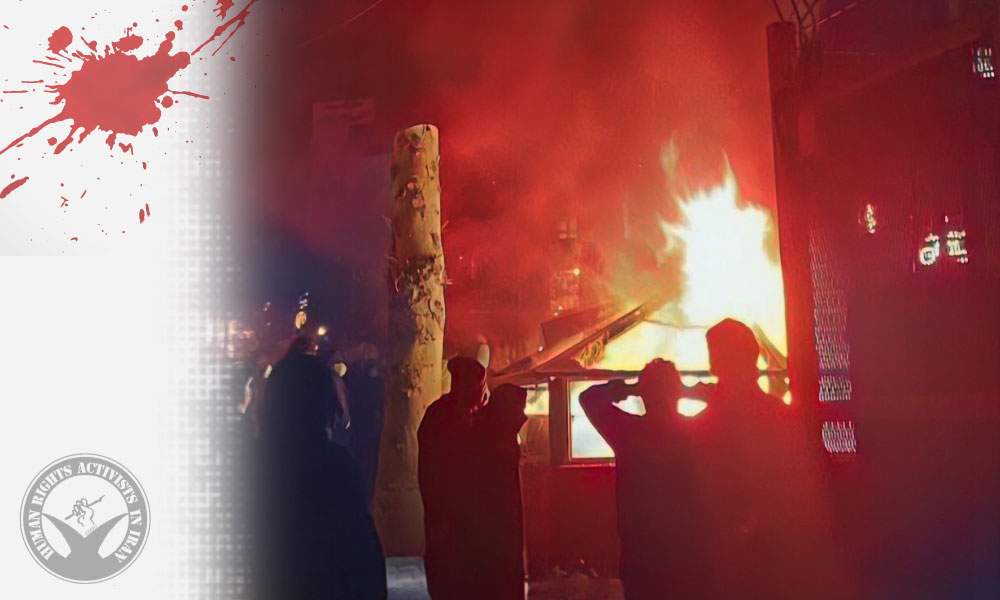
The death of a Canadian citizen amid this turmoil illustrates how the violence has extended beyond Iran’s domestic population to affect foreign nationals. Dual nationals and foreign citizens in Iran often face heightened risks during periods of unrest, particularly when authorities perceive external influence or international scrutiny as threats. Past cases have shown that foreign nationals can become entangled in security operations, detained, or, in extreme circumstances, killed during confrontations between protesters and state forces.
The Iranian government has consistently framed the protests as foreign-instigated unrest, accusing outside powers of interference and portraying demonstrators as threats to national security. This narrative has been used to justify aggressive measures against protesters and to dismiss international criticism. However, the persistence and geographic spread of the demonstrations suggest deep-rooted grievances that go beyond economic triggers, reflecting broader dissatisfaction with governance and rights conditions.
International Fallout and Rising Regional Tensions
The killing of a Canadian citizen has further internationalized the crisis, adding to already heightened global concern over Iran’s internal stability and regional behavior. Governments around the world have issued statements condemning the use of force against protesters, while human rights organizations have called for independent investigations into alleged abuses. Canada’s public attribution of responsibility aligns it with a growing number of countries pressing Iran to halt the violence and respect fundamental rights.
The situation has also intersected with broader geopolitical tensions in the Middle East. U.S. President Donald Trump has warned of “very strong action” if Iran proceeds with executions of protesters, a statement that underscores the potential for the crisis to escalate beyond diplomatic condemnation. While it remains unclear what form such action might take, the warning reflects Washington’s close monitoring of developments and its willingness to link Iran’s domestic conduct with its broader foreign policy posture.
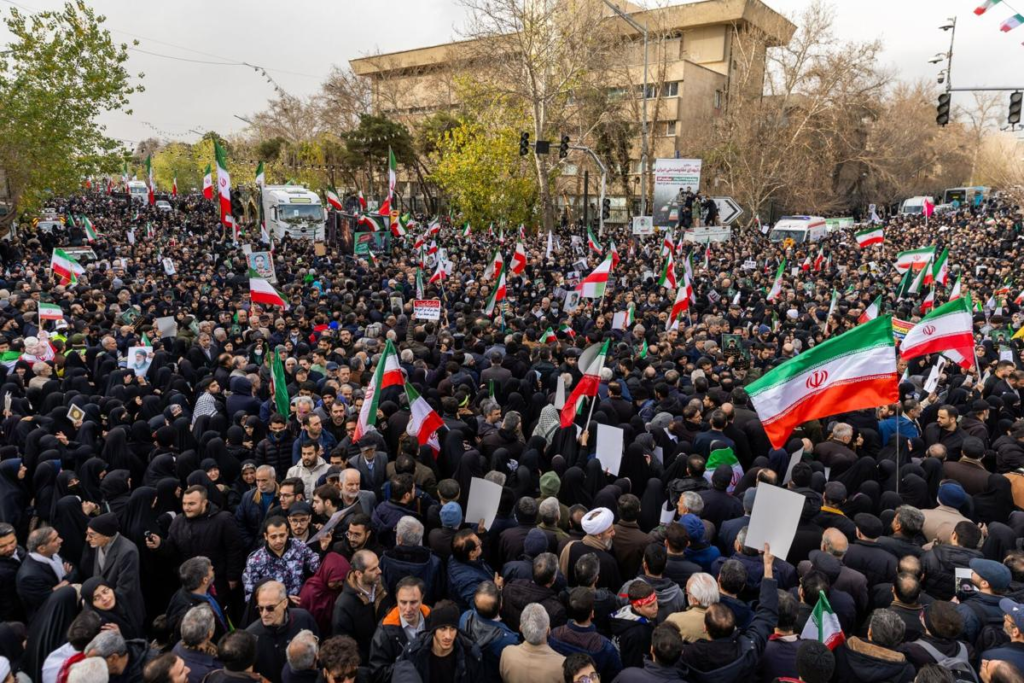
In response to rising threats, the United States has begun pulling some personnel out of bases in the region. A U.S. official indicated that the move followed warnings from a senior Iranian figure that Tehran would target American installations in neighboring countries if military strikes were launched. These developments highlight how internal unrest in Iran can quickly spill over into regional security concerns, particularly given existing tensions over Iran’s nuclear program, regional influence, and relations with Western powers.
For Canada, the death of one of its citizens adds a personal and political dimension to an already complex foreign policy challenge. While Ottawa has limited direct engagement with Tehran, it participates actively in multilateral efforts addressing Iran’s human rights record. The case is likely to be raised in international forums and could contribute to renewed calls for accountability mechanisms, including targeted sanctions against individuals deemed responsible for serious abuses.
At the same time, the lack of publicly available information about the victim serves as a reminder of the opacity surrounding events in Iran. Officials have emphasized respect for the family’s privacy, but the absence of details also reflects the difficulty of obtaining reliable information in an environment where state control over media and communication remains tight. This uncertainty complicates efforts to assess the full scope of the crackdown and to determine the precise circumstances under which foreign nationals are affected.
As protests continue and the death toll rises, the international community faces the challenge of responding in a way that balances condemnation with caution, avoiding actions that could further endanger civilians or escalate conflict. For the family of the Canadian victim, however, the broader geopolitical calculations offer little solace. Their loss stands as a stark example of how quickly political unrest can turn deadly, even for those far from home, and how the consequences of state violence can reverberate well beyond national borders.