
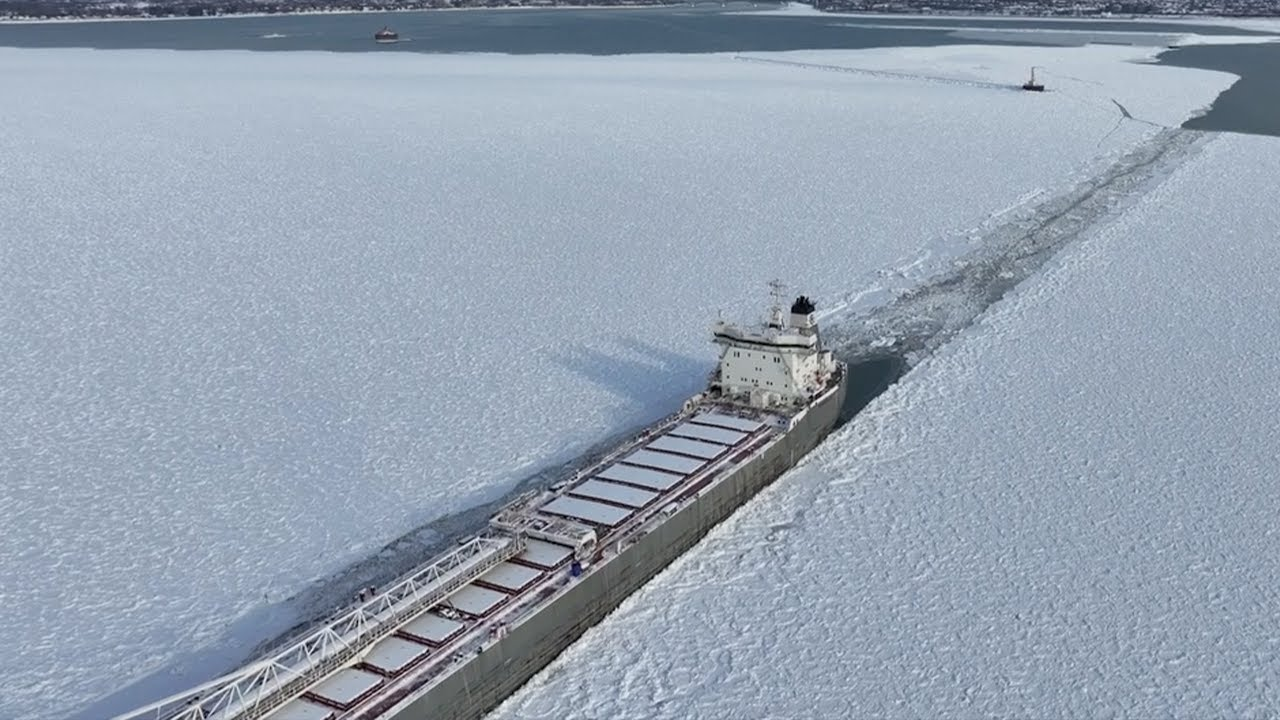
A Canadian freighter, the 663-foot Manitoulin, found itself immobilized in the ice on Lake Erie while attempting to depart Buffalo, New York. The vessel, carrying 17 crew members, became stuck as sub-zero temperatures caused rapid ice formation across the lake’s surface.
The incident has drawn attention not only to the challenges of navigating icy waters but also to the harsh winter conditions that have returned to the Great Lakes region after several years of relatively mild weather.
The Manitoulin’s Journey and Sudden Obstacle
The Manitoulin had just completed the delivery of a load of wheat to Buffalo and was heading back to its home port in Sarnia, Ontario, when the situation unfolded. The ship became trapped in thick ice on Wednesday, a challenge that even Great Lakes freighters, designed to navigate icy waters, occasionally face.
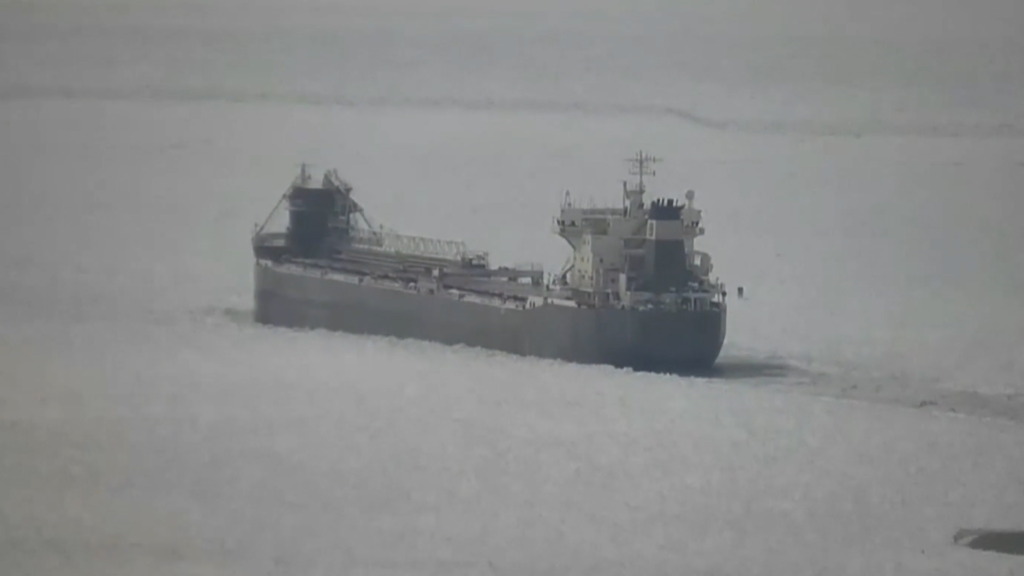
Sub-zero temperatures and rapidly forming ice off Buffalo’s shoreline created an insurmountable barrier for the vessel. Surrounded by snow and ice, the Manitoulin remained stranded through Thursday, creating a striking spectacle for onlookers in the area. The Coast Guard, equipped with icebreaking tools, was promptly dispatched to assist in freeing the vessel and ensuring the safety of its crew.
Paul Angelillo, a search and rescue specialist with the Coast Guard in Buffalo, noted that harsh winters like this one have been rare in recent years, which has heightened public interest in the incident.
Trapped in Lake Erie's icy grip near Buffalo, the freighter Manitoulin found itself at a frosty standstill. Enter Bristol Bay, the fearless ice cutter, carving paths through the rapidly thickening ice to free the frozen freighter from winter's frosty clutches. It was a classic… pic.twitter.com/9TNqLC2NPa
— Andy Parker (@andyparkertv) January 24, 2025
“We just haven’t had a bad winter in quite a while. So now that we’ve had one and people haven’t seen this for a bit, they’re like, ‘what’s going on?’” he explained.
The Role of the Coast Guard in Rescue Efforts
The U.S. Coast Guard played a critical role in responding to the situation, deploying an icebreaking cutter to assist the stranded freighter. By Thursday afternoon, the cutter had begun breaking up the thick ice surrounding the Manitoulin, paving the way for the vessel to continue its journey safely.
The Coast Guard confirmed that the freighter had not sustained any damage and that the captain and crew were safe throughout the ordeal.
Read : Krem Chympe: The River Cave with Dams and Underground Lakes in Jaintia Hills of Meghalaya
While Great Lakes freighters are generally well-equipped to handle icy conditions, extreme cases like this highlight the importance of having emergency response teams ready to intervene when necessary.
Angelillo emphasized that incidents like these, while relatively uncommon, are not unheard of. Even robust freighters can encounter ice that is too hard or thick to navigate, underscoring the value of the Coast Guard’s expertise and resources in ensuring the safety of vessels and their crews.
The Challenges of Winter Navigation on the Lake Erie
The Great Lakes are no strangers to extreme winter conditions, with ice and snow regularly posing challenges to maritime traffic. Freighters operating in this region are built to handle icy waters, but nature can occasionally overwhelm even the most advanced vessels.
Winter navigation requires careful planning and the use of icebreaking technology to maintain shipping routes. The Great Lakes shipping industry is a vital component of regional economies, moving millions of tons of cargo each year, including grain, coal, and iron ore. Disruptions caused by ice can have ripple effects, delaying shipments and impacting supply chains.
This year’s harsh winter has brought renewed attention to the difficulties of operating in the Great Lakes during the colder months. The incident involving the Manitoulin serves as a reminder of the region’s volatile weather patterns and the resilience required to navigate them.
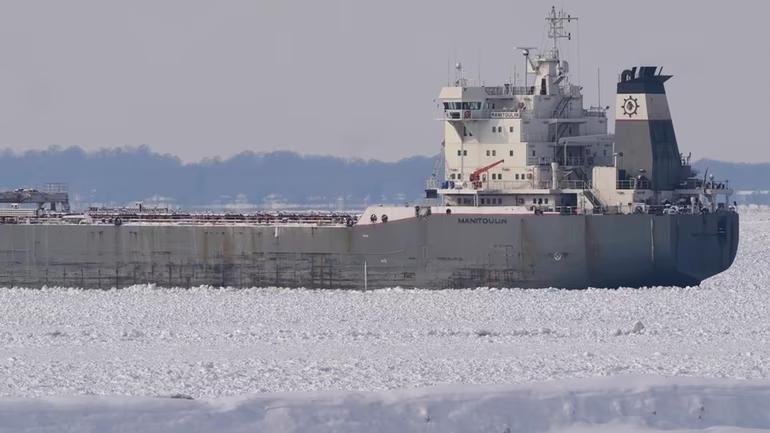
In recent years, relatively mild winters have resulted in less ice formation, making this season’s severe conditions stand out. For communities around the Great Lakes, the sight of a massive freighter frozen in place has become a rare and captivating event.
However, for those who rely on these waters for commerce and livelihood, it is a stark reminder of the challenges they face during the winter season.
The successful rescue of the Manitoulin highlights the strength of the systems in place to support maritime traffic on the Great Lakes. From the advanced capabilities of modern freighters to the swift response of the Coast Guard, every element of the region’s shipping infrastructure is designed to minimize risks and ensure safety.
As winter progresses, more ships may face similar challenges, making it essential for authorities and shipping companies to remain vigilant. Investments in icebreaking technology and enhanced weather forecasting can further reduce the likelihood of incidents like this in the future.
For now, the Manitoulin and its crew stand as a testament to the resilience of those who brave the Great Lakes during the coldest months of the year. The successful outcome of this incident serves as a reminder of the cooperation and determination required to overcome nature’s obstacles and keep commerce moving even in the most extreme conditions.