
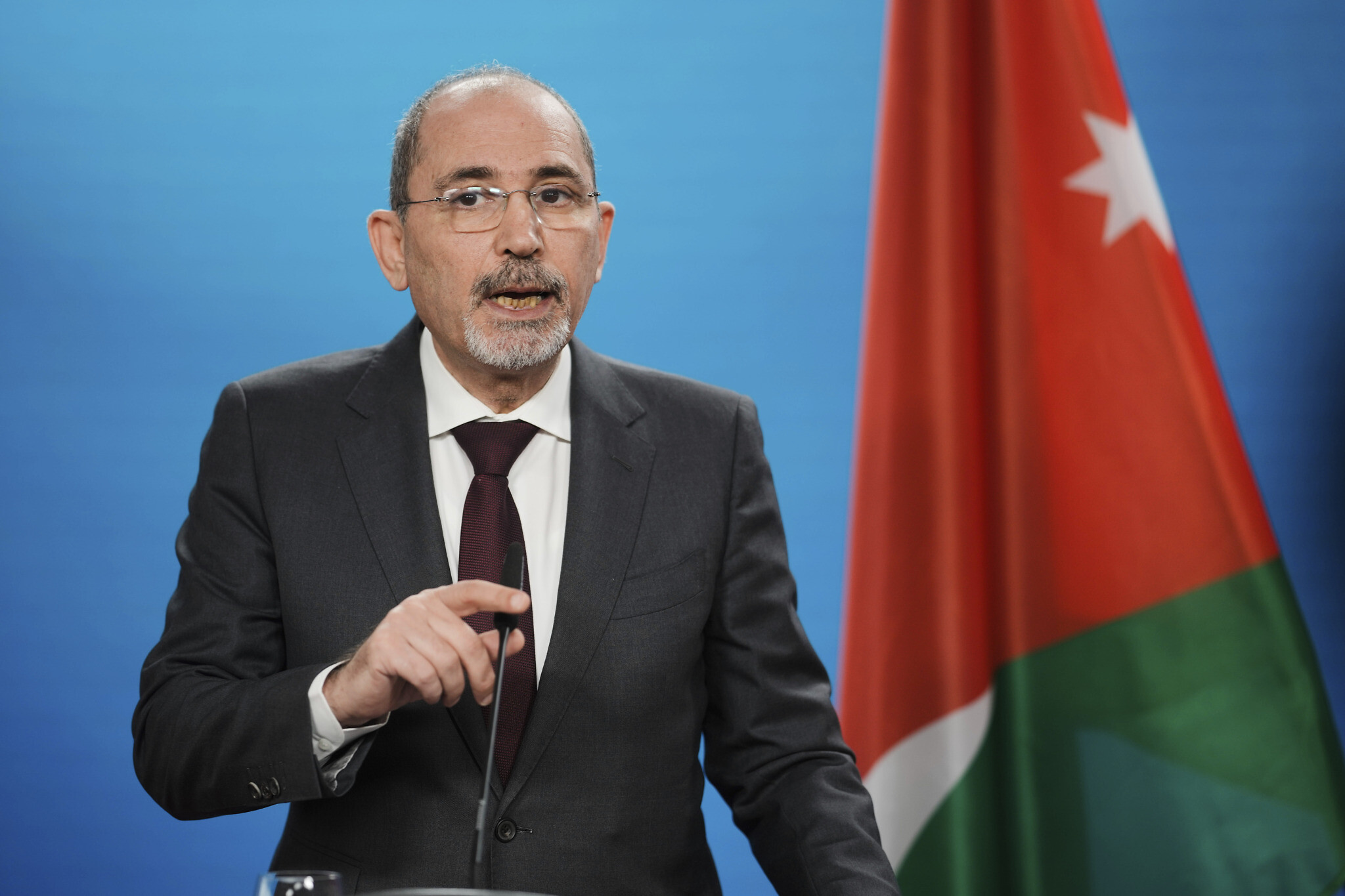
The ongoing crisis in Gaza has reignited debates over the future of the Palestinian people, with particular attention on the role of neighboring Arab nations. Jordan’s Foreign Minister, Ayman Safadi, recently made a firm statement emphasizing that Jordan cannot accept more Palestinian refugees, as 35% of its population already consists of refugees.
This declaration comes in response to suggestions from some quarters that Palestinians could be resettled outside Gaza, an idea that Jordan and other Arab nations have strongly rejected. With tensions escalating and uncertainty prevailing, the Arab world is now working on an alternative proposal to rebuild Gaza while ensuring its people remain in their homeland.
Jordan’s Firm Stance on Palestinian Resettlement
Jordan has long been home to a significant Palestinian refugee population, with waves of displacement occurring since the establishment of Israel in 1948 and subsequent conflicts.
Today, nearly 35% of Jordan’s population comprises Palestinian refugees, making it one of the countries most affected by the ongoing crisis. Given this demographic reality, Jordanian leaders have repeatedly emphasized that their country cannot bear the burden of additional refugees.
Speaking at the Munich Security Conference, Ayman Safadi dismissed any notion of Jordan serving as a resettlement destination for Palestinians fleeing Gaza.
He made it clear that neither the Jordanian government nor the Palestinian people themselves support such an idea. “Just to answer you unequivocally, 35% of our population are refugees; we cannot afford any more,” Safadi stated. “They don’t want to come to Jordan, and we don’t want them to come to Jordan.”
Read : Jordan Will Take 2000 Sick Children for Treatment from Gaza: King Abdullah
This statement directly counters a proposal reportedly backed by former U.S. President Donald Trump, which suggested “cleaning out” Palestinians from Gaza and resettling them in Jordan and Egypt.
Read : How the Watermelon Became a Symbol of Palestinian Solidarity?
Both Amman and Cairo swiftly rejected the plan, arguing that it would be deeply destabilizing and counterproductive. The Jordanian monarchy, particularly King Abdullah, has been vocal in opposing such initiatives, with the King reinforcing his country’s stance during his recent visit to Washington.
Arab Nations Push for an Alternative Plan
Instead of supporting forced displacement, Jordan and other Arab nations are working on an alternative proposal to address the crisis in Gaza. The central idea is to rebuild Gaza without uprooting its people, ensuring that security and governance structures are put in place to maintain stability.
Saudi Arabia is reportedly leading the charge in developing a comprehensive plan for Gaza’s future, with backing from multiple Arab nations. The goal is to present a viable, long-term solution that contrasts sharply with the idea of mass displacement.

According to two European diplomatic sources, King Abdullah argued that this Arab proposal would be “cheaper and faster” than the one put forward by Trump’s administration. The U.S. leader was said to be receptive to the idea, but it remains unclear whether Washington will fully back the Arab initiative.
Safadi stressed the importance of Israel’s role in shaping the future of the region, urging Israeli leaders to consider long-term stability rather than short-term military objectives. “Israelis also have to think long-term. For it to live in peace and security, its neighbors need to live in peace and security,” he said.
Rising Tensions in the West Bank and Regional Concerns
While much of the focus remains on Gaza, tensions in the Israeli-occupied West Bank are also escalating. The West Bank has seen significant violence in recent months, with Israeli military operations targeting Iranian-backed militant groups and widespread destruction forcing thousands of Palestinians to flee their homes. This deterioration in security has sparked fears that the West Bank could become the next flashpoint in the region.
Jordan, which shares a border with the West Bank, is particularly concerned about the situation. Safadi warned that the territory is a “powder keg that could explode” if the violence continues unchecked. Jordan has historically played a key role in mediating between Israeli and Palestinian authorities, but its ability to contain the crisis is being severely tested.

The broader regional implications of the crisis cannot be ignored. Arab nations fear that forced displacement of Palestinians could lead to greater instability, fueling radicalization and further destabilizing the Middle East.
This concern is driving Arab governments to push for diplomatic and reconstruction efforts in Gaza rather than resettlement plans that could have far-reaching consequences.
As discussions continue, Jordan remains firm in its stance: it will not accept more Palestinian refugees, and it supports efforts to rebuild Gaza in a way that allows Palestinians to remain in their homeland.
The challenge now is to develop a concrete plan that is both practical and widely supported by the international community, ensuring that Gaza’s future is shaped by its people rather than by external forces seeking to relocate them elsewhere.