
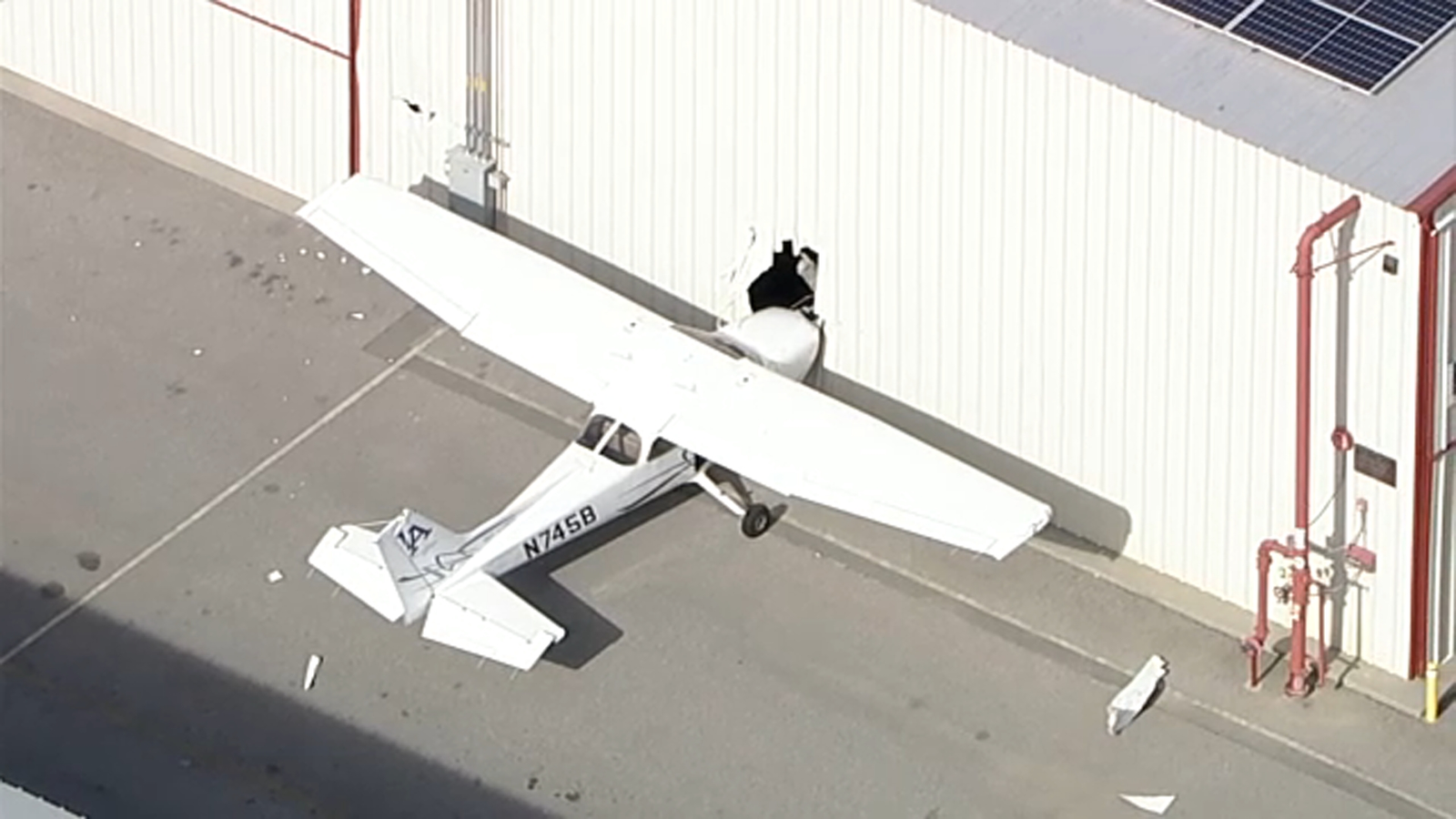
A pre-dawn security breach at one of Southern California’s busiest general aviation airports has drawn renewed attention to vulnerabilities in private airfields and flight schools. Authorities say a 37-year-old Los Angeles man unlawfully accessed Van Nuys Airport, broke into a flight school hangar, and attempted to steal a small aircraft before crashing it moments later. The incident, which unfolded in the early hours of Thursday morning, resulted in extensive property damage but no reported injuries. Police arrested the suspect shortly after the crash, and federal authorities are now assisting in the investigation.
The case has sparked questions about airport access controls, aircraft security, and a broader pattern of unauthorized plane use reported elsewhere in California in recent months. While the immediate danger was contained quickly, the circumstances underscore how rapidly a localized security lapse can escalate into a potentially serious aviation incident.
Early-Morning Breach and Attempted Aircraft Theft at Van Nuys Airport
According to law enforcement, the incident occurred at approximately 5 a.m. when the suspect, identified as Ceffareno Michael Logan, allegedly gained unauthorized access to the grounds of Van Nuys Airport. Investigators say Logan entered the property without permission, forced his way into a hangar belonging to a flight school, and attempted to take control of an aircraft parked inside.
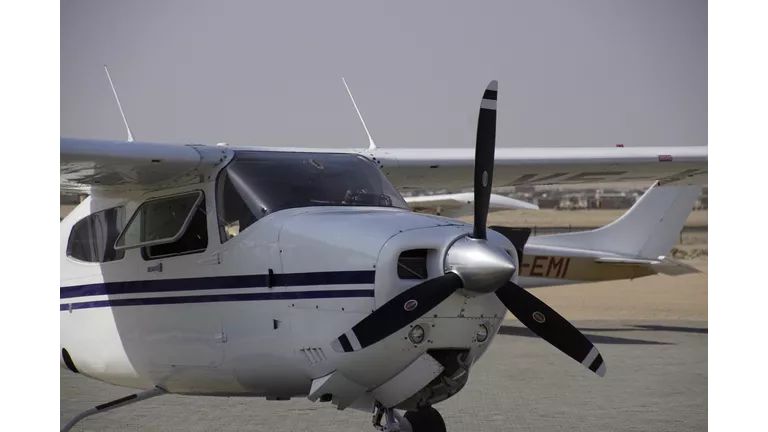
The aircraft involved was a Cessna 172, a widely used, four-seat, single-engine training plane commonly operated by flight schools across the United States. The Cessna 172 is known for its reliability and forgiving handling characteristics, making it a staple for student pilots. Despite its accessibility and straightforward controls compared to larger commercial aircraft, it still requires training and proper procedures to operate safely, particularly during taxiing and takeoff.
Anthony Nercessian, the owner of L.A. Flight Academy, described how the suspect managed to start the engine and begin moving the plane. According to Nercessian, the aircraft rolled approximately 50 to 60 feet before crashing into a nearby hangar. The impact caused significant damage not only to the plane itself but also to the hangar structure. A Porsche parked in the vicinity was also damaged as a result of the collision.
A stolen Cessna crashed into a building at Van Nuys Airport after a suspect allegedly broke into the site at 4am and hijacked the aircraft.
— BPI News (@BPINewsOrg) December 18, 2025
The plane never became airborne and a suspect is in custody. FAA and FBI investigations are under way.#LosAngeles pic.twitter.com/W8cxZ8adMK
Although initial reports suggested the aircraft may have briefly become airborne, later accounts indicate the crash occurred during the attempted departure from the hangar area, before a successful takeoff could be completed. Regardless of the precise moment of impact, authorities agree that the aircraft was never safely flown and that the attempt ended almost immediately in a crash.
After the collision, Ceffareno Michael Logan reportedly fled the scene on foot. Los Angeles Airport Police Department officers responded quickly and took him into custody shortly afterward. In a statement to local media, police confirmed that airport officers apprehended the suspect without further incident. Remarkably, Logan was not injured in the crash.
Arrest, Charges, and Ongoing Investigation Involving Federal Authorities
Following his arrest, Ceffareno Michael Logan was booked on charges including burglary and theft of an aircraft. Bail was set at $150,000. Law enforcement officials have not publicly indicated whether additional charges may be filed as the investigation continues.
The Los Angeles Airport Police Department confirmed that the Federal Bureau of Investigation is assisting in the inquiry. The involvement of federal authorities reflects the seriousness with which aircraft theft and airport security breaches are treated, even when the aircraft involved is a small, non-commercial plane. Unauthorized access to aircraft and airfield operations raises concerns not only about property damage but also about public safety and airspace security.
Read : Kassian William Fredericks Arrested After Attempting to Open Airplane Cabin Door Mid-Flight
At this stage, police have not disclosed a motive for the attempted theft. Nercessian stated that he did not recognize Ceffareno Michael Logan and that the suspect had no known connection to the flight school. Investigators are expected to examine surveillance footage, access logs, and other evidence to determine how the suspect was able to enter the airport grounds and the hangar without being stopped.
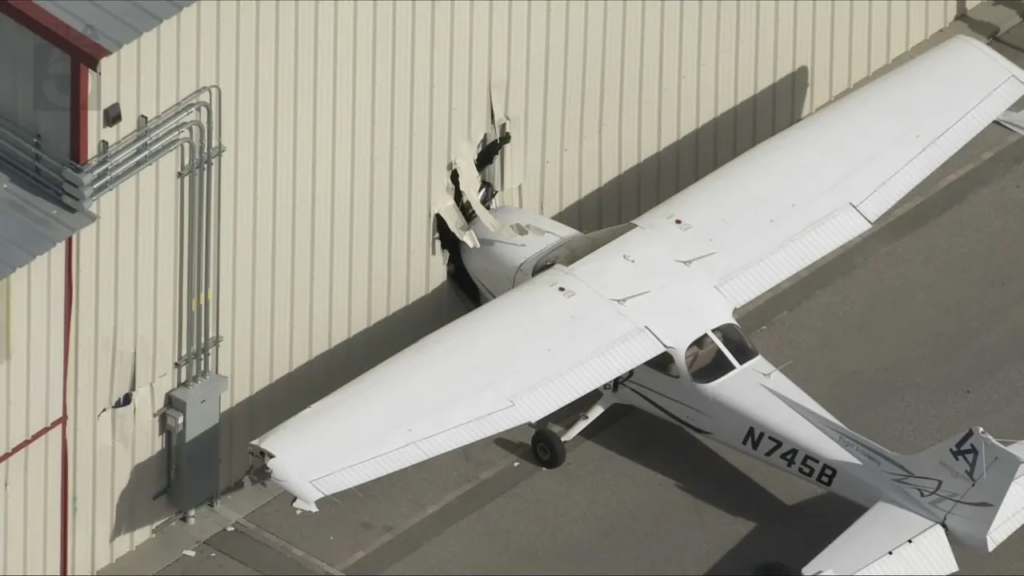
Van Nuys Airport, located in the San Fernando Valley, is one of the busiest general aviation airports in the world. It serves private pilots, flight schools, charter services, and law enforcement aviation units. While the airport does not handle commercial airline traffic, it hosts thousands of aircraft movements each month. Security typically includes perimeter fencing, controlled access points, and patrols, but the incident suggests that gaps may still exist, particularly during early morning hours.
Airport officials have not yet released details about whether security procedures will be reviewed or enhanced following the incident. However, similar events in the past have often prompted reassessments of access controls, surveillance coverage, and hangar security practices at general aviation facilities.
A Broader Pattern of Unauthorized Aircraft Use Raises Safety Concerns
The Van Nuys incident is not an isolated case. Earlier this year, another unusual aircraft theft scenario emerged in California, highlighting a different but equally troubling security issue. In that case, a 75-year-old aircraft owner discovered that his plane had been stolen and returned multiple times without his knowledge.
Jason Hong, who owns a 1958 Cessna Skyhawk, told reporters that he arrived at Corona Municipal Airport in late July to find his plane missing from its hangar. Initially believing it had been moved by airport staff or mistakenly parked elsewhere, Hong searched the airfield before realizing something was wrong. It later emerged that an unknown individual had allegedly taken the aircraft on at least two unauthorized flights across Southern California, returning it to the hangar by morning.
Read : Skydiver Miraculously Survives After Parachute Gets Caught on Plane’s Wing at 15,000 Feet
Despite investigations, neither Hong nor the police were able to identify who had taken the plane or how access was gained. The aircraft was eventually recovered, but the mystery surrounding the unauthorized flights remained unresolved. Unlike the Van Nuys case, the plane in Corona was reportedly flown without being damaged, raising further questions about the skill level of the individual involved and how they avoided detection.
Together, these incidents underscore ongoing challenges in securing small aircraft, particularly at general aviation airports where planes are often parked in hangars that may not have the same level of security as commercial terminals. While these facilities are essential for pilot training, private aviation, and emergency services, they also present unique vulnerabilities due to their size, layout, and the sheer number of people who legitimately access them each day.
Aviation safety experts have long noted that general aviation aircraft, while less complex than commercial airliners, can still pose serious risks if misused. Even a small training plane can cause significant damage if crashed in a populated area or near critical infrastructure. As a result, incidents involving unauthorized access and attempted theft are closely scrutinized by both local and federal authorities.
In the Van Nuys case, officials have emphasized that no members of the public were injured and that the incident was contained within airport property. Nonetheless, the damage to aircraft, buildings, and vehicles illustrates how quickly an unauthorized act can escalate. The fact that the suspect was able to start the engine and move the plane before being stopped will likely be a key focus of the ongoing investigation.
As the case against Ceffareno Michael Logan proceeds through the legal system, attention is expected to remain on the broader implications for airport security and aircraft access. For flight schools and private owners, the incident serves as a reminder of the importance of layered security measures, including robust hangar locks, surveillance systems, and coordination with airport authorities. For regulators and law enforcement, it highlights the need to balance accessibility for legitimate aviation activities with safeguards that prevent misuse.
While rare, such incidents have an outsized impact because of the potential consequences involved. The events at Van Nuys Airport, coupled with other recent cases in California, suggest that unauthorized aircraft use remains a real concern, one that will continue to demand vigilance from airport operators, pilots, and law enforcement alike.