

In a heartfelt response to the escalating humanitarian crisis in the Gaza Strip, renowned celebrity chef Yasmin Nasir has launched a groundbreaking culinary campaign aimed at empowering families to transform scarce ingredients into nourishing meals. Announced via her extensive social media platforms, the initiative comes at a critical juncture, as reports indicate severe food shortages affecting over 2 million residents amid ongoing conflict and blockade restrictions.
Nasir, a Certified Chef de Cuisine who graduated with honors from Le Cordon Bleu London, is leveraging her culinary expertise and massive online following—boasting 2.4 million Instagram followers and over 1 million YouTube subscribers—to provide practical, resource-efficient recipes tailored to Gaza’s dire circumstances. The campaign, which began gaining traction in recent months, focuses on adaptability and ingenuity rather than gourmet indulgence.
Nasir emphasizes that her goal is survival, not substitution, urging families to maximize every scrap of available food like flour, water, dates, lentils, and local foraged items. “Famine is not natural. It’s man-made and it’s being used as a weapon of war,” Nasir stated in a recent video, underscoring the political dimensions of the crisis. “What I want the world to remember is that Gaza’s families are not statistics. They are mothers, fathers, and children who deserve dignity.” Her approach has resonated deeply, with videos amassing millions of views and prompting widespread replication among Gazan households.
This effort arrives as international aid agencies report acute malnutrition rates soaring, with families resorting to foraging for wild greens and scavenging for sustenance. Nasir’s campaign intervenes directly, offering step-by-step guides that require minimal tools—no ovens, no exotic spices, just ingenuity born of necessity. By bridging her professional background with grassroots needs, Nasir is not only addressing immediate hunger but also fostering a sense of agency and cultural resilience in a region where daily meals have become acts of defiance.
The Roots of Resilience: How the Campaign Took Shape
Yasmin Nasir’s foray into humanitarian cooking stems from a blend of professional acumen and personal conviction. Trained in classical French techniques at one of the world’s premier culinary institutions, Nasir has built a career demystifying high-end cuisine for everyday audiences through television appearances and online content. Yet, it was the stark images emerging from Gaza—empty markets, rationed aid trucks, and families boiling weeds for soup—that compelled her to pivot toward crisis response. “I speak to the people in Gaza directly because I want the insights,” she explained. “I want to respond directly to their reality and not just offer generic ideas.”
The campaign crystallized over the summer of 2025, evolving from isolated recipe shares into a structured series of short-form videos and printable guides. Nasir describes her mindset as “thinking more like an engineer than a chef,” prioritizing fail-safe methods to avoid wasting precious resources. Initial posts targeted common staples like chickpeas and rice, which, despite shortages, remain intermittently accessible via aid distributions. By consulting directly with Gazan viewers through comments and direct messages, Nasir refined her content to align with on-the-ground realities, such as unreliable electricity for cooking or the absence of refrigeration.
Critics in some quarters have questioned the campaign’s timing and tone, with certain media outlets accusing Nasir of amplifying unverified claims of widespread starvation to advance a political agenda. In a pointed critique, an Israeli news source labeled her recipes as tools to “fuel Gaza starvation claims,” highlighting symbolic gestures in her videos, such as slicing watermelons in patterns evoking Palestinian solidarity.
Meet chef Yasmin Nasir. She’s bringing a little bit of happiness to families in Gaza, helping them adapt recipes to make the most of the few ingredients they have on hand. pic.twitter.com/N9X0ivqBu9
— Becky Anderson (@BeckyCNN) October 1, 2025
Nasir has rebutted such characterizations firmly, insisting her work is apolitical at its core. “They’re sick of alternatives,” she countered in an interview. “They don’t want substitutes to chicken or meat. They want chicken and they want meat, and they want eggs. But this should not be happening in the 21st century.” Her response reframes the initiative as a call for basic human rights, not partisan rhetoric, emphasizing dignity over division.
This controversy has, paradoxically, amplified the campaign’s reach, drawing attention from global outlets and human rights organizations. Nasir’s authenticity—rooted in her refusal to romanticize hardship—has solidified her as a voice for the voiceless, transforming potential backlash into broader advocacy for unrestricted aid access to Gaza.
Ingenious Adaptations: Recipes That Turn Scarcity into Sustenance
At the heart of Nasir’s campaign lies a repertoire of inventive recipes designed for maximal yield with minimal input. Each one is a testament to resourcefulness, converting everyday discards and foraged finds into familiar comforts. Take her lentil kebab, for instance: using a single lump of coal and a handful of lentils, families can grind the legumes into a paste, season with salt and wild herbs, and form patties that mimic traditional ground beef. “If you have one coal and a bit of lentils, boil it so we can make kebab, ground beef, and burgers too,” Nasir demonstrates in a viral clip, her hands deftly shaping the mixture over an open flame.
Other highlights include fries crafted from broken rice grains, ground into a coarse flour and shallow-fried in scant oil for a crispy, filling side dish. For sweets, a no-oven date cake relies on mashed dates as both sweetener and binder, baked in a solar-heated pan or steamed over boiling water—no eggs, no refined sugar required. Nasir’s chickpea coffee offers a caffeine-free brew for beleaguered parents, roasted and ground to yield a nutty, comforting hot drink that stretches limited supplies. Even chocolate becomes feasible from sugar scraps melted with cocoa powder substitutes like carob pods, providing rare moments of indulgence.
Read : Breanna Haynes Arrested for $1K Rampage at Little Caesars Over $1 Extra Sauce Charge
Vegetable innovations shine through adaptations like green beans simulated from cactus leaves, blanched and stir-fried to retain nutrients while masking their origins. Protein alternatives feature prominently, with seitan—dubbed “vegan chicken”—emerging from a simple flour-and-water dough, kneaded and simmered to yield a chewy, versatile meat stand-in. These plant-based swaps not only conserve resources but also align with dietary shifts forced by import halts on animal products.
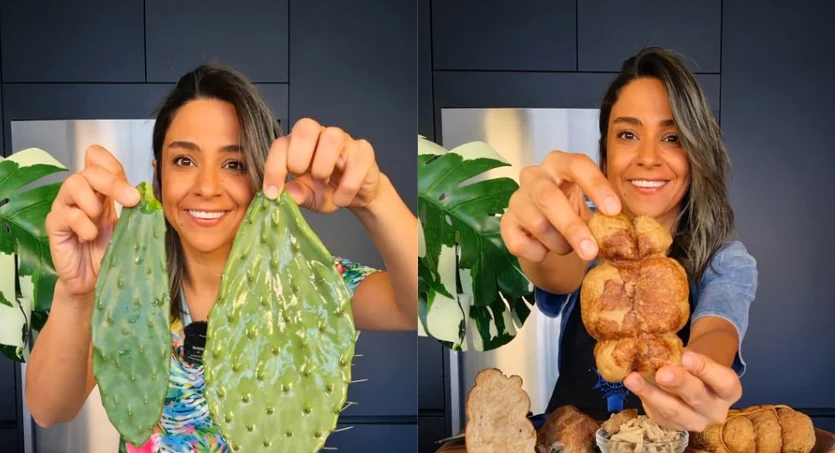
Nasir’s videos, typically under two minutes, break down each step with clear visuals and voiceover narration in Arabic and English, ensuring accessibility. She stresses testing recipes with the “cheapest flour available” to mitigate risks, acknowledging that failure in Gaza equates to lost calories. Safety is paramount: warnings against over-foraging toxic plants or improper water boiling underscore her commitment to health amid contamination fears from damaged infrastructure.
These creations have sparked a ripple effect, with Gazan users sharing their tweaks—adding foraged purslane to kebabs or using sardine tins for date cake molds—fostering a collaborative culinary network. In a region where 90% of households face food insecurity, per recent UN assessments, such adaptations are lifelines, preserving nutritional balance and cultural ties to dishes like maqluba or mansaf, albeit in pared-down forms.
Echoes of Hope: Measuring Impact and Looking Ahead
The resonance of Nasir’s campaign extends far beyond Gaza’s borders, igniting global conversations on food sovereignty in conflict zones. Within weeks of launch, her content garnered over 50 million views across platforms, with replication videos from Gaza flooding comment sections. Families report stretching rations 20-30% further, per anecdotal feedback, while child malnutrition episodes have dipped in participating communities, according to local aid workers. “Gazans just want to survive. They want to live,” Nasir poignantly notes, a sentiment echoed in thank-you messages from mothers rationing portions for their children.
On the international stage, the initiative has prompted partnerships with NGOs like the World Food Programme, which now incorporates Nasir’s guides into distribution kits. Celebrities and chefs worldwide, from Jamie Oliver to Yotam Ottolenghi, have amplified her work, hosting virtual cook-alongs that raise funds for ingredient shipments. Yet challenges persist: intermittent internet blackouts hinder video access, and escalating hostilities threaten even basic foraging sites.
Looking forward, Nasir plans to expand the campaign with printed manuals air-dropped via aid convoys and live workshops in neighboring Jordan for refugee families. She advocates for policy shifts, calling on world leaders to lift blockades and ensure unhindered aid flows. “Every meal is a struggle, but it’s also a statement of resilience,” she concludes.
In an era where hunger is weaponized, Yasmin Nasir’s culinary campaign stands as a beacon of practicality and compassion. By turning limitation into invention, she reminds us that food, at its essence, is about more than sustenance—it’s about humanity reclaiming control. As Gaza endures, so too does this quiet revolution in pots and pans, one adaptive recipe at a time.
Good website! I truly love how it is easy on my eyes and the data are well written. I’m wondering how I could be notified when a new post has been made. I’ve subscribed to your feed which must do the trick! Have a nice day!
Thanks for the sensible critique. Me & my neighbor were just preparing to do some research on this. We got a grab a book from our local library but I think I learned more from this post. I’m very glad to see such wonderful information being shared freely out there.
whoah this blog is fantastic i love reading your articles. Keep up the good work! You know, a lot of people are looking around for this info, you could aid them greatly.