
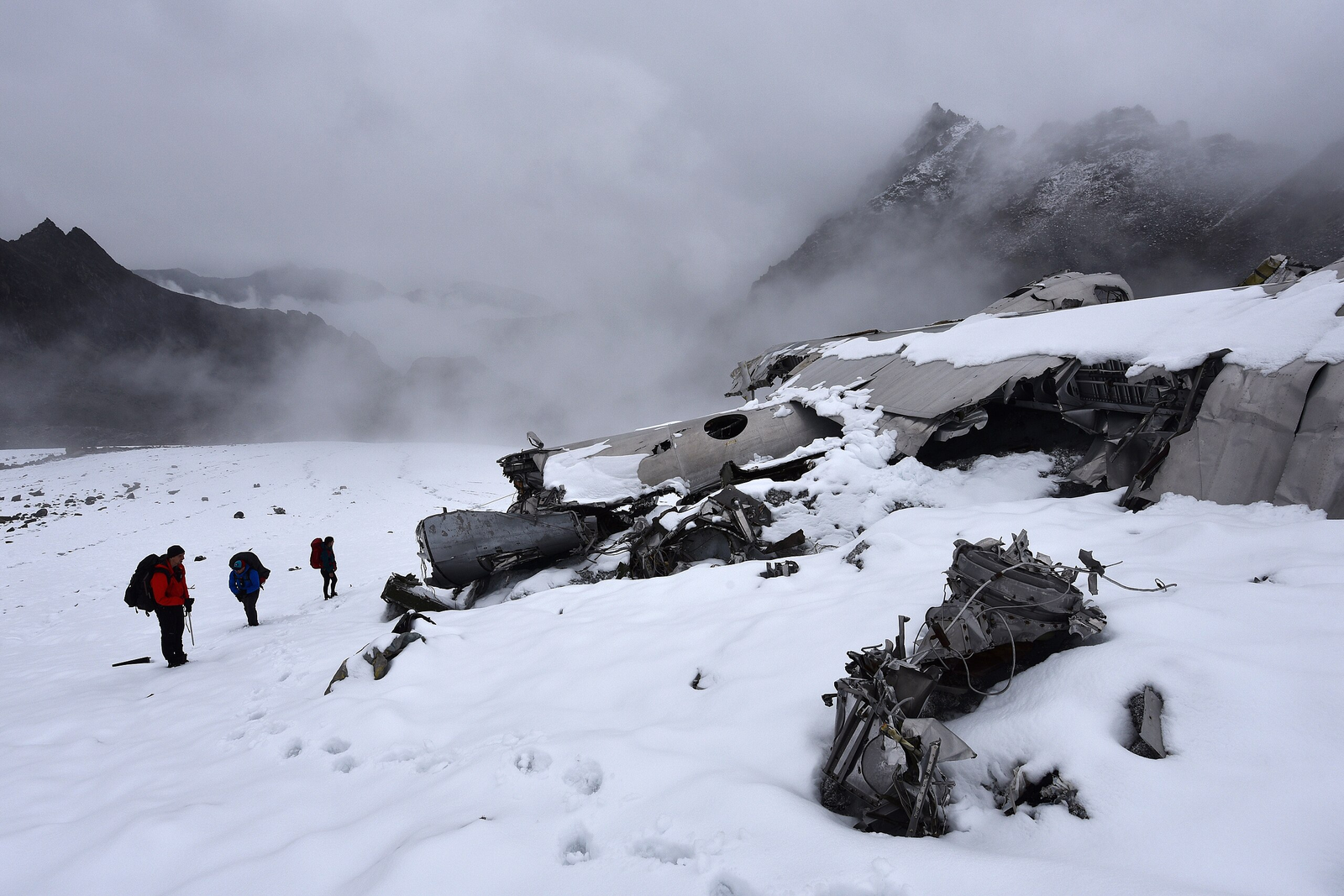
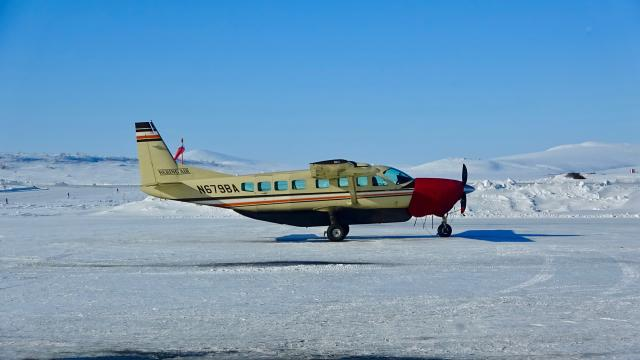
Aircraft That Gone Missing in Alaska, a Cessna 208B Grand Caravan operated by Bering Air, disappeared while en route from Unalakleet to Nome has been found with all 10 People Aboard Dead.
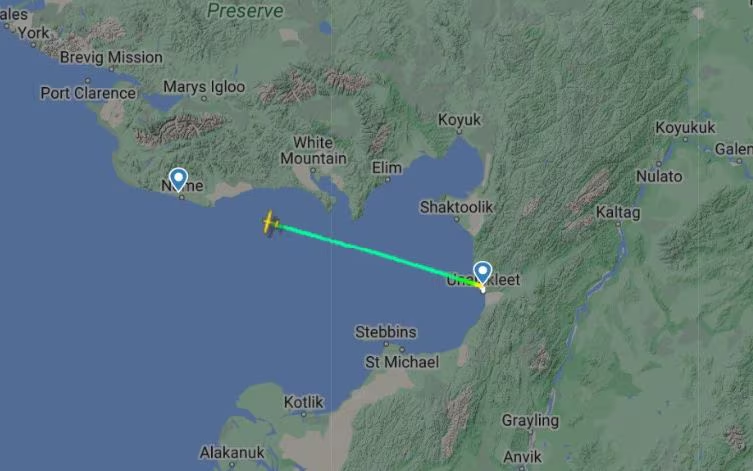
The aircraft was carrying nine passengers and a pilot when it suddenly lost contact around 3:18 p.m. local time on Thursday. This journey, covering a stretch over the Norton Sound inlet, turned into a fatal event as the plane experienced a rapid loss in elevation and speed before vanishing from radar.
Cessna Aircraft That Gone Missing in Alaska
The aircraft was eventually found about 34 miles southeast of Nome on Friday, confirming the worst fears of search and rescue teams.
The US Coast Guard (USCG) deployed rescue swimmers, who discovered three bodies inside the wreckage, while the remaining seven were believed to be trapped within the broken structure of the aircraft. Due to the severe conditions and the state of the wreckage, recovery efforts faced significant challenges.
The disappearance of the aircraft was further complicated by the failure of its emergency locator transmitter (ELT) to broadcast a distress signal.
This device, which is designed to send signals to satellites when exposed to seawater, did not function as expected, making it harder for authorities to locate the downed plane. The cause of this malfunction remains unclear.
Search and Rescue Efforts Amid Harsh Conditions
Following the disappearance, an extensive search operation was launched, involving multiple agencies including the US Coast Guard, the Alaska State Troopers, the National Guard, and local search teams. Searchers scoured the snowy terrain around Nome and the offshore ice in the hope of locating the missing aircraft.
Poor weather conditions severely hampered search efforts. Initial flights using C-130 aircraft from the US Coast Guard and the US Air Force yielded no results.
Heavy snowfall, freezing drizzle, and wind gusts up to 35 mph further complicated aerial searches. The Nome Volunteer Fire Department reported that visibility was extremely poor on Thursday night, making it nearly impossible for rescue teams to spot the wreckage.
Read : Trio Aboard An-2 aircraft Missing for 3 Days Found, Landed in Russia
On Friday morning, weather conditions slightly improved, allowing for clearer visibility. The Coast Guard added helicopter search teams to the operation, and another C-130 was deployed to assist.
Read : Austrian Airlines Plane Suffers Major Damage to Nose During Severe Hailstorm
The FBI also contributed by using specialized resources to geolocate the cell phones of the plane’s passengers in an attempt to determine the aircraft’s final location.
As search teams pressed forward, a promising lead emerged. A search aircraft identified an “item of interest,” prompting rescue teams to investigate further.
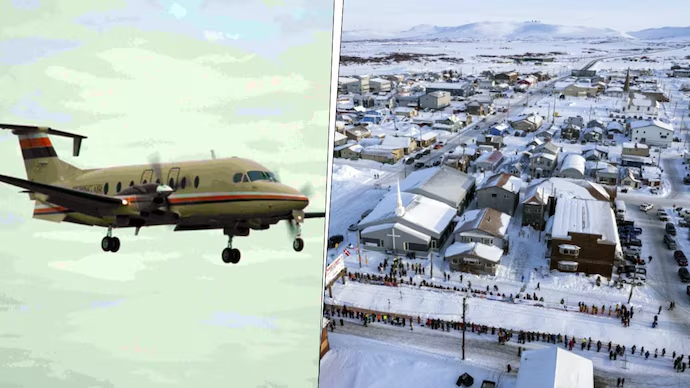
This ultimately led to the discovery of the wreckage southeast of Nome, bringing a devastating conclusion to the efforts. The sight of the aircraft, shattered and lying in the snow, confirmed the tragic fate of all ten individuals aboard.
Investigations and Safety Concerns
The crash of the Cessna 208B Grand Caravan has raised serious concerns regarding aviation safety, particularly in remote and harsh environments like Alaska. The aircraft was last seen over the Norton Sound, an area notorious for its extreme weather conditions. At the time of the flight, Nome Airport was reporting light snow and temperatures around 14 degrees Fahrenheit.
Before the crash, the pilot had reportedly communicated with air traffic control, expressing the intention to enter a holding pattern while waiting for a runway to be cleared.
However, shortly after, the plane disappeared from radar, suggesting a sudden and catastrophic event. Experts speculate that icing on the aircraft’s wings could have played a significant role. If ice buildup degraded the plane’s aerodynamic performance, it could have led to a stall and an eventual crash.
CNN aviation analyst Miles O’Brien highlighted that in such conditions, ice accumulation can be deadly. If ice coated the aircraft’s wings, it would have significantly reduced its ability to stay airborne, potentially causing an abrupt descent. The freezing temperatures and strong winds likely exacerbated the situation, leaving little room for the pilot to recover.
Another critical aspect under investigation is the failure of the emergency locator transmitter. Every aircraft is equipped with an ELT designed to send out distress signals in the event of an accident.
However, no such signal was received by the Coast Guard, raising questions about whether the device malfunctioned or was somehow damaged upon impact. Understanding why this vital piece of equipment did not function properly is crucial for preventing similar tragedies in the future.
Authorities, including the National Transportation Safety Board (NTSB) and the Federal Aviation Administration (FAA), will be conducting a thorough investigation to determine the exact cause of the crash. The probe will likely examine factors such as maintenance records, pilot experience, weather conditions, and potential mechanical failures.
The Aftermath and Community Response
The news of the crash has sent shockwaves through Alaska’s close-knit communities, particularly those served by Bering Air. The airline, based in Nome, has been a vital lifeline for many remote villages, providing essential air travel and cargo services. The loss of ten lives has left families and communities in mourning.
Alaska Governor Mike Dunleavy expressed his condolences, stating that he and his wife were “heartbroken by the loss of the 10 people on the Bering Air flight.” He urged all Alaskans to keep the victims and their families in their thoughts and prayers.
The Norton Sound Regional Hospital in Nome set up a family center for loved ones of the passengers, offering support as they awaited further details. Emergency responders and medical teams were also put on standby in case of any survivors, but unfortunately, their services were not needed.
The tragedy comes at a time when air travel safety in the US is under increased scrutiny, following two other major incidents. A midair collision between a US military Black Hawk helicopter and a passenger jet near Washington, DC, on January 29 resulted in 67 fatalities.
Just days later, on January 31, a medevac jet crashed in Philadelphia, killing seven. These back-to-back aviation disasters have raised urgent questions about the reliability of air travel and the effectiveness of current safety measures.
For many residents of Alaska, flying is not just a convenience but a necessity. The state’s vast and often inaccessible landscape makes air travel the only viable option for reaching certain regions.
However, the risks associated with flying in such an environment are significant. Harsh weather, mechanical challenges, and limited emergency response capabilities all contribute to the dangers faced by pilots and passengers.
As investigators work to uncover the cause of this latest crash, families of the victims are left to grieve. The loss of life is a painful reminder of the vulnerabilities that come with aviation in extreme conditions.
While the findings of the investigation may lead to improved safety measures, they will not bring back the ten individuals who lost their lives in this heartbreaking accident.
This tragedy underscores the need for continuous advancements in aviation safety, particularly in regions where flying is essential.
From improving weather monitoring systems to ensuring that emergency equipment functions correctly, every measure must be taken to prevent future losses. Until then, the people of Alaska will mourn the lives lost and hope for answers that might prevent another such catastrophe.