
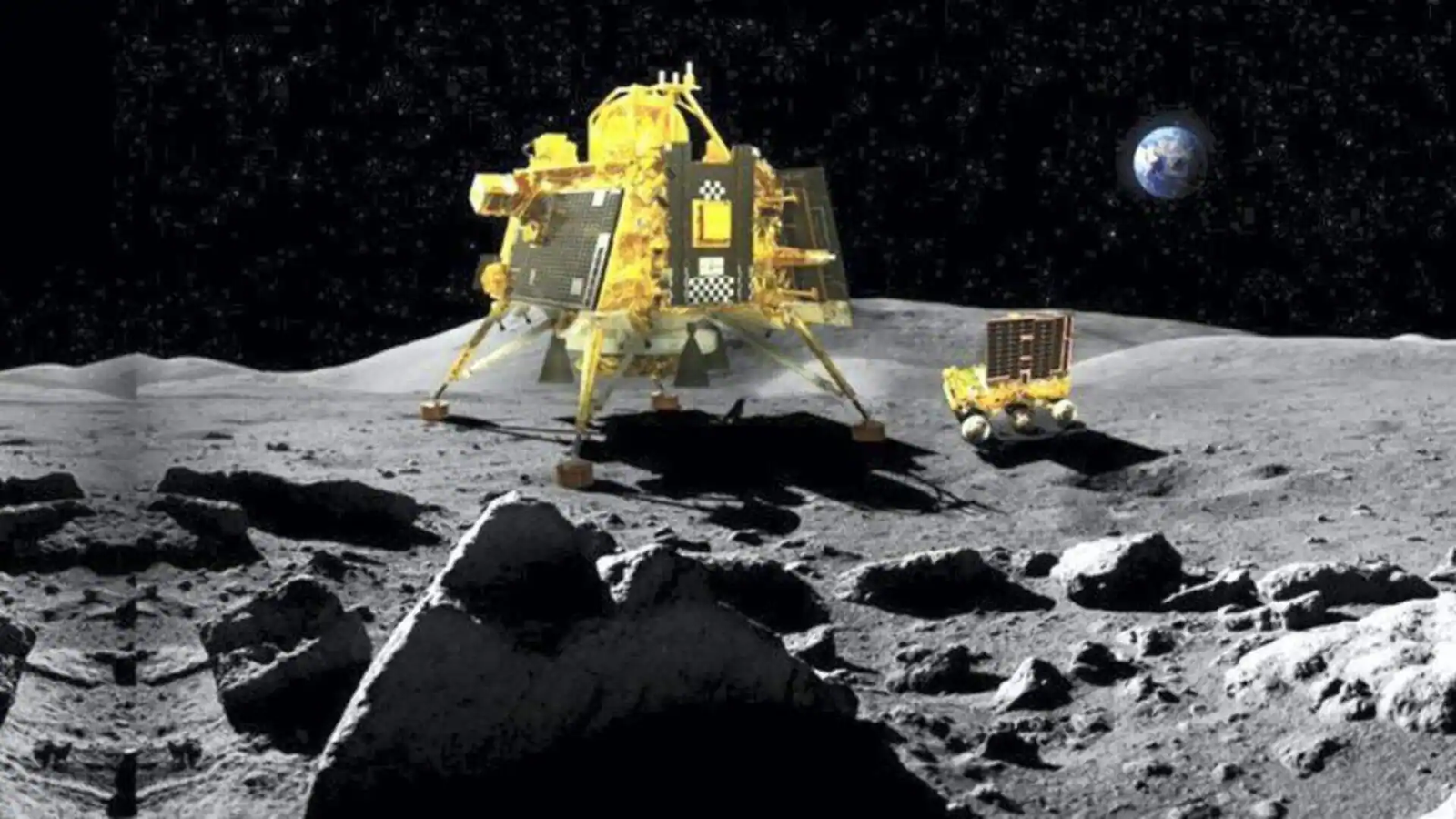
Chandrayaan-3 has made an extraordinary breakthrough by detecting mysterious seismic signals on the Moon, marking a significant advancement in lunar science. The recent findings from India’s Chandrayaan-3 mission provide unprecedented insights into the Moon’s seismic activity, particularly in its southern polar region.
This discovery is not only the first of its kind from this part of the lunar surface but also the first seismic data recorded anywhere on the Moon since the Apollo missions.
The Instrument for Lunar Seismic Activity (ILSA) aboard the Vikram lander has captured over 250 seismic signals, including 50 distinct ones that remain unexplained, suggesting the potential presence of Moonquakes.
Chandrayaan-3’s Groundbreaking Seismic Discovery
The Chandrayaan-3 mission, launched by the Indian Space Research Organisation (ISRO), has achieved a significant milestone with its seismic detection capabilities.
The ILSA, mounted on the Vikram lander, operated from August 24 to September 4, 2023, and collected data from the Moon’s south polar region at coordinates 69.37° South and 32.32° East. This period of operation lasted for 190 hours, during which the instrument recorded over 250 seismic signals.
Of these signals, approximately 200 were linked to known activities related to the Pragyan rover’s movements and the operation of other scientific instruments.
Read : Ranking the World’s Top 10 Strongest Space Agencies
However, the remaining 50 signals were not attributed to any of these known sources, indicating that there may be additional, unexplained seismic activity on the Moon. This discovery is notable as it is the first seismic data collected from the Moon’s southern polar region and provides a new perspective on lunar seismic phenomena.
Unexplained Seismic Signals Detected by Chandrayaan-3
The data obtained by Chandrayaan-3 has unveiled intriguing details about the Moon’s seismic activity. The 50 uncorrelated seismic signals, which were not linked to the rover’s movements or the operations of other instruments, have drawn significant attention from researchers. These signals, with peak-to-peak amplitudes reaching up to 700 µg, suggest the possibility of Moonquakes or other lunar seismic events.
Director of ISRO’s Laboratory for Electro-Optics Systems (LEOS), Sriram, indicated that these uncorrelated events are a key focus of ongoing research.
The signals exhibited a wide frequency range, up to 50 Hz, and varied in duration from a few seconds to several minutes. The discovery of these unexplained signals opens new avenues for understanding lunar seismic activity and highlights the need for further investigation to determine their origins.
Implications and Future Research
The findings from Chandrayaan-3 have significant implications for lunar science and exploration. The detection of unexplained seismic signals provides valuable data that could help scientists better understand the Moon’s internal structure and seismic activity. This information is crucial for future missions and for developing a more comprehensive understanding of the Moon’s geological processes.
Researchers are now focused on analyzing the uncorrelated seismic signals to determine their potential causes. Further studies will be essential to validate these findings and explore their implications for lunar science. The data from Chandrayaan-3 could lead to new discoveries about the Moon’s seismic activity and contribute to our knowledge of its geological history.
Chandrayaan-3’s detection of mysterious seismic signals on the Moon represents a groundbreaking achievement in lunar exploration.
The mission has provided unprecedented data on the Moon’s seismic activity, including unexplained signals that suggest the potential presence of Moonquakes. This discovery not only enhances our understanding of the Moon’s geological processes but also paves the way for future research and exploration.
The Chandrayaan-3 mission underscores the importance of continued space exploration and the pursuit of knowledge about our celestial neighbors. As researchers delve deeper into the implications of these findings, the data collected from this mission will play a crucial role in shaping our understanding of lunar science and advancing future space missions.