

A disturbing criminal case involving the death of a toddler in Texas has concluded with a life prison sentence for the child’s mother after a jury found her guilty of capital murder. The case centered on the tragic death of 17-month-old Hannah Yonko, who died after being stabbed and thrown from the balcony of a hotel. The incident shocked the community when authorities discovered the severely injured child in the street outside the hotel.
After an investigation, prosecutors brought capital murder charges against the mother, Channel Yonko, leading to a trial that examined the events leading up to the child’s death, the defendant’s mental state, and the evidence gathered from the scene. Following a week-long trial and a brief jury deliberation, the court delivered a verdict that carries a mandatory sentence of life imprisonment without the possibility of parole.
The Events Leading to the Child’s Death
The fatal incident occurred on October 23, 2024, when local police responded to an emergency call reporting a baby lying in the street with severe injuries. Officers arriving at the scene discovered the 17-month-old child bleeding heavily from a head wound. The toddler also had stab wounds in her back, adding to the seriousness of the situation. Emergency medical responders rushed the child to a nearby hospital in an attempt to save her life, but despite medical intervention, the injuries proved fatal and the child later died.
Investigators quickly began reconstructing the events that led to the discovery of the injured toddler. Evidence gathered from the hotel where the child and her mother had been staying revealed that the injuries were inflicted before the child fell from the balcony. Authorities determined that the child had been stabbed multiple times in the back and then thrown from a third-floor balcony of the hotel.
The brutality of the act and the young age of the victim deeply affected investigators and members of the community. The discovery of both stabbing injuries and trauma from the fall indicated that the child had endured multiple forms of violence in the moments leading up to her death. Police began collecting physical evidence from the hotel room, examining surveillance footage, and interviewing witnesses who might have seen or heard something around the time of the incident.
As the investigation progressed, authorities identified the victim as Hannah Yonko and confirmed that she had been staying at the hotel with her mother. The discovery shifted the focus of the investigation toward determining exactly what occurred inside the hotel room before the fatal fall from the balcony.
Read : Joelynn P. Lauterwasser Accused of Stealing Thousands of Dollars From Mother’s Cancer Medication
Evidence collected from the hotel room reportedly included visible signs of blood and other physical traces indicating that a violent event had taken place inside the room before the child was thrown outside. Surveillance cameras in the area provided investigators with footage that helped establish a timeline of events, including movements within the hotel and activity around the balcony area.
Read : Kenya is Planning to Kill 1 Million Indian House Crows in the Next Six Months
The combination of physical evidence, video footage, and witness accounts led authorities to conclude that the injuries and fall were not accidental. Instead, investigators determined that the child had been intentionally harmed and thrown from the balcony, resulting in the decision to pursue criminal charges.
Courtroom Evidence and Testimony
The trial that followed lasted approximately one week and focused heavily on the evidence gathered during the investigation as well as testimony from experts and witnesses. Prosecutors presented a series of materials intended to demonstrate both the actions that led to the child’s death and the defendant’s awareness of those actions. One of the most significant pieces of testimony came from a psychiatrist who evaluated Channel Yonko.
According to testimony presented in court, the defendant admitted during psychiatric evaluation that she had stabbed her daughter three times in the back before the child was thrown from the balcony. This admission became a key component of the prosecution’s argument that the act was intentional and deliberate. In addition to the psychiatric testimony, prosecutors introduced photographs taken inside the hotel room. These images reportedly showed bloody evidence consistent with a violent struggle or assault that occurred prior to the fall.
The photographs were used to support the claim that the stabbing occurred inside the room before the child was taken to the balcony. Surveillance footage from the hotel also played an important role during the trial. The videos helped reconstruct the timeline and showed movements related to the incident. According to the prosecution, the footage provided visual confirmation that the child was thrown from the balcony rather than accidentally falling.

Prosecutors also presented text messages and witness testimony that they argued further demonstrated the defendant’s awareness of her actions. These communications and accounts were used to build a broader narrative of events leading up to and immediately following the crime. The defense team, meanwhile, focused much of its strategy on the mental state of the defendant at the time of the incident. Lawyers argued that Channel Yonko was not in her right mind when the events occurred and sought to have her declared legally insane.
Their argument suggested that severe mental instability impaired her ability to understand or control her actions. Establishing legal insanity requires demonstrating that a defendant was unable to distinguish right from wrong at the time of the crime. The defense therefore attempted to show that Yonko’s mental condition met this standard. They relied on psychiatric analysis and contextual factors to argue that her behavior was the result of a serious mental health episode rather than deliberate criminal intent.
Prosecutors countered this argument with evidence suggesting that Yonko understood what she had done and attempted to flee afterward. According to testimony presented in court, shortly after the child was thrown from the balcony, Yonko attempted to call for an Uber ride. Prosecutors argued that this action indicated an effort to leave the scene, which they said demonstrated awareness that the act was wrong.
This detail became a central point in the prosecution’s rebuttal of the insanity defense. By presenting evidence of what they described as an attempted escape, prosecutors sought to show that the defendant had the capacity to recognize the consequences of her actions and take steps to avoid responsibility. Throughout the trial, the jury was presented with a range of evidence including expert testimony, surveillance footage, forensic analysis, and witness accounts. Each piece contributed to the larger narrative the prosecution constructed about the sequence of events and the intent behind them.
Jury Verdict and Mandatory Life Sentence
After hearing the evidence and arguments from both sides, the jury began deliberations to determine whether Channel Yonko was guilty of capital murder. The deliberation process proved to be remarkably brief. According to records from the district attorney’s office, the jury reached a verdict in less than an hour. The jury ultimately rejected the defense’s claim that the defendant was legally insane at the time of the crime. Instead, they concluded that the evidence presented by prosecutors proved beyond a reasonable doubt that Yonko had intentionally killed her daughter.
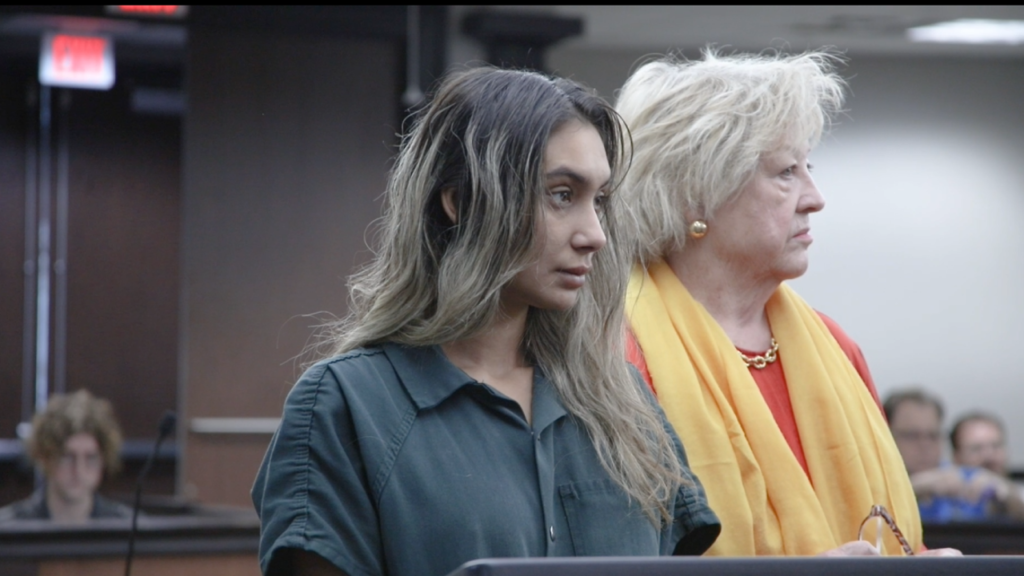
The conviction was for capital murder, a charge that carries severe legal consequences under Texas law. In this case, the verdict automatically triggered a mandatory sentence of life imprisonment without the possibility of parole. Because the charge fell under the category of capital murder involving a child victim, the sentencing guidelines did not require a separate sentencing phase once the guilty verdict was returned.
As a result, Channel Yonko was immediately sentenced to spend the rest of her life in prison without the chance of release. The sentence ensures that she will remain incarcerated permanently. Additional details presented during the proceedings also revealed that Yonko had previous interactions with Child Protective Services. However, authorities clarified that those earlier cases did not involve the 17-month-old victim in this incident. While the earlier interactions were noted, they were not directly related to the crime that led to the trial.
The conclusion of the case brought an end to the legal process surrounding the death of Hannah Yonko. The investigation, trial, and final sentencing collectively addressed the events that began with the emergency call reporting an injured baby in the street and culminated in the conviction of the child’s mother.
The case remains one of the more disturbing child-abuse homicide prosecutions in recent years due to the combination of violence involved and the extremely young age of the victim. Law enforcement officials, prosecutors, and medical professionals who worked on the case presented detailed evidence during the trial in order to reconstruct the sequence of events and determine responsibility for the child’s death.
References:
Nba games tonight
References:
https://etuitionking.net/forums/users/yokeinch8/
References:
Effects of long term steroid use
References:
http://218.232.111.112:8300/alphonsegilson
References:
Winstrol erectile dysfunction
References:
http://www.st-toenis-erleben.com/index.php/;focus=STRATP_com_cm4all_wdn_Flatpress_22934050&frame=STRATP_com_cm4all_wdn_Flatpress_22934050?x=entry:entry211125-223934;comments:1