

The leak of confidential U.S. tax records belonging to President Donald Trump and hundreds of thousands of other taxpayers stands as one of the most consequential data breaches in the history of the Internal Revenue Service. At the center of the case is Charles Edward Littlejohn, a former contractor who worked for consulting firms embedded within federal agencies and who ultimately admitted to unlawfully disclosing protected taxpayer information to media organizations.
Years after the initial leaks appeared in news reports, the consequences continue to reverberate through government oversight, federal contracting, and public trust in the stewardship of sensitive financial data. The episode has prompted renewed scrutiny of how private contractors are vetted and monitored, culminating most recently in the Treasury Department’s decision to cancel all contracts with Booz Allen Hamilton, one of the firms linked to Littlejohn’s access to IRS systems.
Background and Professional Role
Charles Edward Littlejohn was employed as a contractor, not a direct government employee, working on assignments that gave him access to highly sensitive IRS databases. During the period between 2018 and 2020, Littlejohn was affiliated with Booz Allen Hamilton, a major consulting firm that has long provided services to U.S. government agencies, including the Treasury Department and the Internal Revenue Service.
Contractors like Charles Edward Littlejohn are often brought in to support specialized technical or analytical functions, and in doing so they may be granted system access comparable to that of career civil servants. That access came with strict legal and ethical obligations. Federal law tightly restricts the disclosure of tax return information, reflecting the expectation that taxpayers must be able to provide detailed financial data to the government without fear that it will be exposed.
According to Treasury Department statements, Booz Allen Hamilton failed to implement adequate safeguards to protect the sensitive data available to its employees through IRS-related contracts. While the firm was not accused of directing or knowingly enabling the leaks, the breach exposed weaknesses in internal controls governing contractor access to confidential information.
Read : 13 Scientific Mysteries on Earth That Remain Unsolved
Charles Edward Littlejohn’s role placed him in a position of trust. As a contractor embedded in federal systems, he was expected to adhere to the same confidentiality standards as government employees. Instead, prosecutors later said, he exploited his access to download and remove vast quantities of taxpayer data over an extended period. The scope of the breach would only become clear years later, when investigations revealed the sheer volume of records compromised and the deliberate nature of the disclosures.
The Data Breach and Media Disclosures
Between 2018 and 2020, Charles Edward Littlejohn stole and leaked confidential tax return information relating to approximately 406,000 taxpayers, according to the Internal Revenue Service. Among the most prominent disclosures were President Donald Trump’s tax records, which were provided to The New York Times, as well as financial information about numerous wealthy individuals that was shared with the investigative journalism outlet ProPublica.
Read : Who Is Lisa Cook, the Fed Governor in the Spotlight of Trump’s Supreme Court Clash Over Removal?
These leaks fueled extensive public debate about tax policy, wealth inequality, and the tax practices of high-profile individuals, while also raising alarm about the security of IRS data. The disclosures were not the result of a single lapse or accidental exposure. Court records indicate that Littlejohn intentionally accessed, downloaded, and exfiltrated taxpayer information over time, bypassing safeguards designed to detect unauthorized use.

The IRS later characterized the incident as a deliberate theft of data rather than a technical breach or system failure. Investigators traced the leaks back to Littlejohn through digital forensics and access logs, eventually building a case that led to criminal charges. The public impact of the leaks was immediate and far-reaching.
News organizations published analyses based on the disclosed records, prompting political controversy and renewed calls for tax reform. At the same time, the incident underscored vulnerabilities inherent in the government’s reliance on private contractors. While contractors are integral to the functioning of modern federal agencies, the Littlejohn case demonstrated how insider threats can bypass even sophisticated security frameworks when oversight fails.
Legal Consequences and Institutional Fallout
In October 2023, Charles Edward Littlejohn pleaded guilty to one count of disclosure of tax return information, acknowledging his role in leaking confidential IRS data to the media. He admitted specifically to providing President Trump’s tax records to The New York Times and to sharing information about wealthy individuals with ProPublica. In January 2024, a federal court sentenced him to the maximum penalty allowed under the statute: five years in prison.
Read : Kyle Chrisley Arrested Months After Trump Pardons Parents Todd and Julie Chrisley
The sentence reflected the scale of the breach and the sensitivity of the information involved, even as it highlighted the limits of existing penalties for tax data disclosures. The fallout extended well beyond Littlejohn’s personal legal consequences. On Monday, U.S. Treasury Secretary Scott Bessent announced that the department had canceled all Treasury contracts with Booz Allen Hamilton, citing the firm’s failure to adequately safeguard confidential taxpayer information.
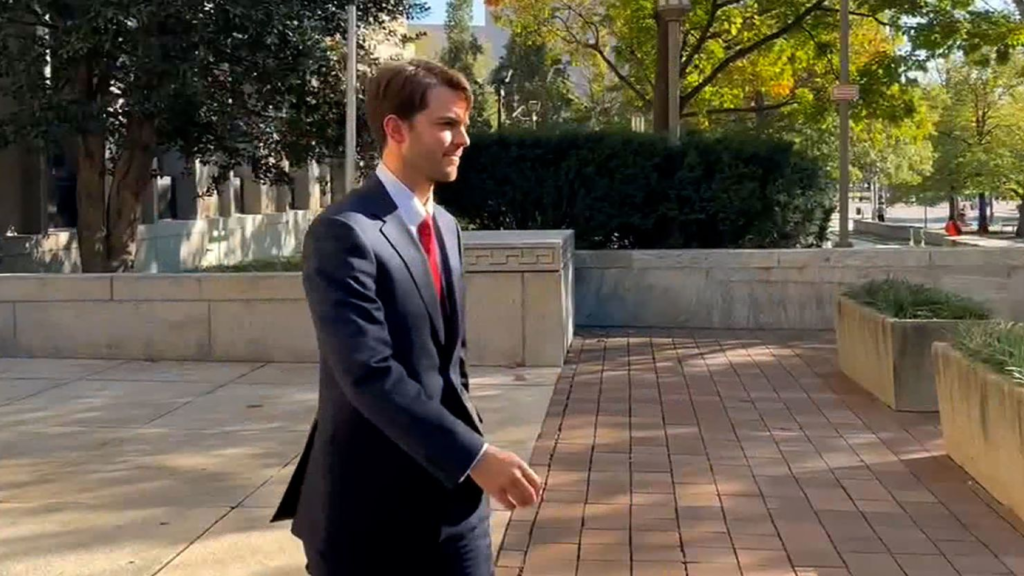
The Treasury Department disclosed that it held 31 separate contracts with the firm, representing approximately $4.8 million in annual spending and $21 million in total obligations. The decision was framed as part of a broader effort to combat waste, fraud, and abuse within government operations and to restore public confidence in federal institutions.
Financial markets reacted swiftly. Booz Allen Hamilton’s share price fell by about 8 percent following the announcement, reflecting investor concern about the loss of government business and potential reputational damage. The move signaled a tougher stance by the Treasury Department on contractor accountability and suggested that firms providing government services could face significant consequences for lapses in data protection, even when wrongdoing is attributed to an individual employee rather than corporate policy.
Institutionally, the case has prompted a reassessment of how contractors are monitored and how access to sensitive systems is granted and reviewed. The Treasury Department’s actions indicate a willingness to impose tangible penalties on firms deemed to have fallen short of security expectations. For the IRS and other agencies that rely heavily on outside contractors, the Littlejohn case has become a reference point in discussions about insider threats, auditing practices, and the balance between operational efficiency and data security.
Charles Edward Littlejohn’s actions and their aftermath have left a lasting imprint on the intersection of government transparency, privacy, and accountability. While the information he disclosed fueled public debate, the means by which it was obtained and released exposed systemic weaknesses that federal authorities are now seeking to address through stricter oversight and contractual enforcement.
Pretty solid experience with f9games. Decent graphics and good gameplay kept me entertained. Check out what all the hype is about: f9games.
Hey all! New here. Heard about betbbapp, gonna check it out. Fingers crossed for some wins! Check it out: betbbapp
What’s up gamers? Trying out gg88bet. Seems legit so far. Gonna throw some bets down. Check it out right here: gg88bet