
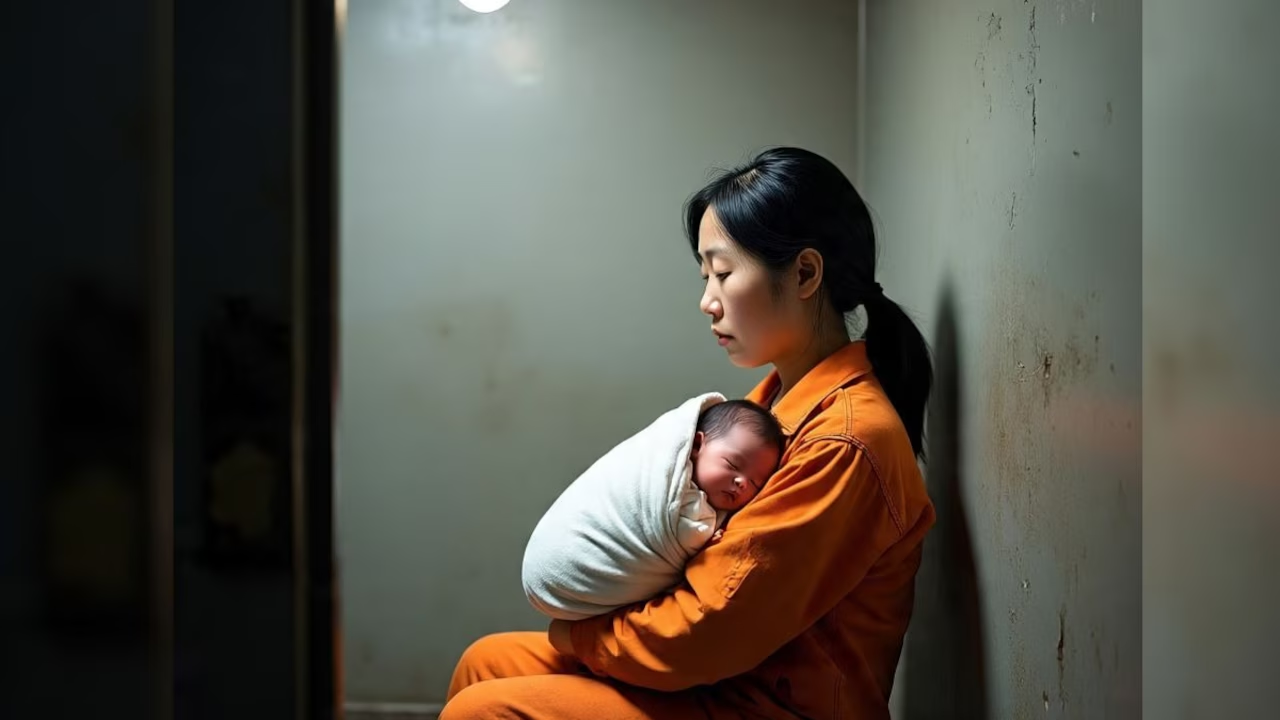
In a story that has captivated and shocked audiences across China and beyond, a woman identified as Chen Hong has managed to evade serving her full prison term through an unusual and calculated series of pregnancies. Convicted of fraud in late 2020, Chen was handed a five-year sentence, but over the subsequent four years, she gave birth to three children, each time leveraging Chinese legal provisions that allow for sentence deferrals for pregnant or nursing mothers.
This case highlights the intersections of law, family planning, and personal strategy in a system where such loopholes exist. While the details paint a picture of ingenuity—or perhaps desperation—the broader implications raise questions about justice, child welfare, and potential reforms. As news of her actions spread, social media erupted with debates, pitting sympathy for the children against criticism of the mother’s choices.
The Fraud Conviction and Initial Sentence
The saga began in December 2020 in Shanxi province, northern China, where Chen Hong stood trial for fraud. According to reports from local authorities and media outlets, Chen had been involved in a scheme that defrauded individuals or entities—though specific details of the fraud, such as the exact nature of the deception or the amount involved, have been kept somewhat vague in public disclosures to protect privacy. What is clear is that the court found her guilty, sentencing her to five years in prison. This punishment was intended to commence immediately, with Chen being remanded to a detention center to begin her term.
At the time of her conviction, Chen Hong was already in a relationship with a man who would later become the father of her three children. The couple’s personal life quickly intertwined with her legal troubles. Under Chinese criminal law, particularly provisions outlined in the Criminal Procedure Law, certain categories of offenders can apply for temporary release or sentence suspension.
These include pregnant women, those who are breastfeeding infants under one year old, or individuals with serious illnesses that make incarceration impractical. The rationale behind these rules is humanitarian: to protect the health of mothers and newborns, ensuring that childbirth and early childcare occur in a safe environment rather than behind bars. In Chen’s case, she was granted an initial deferral shortly after her sentencing because she was found to be pregnant with her first child.
This pregnancy was confirmed through medical examinations mandated by the court, and as a result, she was allowed to serve her sentence outside of prison under supervision. This meant she could live at home or in a designated location, reporting periodically to authorities while awaiting the birth. The first child arrived in 2021, and during the nursing period—which typically lasts up to one year—her incarceration was further postponed.
This initial deferral set the stage for what would become a pattern. Chen Hong’s situation was not unique in the broader context of Chinese jurisprudence; similar cases have occurred where women have used pregnancy as a means to delay or mitigate sentences. However, the frequency and timing of Chen’s pregnancies drew particular scrutiny.
Read : Dentist Lucinda Collins Avoids Jail After Killing Cyclist While Distracted by News of Dying Father
Legal experts note that while the law provides these exemptions to uphold family values and protect vulnerable groups, it assumes good faith on the part of the offender. In Chen Hong’s instance, prosecutors later argued that her actions appeared deliberate, aimed at exploiting the system rather than arising from natural family planning. The fraud itself, while not the most sensational aspect of the story, underscores the seriousness of her original crime.
Read : Unveiling the Mystery of Ghost Marriage in Chinese Culture
Fraud convictions in China can stem from various activities, such as financial scams, false representations in business dealings, or even involvement in pyramid schemes that have plagued parts of the economy. Shanxi province, known for its coal mining industry and economic transitions, has seen its share of such cases amid efforts to crack down on corruption and illegal financial practices. Chen’s five-year sentence reflects the court’s view of the offense as significant, warranting substantial punishment to deter others.
As the months turned into years, Chen Hong’s life outside prison continued. She maintained her relationship, and the couple’s decision to expand their family repeatedly aligned perfectly with the expiration of each deferral period. By the end of 2021, as her first nursing period concluded, authorities prepared to enforce the sentence—only for Chen to announce another pregnancy. This cycle repeated, turning what should have been a straightforward incarceration into a prolonged legal limbo.
Exploiting the Legal Loophole: Pregnancies and Delays
The core of this bizarre tale lies in how Chen Hong navigated China’s legal framework to extend her freedom. Between 2020 and 2024, she gave birth to three children, all with the same partner, effectively resetting the clock on her prison term each time. Chinese law, specifically Article 254 of the Criminal Procedure Law, stipulates that female prisoners who are pregnant or breastfeeding a child under one year may be allowed to serve their sentences temporarily outside prison.
This provision is part of a broader set of reforms aimed at humanizing the justice system, influenced by international standards on women’s rights and child protection. For Chen Hong, the first pregnancy led to the birth of her eldest child in early 2021. During the subsequent year, she nursed the infant, qualifying for continued deferral. As that period neared its end in 2022, she became pregnant again, giving birth to her second child later that year. Once more, the nursing exemption kicked in, pushing her incarceration further into the future.
By 2023, with the second deferral expiring, Chen Hong announced her third pregnancy, resulting in the birth of her youngest child in 2024. This sequence of events spanned four years, during which Chen avoided full imprisonment. Instead, she remained under what is known as “community correction” or supervised release, where she had to comply with check-ins, restrictions on movement, and other conditions set by the local public security bureau.

Prosecutors in Shanxi monitored her closely, but each new pregnancy provided irrefutable grounds for extension under the law. Medical verifications were conducted at each stage to confirm the pregnancies and ensure they were legitimate, though questions arose about intent. Critics argue that this loophole, while well-intentioned, can be abused in cases like Chen’s.
There is no explicit limit in the law on how many times a woman can invoke pregnancy for deferrals, leading to scenarios where sentences are indefinitely postponed. In Chen’s case, her three children were born in quick succession—approximately every 18 to 24 months—suggesting a strategic approach. The father of the children, whose identity remains private, supported her throughout, raising the family while Chen Hong navigated her legal obligations.
By mid-2024, with the third nursing period concluding, authorities decided enough was enough. The local procuratorate—the body responsible for overseeing sentence enforcement—petitioned the court to revoke further deferrals. They argued that Chen’s repeated pregnancies indicated a deliberate attempt to evade justice, potentially violating the spirit of the law. In a hearing, evidence was presented showing the timeline of her conceptions aligning suspiciously with deferral expirations. The court agreed, and Chen was finally remanded to a detention center to begin serving her sentence properly.
This decision marked the end of her four-year delay. Now in custody, Chen Hong faces the full five years, minus any time already credited under supervision. Her children, aged roughly one, two, and three years old, are reportedly being cared for by family members, including the father. The case has prompted discussions among legal scholars about whether additional safeguards, such as caps on deferral extensions or psychological evaluations, should be introduced to prevent similar exploitations.
Public Reaction and Legal Implications
News of Chen Hong’s story broke widely in Chinese media in August 2025, sparking intense online debates. On platforms like Weibo and Douyin, users expressed a mix of astonishment, anger, and pity. Many focused on the children, with comments like “Pity the children—they didn’t ask to be born into this mess” gaining thousands of likes. Others criticized Chen as selfish, accusing her of using her offspring as shields against accountability. “This is not motherhood; it’s manipulation,” one viral post read, reflecting a sentiment that her actions undermined the justice system.

Supporters, however, pointed to systemic issues. Some argued that the law’s humanitarian aspects are essential, protecting women from harsh conditions in prisons, which in China can include overcrowding and limited medical care. Stories of miscarriages or health complications in custody have fueled calls for such exemptions. Chen’s case, they say, is an outlier that shouldn’t overshadow the benefits for genuine cases.
The broader implications extend to family policy in China. Amid declining birth rates and government incentives for larger families—such as relaxed child limits and subsidies—this incident ironically aligns with pro-natalist goals but in a twisted way. Officials have emphasized that while encouraging births, exploiting laws for personal gain won’t be tolerated. In response to the publicity, Shanxi authorities announced reviews of similar cases to ensure consistent enforcement.
Legally, this could lead to reforms. Proposals include requiring judicial approval for multiple deferrals or integrating family impact assessments. Internationally, the story draws parallels to cases in other countries where pregnancy influences sentencing, such as in the U.S. or Europe, though China’s context is unique due to its centralized system.
Chen Hong’s tale serves as a cautionary narrative about the unintended consequences of compassionate laws. As she begins her sentence, the focus shifts to her children’s future and whether this bizarre chapter will inspire change. In a society balancing rapid modernization with traditional values, such stories remind us of the human elements in justice.