
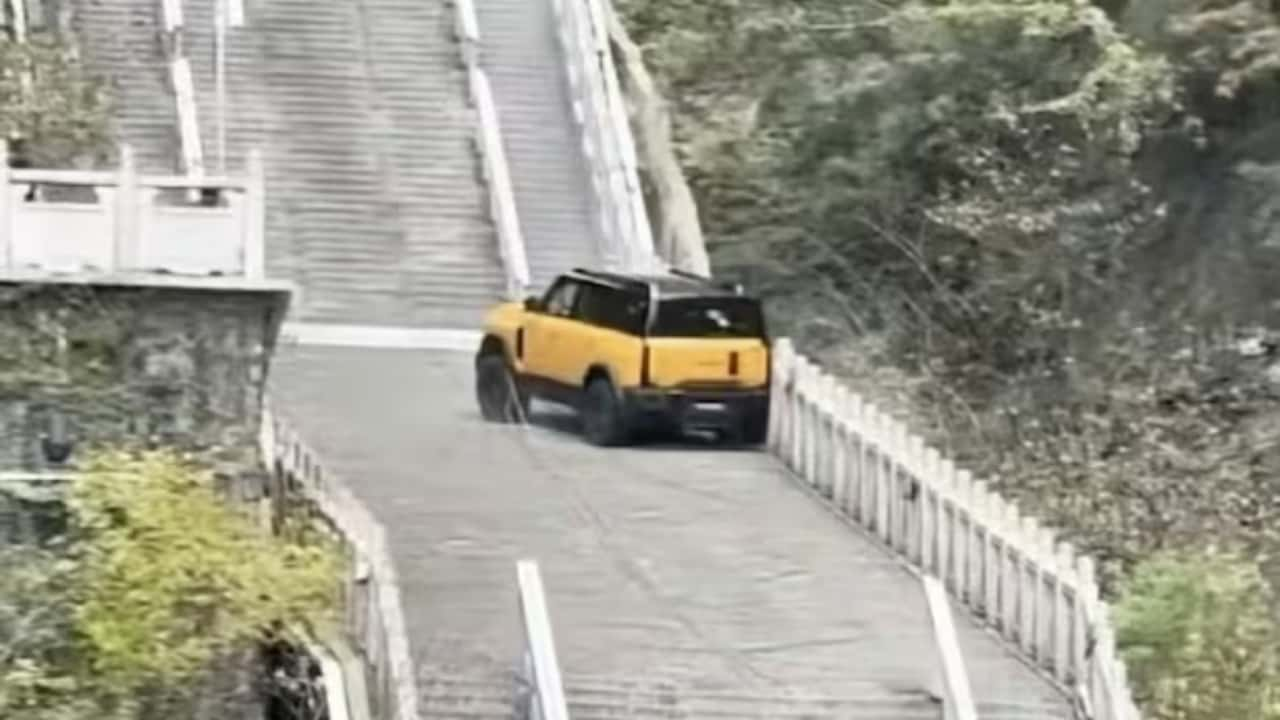
Chery Automobile’s attempted recreation of a globally recognised automotive stunt took a dramatic turn at China’s Tianmen Mountain, resulting in a failed climb, damage to the historic “Heaven’s Staircase,” and an immediate public relations challenge for the automaker. The incident, involving the newly launched Fengyun X3L SUV, unfolded in front of cameras, witnesses, and online audiences as the vehicle slid backward during the ascent and crashed into a guardrail.
The company has since issued a formal apology and committed to full restoration of the affected site. The episode stands in stark contrast to the successful Range Rover “Dragon Challenge” of 2018, raising questions about preparation, risk assessment, and the suitability of conducting such stunts at renowned cultural landmarks.
The Ambitious Attempt on the Famous ‘Sky Ladder’
The “Heaven’s Staircase,” a 999-step stone stairway at Tianmen Mountain National Forest Park in Zhangjiajie, is known for its extreme gradients and narrow 30-centimetre-wide steps. The stairway ascends roughly 300 metres toward the Tianmen Cave, a natural arch formation that draws millions of visitors every year. Because of its physical and symbolic significance, it has been featured in a limited number of high-profile challenges, including Land Rover’s highly choreographed “Dragon Challenge” in 2018.
That climb, performed by professional racing driver Tung Ho Pin, required extensive planning, engineering oversight, and safety controls, marking it as one of the brand’s most daring marketing feats. Chery’s attempt with the Fengyun X3L sought to capture similar attention. The challenge was positioned as a demonstration of the SUV’s power, traction, and engineering advancements.
Footage captured on the day showed the vehicle making steady initial progress before beginning to struggle partway through the climb. Moments later, the SUV lost momentum, slipped backward, and collided with a guardrail, breaking part of the historic structure. Spectators were heard shouting in alarm as the vehicle came to a stop. According to a witness, it remained lodged on the staircase for nearly two hours as crews assessed the situation and determined how to safely remove it.
Chinese automaker Chery carried out a stunt on the 999-step “Stairway to Heaven” at Tianmen Mountain, only for one of its test SUVs to lose traction mid-climb, slide back and crash through a guardrail.#Chery #TianmenMountain #StairwayToHeaven #AutoNews
— BusinessToday Malaysia (@BusinessTodayM1) November 14, 2025
(1/2) pic.twitter.com/ADJj5na7c4
The event prompted the temporary closure of the staircase to visitors for November 12 and 13, though alternate access to the peak, including the mountain-penetrating elevator system, remained in operation. While no injuries occurred, the accident immediately sparked widespread online discussion, with many questioning the necessity of conducting automotive stunts in public scenic areas. Some commentators drew comparisons to the highly controlled environment of the earlier Range Rover challenge, noting crucial differences in planning and safety strategy.
Chery’s Explanation and Public Apology
In a statement released on Thursday, Chery Automobile addressed the incident and outlined its understanding of the mechanical failure that contributed to the crash. According to the company, a metal shackle attached to the safety rope’s anchor point detached unexpectedly. Once it came loose, the rope became tangled around the SUV’s right rear wheel, obstructing power transmission to the drivetrain. With the wheel unable to rotate freely, the vehicle could not maintain traction and began to slide backward down the steep incline.
Read : Freakish! Elmoncy Sercle Ran Over Woman with SUV After She Refused to Let Him Smell Her Feet
Chery acknowledged that the mechanical malfunction alone did not account for the broader shortcomings in the execution of the event. The company stated that its risk assessment had been insufficient and that critical planning details had been overlooked. It further conceded that selecting a highly visible public landmark as the test site raised legitimate concerns, especially given the cultural significance and heavy tourist activity associated with Tianmen Mountain.
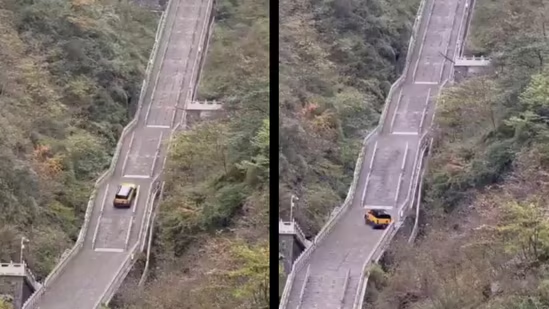
In its published apology, the automaker expressed regret for the damage caused to the stairway and the disruption to visitors. Chery pledged to fully restore the broken guardrail and any affected stonework, working directly with authorities at Tianmen Mountain Scenic Area. The company also committed to enhancing safety protocols for future tests and publicity activities, noting that it would re-evaluate site selection standards, equipment inspection processes, and technical supervision procedures to prevent similar incidents.
The statement emphasised that the company took the public’s concerns seriously, highlighting that the accident had prompted internal reflection over the balance between marketing ambition and responsible use of public cultural sites. The apology was widely shared across Chinese social media platforms, including Weibo, where viewers had been actively discussing the failed climb and its implications.
Context and Comparison to the 2018 ‘Dragon Challenge’
The failed ascent inevitably drew comparisons to Land Rover’s successful “Dragon Challenge,” which remains one of the most iconic automotive feats attempted at Tianmen Mountain. In 2018, the New Range Rover Sport completed the 999 steps in 21 minutes and 47 seconds, with professional driver Tung Ho Pin at the wheel. The event formed part of a carefully controlled promotional campaign focused on the vehicle’s hybrid powertrain and terrain management capabilities.
The 2018 challenge involved months of planning, closed-site testing, and collaboration with local authorities and engineering teams. Land Rover installed specialised safety rigs, conducted repeated pre-runs, and ensured that each aspect of the ascent was measured, supervised, and thoroughly validated before execution. The vehicle itself was modified only minimally, with the primary focus placed on ensuring consistent traction on the steep, narrow stone steps.
Read : SUV Carrying Six Students of Archie Williams High School Crashes into Tree, 4 Dead
Chery’s attempt, by contrast, appears to have involved less extensive preparation and fewer layers of technical oversight. While the Fengyun X3L was equipped with a safety rope system, the failure of the shackle and subsequent entanglement of the rope suggest that critical stress conditions may not have been fully anticipated. Automotive analysts have noted that climbing a stairway of this nature requires precise calculations regarding torque distribution, wheel stability, and tread grip, particularly when the gradient can exceed 60 degrees in some sections.
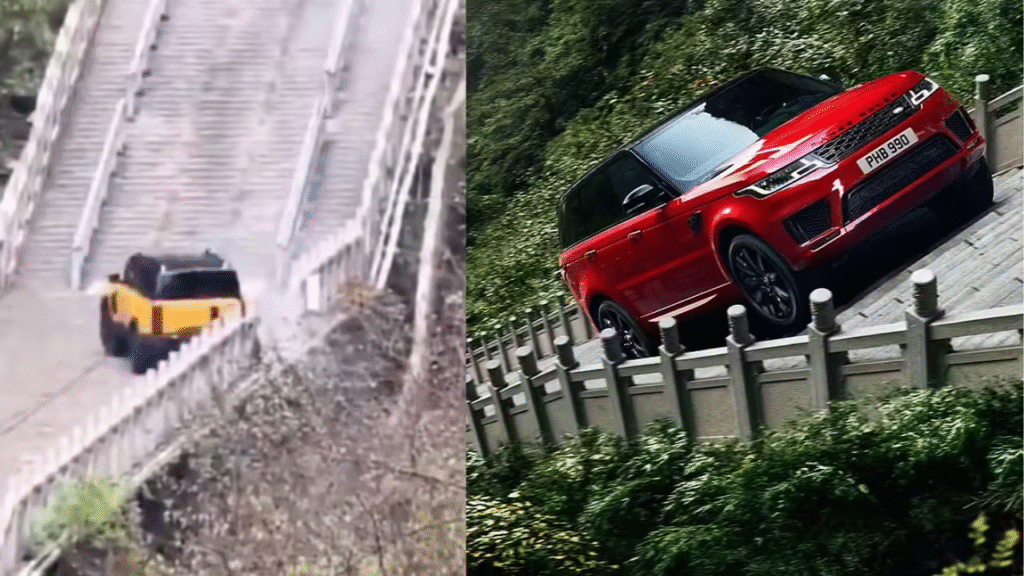
The decision to conduct the stunt at an active tourist site further heightened risks. Unlike Land Rover’s event, which involved a full site lockdown and a controlled production environment, Chery’s test occurred in a context where visitors were present and filming. While no injuries occurred, the potential consequences of a vehicle sliding backward on such a steep incline could have been severe.
The incident has also sparked broader discussion about marketing strategies among automakers in China’s increasingly competitive SUV segment. As brands seek to distinguish themselves through bold demonstrations of performance, the boundary between spectacle and safety has become a subject of scrutiny. Critics argue that the push for viral moments can lead to undue risk-taking, particularly when historic landmarks become staging grounds for promotional events.
For Chery, the failed attempt comes at a time when the company is expanding its SUV lineup and seeking greater global recognition. The Fengyun X3L represents an effort to position the brand more competitively in domestic and international markets, making the incident especially sensitive. While the company’s transparent acknowledgment of fault may help mitigate public backlash, the episode underscores the challenges of balancing ambition with responsibility.
As Tianmen Mountain authorities work with Chery on restoration efforts, the long-term implications for future automotive tests at scenic sites remain uncertain. The incident could prompt stricter regulations on the use of public landmarks for commercial stunts, particularly those involving heavy machinery or high-risk maneuvers. For now, the failed climb serves as a cautionary example of how even well-intentioned promotional events can falter without comprehensive planning and respect for the complexities of the environment in which they occur.
zuflwd