
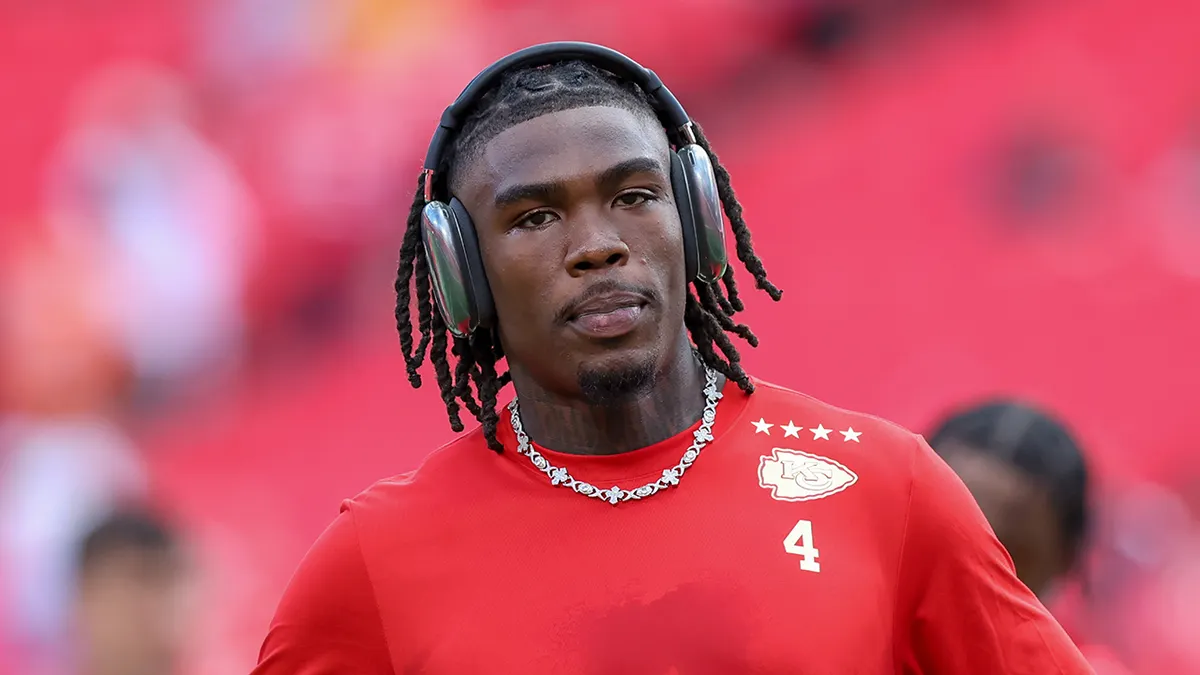
Rashee Rice, one of the National Football League’s most promising young wide receivers, is facing intense public scrutiny after his former partner, Dacoda Nichole Jones, accused him of sustained domestic abuse spanning several years. The allegations, shared through a graphic Instagram post, have rapidly shifted attention away from Rice’s on-field performances with the Kansas City Chiefs and toward deeply personal claims involving violence, coercive control, and alleged neglect.
Although no legal action or official league response has been confirmed at the time of publication, the accusations have ignited widespread debate across social media and the broader sports community, underscoring the ongoing tension between athletic achievement and personal accountability in professional sports.
Rashee Rice, who remains an active member of the Chiefs, has not publicly responded to the allegations. The franchise and the NFL have also remained silent, leaving the claims unadjudicated but highly visible. In an era where athletes’ private lives are increasingly scrutinized alongside their professional conduct, the situation highlights how allegations alone can significantly affect public perception, endorsement value, and career trajectory, even before any formal investigation or legal process unfolds.
Allegations Surface Through Instagram Post Detailing Abuse and Control
The controversy began after Dacoda Nichole Jones published a carousel of images on Instagram that she said documented years of abuse. The post included photographs showing visible injuries and damage to the interior of a home, which she described as evidence of repeated violent incidents. Accompanying the images was a lengthy caption in which Jones alleged a prolonged pattern of physical and emotional abuse, manipulation, and intimidation throughout her relationship with Rashee Rice.
She opened the post with a stark warning, explicitly labeling the content as related to domestic violence awareness. Jones wrote that her decision to speak publicly was not sudden but the result of years of silence she claims was maintained to protect Rashee Rice’s reputation. According to her account, that silence became untenable as the alleged behavior continued even after their relationship ended.
Jones stated that the abuse extended into periods when she was pregnant, alleging that Rashee Rice physically assaulted her during that time and subjected her to extreme conditions, including locking her outside overnight in freezing temperatures. She further claimed that he exerted control over her living arrangements and personal belongings, alleging that he damaged or destroyed her clothing and shoes during confrontations.
Beyond physical violence, Jones described what she characterized as financial and emotional manipulation. She alleged that after Rashee Rice left her and their children in Kansas, she was forced to repeatedly ask him for money to relocate to Texas. According to her account, even arrangements she says were agreed upon were not honored, leaving her responsible for maintaining stability for their children under difficult circumstances.
Read : Discover Nature’s Masterpieces: The Top 10 Most Beautiful Lakes Worldwide
Jones also accused Rashee Rice of failing to fulfill his responsibilities as a father, alleging infrequent communication with their children and prioritization of other relationships over parental involvement. She concluded the post by stating that Rice was attempting to remove her and the children from their home, framing the move as part of a broader pattern of intimidation and control. Her final words emphasized a decision to prioritize her own safety and the well-being of her children, stating that she would no longer protect what she described as a false public persona.
Rashee Rice’s Status With the Chiefs and the Absence of Official Action
At the time the allegations became public, Rashee Rice remained on the Kansas City Chiefs’ active roster, and no disciplinary action had been announced by the team or the NFL. The league’s personal conduct policy allows the commissioner broad discretion to place players on administrative leave or impose discipline even in the absence of criminal charges, but such steps are typically taken after preliminary fact-finding or formal complaints.
The Chiefs have not issued a public statement addressing the accusations, nor has Rashee Rice released a response through legal counsel or social media. The lack of immediate comment has contributed to speculation among fans and analysts, though it does not imply guilt or innocence. In high-profile cases involving professional athletes, organizations often wait for additional information before responding, particularly when allegations surface through social media rather than formal legal channels.
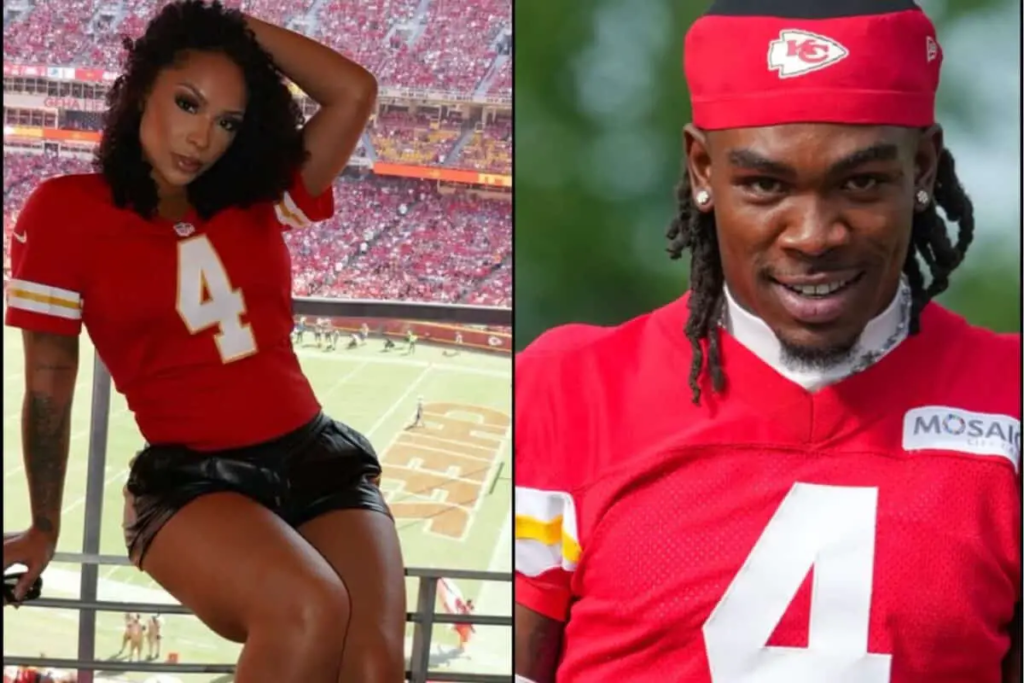
Rice entered the NFL with significant expectations and quickly became an important part of Kansas City’s offense. His on-field success, coupled with the Chiefs’ high-profile status as one of the league’s most visible franchises, has amplified the reach and impact of the allegations. For the team, the situation presents a complex challenge: balancing due process for the player with the organization’s public commitments to personal conduct standards and community values.
Historically, the NFL’s handling of domestic violence cases has drawn criticism for inconsistency and perceived leniency. High-profile incidents in previous years prompted the league to revise its policies and emphasize education, prevention, and accountability. As a result, any case involving such allegations is now closely watched by advocacy groups, fans, and media outlets, regardless of whether it proceeds to court.
Public Reaction, Broader Implications, and the Road Ahead
The reaction to Jones’s post has been swift and polarized. Many supporters expressed solidarity with her, praising her decision to speak publicly and highlighting the difficulties survivors often face when accusing powerful public figures. Others urged caution, emphasizing the importance of due process and warning against drawing conclusions before investigations or legal proceedings take place.

Within the broader context of professional sports, the situation reflects ongoing debates about how leagues, teams, and fans should respond to allegations of domestic abuse. Social media has increasingly become a platform where such claims surface, bypassing traditional legal or journalistic gatekeeping and forcing institutions to respond in real time. While this can empower alleged victims to share their experiences, it also complicates efforts to verify claims and ensure fair treatment for all parties involved.
For Rice, the allegations arrive at a pivotal moment in his career. Young, successful, and playing for a championship-contending team, he represents both athletic promise and commercial value. Even without formal charges, the reputational damage from such accusations can have lasting effects, influencing endorsement opportunities, fan support, and organizational trust.
For Jones and her children, the public nature of the allegations brings both visibility and vulnerability. Speaking out can invite scrutiny and backlash, particularly when the accused holds celebrity status. At the same time, public attention can create pressure for institutions to act and can encourage broader conversations about domestic abuse, power dynamics, and accountability.
As of now, the situation remains unresolved. No court filings, police reports, or league investigations have been publicly confirmed, and Rice has not offered his version of events. What is clear is that the allegations have already altered the narrative surrounding one of the NFL’s rising stars. Until further information emerges, the claims stand as serious accusations that demand careful consideration, underscoring the complex intersection of personal conduct, public image, and professional sport.
I got good info from your blog
You need to participate in a contest for the most effective blogs on the web. I’ll recommend this website!