
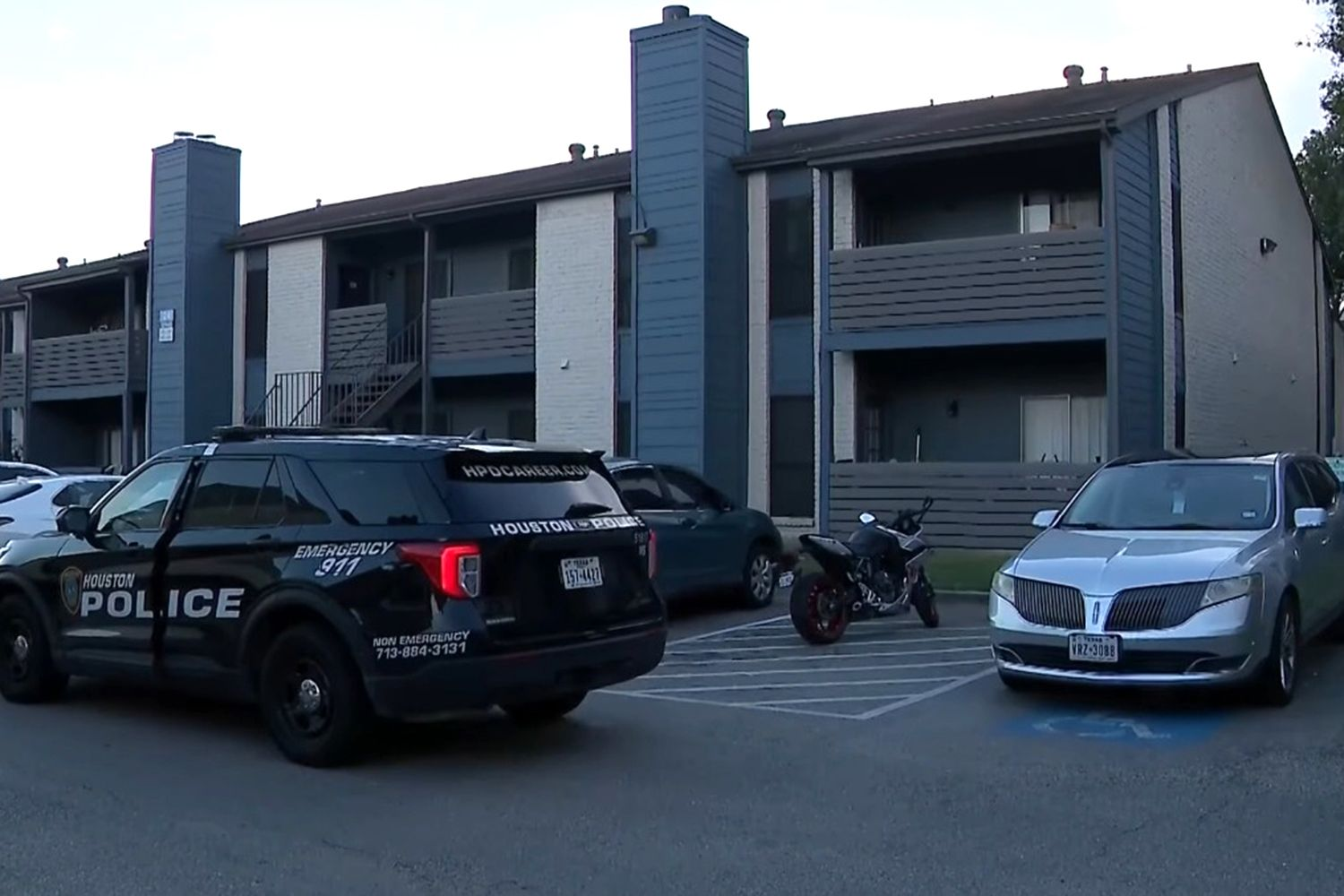
In a tragedy that has shaken the city of Houston to its core, three young children, all under the age of four, inadvertently led police officers to the scene of their parents’ deaths in what authorities have described as a murder-suicide. The incident unfolded in a west Houston apartment complex, highlighting the fragility of family life and the unforeseen horrors that can lurk behind closed doors. As details emerge from the Houston Police Department, the community grapples with the loss of two young lives and the uncertain future facing the orphaned toddlers.
This heartbreaking event serves as a stark reminder of the silent struggles many families endure, often without outward signs of distress. The children, aged 3, 2, and 1, were discovered wandering the apartment complex in the sweltering Texas heat, reportedly searching for food. Their innocent quest for sustenance drew the attention of concerned residents and ultimately law enforcement, who followed the little ones back to their home.
Inside, officers uncovered a grim scene: the bodies of the children’s mother and father, both victims of gunshot wounds in an apparent act of domestic violence that ended in suicide. While the names of the deceased have not been publicly released pending notification of extended family, the police have confirmed that the couple was young, adding another layer of sorrow to the narrative. This story, emerging in mid-August 2025, has prompted widespread discussions about child welfare, mental health support, and the role of community vigilance in preventing such calamities.
As investigators piece together the timeline, questions arise about what led to this devastating outcome. Domestic disputes, financial pressures, or untreated mental health issues are often cited in similar cases, though specifics here remain under wraps as the inquiry continues. The resilience of the children, who managed to escape unharmed physically despite the chaos, is nothing short of miraculous. Yet, the emotional scars they carry will undoubtedly require long-term care and support.
The Heartbreaking Discovery by the Children
The afternoon of August 18, 2025, began like any other in the bustling west Houston apartment complex, where families go about their daily routines amid the hum of urban life. However, what started as a routine day quickly turned into a nightmare when residents noticed three small children—barely out of diapers—roaming unsupervised in the oppressive heat. The toddlers, dressed in light clothing unsuitable for prolonged exposure to the sun, appeared disoriented and hungry.
Eyewitness accounts describe the children as approaching strangers, perhaps instinctively seeking help, though their young ages limited their ability to communicate effectively. One resident, who chose to remain anonymous, recounted hearing faint cries and seeing the children knocking on doors, possibly mimicking behaviors they had observed from adults. Concerned for their safety, the resident alerted authorities, prompting a swift response from the Houston Police Department.
Officers arrived on the scene around midday, where they encountered the children: a 3-year-old boy, a 2-year-old girl, and a 1-year-old infant. The eldest child, in a moment that has been described as both poignant and chilling, reportedly pointed toward their apartment unit and uttered words indicating that something was terribly wrong inside. “Mommy and Daddy are sleeping,” or similar phrases, were relayed to the officers, though exact details have been kept confidential to protect the minors.
Read : Pennsylvania Family of Four Found Dead in Murder-Suicide Case
Guided by the children, police entered the apartment, where they were met with a scene of utter devastation. The mother and father were found deceased in the living room area, with evidence suggesting a violent altercation had preceded the fatalities. Preliminary reports indicate that the father had inflicted fatal gunshot wounds on the mother before turning the weapon on himself. The weapon, a handgun, was recovered at the scene, and no signs of forced entry or external involvement were apparent, leading investigators to classify the incident as a murder-suicide from the outset.
Read : Shocking Pentagon Study Found That More U.S. Soldiers Died by Suicide Than Combat from 2014 to 2019
The children’s survival is attributed to sheer luck; they had somehow managed to exit the apartment, perhaps through an unlocked door, and wander in search of food. Medical examinations confirmed that the toddlers were dehydrated and malnourished but otherwise unharmed. Child Protective Services was immediately involved, placing the siblings in temporary foster care while arrangements for long-term guardianship are made. Relatives have been notified, and there is hope that family members will step in to provide a stable environment.
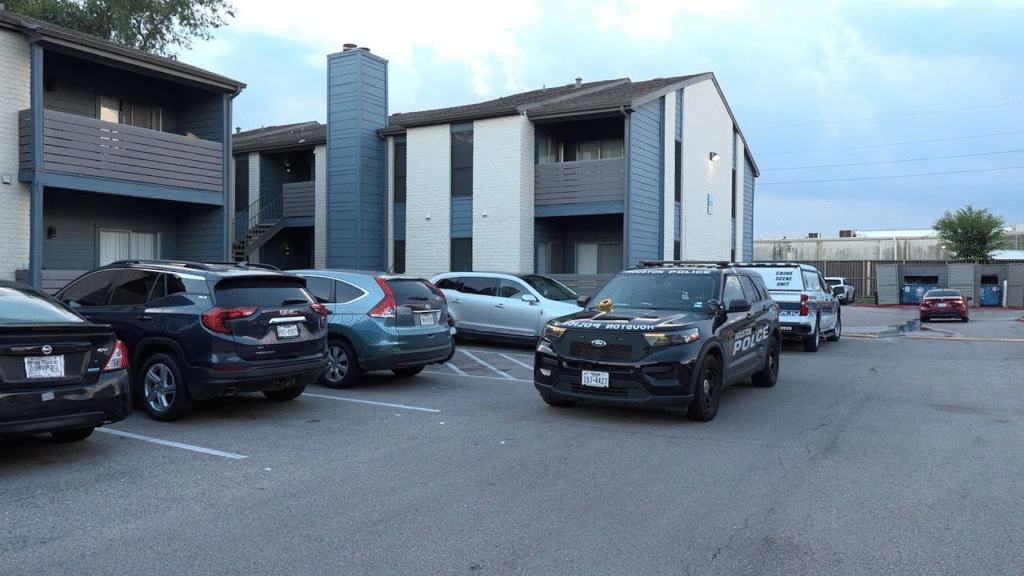
This discovery underscores the vulnerability of young children in households plagued by instability. In Houston, where temperatures often soar above 90 degrees Fahrenheit in August, the risks of heat exposure alone could have been fatal. The fact that these toddlers endured not only the trauma of witnessing or hearing the violence but also navigated the outside world alone speaks to an innate survival instinct.
Community members have since expressed outrage and sorrow, with many questioning how such young children could be left in such a predicament without earlier intervention. Social workers emphasize that signs of distress in families can be subtle, urging neighbors to report any concerns promptly. As the story spread through local media outlets, it evoked memories of other tragic family incidents in Texas, where children have been unwitting survivors of domestic horrors.
The emotional weight of this event is compounded by the children’s ages—they are too young to fully comprehend the loss, yet old enough to retain fragmented memories that could haunt them for years. Psychologists note that early childhood trauma like this can lead to long-term issues such as anxiety, attachment disorders, and post-traumatic stress. Immediate therapeutic interventions are crucial, and organizations specializing in child grief support have already offered their services.
Details of the Investigation
The Houston Police Department’s Homicide Division took charge of the case immediately following the discovery, treating it with the sensitivity required for incidents involving minors. Lieutenant Larry Crowson, a spokesperson for the department, provided initial briefings to the press, confirming the murder-suicide classification based on forensic evidence. Ballistics analysis matched the wounds to the handgun found near the father’s body, and autopsies conducted by the Harris County Institute of Forensic Sciences corroborated the sequence of events: the mother was shot multiple times, likely in a fit of rage, before the perpetrator ended his own life.
Investigators have been meticulous in reconstructing the timeline. Neighbors reported hearing loud arguments from the apartment in the days leading up to the incident, though no prior police calls were documented for domestic disturbances at this address. The couple, both in their mid-20s, had resided in the complex for approximately two years. Employment details remain undisclosed, but sources close to the investigation suggest financial strain may have been a contributing factor, exacerbated by the challenges of raising three young children.
Toxicology reports are pending, which could reveal if substances played a role in escalating the situation. In many murder-suicide cases, alcohol or drugs are involved, impairing judgment and amplifying conflicts. The apartment was described as modestly furnished, with children’s toys scattered amid the chaos, painting a picture of a once-normal family life shattered in an instant. No suicide note was found, leaving motives shrouded in speculation. Police have interviewed extended family members, who expressed shock and denial, stating that while the couple had faced typical parental stresses, nothing indicated an impending crisis.
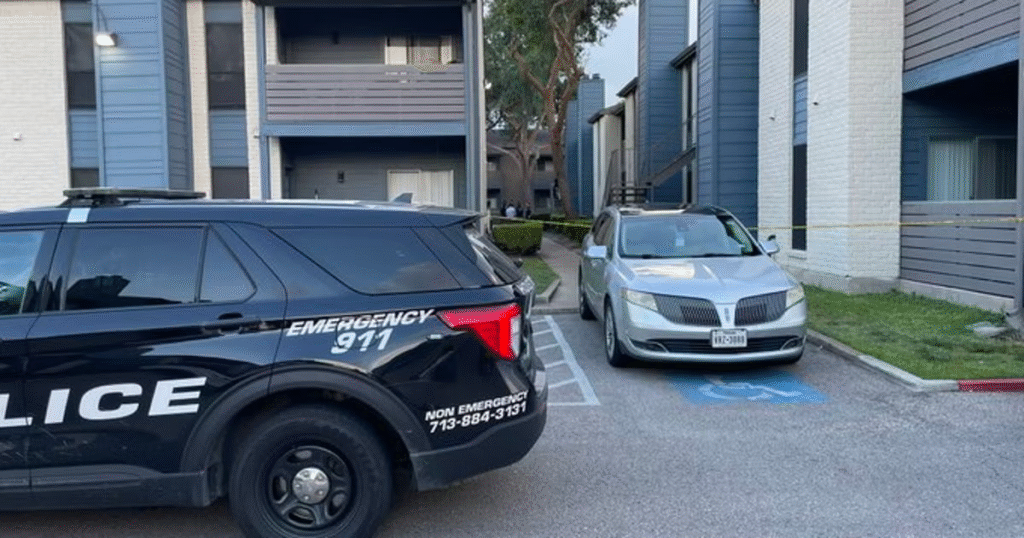
The investigation also extends to reviewing any history of mental health issues. Texas has seen a rise in domestic violence incidents post-pandemic, with experts linking it to increased isolation and economic pressures. The Houston Police Department collaborates with local advocacy groups to analyze patterns in such cases, aiming to improve prevention strategies. In this instance, the absence of prior reports highlights a gap in community awareness—neighbors may have heard disputes but dismissed them as commonplace.
Forensic teams spent hours processing the scene, collecting evidence to ensure no foul play from outsiders. Security footage from the complex confirmed the children’s movements, showing them exiting the apartment shortly after the estimated time of death. This digital trail has been instrumental in ruling out alternative scenarios. As the case progresses, authorities anticipate closing the file soon, given the straightforward nature of the evidence, but they emphasize ongoing support for the children as paramount.
Public records searches, conducted as part of the probe, revealed no criminal history for the couple, making the event all the more baffling. Community leaders have called for enhanced mental health resources, particularly for young families in low-income housing. The investigation’s transparency has been praised, with regular updates provided to alleviate public concerns about safety in the area.
Impact on the Community and Support for the Children
The ripple effects of this tragedy extend far beyond the apartment walls, resonating throughout Houston and prompting a collective soul-searching. Residents of the west Houston complex, a diverse community of working-class families, have banded together in grief and solidarity. Vigils have been organized, with candles lit in memory of the lost parents and prayers offered for the children’s future. Local churches and nonprofits have stepped up, collecting donations for the toddlers’ immediate needs, including clothing, toys, and educational materials.
Child welfare experts stress the importance of stability for the siblings, advocating against separating them in foster care. Potential relatives, possibly from out of state, are being evaluated for custody, with background checks ensuring a safe environment. In the interim, licensed foster parents trained in trauma-informed care are providing round-the-clock support. Therapeutic play sessions, art therapy, and counseling are integral to helping the children process their experiences, even at such tender ages.
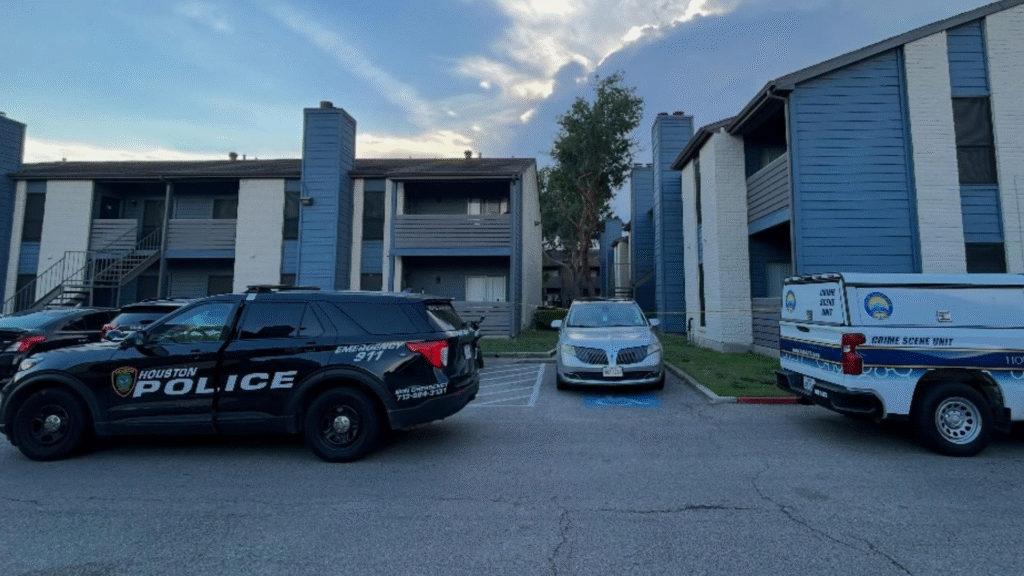
Broader discussions have emerged about preventive measures. Houston’s domestic violence hotlines have reported increased calls since the news broke, indicating heightened awareness. Organizations like the Houston Area Women’s Center are amplifying their outreach, offering free workshops on recognizing abuse signs and accessing help. Schools in the district are reviewing protocols for monitoring student well-being, as early intervention could prevent escalations in troubled homes.
The financial burden on the community is also notable; child protective services strain under caseloads, and this high-profile case underscores the need for more funding. Philanthropic efforts, including online fundraisers vetted by reputable charities, aim to establish trusts for the children’s education and therapy. Mental health advocates point out that murder-suicides often stem from untreated depression or relationship breakdowns, urging policymakers to expand access to affordable counseling.
In reflecting on this unimaginable event, Houstonians are reminded of their interconnectedness. Acts of kindness, from neighbors checking on one another to volunteers mentoring at-risk youth, can make a difference. The children’s story, though tragic, inspires hope through the compassion it has elicited. As the city heals, the focus remains on ensuring these young survivors thrive, turning a tale of loss into one of resilience and community strength.
This incident, while isolated, mirrors national trends in family violence, prompting calls for systemic changes. By addressing root causes like poverty and isolation, society can work toward fewer such headlines. For now, the three children represent both the innocence lost and the potential for renewal, as Houston rallies to support them in their journey ahead.