
Guizhou, a province often described as the heart of China’s mountainous south, is where engineering dreams go to defy gravity. Home to dramatic cliffs and jagged landscapes, it’s a land both breathtaking and brutal—especially for anyone trying to build a road. But where most countries might compromise with winding switchbacks and endless tunnels, China has instead carved its way to the top of the world—literally.
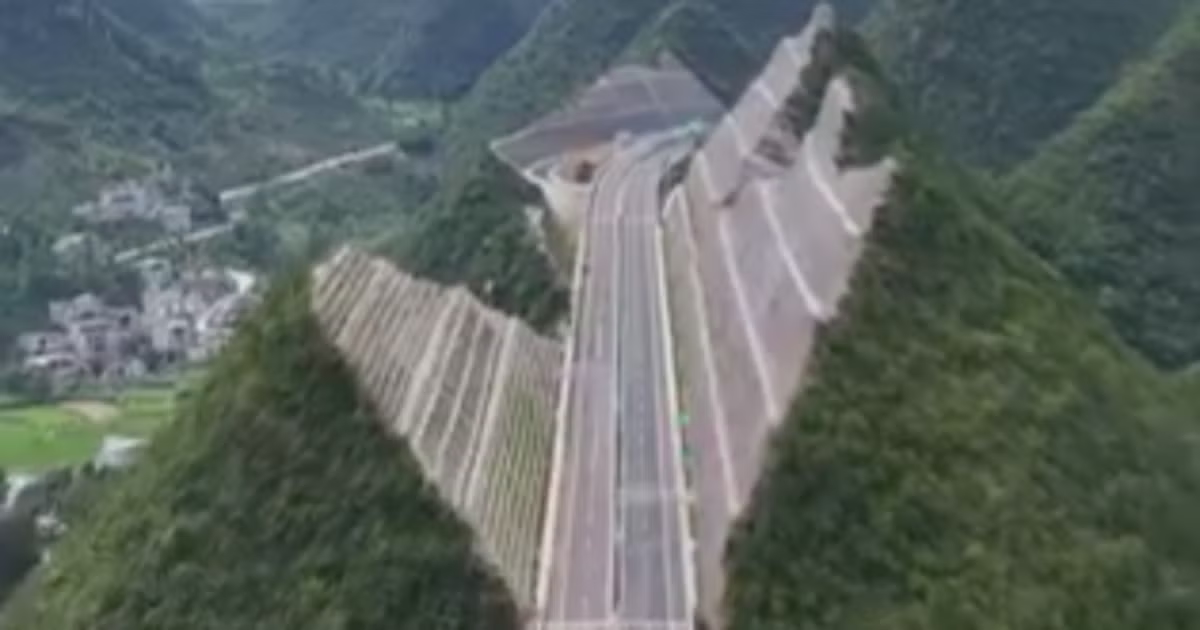
In one of the most jaw-dropping infrastructure projects of modern times, China sliced the Beipanjiang mountain in half to create the Guizhou Luan Expressway, a marvel that now features the Huajiang Canyon Bridge, set to become the tallest bridge in the world.
A suspension masterpiece soaring 2,051 feet above the canyon floor, the Huajiang Canyon Bridge is more than an architectural feat—it’s a symbol of ambition, resilience, and innovation. Once open, it will transform the way people travel in one of China’s most remote and inaccessible regions. But this project is more than just numbers and steel; it’s a story of how one nation looked at its impossible terrain and decided to build straight through it.
Tearing Through Mountains: The Unconventional Route to Connectivity
Guizhou’s terrain is notoriously harsh. With over 92 percent of its land covered by mountains and cliffs, constructing an efficient transportation network has always been a formidable challenge. For centuries, remote villages remained isolated, and a journey that should have taken minutes often dragged on for hours through winding, narrow roads clinging precariously to cliff edges.
The conventional solution would have involved boring through endless tunnels—but in a bold move, Chinese engineers decided to go even bigger. Instead of weaving around or underneath the mountains, they went over and through them.
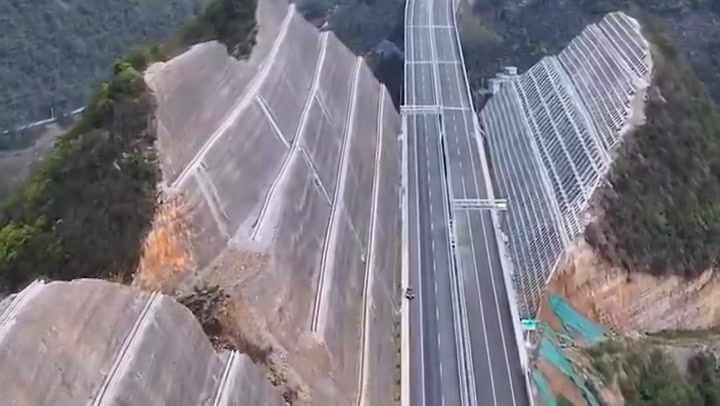
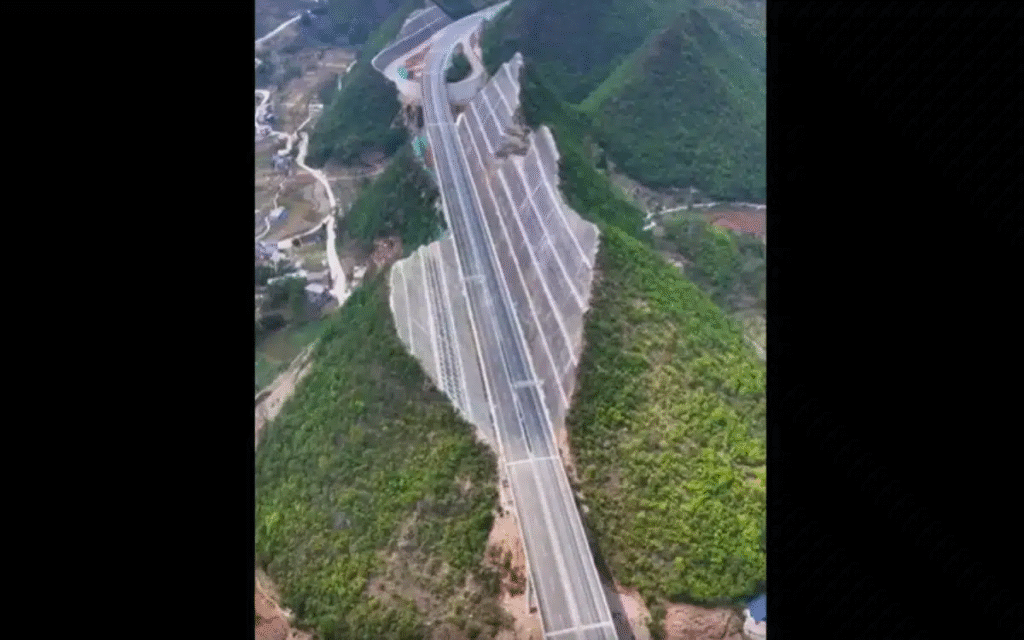
Enter the Guizhou Luan Expressway. Carved directly through the Beipanjiang mountain range, engineers quite literally sliced off mountaintops to lay the groundwork for this skyway. Using a mix of GPS-guided precision and brute-force excavation, the mountaintops were levelled and reshaped to form a path for the highway. This process was not only groundbreaking in concept but groundbreaking in execution, requiring the movement of millions of cubic meters of rock and earth.
China just sliced mountains like butter — to connect forgotten villages with the world. Huajiang Bridge is unreal. pic.twitter.com/JdKcAxe2LU
— Henry Kabogo 💧 ❄ 🇰🇪 (@Kabogo_Henry) August 1, 2025
The result is a smooth, direct expressway that connects previously isolated regions with major urban centers, transforming the local economy and accessibility in ways that were previously unimaginable. Where villagers once faced a 70-minute journey along steep, dangerous roads, they’ll now enjoy a one-minute ride across a bridge in the clouds.
The Huajiang Canyon Bridge: A Sky-High Marvel
The undisputed crown jewel of the Guizhou Luan Expressway is the Huajiang Canyon Bridge. With a design that fuses aesthetic grandeur with mind-bending engineering, this suspension bridge is poised to become the tallest in the world, standing at a staggering 2,051 feet above the canyon floor—high enough to conceal the Eiffel Tower beneath it.
Stretching 9,482 feet in total length, with a central span of 4,659 feet, the bridge is a towering symbol of China’s infrastructure ambitions. The steel used to construct it weighs in at over 49,000 tons, and each component had to be placed with surgical precision. Given the sheer altitude, wind speeds and weather conditions were critical factors—so engineers employed advanced wind sensors and GPS-guided cable cranes to ensure stability during construction.
Read : Catastrophe! 360 Degrees Thrill Ride Snaps in Half at Saudi Arabia’s Green Mountain Park
This isn’t just a bridge—it’s an elevated experience. Travelers won’t just cross from one side to the other; they’ll glide through the sky, with panoramic views that would make even the most hardened thrill-seeker pause. And for those with a fear of heights, just thinking about driving across it might trigger sweaty palms long before the tires hit the asphalt.
But the bridge is more than just a marvel for motorists. There are whispers of future glass walkways, observation decks, and even stargazing platforms perched atop its towers. Given its altitude and minimal light pollution, the bridge may double as one of the most unique astronomical viewing stations on Earth. And for the adrenaline junkies? Expect extreme sports like bungee jumping and zip-lining to find a new home here.
The Human Impact: Transforming Lives and Tourism
While the engineering might steal the headlines, the true impact of the Guizhou Luan Expressway and the Huajiang Canyon Bridge lies in how it transforms the daily lives of the people who call this region home. For decades, communities tucked away in these deep mountain valleys were cut off from economic opportunities and basic services. Traveling to a city often meant a perilous journey, one that could take hours and leave families stranded during landslides or bad weather.
Now, with the expressway in place and the bridge nearing completion, entire regions will be plugged into the national grid of transportation and trade. What was once an insurmountable divide is now a seamless route, opening doors to education, healthcare, and commerce. Farmers can transport their produce to city markets with ease.
Students can reach schools without the risk of trekking along cliffside paths. And tourists? They’ll flock in, drawn by the sheer audacity of the bridge’s design and the natural beauty it showcases. Guizhou has already earned the nickname “the world’s highest bridge museum” because of the many gravity-defying bridges that pepper its cliffs and valleys.
But the Huajiang Canyon Bridge is destined to be its centerpiece—a monument not just to engineering, but to human willpower and ingenuity. With its completion slated for late 2025, anticipation is growing. Social media is abuzz with photos and drone footage of the bridge mid-construction. Reddit users have dubbed it “new nightmare fuel” and “nature’s cheat code,” with reactions oscillating between awe and vertigo.
Yet this blend of fear and fascination may be exactly what makes the bridge such a draw. Adventure tourists will come for the thrill. Photographers will chase the perfect shot of sunrise breaking over the suspension cables. Environmentalists will study how the expressway was built through such a delicate landscape with minimal disruption. The bridge is not just an engineering achievement—it’s a cultural landmark in the making.
As much as it is a triumph of modern design, it’s also a promise—proof that even the most rugged terrain can be overcome with vision and technology. China’s ability to stare down its natural barriers and slice through them with steel and resolve sets a global example of what infrastructure in the 21st century can look like.
China’s decision to slice the Beipanjiang mountain in half and construct the world’s tallest bridge across the Huajiang Canyon is nothing short of a miracle of modern engineering. The Guizhou Luan Expressway doesn’t just link points A and B—it connects lives, revitalizes communities, and redefines what is possible when determination meets design.
Once complete, the Huajiang Canyon Bridge will stand not only as the highest bridge on the planet but as a towering symbol of ambition, innovation, and national pride. It’s a project that defies gravity and expectations—a one-minute ride that took years of planning and a vision daring enough to move mountains.