
In recent years, the relationship between humans and their pets in China has undergone a distinct transformation. What was once seen primarily as a matter of companionship has now grown into a deep emotional connection rooted in care, responsibility, and even spiritual devotion. This shift is reflected in the growing practice among young pet owners of visiting the sacred pagoda of Diting, a mythical dog deity located at Jiuhua Mountain in Chizhou, Anhui province.
Here, pet owners gather to pray for the health, safety, and long lives of their beloved dogs. The cultural significance of this tradition reaches beyond simple superstition or folklore. Instead, it illustrates the modern intertwining of ancient mythology with contemporary attitudes toward animal welfare, companionship, and the emotional role pets now play in many households. The story of Diting, the guardian creature believed to accompany an enlightened Bodhisattva, symbolizes devotion, wisdom, and protection, making the site a meaningful place of pilgrimage for those who view their pets as family members.
Origins and Mythological Significance of Diting
The roots of the Diting belief trace back to the legend of Earth Store Bodhisattva, also known in Chinese Buddhism as Kṣitigarbha, a revered figure known for guiding souls and preventing suffering. According to the legend, the Bodhisattva raised a loyal white dog that accompanied him faithfully throughout his spiritual journey.
When the Bodhisattva attained enlightenment on Jiuhua Mountain, the dog transformed into a divine creature known as Diting. This mythical being is described in traditional imagery as having a tiger’s head, a single horn atop its head, dog-like ears, the body of a dragon, and the tail of a lion. The unique combination of animal traits symbolizes strength, wisdom, loyalty, and celestial power.
Diting is believed to possess the extraordinary ability to distinguish good from evil by listening deeply to the hearts and intentions of living beings. In Buddhist iconography and storytelling, this ability to “hear all” is central to its symbolic identity. As a result, Diting has become a representation of justice, loyalty, and spiritual clarity. Devotees believe that this divine creature not only protects humans but also watches over animals, particularly those who have formed emotional bonds with people.
Read : 38-Year-Old Monica Emerson Mauled to Death by Own Pet Dogs After Suffering Medical Episode at Home
To honor this mythical protector, a pagoda with a stone statue of Diting was erected on Mount Jiuhua. Over time, the site transitioned from a historical monument into a place of active pilgrimage. Today, it is believed to be the only pagoda in China dedicated specifically to honoring animals. Visitors come not only for cultural curiosity but with sincere devotion, bringing offerings and prayers in hopes of securing health and happiness for their pets.
A Growing Cultural Movement Among Young Pet Owners
The recent surge in visits to the Diting Pagoda has been driven largely by younger generations, particularly in urban areas where pet ownership has increased significantly. With rising social pressures, longer working hours, and changes in family structures, many young adults in China see their pets as emotional companions and sources of comfort. This shift has led to greater emphasis on pets’ quality of life and physical and emotional well-being, which includes healthcare, nutrition, and, in some cases, spiritual protection.
Read : Choosing Between a Pet Animal and a Pet Bird: What’s Best for You?
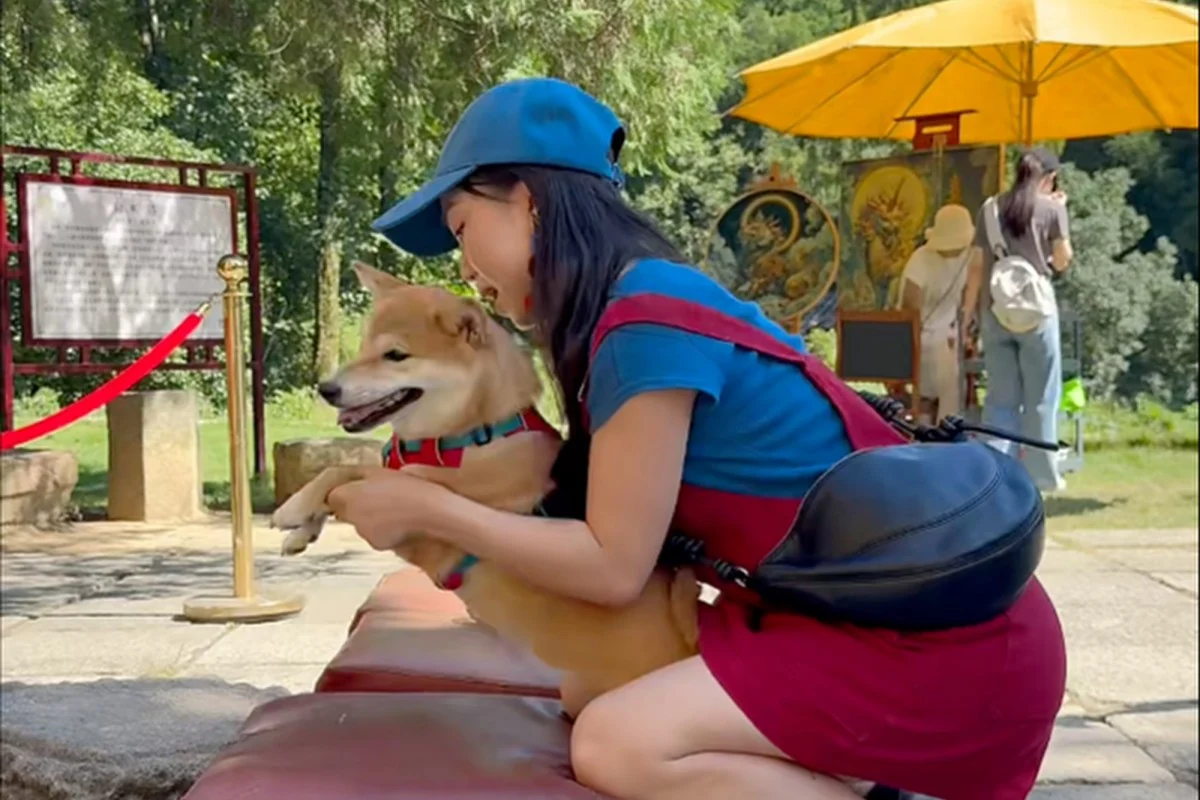
On October 26, a young pet owner named Wu Suowei traveled to Mount Jiuhua with her Shiba Inu, Duobao, who had been suffering from digestive issues. Wu’s visit reflects a common sentiment shared by many pet owners who feel a deep responsibility for their animals’ welfare. At the site, Wu laid Duobao gently on a prayer stool and knelt beside him as she prayed to Diting for his recovery. Like many others, she circled the pagoda three times with her dog, a ritual believed to invoke blessings.
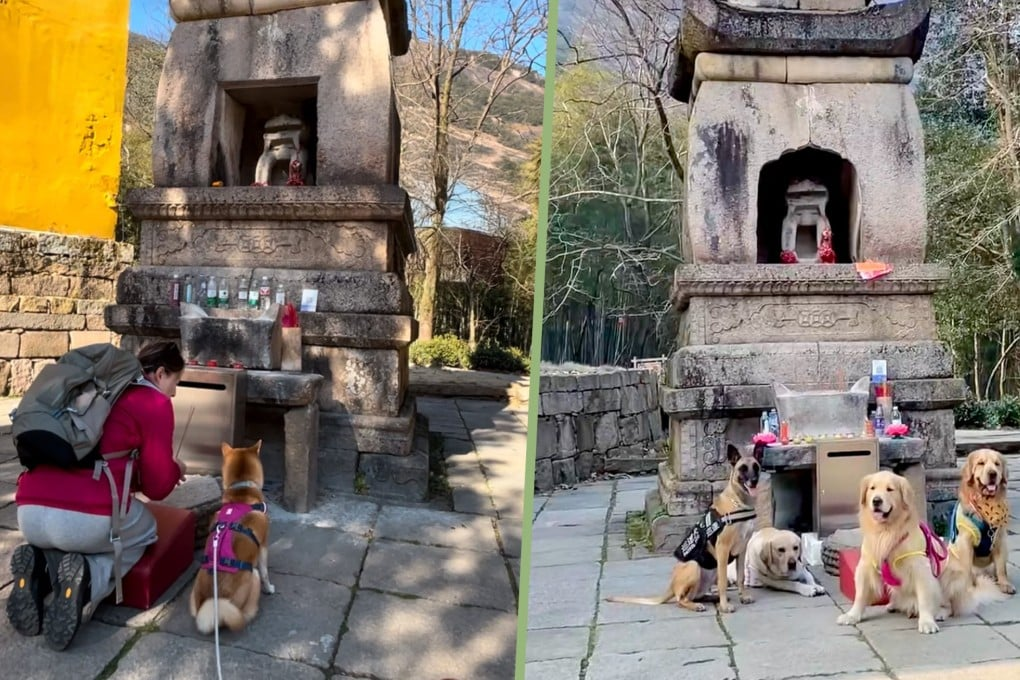
She then placed the dog’s collar and leash in incense ashes for a short moment, a traditional practice intended to protect pets from becoming lost. Around the pagoda, the atmosphere is often serene but emotionally charged. Visitors can be seen offering dog food, snacks, toys, and sometimes handwritten messages expressing their wishes for long, healthy lives for their pets. Some owners sit quietly beside their animals in contemplation, while others gently embrace their dogs as they pray.
This form of devotion may draw attention for its spiritual dimension, but it is rooted in a broader social trend. Pets in modern China are no longer seen solely as domestic animals; they are regarded as cherished family members. This shift reflects broader societal changes, including evolving views on compassion, emotional support, and the value of companionship. Many pet owners express that visiting Diting offers emotional reassurance and a sense of shared community with others who understand the significance of their bond with their dogs.
The Sacred Site and Its Symbolic Role in Contemporary Society
Jiuhua Mountain is one of the four sacred Buddhist mountains in China, known for its temples, monastic history, and scenic landscapes. Among these spiritual landmarks, the Diting Pagoda stands out for its unique dedication to a non-human guardian figure. Visitors can access the pagoda for an admission fee, though dogs are allowed to enter without charge. The location has gradually become a cultural gathering space where themes of spirituality, compassion, and animal welfare intersect.
Read : 61-Year-Old Craig Vogt Kills and Eats Pet Peacocks After Neighbor Keeps Feeding Them
While the pilgrimage may appear to some as a blend of folklore and modern sentimentality, its deeper significance reflects an evolving relationship between humans and animals in Chinese society. The act of praying to Diting is symbolic of responsibility and empathy. Many pet owners express that the rituals offer emotional healing and reinforce the value of caring for living beings.
Furthermore, the site acts as a reminder of Buddhist teachings on compassion toward all forms of life. By honoring Diting, visitors also pay respect to the idea that loyalty, awareness, and moral insight are virtues not limited to humans. The belief that a divine guardian can listen and protect reinforces the emotional assurance that pets are not alone, even in times of vulnerability.
The growing popularity of the Diting pilgrimage aligns with wider social conversations about animal rights and ethical treatment. As China continues to urbanize, the role of domestic animals has expanded, and public awareness about veterinary care, mental stimulation for pets, and adoption has increased. The worship of Diting does not replace modern medical care, but rather coexists alongside it as an expression of emotional devotion and cultural tradition.
In this way, the Diting pagoda represents not only a physical temple but also a symbolic space where tradition and modernity converge. It stands as a testament to enduring cultural stories that adapt to the needs and values of contemporary life. Through rituals, prayers, and shared sentiment, pet owners reaffirm the emotional importance of their pets and the deep, almost familial bonds that shape their lives.