
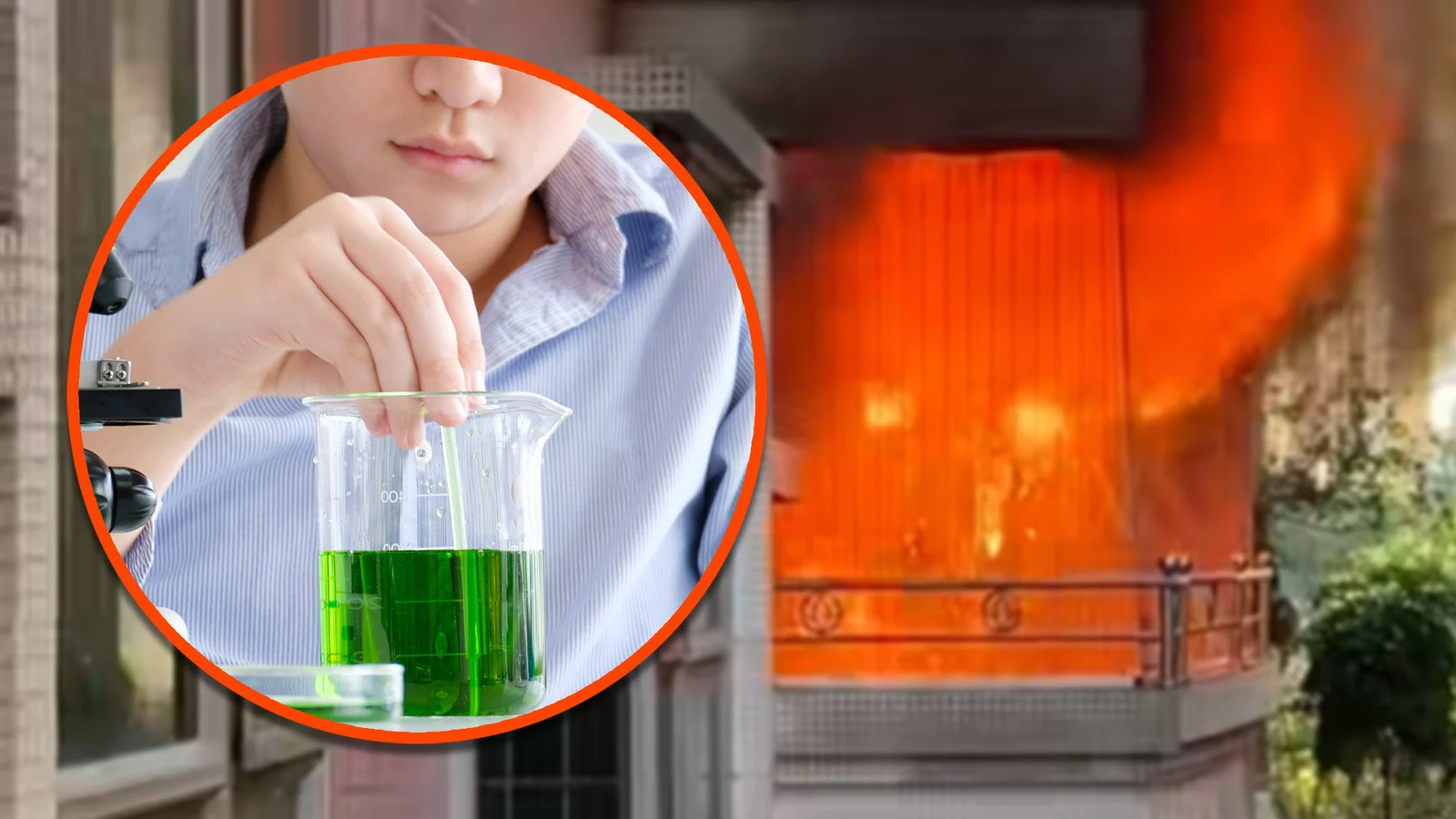
In a tragic incident that underscores the dangers of unmonitored scientific curiosity, a 15-year-old boy from Guangzhou, China, suffered devastating injuries after a chemistry experiment he conducted at home ended in an explosion. Chinese Teen’s Arm Amputated and sustained serious damage to his eyes, whose name has not been released publicly.
The unfortunate event has not only left the young student permanently scarred but also shaken the local community and prompted renewed discussions about safety education for children engaging in scientific experimentation outside of supervised environments.
The blast occurred on April 6, 2025, in the southern Chinese province of Guangdong, within a residential building where the teenager lived with his family.
According to reports from the South China Morning Post, the explosion was so intense that it caused residents in the area to feel the ground tremble. The aftermath has left a young life changed forever, and the community grappling with how such a horrific accident could occur within the supposed safety of a home.
Curiosity Turned Catastrophic: How the Tragedy Unfolded
Chinese teenager was reportedly fascinated by chemistry, despite not yet being formally introduced to the subject through the school curriculum. In China, chemistry typically begins in the third year of secondary education, whereas the boy was still in his second year. Despite his limited formal knowledge, the boy had apparently conducted various experiments at home before, driven by a deep and independent curiosity for science.
His father, Mr. Huang, explained that the boy had previously engaged in experiments without incident, giving the family no reason to expect danger. “He had conducted experiments at home before. We never expected this would lead to an accident,” said Mr. Huang, highlighting the unpredictability of unsupervised experimentation. The boy’s interest in chemistry had never raised any alarms, making the incident all the more shocking and heartbreaking.
Unfortunately, whatever substances or processes he attempted to mix this time triggered a powerful explosion. The precise nature of the experiment remains unclear. Authorities are still investigating what chemicals were involved and whether any flammable or highly reactive compounds were part of the process.
Read : Huge House Explosion While Making Cannabis Gummy Sweets Killed 7-Year-Old Boy in Benwell
Emergency responders were called to the scene immediately after the explosion. Witnesses reported that the ground shook and that the sound of the blast startled the entire residential block. The boy was swiftly transported to a hospital, where the full extent of his injuries became apparent.
One of his arms had been so severely damaged that it had to be amputated, and both of his eyes were critically injured. Mr. Huang stated, “My son’s right eye can hardly see anything, while his left eye still has some functionality.”
Doctors have recommended a cornea transplant for the left eye, and extensive skin grafting procedures will be required due to the complete destruction of skin around his face and eyes. He will also need a prosthetic limb to replace his lost arm.
Community in Shock: Response and Relief Efforts
The explosion has left the community of Guangzhou deeply shaken. Residents of the building described feeling the entire structure vibrate from the force of the blast, prompting immediate fears about the building’s safety. The local residential committee responded by launching a structural integrity investigation to determine whether the explosion had caused any long-term damage to the building itself.
Alongside the technical investigations, the community has come together in a show of compassion and solidarity. The residential committee initiated a donation campaign to raise funds for the boy’s medical expenses, which are expected to be extensive given the surgeries and long-term rehabilitation involved. Early reports indicate a positive response, with many residents contributing to support the boy and his family in this difficult time.
While the explosion has brought pain and trauma, it has also revealed a heartwarming sense of unity among neighbors, who have been actively involved in providing both emotional and financial support.
Community leaders have also started discussions around promoting safe scientific curiosity, advocating for the creation of supervised spaces where students can safely explore chemistry and other sciences without the risk of injury.
Parents, educators, and officials are now debating how best to strike a balance between encouraging scientific interest and ensuring that such interests do not become life-threatening. The tragedy has prompted a larger national conversation about the role of schools and families in guiding and monitoring scientific exploration by young students.
The Importance of Science Safety Education
The incident has sparked widespread reflection across China about the importance of science education, particularly in teaching children about the potential dangers of unsupervised experimentation. While curiosity is a vital part of learning, the absence of safety awareness and proper supervision can lead to dire consequences, as seen in this case.
In recent years, educational programs in China and elsewhere have been emphasizing STEM (Science, Technology, Engineering, and Mathematics) education. However, this incident suggests a gap in the way practical safety knowledge is imparted to students.
Many young people now have access to YouTube tutorials and online forums that make experimental procedures look simple and exciting, but often without emphasizing the critical aspect of safety precautions.
Experts warn that children who experiment at home often lack access to proper protective gear, lab supervision, or even a basic understanding of chemical reactivity. This combination can be dangerous. The tragedy in Guangzhou has amplified the calls for schools to include modules on scientific safety from an earlier stage, even before formal science instruction begins.
Some commentators have also suggested that science kits and home lab tools be regulated more strictly and that schools should offer structured “discovery labs” where students can safely explore their curiosity under guidance.
Creating official community science centers or supervised extracurricular clubs may also help redirect such interests away from potentially hazardous home environments.

Beyond institutional changes, families are also being encouraged to have open conversations with their children about the risks of chemical substances. Parents must understand that curiosity, while commendable, must be channeled with caution, and that even intelligent and well-meaning teens can make dangerous mistakes when left to experiment without guidance.
The story of the young boy from Guangzhou is one of both profound tragedy and a stark warning. A 15-year-old filled with curiosity and a desire to learn lost his arm, damaged his eyesight, and now faces a future filled with surgeries, rehabilitation, and psychological recovery. His passion for science, while admirable, turned catastrophic due to a lack of proper knowledge, supervision, and safety infrastructure.
While the community’s compassionate response is a testament to human kindness in times of crisis, this incident should not fade into memory without leaving a lasting impact.
It should serve as a wake-up call to educators, parents, policymakers, and students themselves about the importance of safety in science. There must be a concerted effort to foster curiosity within frameworks that ensure well-being, where young minds can explore without risking their lives.
The hope now is not just for the boy’s recovery, but for a broader cultural shift that respects scientific enthusiasm while taking every measure to protect those who dare to explore it.