
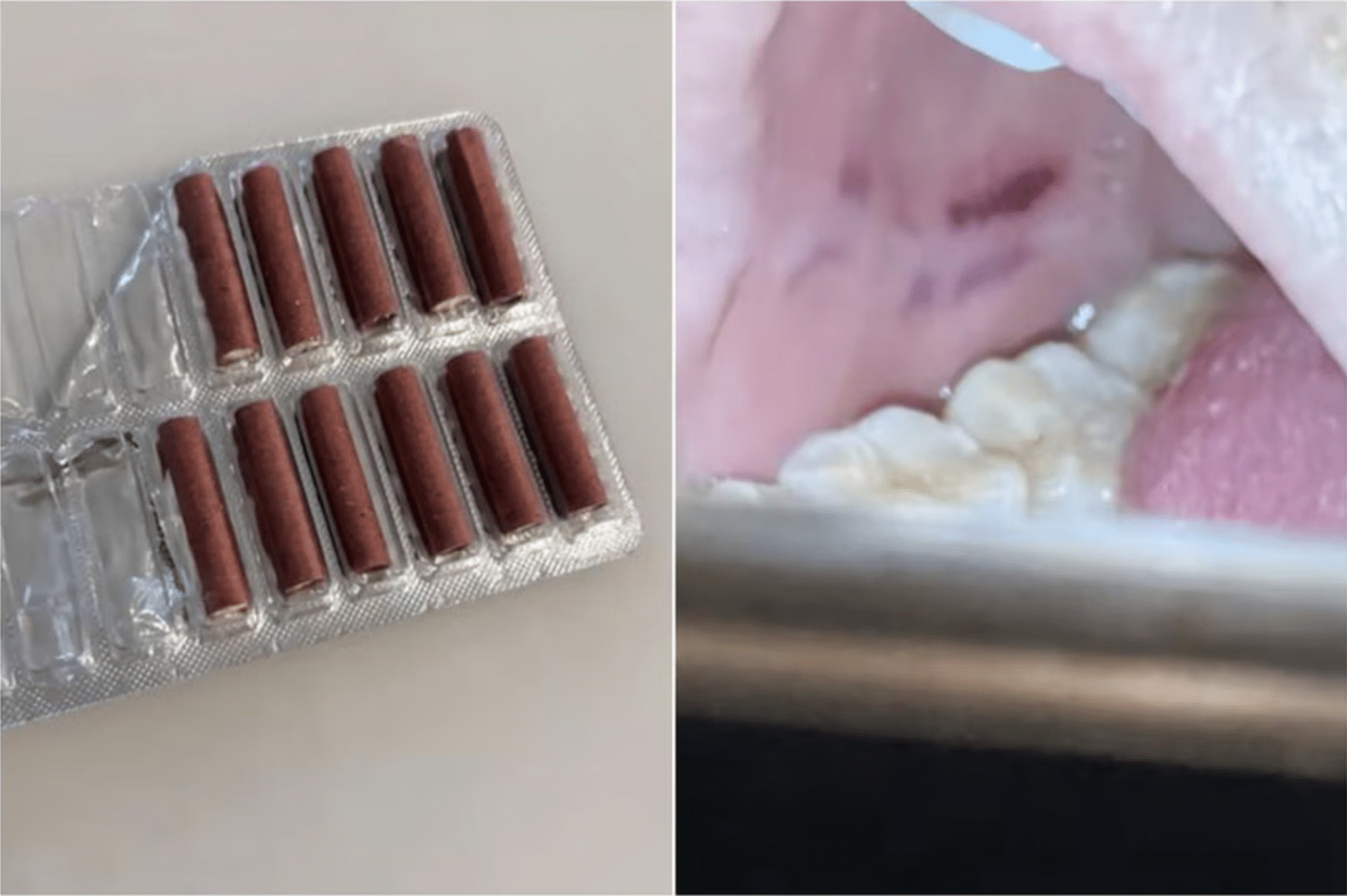
Chinese woman eats firecracker after mistaking it for candy in a shocking incident that highlights the dangers of misleading packaging. The woman, surnamed Wu, from Chengdu in Sichuan province, shared her distressing experience on Chinese social media, sparking widespread discussions about product labeling and safety concerns.
The unfortunate event occurred when Wu mistook a commonly used firecracker known as shuang pao for a milk confectionery, leading to an explosion in her mouth and subsequent injuries.
A Mistaken Identity with Dangerous Consequences
The incident took place when Wu’s younger brother brought home what she believed to be a bag of snacks. Among them was shuang pao, a firecracker that is widely used for celebrations, weddings, and festive gatherings, especially during the Lunar New Year.
The firecracker, known for its ability to ignite without a flame, is designed to explode with a loud pop when thrown or subjected to pressure. Unfortunately, Wu mistook it for a popular taro-flavored milk candy, a childhood favorite, and unknowingly placed it in her mouth.
Seated in a dimly lit living room while watching television, Wu casually unwrapped what she assumed was a piece of candy and began chewing. The moment her teeth applied pressure, the firecracker detonated inside her mouth. The sudden explosion left her momentarily stunned, and though she did not immediately feel pain, she noticed the distinct smell of gunpowder.
As she later explained in her post, she experienced numbness, likely due to shock, and could still eat and brush her teeth despite the incident. However, photos she shared revealed visible blood stains inside her mouth, indicating the extent of her injuries.
四川女誤將摔炮當糖吃 在口中爆炸
— 新唐人電視台 (@NTDChinese) February 6, 2025
2月5日,四川成都巫女士误将摔炮当糖果吃,咬下去后摔炮在口腔内爆炸,瞬间被炸蒙。事发时,巫女士在看电视,弟弟带回零食,她误以为是香芋奶糖,没开灯的情况下直接放进嘴里。爆炸后,她口腔受伤但未大碍,认为这种设计容易误导消费者。
网友:… pic.twitter.com/ajiWLDlwns
Wu’s story quickly went viral on social media, prompting an outcry from netizens who expressed concern over misleading product packaging. Many users criticized manufacturers for wrapping firecrackers in a manner that could easily be confused with edible items, especially in low-light environments.
The Risks of Misleading Packaging
The case of Wu’s firecracker mishap sheds light on a broader issue of misleading packaging in consumer goods. In China, it is not uncommon for firecrackers, novelty items, and even some household products to be packaged in ways that closely resemble snacks or candies.
The shuang pao firecracker in question was encased in plastic film and covered with aluminum foil, bearing a striking resemblance to traditional milk candies. This lack of clear distinction between potentially hazardous items and edible products presents significant risks, particularly for children and the elderly.

Wu’s experience resonated with many on social media, with users sharing their own encounters with similar deceptive packaging. Some recounted incidents where they or their family members had mistakenly consumed non-edible items due to confusing labeling, while others called for stricter regulations on how such products should be marketed and displayed.
Safety experts argue that hazardous items such as firecrackers should be distinctly marked with warning labels and packaged in non-food-related designs to prevent such incidents. Unlike food products that require strict labeling guidelines, novelty fireworks and small explosive items often lack sufficient regulatory oversight, leading to potential accidents like Wu’s.
Social Media Outcry and Call for Action
Following Wu’s post, social media platforms in China were flooded with discussions and debates on the responsibility of manufacturers and regulators. Many users demanded that authorities implement clearer guidelines to ensure that fireworks and other potentially dangerous products are packaged in a way that prevents confusion.
Wu herself questioned why such firecrackers were not contained within a designated box or labeled with a clear warning. “Shouldn’t these firecrackers be packaged in a box?” she asked, echoing the sentiments of many netizens who found the current packaging practices irresponsible.
The incident has also reignited concerns about product safety standards in China. While the country has made significant progress in implementing consumer protection laws, cases like Wu’s suggest that more needs to be done to prevent accidental ingestion of hazardous items.

Some experts have proposed new regulations requiring all firecrackers to be sold in distinctively marked containers, similar to how medications are packaged to prevent accidental consumption.
In response to the growing public concern, some local authorities have reportedly begun reviewing existing guidelines on the sale and packaging of fireworks. However, as of now, no official directives have been issued regarding changes to firecracker packaging.
Wu’s bizarre and unfortunate experience serves as a cautionary tale about the importance of careful product labeling and consumer awareness. While she was fortunate to escape without severe injuries, the incident could have had far more serious consequences.
Her story highlights the need for manufacturers and regulatory bodies to take proactive measures in ensuring product safety, especially when dealing with items that could be mistaken for food.
As discussions continue online, Wu’s ordeal has sparked a broader conversation about how everyday products are marketed and the potential dangers of misleading designs. Whether this incident will lead to tangible changes in packaging regulations remains to be seen, but it has undoubtedly raised awareness about the critical need for better safety measures.