
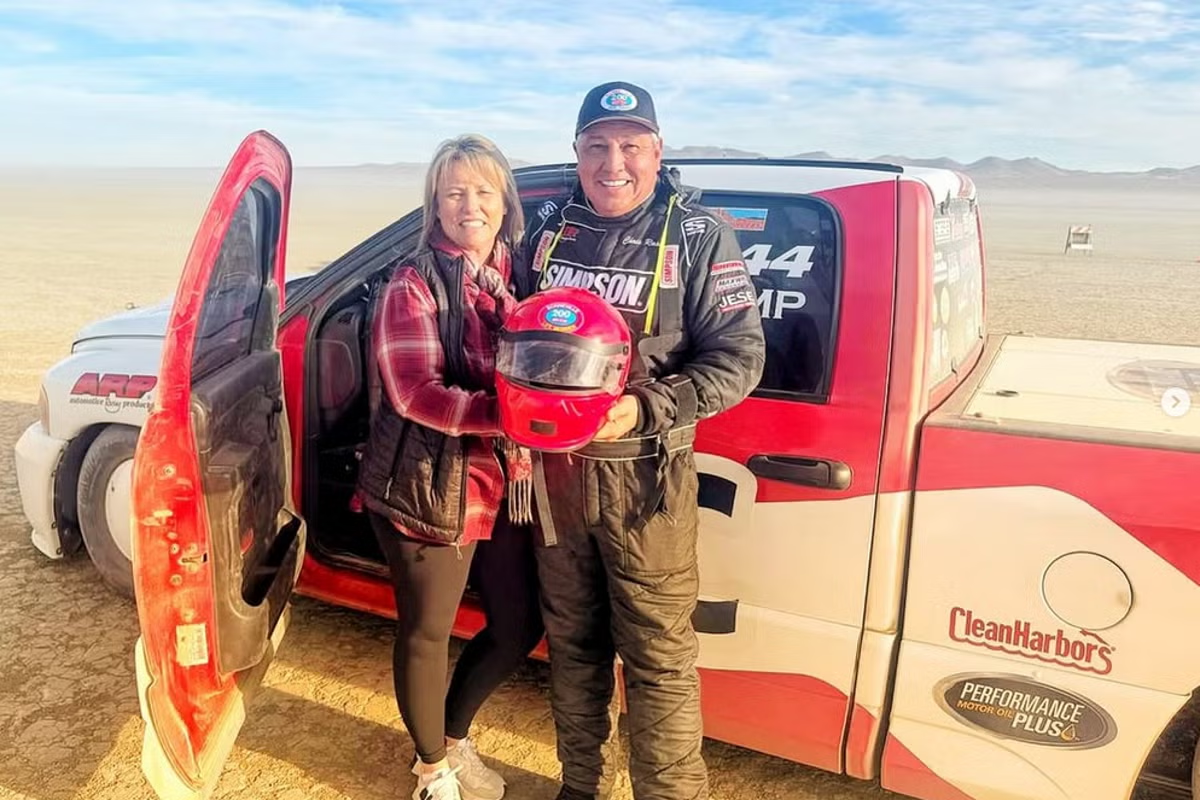
The Bonneville Salt Flats, a place known for pushing the boundaries of speed and human ingenuity, turned somber this past Sunday when veteran driver Chris Raschke tragically lost his life during an attempt to set a land speed record. Raschke, 60, was participating in the annual “Speed Week,” an event that draws some of the world’s most daring and skilled drivers to the vast expanse of salt in Utah in pursuit of speed records that often surpass 300 miles per hour.
His death sent shockwaves through the tight-knit land speed racing community, which has long revered the Bonneville Salt Flats as hallowed ground for those obsessed with speed. The Southern California Timing Association (SCTA), which organizes and oversees Speed Week, confirmed that Raschke died after losing control of his vehicle around the 2.5-mile mark of the track.
The crash occurred at approximately 3:03 p.m. Mountain Time, casting a shadow over the first day of the event. Raschke was driving the Speed Demon streamliner, a vehicle renowned in the racing world for its incredible speed capabilities. His team, Speed Demon, based in Ventura County, California, expressed profound grief over the loss of a teammate and friend who had devoted decades to motorsports.
The tragedy has prompted not only mourning but also reflection within the motorsports world about the inherent dangers of land speed racing, even for the most experienced and respected drivers. As the community grapples with the loss, many are honoring Raschke’s contributions and remembering his passion, character, and the legacy he leaves behind in the sport.
A Lifelong Devotion to Speed and Motorsports
Chris Raschke’s story is one woven into the fabric of American motorsports. Beginning his career in the 1980s, Raschke earned a reputation as a man who lived and breathed racing. His work spanned decades, and his involvement with the Speed Demon team placed him at the forefront of land speed racing innovation and achievement.
The Speed Demon streamliner he piloted is one of the most celebrated vehicles in land speed history, regularly reaching speeds in the 400 mph range in past years and consistently challenging the limits of engineering and physics. For Raschke, racing at Bonneville was more than a professional pursuit—it was a passion, a calling.
The salt flats, though desolate and otherworldly in appearance, hold a magnetic pull for speed enthusiasts. Raschke was known in the community not only for his competitive spirit but for his warmth and generosity. The American Hot Rod Foundation described him as someone who struck a rare balance between being fiercely competitive and genuinely kind—a trait not easily found in such a high-stakes environment.
Read : Crossing Boundaries: Exploring the Top Ten Longest Bridges in the World
Chris Raschke’s dedication to his craft was evident in every pass down the track. He was meticulous, focused, and deeply respectful of the risks involved. For him, each run was a blend of science, skill, and a deep-seated love for the sport. While the dangers of land speed racing are widely acknowledged, Raschke’s commitment to precision and preparation underscored his understanding of those risks and his unwavering determination to overcome them.
The History and Peril of the Bonneville Salt Flats
The Bonneville Salt Flats are unlike any other place on Earth. Situated about 120 miles west of Salt Lake City, Utah, and located on the western edge of the Great Salt Lake Basin, the flats are remnants of ancient Lake Bonneville. Spanning about 12 miles in length and 5 miles in width, the flats are composed almost entirely of sodium chloride—essentially, table salt. The vast, flat terrain offers a unique surface ideal for high-speed driving, and for more than a century, it has been the site of countless speed records and breathtaking feats of engineering.
However, this pursuit of speed does not come without risk. The speeds achieved at Bonneville are extreme, often exceeding 300 miles per hour. At such velocities, even the smallest error or mechanical failure can have catastrophic consequences. Vehicles designed for land speed records are marvels of aerodynamic engineering, but they also demand absolute precision in control. The terrain, while flat, can be unpredictable with occasional soft spots or surface irregularities caused by weather conditions or natural erosion.
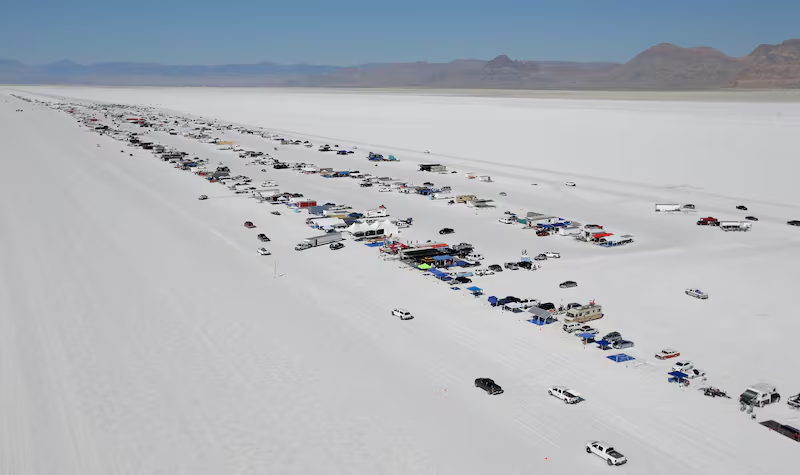
Raschke’s crash is a stark reminder of these dangers. According to reports, he was traveling in the neighborhood of 300 mph when he lost control of the vehicle. The precise cause of the crash remains under investigation by the SCTA. As is customary following such incidents, the vehicle will be examined in detail, and event data will be analyzed to determine what went wrong. These investigations serve not only to bring closure but also to improve safety protocols and vehicle design moving forward.
Despite the inherent dangers, the allure of the Bonneville Salt Flats endures. For many drivers, it represents the pinnacle of speed achievement—a place where man and machine are tested against the ultimate frontier. For Raschke and many like him, Bonneville was not just a track, but a sanctuary of ambition and courage.
Mourning a Legend and Honoring His Legacy
The outpouring of grief following Chris Raschke’s death has been immense. Social media channels were flooded with tributes from fans, fellow drivers, and organizations who recognized not just his skill as a driver, but his contributions to the spirit and community of land speed racing. The Speed Demon team, visibly heartbroken, described the loss as devastating, acknowledging Raschke’s integral role in their shared achievements and his unwavering dedication to their mission.
The American Hot Rod Foundation also paid tribute to Raschke, emphasizing the uniqueness of his personality and the respect he commanded on and off the track. “He was someone who found the perfect balance of friendly and competitive,” they wrote—a sentiment echoed by many who had raced alongside him or worked with him over the years.
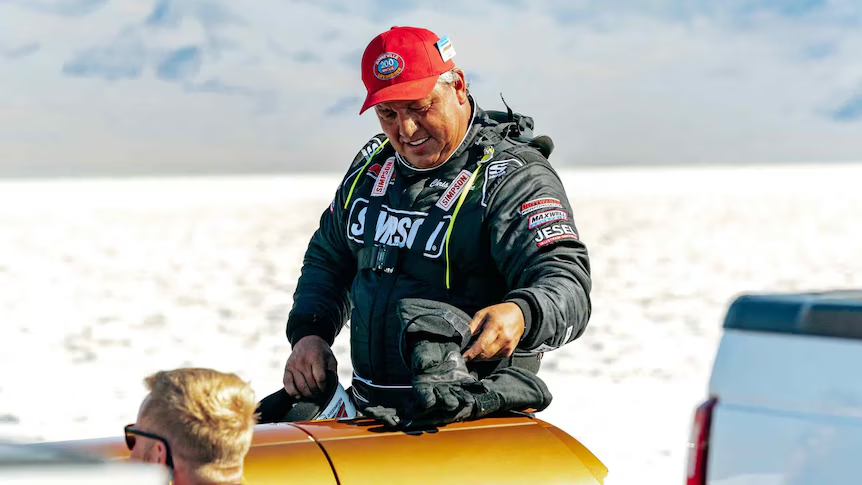
While the immediate focus remains on mourning and supporting Raschke’s family and teammates, conversations have naturally begun to emerge about how best to honor his legacy. There have been suggestions of dedicating future Speed Week events to his memory, or even naming a racing category or award after him. What remains certain is that Raschke’s influence will not be forgotten. His life and work will continue to inspire future generations of drivers who look to Bonneville as the ultimate stage for speed.
His death also reinforces the importance of safety and preparation in a sport where the line between triumph and tragedy is razor-thin. As investigations continue into the cause of the crash, it’s likely that his final run will provide lessons that contribute to the ongoing evolution of land speed racing—something Raschke, as both a racer and a craftsman, would have valued deeply.
Chris Raschke’s death is a profound loss to the world of motorsports, but it is also a moment to reflect on the extraordinary lives of those who devote themselves to pursuing the limits of what is possible. In the wide expanse of salt and sky, Raschke found a calling that many only dream of—and in doing so, he became a part of Bonneville’s storied history. His final run, though ending in tragedy, stands as a testament to the daring, determination, and heart that define the spirit of land speed racing.