

Two longtime friends were killed in a sudden and tragic accident while hiking on a popular trail in Washington state’s Olympic National Forest, underscoring the unpredictable risks that can exist even on well-known outdoor routes. Christine Mutchler, 70, and Kathy Pickard, 76, died after a dead fir tree broke apart and fell onto the trail near Lena Lake on January 15, striking them as they hiked with a third friend. The incident has shaken the close-knit outdoor recreation community that knew the women as energetic, active, and deeply committed to spending time together in nature.
According to reporting by the Kitsap Sun, the three women were making their way along the trail when a dead fir tree, broken about ten feet up its trunk, suddenly cracked and came down in pieces. The falling wood struck Mutchler and Pickard, causing fatal injuries. Their companion, Kathy Todd, 74, witnessed the moment and was not physically injured, though she described the sound and speed of the event as unforgettable. The accident occurred without warning on a trail that is frequently used by hikers of varying experience levels.
Pickard was pronounced dead at the scene. Mutchler was airlifted by helicopter toward Harborview Medical Center in Seattle but died minutes before arrival. News of the women’s deaths quickly spread through their community, prompting an outpouring of grief and remembrance from friends who had shared countless miles, trails, and seasons with them.
The accident on the Lena Lake trail
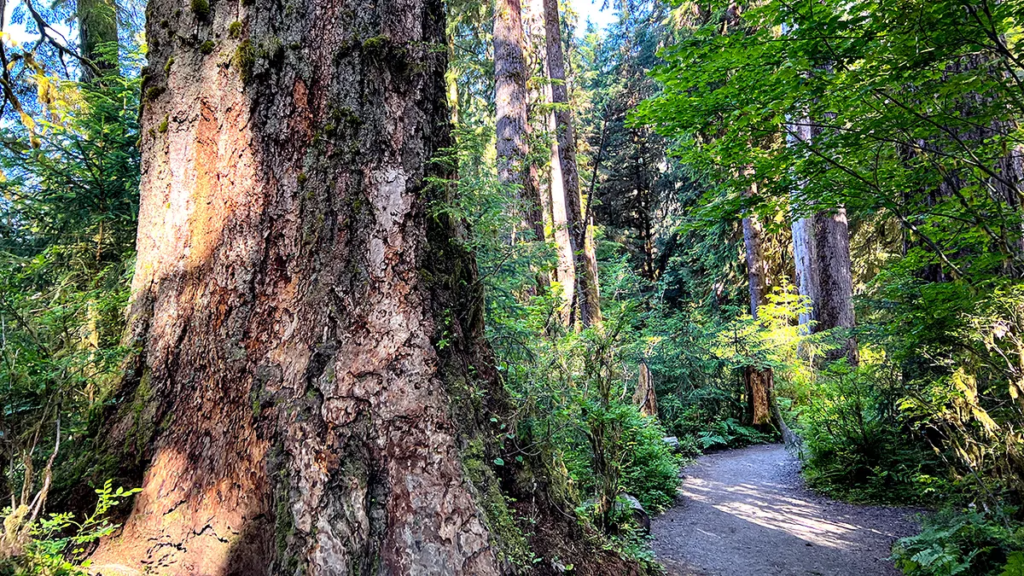
The Lena Lake trail, located within Olympic National Forest, is considered a popular and relatively accessible hike, drawing visitors throughout the year. It winds through dense forest before opening to views of the lake, surrounded by steep terrain and thick stands of trees. Like many trails in the Pacific Northwest, it passes beneath tall conifers, some of which may be weakened or dead due to age, disease, or weather conditions.
On the day of the hike, the three women were walking together when they heard what Todd later described as a loud crack. According to her account, the sound was sudden and alarming, prompting an immediate instinct to run. She told the Kitsap Sun that she ran as fast as she could and believed her friends did the same, but there was no time to escape the falling debris. The fir tree, already dead, broke apart and fell onto the trail in pieces rather than toppling in a single direction, increasing the danger to anyone below.
Authorities have not indicated that weather conditions at the time were extreme, highlighting how such incidents can occur even without storms or high winds. Dead or weakened trees, sometimes referred to as “widowmakers,” can fall unexpectedly, particularly in forests where decay is not always visible from the outside. In many national forests, especially those characterized by heavy rainfall and dense growth, fallen trees are a known hazard that land managers continuously monitor, though it is not possible to eliminate the risk entirely.
Read : Touching the Sky: The Iconic Burj Khalifa – Tallest Building in the World
Emergency responders arrived at the scene after the incident was reported. Despite their efforts, Pickard could not be saved. Mutchler’s injuries were severe enough to require air transport, but she died en route to the hospital. Todd, though physically unharmed, was left to grapple with the trauma of witnessing the deaths of her close friends in an instant.
Remembering Christine Mutchler and Kathy Pickard
Christine Mutchler and Kathy Pickard were described by friends as vibrant, adventurous women who embraced an active lifestyle well into their later years. According to those who knew them, they were part of a long-standing friend group that regularly biked, hiked, and skied together, often referring to themselves with affection and humor. Their shared activities were not casual pastimes but central to their friendships and daily lives.
Friends told the Kitsap Sun that the women were known as the “back-of-the-bus crowd,” a phrase that captured their lighthearted approach to life and their enjoyment of being together rather than rushing ahead. Sarah Rogers, speaking to the newspaper, described them as “absolutely a light,” emphasizing their happiness, energy, and sense of fun. They were remembered as people who were always eager for a good time in the best sense of the phrase, finding joy in movement, companionship, and the outdoors.
Mutchler and Pickard’s ages did not define their level of activity. At 70 and 76, they continued to explore trails, cycle routes, and ski areas, challenging stereotypes about aging and physical capability. For many who knew them, their deaths felt particularly unfair because they occurred while the women were doing something that brought them fulfillment and connection.
Their friend Kathy Todd, who survived the incident, shared not only the harrowing details of the moment but also the depth of the bond between the women. The three had set out together as they had many times before, expecting another day of shared experience in a place they loved. Instead, Todd was left to carry the memory of the sound of the tree cracking and the suddenness with which her friends were taken.
Olympic National Forest and the risks of outdoor recreation
Olympic National Forest spans a vast portion of Washington’s Olympic Peninsula, encompassing rainforests, alpine ridges, lakes, rivers, and remote wilderness areas. The forest is known for its lush vegetation, frequent fog, and towering trees, creating an environment that is both breathtaking and complex. Wildlife such as elk, black bears, and bald eagles inhabit the region, adding to its appeal for hikers, photographers, and nature enthusiasts.

With its popularity, the forest also presents inherent risks that come with outdoor recreation. Falling trees, landslides, rapidly changing weather, and wildlife encounters are among the hazards that hikers may face. While land management agencies work to maintain trails and remove obvious dangers, the natural processes that define these landscapes cannot be fully controlled. Dead trees may remain standing for years before finally falling, and decay within a trunk may not be visible from the outside.
The deaths of Mutchler and Pickard have drawn attention to these risks, particularly the danger posed by dead or weakened trees along trails. In heavily forested areas like the Olympic Peninsula, high moisture levels can accelerate rot, while wind, temperature changes, or simple gravity can cause a tree to fail without warning. Even experienced hikers, familiar with the terrain, can find themselves in danger through no fault of their own.
Outdoor safety experts often emphasize situational awareness, including paying attention to surroundings and avoiding lingering beneath dead trees when possible. However, incidents like this one illustrate that awareness alone cannot prevent every tragedy. Trails frequently pass through areas where exposure to overhead hazards is unavoidable, and the randomness of such events makes them especially difficult to anticipate.
As the community mourns Christine Mutchler and Kathy Pickard, their deaths serve as a stark reminder of both the beauty and unpredictability of natural environments. Olympic National Forest remains a place of extraordinary landscapes and cherished experiences, but it is also a setting shaped by natural forces beyond human control. For those who knew the two women, the forest will forever be associated with their memory, their friendship, and the lives they lived fully until their final day.
**mitolyn official**
Mitolyn is a carefully developed, plant-based formula created to help support metabolic efficiency and encourage healthy, lasting weight management.
References:
Gsn casino app
References:
https://apunto.it/user/profile/779594
References:
Real money online poker
References:
https://bandori.party/user/484519/woodpush5/