
A violent confrontation in Seattle’s Ballard neighborhood has led to serious criminal charges against a 62-year-old man accused of opening fire on police officers during an attempted arrest. The suspect, Christopher Michael Bowman, now faces multiple assault charges after authorities say he initiated a gunfight when officers attempted to detain him following a stalking complaint from his 18-year-old former partner. The incident left one officer injured and Bowman hospitalized in critical condition after being struck by return gunfire.
Prosecutors allege that the encounter was not an isolated act of aggression but part of a pattern of violent behavior stretching back decades. Court records indicate Bowman has a long criminal history involving serious offenses, including rape, aggravated robbery, and kidnapping. At the time of the confrontation, he was also wanted on an active warrant connected to previous crimes in Kansas. Investigators say the events that unfolded on February 12 escalated rapidly from a stalking report to an armed exchange of gunfire, underscoring the dangers officers faced during the arrest attempt.
Charging documents, police accounts, and body-worn camera summaries provide a detailed timeline of the events leading up to and during the shooting. Authorities describe a situation that began with fear and uncertainty and quickly escalated into a life-threatening encounter that left both law enforcement and the suspect wounded. The case has drawn attention not only because of the violence involved but also because of Bowman’s criminal background and the circumstances that led police to locate him in the first place.
Initial report and police response
The incident began in the early evening when an 18-year-old woman contacted police to report that Bowman, whom she identified as her former partner, was following her. According to investigators, she told dispatchers that he typically carried a pistol, raising immediate concerns about her safety and the potential for violence. Seeking protection, the woman entered a grocery store in the Ballard neighborhood and waited inside while officers responded to the call.
Police quickly began searching for Bowman while also reviewing his background information. A database check revealed that he had an active warrant connected to violent crimes in Kansas, including rape. Authorities determined that the warrant was extraditable, meaning he could be taken into custody and transferred to face charges there. This discovery elevated the urgency of the situation and reinforced officers’ understanding that Bowman could be dangerous.
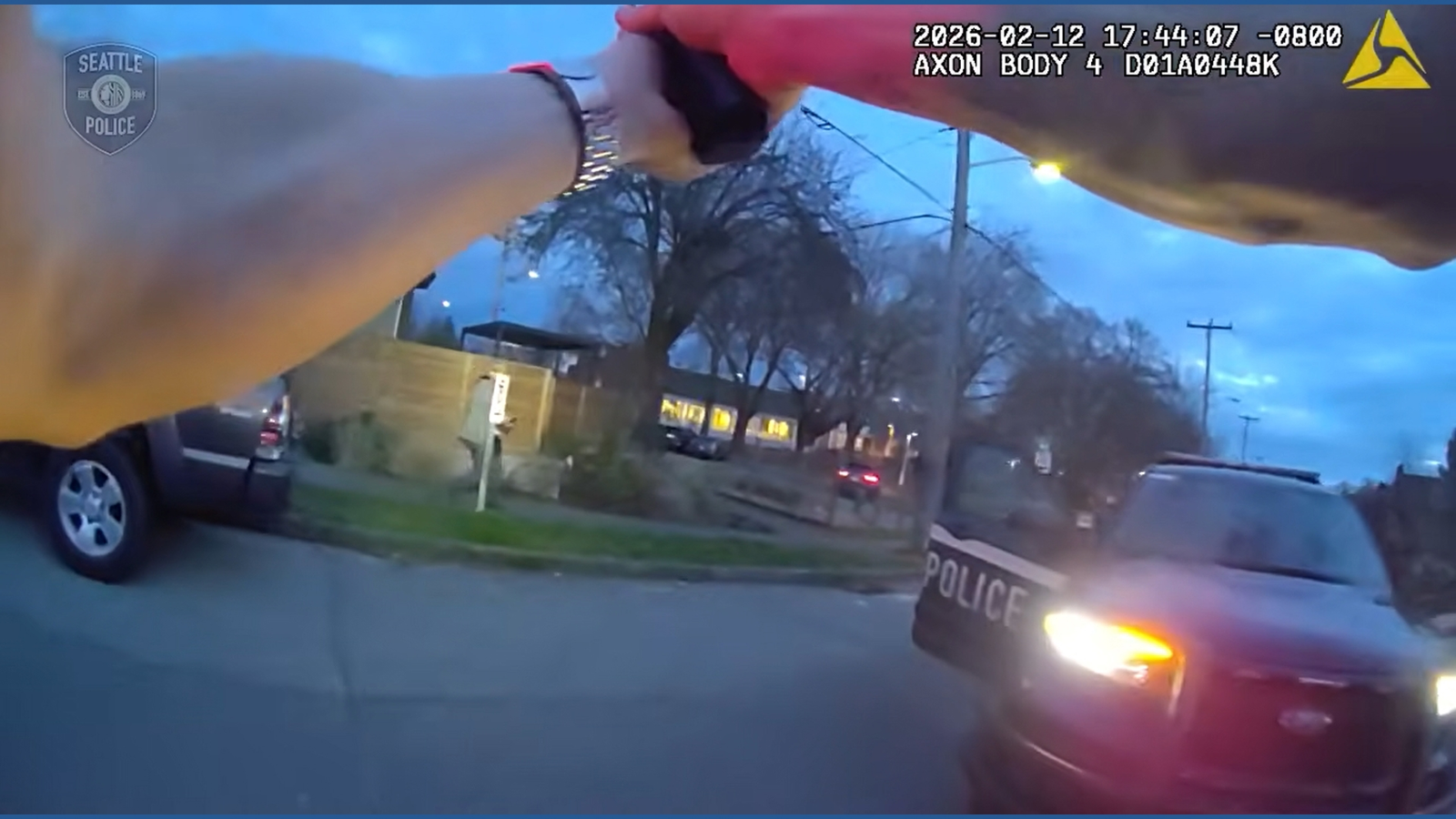
While officers patrolled the area, they located Bowman walking along a nearby street roughly 40 minutes after the initial call. The officer who spotted him exited a patrol vehicle and ordered him to show his hands. At that moment, according to investigators, the situation shifted dramatically from an attempted arrest to an armed confrontation.
JUST IN: Seattle PD Shootout with Felon After Domestic Response Call
— The Facts Dude 🤙🏽 (@Thefactsdude) February 16, 2026
Seattle PD reported a shootout with 62-year-old suspect Christopher Michael Bowman after his 18-year-old ex-wife called about him following her.
The wife called and reported that Bowman was following her… pic.twitter.com/WMGc4zNaa4
Law enforcement officials state that officers followed standard procedures when approaching Bowman. They identified themselves and issued commands intended to gain compliance and prevent escalation. However, prosecutors say Bowman’s response was immediate and violent. Rather than surrender or attempt to flee, he allegedly drew a firearm and fired directly at the officer who confronted him.
This sudden escalation triggered a rapid response from nearby officers, setting off a shootout in a residential neighborhood. Investigators later described the confrontation as fast-moving and chaotic, with multiple officers involved and gunfire exchanged in close proximity.
Gunfire and confrontation with officers
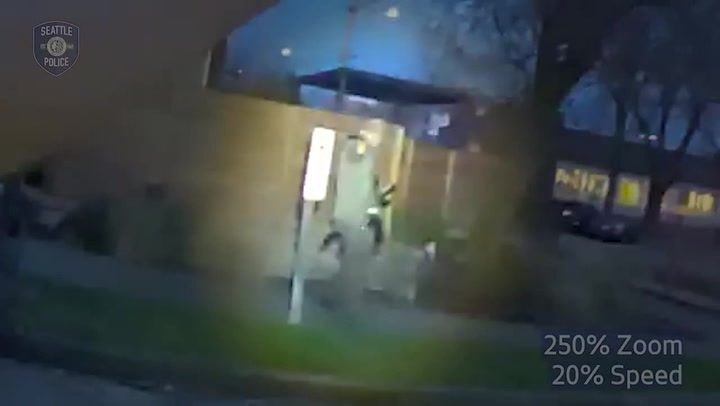
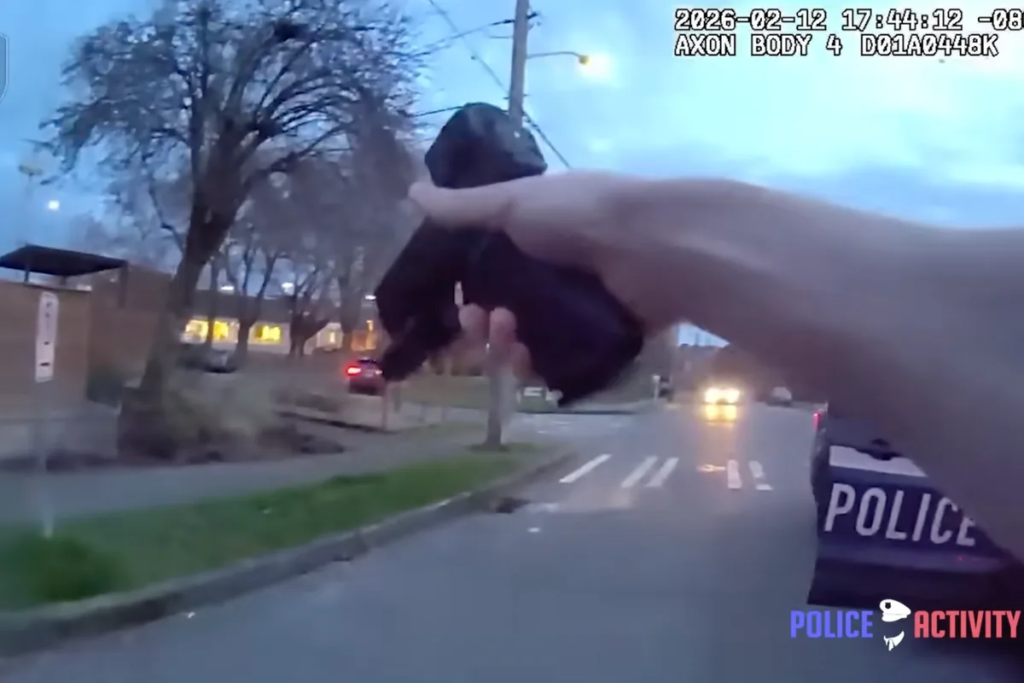
Charging documents and body-worn camera summaries indicate that Bowman fired his weapon almost instantly after being ordered to show his hands. Prosecutors argue that this reaction demonstrated a willingness to use deadly force against law enforcement without hesitation. The officer he confronted had identified himself and issued clear commands, yet Bowman allegedly responded by aiming his weapon and shooting.
Three officers returned fire, striking Bowman multiple times. Video evidence reportedly shows him firing his weapon in footage captured from all three officers’ cameras, reinforcing investigators’ claims that he actively engaged in the shootout rather than firing a single defensive shot.
During the exchange of gunfire, one female officer was injured when shrapnel from one of Bowman’s shots struck her knee. Authorities described the injury as a graze wound, and she received medical treatment. While not life-threatening, the injury highlighted the risk faced by officers responding to the situation. Even a fragment of metal from a fired round can cause serious harm, and the presence of multiple officers in the line of fire increased the danger of collateral injury.
Read : Two Teen Boys Fatally Shot at Rainier Beach Bus Stop in Seattle
Police accounts emphasize that the confrontation unfolded quickly, leaving little time for negotiation or de-escalation. The officer who initially approached Bowman had attempted to gain compliance through verbal commands. Instead, prosecutors say, Bowman’s immediate resort to gunfire forced officers to defend themselves and others nearby.
After being struck by return fire, Bowman was transported to a medical center, where he remained hospitalized. Authorities reported that he was in critical condition following the shooting. Despite his injuries, prosecutors proceeded with filing charges, citing evidence gathered from video footage, officer testimony, and witness accounts.
The seriousness of the incident is reflected in the charges brought against Bowman. He faces assault in the first degree and assault in the second degree, both of which stem from allegations that he intentionally used a firearm against police officers performing official duties. Prosecutors have also requested that bail be set at three million dollars if he is released from the hospital, indicating the perceived risk he poses to public safety.
Investigators have emphasized that the officer involved in the initial confrontation clearly identified himself as law enforcement and instructed Bowman to show his hands. Prosecutors argue that Bowman’s immediate use of a firearm demonstrates a deliberate decision to respond with lethal force. This interpretation is central to the charges now pending against him.
A violent criminal history and legal consequences
Authorities say Bowman’s past criminal record plays a significant role in understanding the broader context of the incident. Court filings show a long history of violent offenses dating back to the 1990s, including convictions in Kansas for rape, aggravated robbery, and aggravated kidnapping. He has also been convicted of criminal possession of a firearm and trafficking contraband within a correctional institution. In Missouri, he was convicted of robbery in the first degree.
This record indicates a sustained pattern of serious criminal conduct spanning decades. Prosecutors note that Bowman was already wanted on an active warrant connected to prior convictions at the time he encountered police in Seattle. The warrant was extraditable, meaning that law enforcement had the authority to detain him for transfer to another jurisdiction.
Read : Man Drags Female Washington State Patrol Lieutenant Out Of Patrol Car In Seattle, Arrested
The existence of the warrant likely influenced officers’ approach to the situation. Knowing that Bowman had a documented history of violent crimes and firearm-related offenses would have heightened concerns about officer safety during any attempt to detain him. Prosecutors argue that his past behavior demonstrates both a capacity for violence and a willingness to defy law enforcement authority.
The current charges reflect not only the shooting itself but also the danger posed to officers and the public. Assault in the first degree typically involves intentional acts that cause serious physical harm or demonstrate extreme indifference to human life. Assault in the second degree includes actions that intentionally cause injury or involve the use of a deadly weapon. Together, these charges indicate that prosecutors believe Bowman’s conduct was both deliberate and life-threatening.
If convicted, Bowman could face substantial prison time. The severity of the charges and the high bail request suggest that authorities consider him a significant risk. His hospitalization has delayed immediate detention, but prosecutors have already outlined the legal framework for his continued custody once medical treatment allows.
The case also raises broader concerns about repeat violent offenders and the challenges law enforcement faces when encountering individuals with extensive criminal histories. Officers responding to the stalking complaint were confronted not only with an immediate threat but also with a suspect whose record suggested a long-standing pattern of serious offenses. The combination of an active warrant, a reported firearm, and a history of violent crime created a situation in which the potential for escalation was already high.
Meanwhile, the woman who initially contacted police remains central to the timeline of events. Her report that Bowman was following her and possibly armed prompted the police response that ultimately led to the confrontation. Without that call, officers might not have encountered Bowman at that time or location. Her decision to seek help underscores the importance of early reporting in situations involving stalking or perceived threats.
As Bowman continues to receive medical treatment, the legal process is expected to move forward based on the evidence collected. Prosecutors have already laid out their case, citing body camera footage and witness accounts as key elements. The outcome will depend on court proceedings once Bowman is able to participate in his defense.
The events in Ballard illustrate how quickly a routine response to a stalking complaint can escalate into a life-threatening situation when firearms are involved. Officers attempting to detain a suspect with an active warrant encountered immediate gunfire, resulting in injuries on both sides and serious criminal charges. The case now moves into the judicial system, where the details of the confrontation and Bowman’s long criminal history will shape the proceedings ahead.