
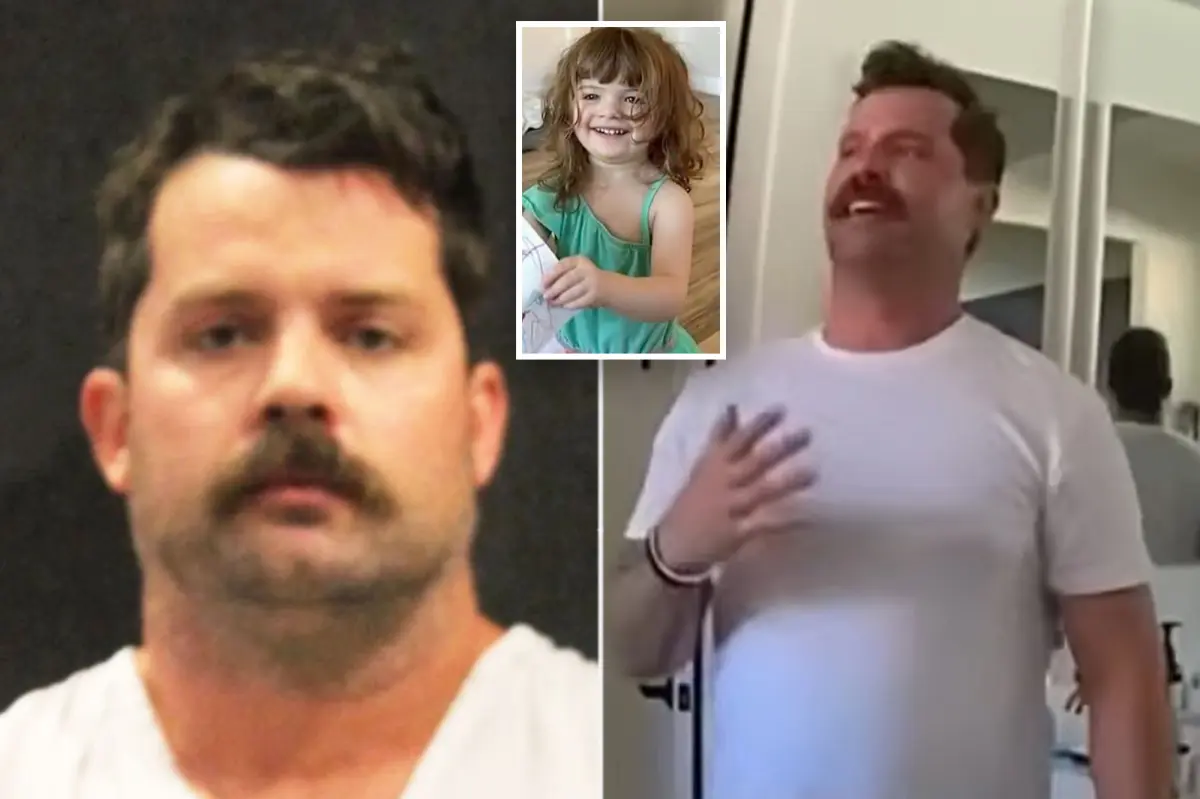
The case of Christopher Scholtes has drawn significant public attention due to the tragic circumstances surrounding the death of his two-year-old daughter and his subsequent suicide ahead of sentencing. Scholtes, a 38-year-old father from Arizona, pleaded guilty to second-degree murder after admitting that he left his toddler, Parker, in a sweltering car where she died in July 2024. The details of the incident revealed troubling behavioral patterns and raised broader questions about parental responsibility, legal accountability, and the emotional aftermath faced by surviving family members.
These events have continued to impact everyone connected to the case, from the child’s mother to older siblings who have now come forward with allegations of similar neglect in years past. Christopher Scholtes’ death occurred on the very day he was meant to report to prison, adding another layer of emotional complexity and societal reflection regarding justice, guilt, and the consequences of irreversible actions.
The Incident and the Death of Parker Scholtes
On a hot July day in 2024, temperatures in Marana, Arizona, rose to around 109 degrees Fahrenheit. According to the account Christopher Scholtes initially provided to police, he claimed that he had left his daughter in the car for approximately thirty minutes with the air conditioning running, believing that the child was asleep and that moving her might disturb her. However, investigators later learned that Parker had been left unattended for more than three hours, and that the car’s power system automatically shut off long before Scholtes returned to check on her.
The father later acknowledged that he knew the vehicle had a feature that would disable the engine after roughly half an hour. During the time Parker remained in the car, Christopher Scholtes was inside the family’s home. Court records and police reports documented that he spent those hours drinking beer, watching pornography, and playing video games.
When Parker’s mother, Erika, who worked as an anesthesiologist at Banner University Medical Center, returned home around 4 p.m., she discovered the child in the family’s driveway. Parker was extremely overheated and unresponsive. Responding officers recorded bodycam footage in which they attempted to cool her body and provide urgent medical care. She was transported to the same medical center where her mother worked, but medical staff were unable to save her.
🚨 NEW: Arizona man Christopher Scholtes, who left his 2-year-old daughter to die in a hot car while he watched p*rn and played video games, was found dead before reporting to prison.
— Digital Gal 🌸 (@DigitalGal_X) November 5, 2025
He had pleaded guilty to second-degree murder and faced up to 30 years. Authorities suspect… pic.twitter.com/JXKzPRTTuI
The footage also revealed Christopher Scholtes’ demeanor during the initial confrontation with police. When told that he could not be left alone and that officers had to secure the home, he questioned whether he was being treated “like a murderer.” The emotional shock of the situation appeared to lead him from denial to remorse, expressed in later text messages to his wife. However, the gravity of the incident was underscored by statements from Scholtes’ older children and further evidence that leaving children in a car was not a one-time mistake.
History of Behavior and Family Testimony
Following the death of Parker, investigators began collecting testimonies from other children in the household and from Christopher Scholtes’ older children from a previous marriage. These individuals independently reported that Scholtes had a long-standing habit of leaving children unattended in vehicles. The accounts described routine instances in which he would strap the children into their seats, leave them waiting for extended periods, and return only when he felt ready. These reports provided a broader pattern of behavior that contradicted Scholtes’ initial claims that the tragedy was an isolated lapse in judgment.
Court documents included text exchanges between Christopher Scholtes and Erika, demonstrating prior warnings and conflicts regarding child safety. In one notable message, Erika confronted him with frustration: “I told you to stop leaving them in the car. How many times have I told you?” His reply, written shortly after Parker’s death, conveyed despair and self-blame: “Babe, I’m sorry. Babe, our family. How could I do this? I killed our baby, this can’t be real.”
Read : Tiona Lasaisha Islar Arrested After Her Two Children Die in Hot Car While She Napped
The emotional impact of these admissions extended beyond the immediate household. One of Scholtes’ older daughters, who was 17 at the time of filing, sued both Christopher Scholtes and Erika in October, alleging emotional distress, battery, and assault. Her claims described not only the pattern of neglect but also an environment she said caused long-term psychological and emotional harm. Her guardian stated that the teenager had suffered extensively and that the effects of her father’s behavior persisted well into her adolescence.
These accounts reinforced the prosecution’s argument that Scholtes’ failure to protect his child was not accidental but part of a recurring pattern. When he pleaded guilty to second-degree murder in October, the plea acknowledged the seriousness of these actions. The plea agreement meant that he would face a potential sentence ranging from 20 to 30 years in prison.
Sentencing, Public Response, and Scholtes’ Suicide
Christopher Scholtes was scheduled to report to prison on November 5, ahead of the court’s final sentencing ruling. However, that morning, law enforcement officials confirmed that he had died by suicide in a residence in Phoenix. Police responded to a call just after 5 a.m. and later verified his identity. Pima County Attorney Laura Conover publicly acknowledged his death, noting that it occurred on the night before he was expected to take responsibility for the crime in court.
Read : Vanessa Esquivel Arrested After Intentionally Leaving 15-Month-Old Child to Die in Hot Car
The suicide added another dimension to an already tragic case. Some observers viewed his death as an escape from accountability, while others interpreted it as the culmination of overwhelming guilt. For the surviving family, this meant confronting two devastating losses within a short period.
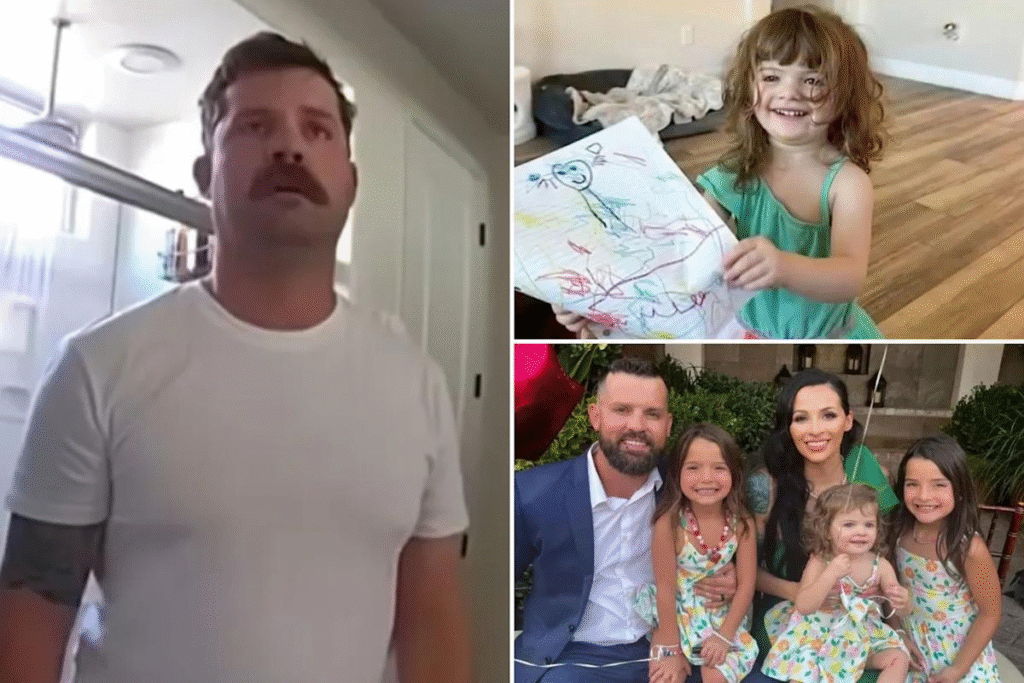
Erika had previously requested that Christopher Scholtes be allowed to return home after his arrest so the family could grieve together, indicating that despite the events, bonds of emotional attachment remained. Scholtes’ suicide ended the judicial process but left unresolved questions about responsibility, remorse, and the psychological burdens carried by individuals who commit acts that result in irreversible harm.
The death also raised broader social discussions regarding parental negligence and legal consequences in cases involving children left in hot cars. Over the years, numerous incidents have occurred in which children have died from heat exposure after being left unattended in vehicles. In many cases, the cause has been attributed to forgetfulness, distraction, or overwhelming stress. However, the Scholtes case presented a particularly severe example, as the evidence suggested awareness of the risk, a history of similar behavior, and an extended period during which the parent was engaged in unrelated leisure activities.
The family continues to face legal and emotional fallout. The case filed by the older daughter remains ongoing, highlighting the continued need for accountability and recognition of harm suffered by surviving children. The loss of Parker and the death of her father have shaped the family’s future in ways that extend beyond legal outcomes and into deeply personal spaces of grief, trauma, and recovery.
Through this sequence of events, the story of Christopher Scholtes and his daughter invites reflection on how quickly tragedy can unfold when responsibility is neglected, how the weight of guilt can alter the course of a life, and how the consequences of such tragedies extend outward to affect entire families and communities.
Cụ thể, xn88 lừa đảo có một chương trình khuyến mãi cho hầu hết mọi sự kiện, bắt đầu từ tiền thưởng đăng ký cho người chơi mới đến các ưu đãi đặc biệt cho các thành viên cũ. Các chương trình khuyến mãi như vậy không chỉ cung cấp cho người chơi cách trải nghiệm dịch vụ, mà còn tăng cường cơ hội thắng trong các trò chơi tham gia. TONY12-24