
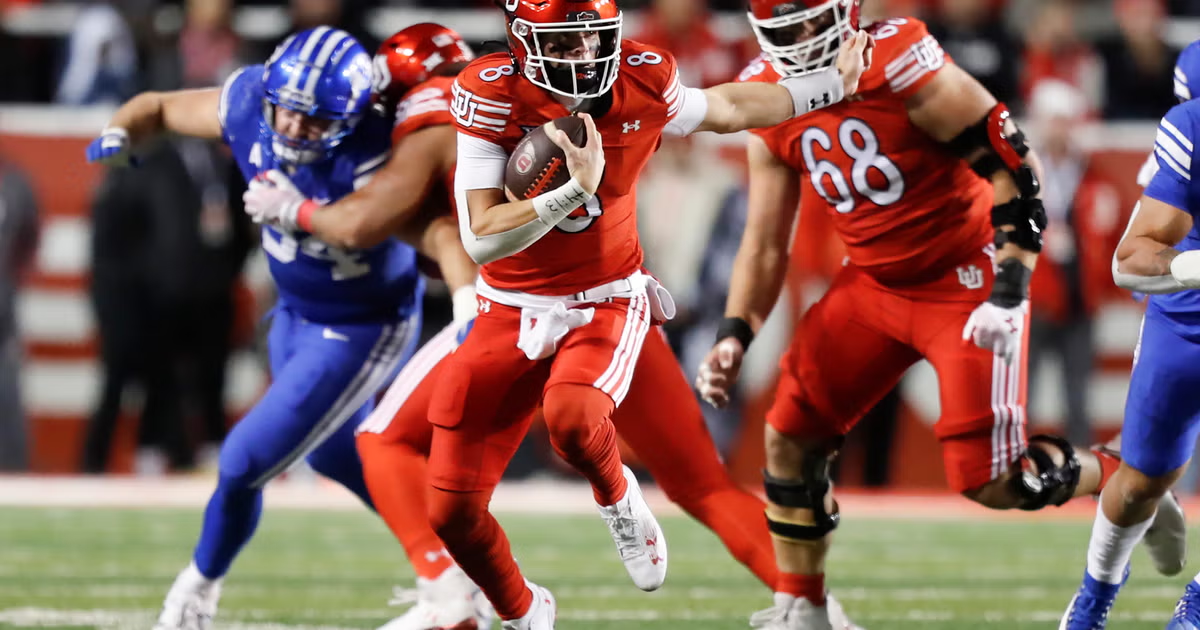
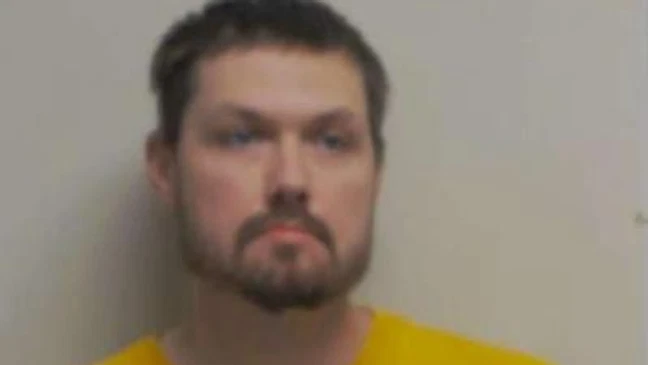
The long-standing “Holy War” rivalry between the University of Utah and Brigham Young University, already known for its fierce energy and emotional intensity, took a dark and alarming turn this week when a Utah man was arrested for allegedly threatening to shoot rival fans. Christopher Tai Justice, 28, was taken into custody after police traced violent social media threats to an account linked to him. The incident has sent shockwaves through Utah’s college sports community and reignited discussions about fan behavior, online accountability, and the darker side of sports rivalries that sometimes cross into criminal territory.
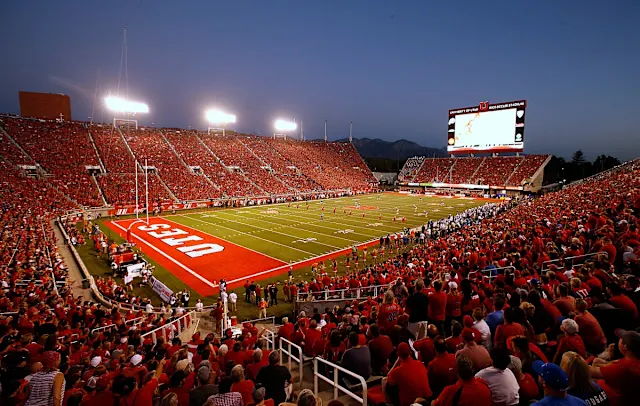
The threats surfaced just days before the two teams were scheduled to meet again in one of college football’s most storied matchups. Authorities say Justice used an X (formerly Twitter) account to post messages threatening to shoot Utah Utes supporters during the upcoming game at LaVell Edwards Stadium, home to the BYU Cougars. His arrest and subsequent confession — following initial denials — underscore how seriously law enforcement is treating such threats in the current climate of heightened public safety concerns around large sporting events.
An Alarming Threat Ahead of a Storied Rivalry
According to police, Christopher Tai Justice’s online activity first came to the attention of authorities after a series of disturbing posts appeared on the X account @juiceisloose328. One message read, “I’ll be in LES [LaVell Edwards Stadium] Saturday. Any Ute fan I see is dead. Mark my words.” When another user urged him to “log off,” Justice allegedly doubled down with an even more menacing statement: “Nah, anyone wearing red on Saturday is getting shot.” The posts, circulated widely online, immediately prompted concern among fans, school officials, and law enforcement, who quickly began an investigation to determine the source of the threats.
The timing could not have been more sensitive. The annual BYU-Utah clash, often referred to as the “Holy War,” is among the most intense rivalries in college football, with a history that spans more than a century. While the competition is rooted in tradition and local pride, the emotional stakes often run high — sometimes too high. The rivalry’s name itself references the religious and cultural identities that have long been part of Utah’s social fabric, with BYU representing Brigham Young University, a private institution affiliated with the Church of Jesus Christ of Latter-day Saints, and the University of Utah representing the state’s flagship public university.
After identifying Justice as a suspect, investigators confronted him about the threatening posts. According to court documents obtained by local news outlet KUTV, Justice initially denied having an X account or making any such statements. He reportedly told officers that he found the posts “horrible” and insisted that he would “never say anything like that.” However, his denial began to unravel when police uncovered text messages between Justice and a friend, in which he admitted to making the posts and said that if authorities questioned him, he planned to deny everything. When confronted with this evidence, Justice allegedly confessed to lying because he was “scared of what would happen.”
Read : Shannon Kobylarczyk Fired After Telling Latino Dodgers Fan, ‘Ya know what, let’s call ICE’
Authorities subsequently arrested him and booked him into Emery County Jail on misdemeanor charges of threat of violence and obstruction of justice. According to the Utah Department of Corrections, Justice was already on probation following two prior DUI convictions within the past decade, further compounding his legal troubles.
Read : 8-Year-Old Pekingese Wild Thang Wins 2024 World’s Ugliest Dog Contest
The seriousness of Justice’s actions has drawn attention not only for the explicit nature of the threats but also for the broader implications of how online speech can translate into real-world fears. Law enforcement officials have repeatedly emphasized that even perceived threats against public gatherings — especially those involving thousands of attendees — are treated as credible until proven otherwise.
History of Tension in the BYU-Utah Rivalry
The BYU-Utah matchup has long been a showcase of pride, passion, and deep-rooted loyalty — but it has also, at times, been marred by conflict. From pitch invasions to physical altercations, the rivalry’s intensity has occasionally spilled beyond the bounds of good sportsmanship. The first game between the two schools was played in 1896, and over the decades, the “Holy War” has evolved into one of the most anticipated events in the college football calendar, drawing tens of thousands of fans and dominating Utah’s sporting landscape each year.
Notable incidents from past matchups illustrate just how emotionally charged the event can be. In 2012, for example, Utah fans infamously stormed the field three separate times in celebration after what they believed was the final whistle — only to be sent back to the stands twice before the game officially ended. The premature celebrations led to penalties, fines, and widespread media coverage, cementing the game’s reputation for chaos and unpredictability.
Perhaps the most infamous incident occurred in 1999, when Utah cheerleader William Priddis was tackled by a BYU fan after a touchdown. Priddis responded by repeatedly punching the fan, who was subsequently detained for the remainder of the game. The altercation became national news, symbolizing both the passion and the volatility that sometimes characterize the rivalry.
Over the years, both schools have made concerted efforts to curb hostility and encourage sportsmanship. In 2018, athletic directors Mark Harlan (University of Utah) and Tom Holmoe (BYU) issued a joint statement urging fans “to treat each other and this game with the respect it deserves as one of the longest rivalry series in the country.” Similar appeals have been made by coaches, players, and university presidents, who consistently emphasize that the rivalry should celebrate competition, not animosity.
This week, in an almost prophetic coincidence, the presidents of both universities released a joint video calling for civility and respect ahead of Saturday’s matchup — on the very same day that Justice was arrested. Their message underscored the need for unity and mutual respect, particularly as fan behavior comes under increasing scrutiny across American sports.
Fan Conduct, Online Speech, and Legal Accountability
Justice’s arrest is part of a growing trend of law enforcement taking online threats related to sporting events more seriously than ever before. In an age when social media allows for near-instant amplification of violent rhetoric, distinguishing between idle talk and genuine intent has become a central challenge for police and public safety agencies. Even if Justice never intended to act on his threats, the chilling effect such statements can have on fans, families, and event organizers is undeniable.
Modern sporting venues like LaVell Edwards Stadium are equipped with sophisticated security systems, and game-day protocols often involve collaboration between local police, university security, and federal agencies. Threats like the ones Justice allegedly made can disrupt these preparations, leading to increased costs, anxiety, and strained community relations. Officials stress that even misdemeanor charges for “threat of violence” can carry significant penalties, particularly when they relate to public gatherings.
Legal experts note that online speech loses its protection under the First Amendment when it crosses into the territory of a “true threat” — that is, a statement that a reasonable person would interpret as a serious expression of intent to harm. Courts have repeatedly upheld prosecutions in similar cases, especially when the targets are members of the public at large. In Utah, such offenses can lead to jail time, fines, and lasting criminal records that affect future employment and probation status.
For Justice, whose history includes prior DUI convictions, the consequences may be compounded by his probationary status. Prosecutors could argue that his actions demonstrate a continued pattern of poor judgment and disregard for the law, which may influence sentencing decisions. Beyond the courtroom, the case also raises questions about the broader culture of fandom and rivalry in college sports. While spirited competition is a hallmark of athletic tradition, the line between enthusiasm and hostility is often thin. The anonymity and reach of social media have made it easier for individuals to vent frustrations or engage in performative aggression online — sometimes with devastating results.
University officials, too, face increasing pressure to ensure fan safety both on and off campus. In recent years, several colleges have implemented code-of-conduct policies that extend to online behavior, with potential bans from future events for individuals who make threats or engage in harassment. BYU and Utah have both made efforts to promote responsible fandom through awareness campaigns and joint initiatives emphasizing respect and inclusivity.
As Saturday’s game approaches, law enforcement agencies are expected to heighten security measures at LaVell Edwards Stadium. Officials have not specified the exact protocols but have confirmed that they are taking all necessary precautions to ensure the safety of players, staff, and spectators. The Justice case serves as a sobering reminder that the excitement of rivalry should never come at the expense of public safety. Whether born of misguided bravado or genuine malice, threats of violence have no place in sport — or in society at large.
In a rivalry that has produced unforgettable moments of triumph and heartbreak over more than a century, this latest chapter stands out not for what happened on the field, but for what occurred in the digital space. The incident highlights both the enduring passion that defines Utah’s sporting culture and the urgent need to balance that passion with responsibility, empathy, and respect. As the University of Utah and BYU prepare to meet once again, fans and players alike are being reminded that the “Holy War” may be fierce — but it should never be dangerous.
**prostadine**
prostadine is a next-generation prostate support formula designed to help maintain, restore, and enhance optimal male prostate performance.
you may have an excellent weblog right here! would you prefer to make some invite posts on my blog?
Thanks for the sensible critique. Me and my neighbor were just preparing to do a little research on this. We got a grab a book from our local library but I think I learned more from this post. I am very glad to see such magnificent info being shared freely out there.
I like the helpful information you provide to your articles. I’ll bookmark your weblog and check once more right here regularly. I am rather sure I’ll be told a lot of new stuff right here! Best of luck for the next!
I really appreciate this post. I’ve been looking everywhere for this! Thank goodness I found it on Bing. You have made my day! Thx again!