
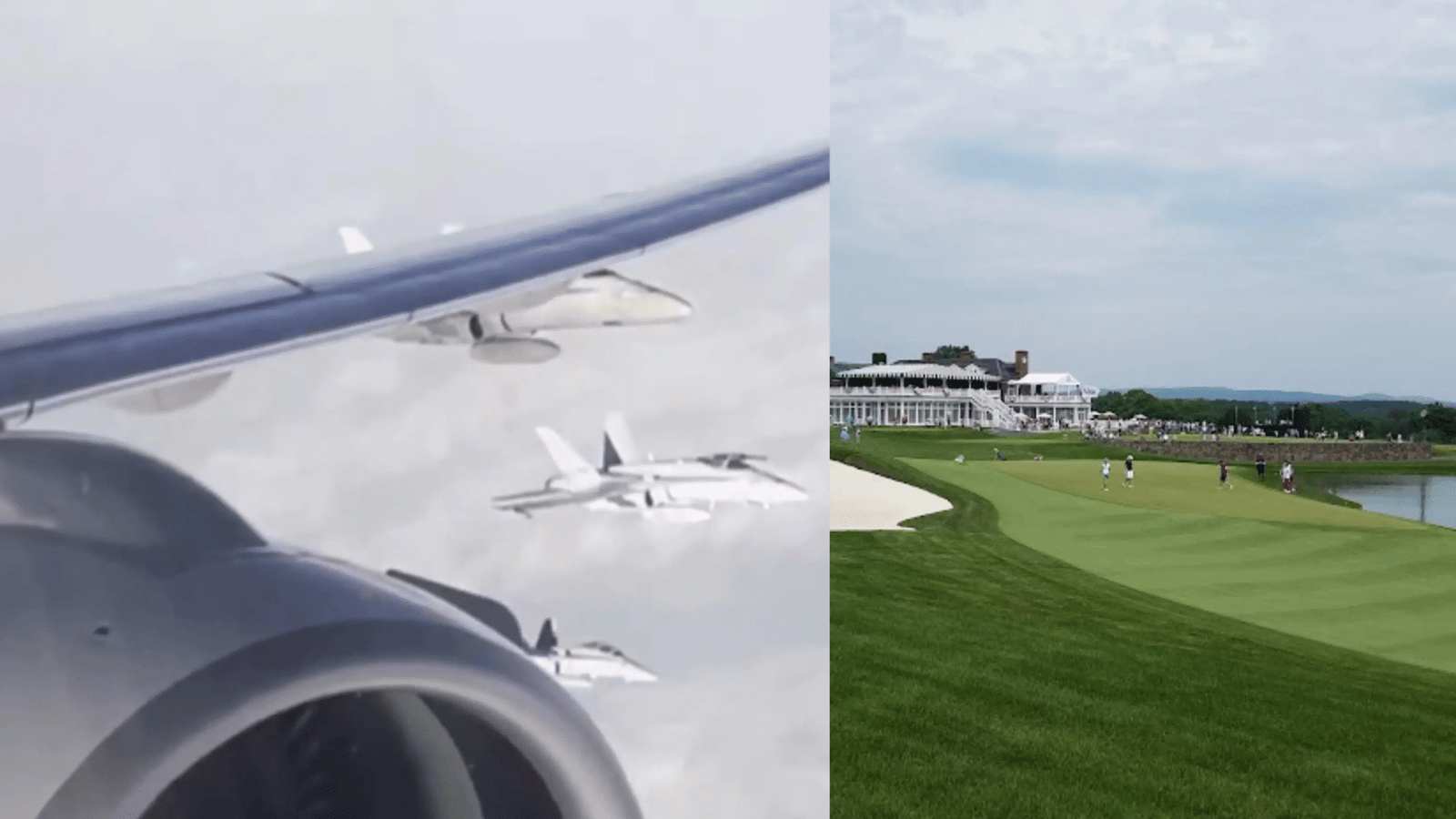
During the July 4 holiday weekend, as former President Donald Trump visited his Bedminster, New Jersey, golf resort, the North American Aerospace Defense Command (NORAD) was forced to intercept 11 Civilian Aircraft Breaching Trump No Fly Zone.
The surge in Temporary Flight Restriction (TFR) violations brought renewed attention to how presidential no-fly zones operate and the challenges involved in protecting U.S. airspace. With five incursions on Saturday alone and additional breaches spilling into Sunday morning, the incident has sparked concern among military officials over increasing pilot negligence and the growing strain on defense resources.
NORAD and the Federal Aviation Administration (FAA) work together to ensure the safety of U.S. skies, particularly around the President or former Presidents who receive Secret Service protection. Their coordination includes the issuance and enforcement of TFRs whenever a protected individual travels.
Yet, the volume of recent violations suggests that not all civilian pilots are taking these rules seriously—or even aware of them. As a result, NORAD had to deploy fighter jets repeatedly to identify, warn, and escort aircraft out of protected airspace, triggering a defense mechanism that is both costly and potentially hazardous.
Civilian Aircraft Breaching Trump No Fly Zone
NORAD is a joint U.S.-Canadian military organization tasked with aerospace warning, aerospace control, and maritime warning for North America. When it comes to enforcing TFRs, NORAD uses a layered defense strategy that includes radar installations, satellites, and rapid-response fighter jets such as the F-16. These assets allow NORAD to detect and track any aircraft entering restricted airspace, no matter how small or slow.
A Temporary Flight Restriction is a mechanism that provides a defined area of restricted airspace, typically issued by the FAA for various reasons—natural disasters, major public events, or national security. During presidential visits, the FAA issues NOTAMs alerting aviators to avoid the designated zone.
Failure to comply results in swift military response. NORAD fighter jets can execute maneuvers like the “headbutt”—where a fighter flies close ahead of the intruding aircraft to get the pilot’s attention—before guiding the plane out of restricted airspace.
Fighter jets scramble to intercept plane flying at TRUMP in golf club
— RT (@RT_com) July 6, 2025
Pilot 'violated flight restriction' — NORAD pic.twitter.com/DrfKuoyhsu
On July 4 weekend, NORAD faced multiple such breaches. On Saturday alone, five aircraft violated the TFR over Bedminster. The military confirmed that one of the jets carried out a headbutt maneuver to alert a pilot around 2:39 p.m. ET. Another incident occurred Sunday morning at approximately 10:30 a.m., bringing the total number of violations to 11 by the end of the weekend.
Pilot Negligence and National Security Risks
What’s particularly alarming about these repeated TFR violations is the suggestion that many civilian pilots are either unaware of or ignoring NOTAMs. General Gregory Guillot, the commander of NORAD and U.S. Northern Command, issued a statement criticizing civil aviators for failing to review airspace restrictions before flight. He emphasized that TFR procedures are mandatory and essential for national safety and the protection of VIPs like the president.
Read : Insane! 23-Year-Old Anthony Thomas Reyes Jumps Mar-a-Lago Wall to Marry Donald Trump’s Granddaughter
Repeated violations not only compromise security but also stretch military resources thin. Each interception requires the scrambling of an armed fighter jet, coordination between air traffic control and defense agencies, and sometimes the redirection of commercial flights. These deployments are both expensive and risky, especially if the intruding aircraft fails to respond promptly to instructions.
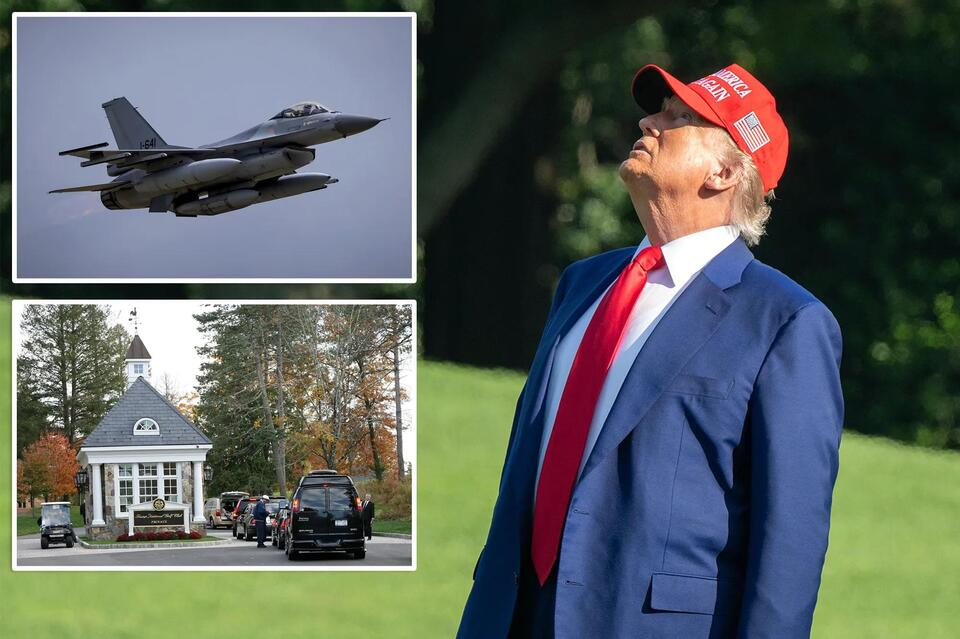
Pilots intercepted in restricted zones are advised to immediately switch to radio frequencies 121.5 or 243.0 and reverse course unless told otherwise. But even a brief failure to comply can escalate the situation. In the past, aircraft that failed to respond were considered potential threats, leading to high-stakes standoffs in the air. While no such situation occurred during the July 4 weekend, the frequency of violations heightens the chance of future incidents with more serious consequences.
Past Incidents
This isn’t the first time NORAD has dealt with multiple TFR violations during Trump’s visits. Earlier in March, during a trip to his Mar-a-Lago estate in Florida, NORAD intercepted over 20 aircraft in less than two months. These repeated incursions signal a systemic issue—either in how the FAA communicates restrictions or how pilots interpret them.
The FAA and NORAD are now expected to review the July 4 incidents and consider additional enforcement mechanisms. This may include wider dissemination of NOTAMs, increased penalties for TFR violations, and possibly enhanced pilot education programs focused on airspace awareness.
While professional pilots are typically well-trained in reading NOTAMs, general aviation—a category that includes recreational or private flights—can include less experienced aviators who may not always follow best practices.
It is also possible that some of the violations were inadvertent, resulting from GPS errors, outdated flight planning software, or failure to receive NOTAM updates. Regardless of the cause, the responsibility ultimately lies with the pilot to ensure full awareness of all flight restrictions in place.
In the meantime, NORAD continues to stress the importance of compliance and readiness. General Guillot’s statement underscored that NORAD fighter jets will continue to intercept and escort any aircraft that violates TFRs, with no exceptions.
The broader takeaway is that the integrity of U.S. airspace depends on both military vigilance and civilian cooperation. While NORAD’s rapid response capabilities are essential, they are not a substitute for informed and responsible flight behavior among civil aviators. The growing number of TFR violations during high-security weekends highlights a weak link in the chain of aviation safety—one that needs urgent attention before a future incursion results in a more dangerous or tragic outcome.