
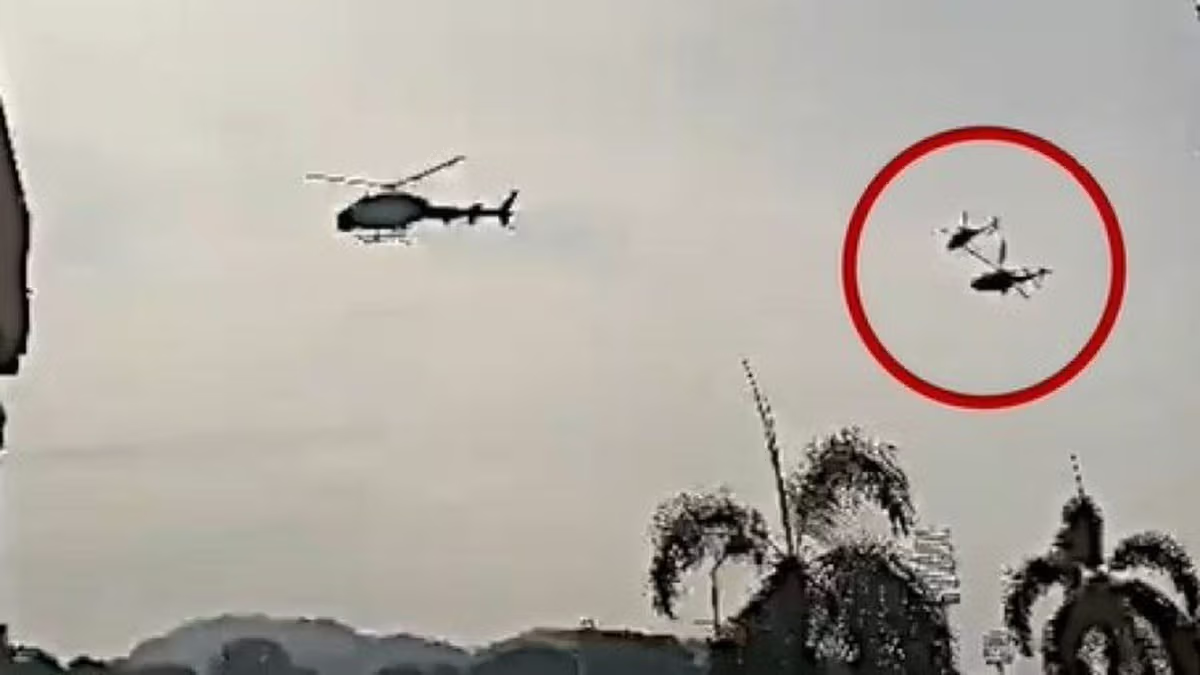
Two Civilian Helicopters Collided Mid-Air in Finland has resulted in the loss of five lives, according to local authorities. The devastating incident occurred on a clear day near Eura Airport, approximately at 12:00 local time (10:00 GMT).
The helicopters were flying from Tallinn, the capital of Estonia, and were en route to a regional aviation event when disaster struck. The crash has shaken both Finnish and Estonian aviation communities and prompted a joint investigation by authorities from both countries.
Police confirmed that the wreckage was located in a forested area not far from Eura, and that two people were aboard one helicopter and three in the other. All individuals involved perished in the crash.
These helicopters were civilian, foreign-registered aircraft, indicating they were not part of the Finnish defense or emergency services. The passengers were believed to be aviation enthusiasts or participants in the upcoming event at the Piikajärvi Flight Center in Kokemäki.
While the specific details of how the mid-air collision occurred are still under investigation, early indications suggest that both helicopters had taken off together from Estonia and were likely flying in close formation.
This is a standard procedure during flights to airshows or aviation meets, but it requires rigorous coordination and communication between pilots. The fact that such an incident occurred in controlled airspace near a designated airport is raising significant concerns among aviation safety experts.
Eyewitness Accounts and Emergency Response
Eyewitnesses reported hearing a loud crashing noise in the sky followed by the sound of rotors failing. Moments later, debris could be seen falling from the sky, and smoke began rising from the wooded area where the helicopters had gone down.
Residents living nearby rushed to the scene, only to find shattered aircraft remains strewn across a dense part of the forest. Emergency responders arrived quickly and cordoned off the area to begin the grim task of recovering bodies and securing the crash site.
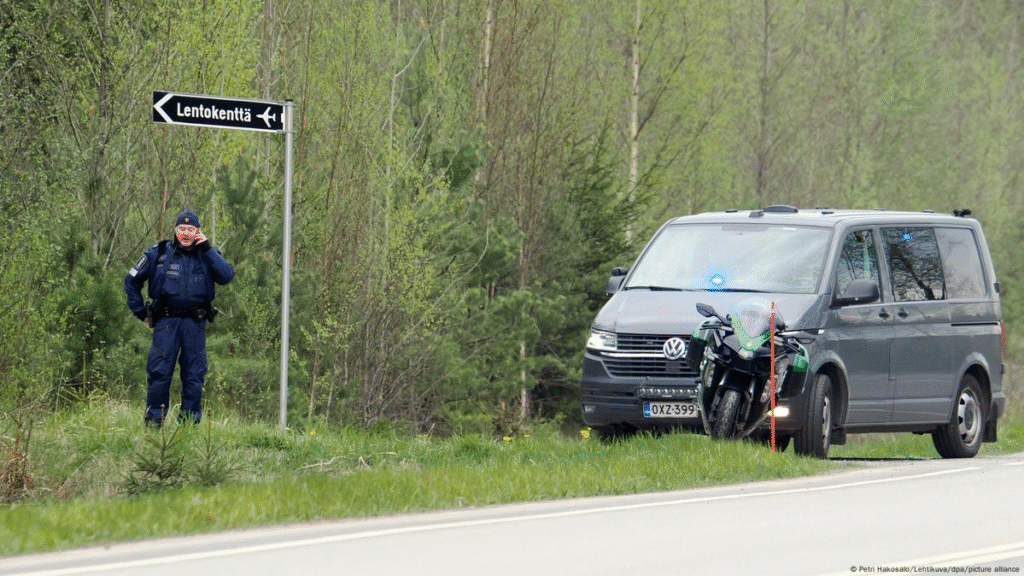
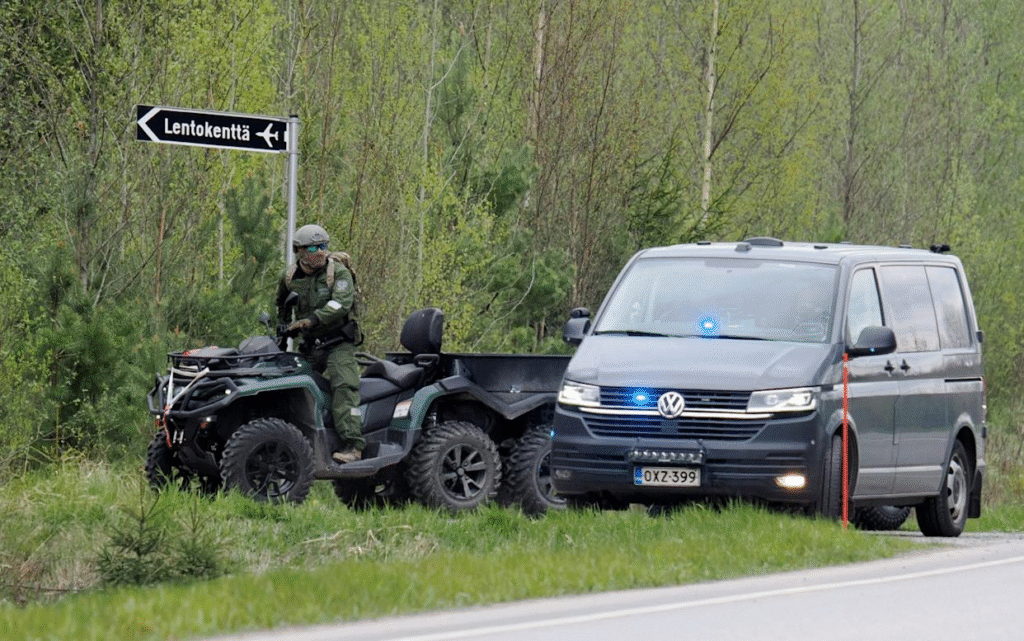
According to first responders, the condition of the wreckage made it evident that the collision had been violent and sudden, leaving little to no chance of survival for those onboard. The Finnish Border Guard, local rescue teams, and aviation authorities all collaborated in the recovery and investigation efforts.
Read : Nearly 700 Koalas Shot Dead From Helicopters to Save Them From Suffering After Massive Wildfire
Drones were deployed to scan the crash area for debris and any potential fire hazards. Fortunately, no fires were reported despite the highly combustible nature of aviation fuel.
Read : ‘I Visited Palestine on Jordan’s Chopper and Israeli Jets Escorted My Trip’: PM Modi
Finnish police have requested the public to avoid the area to allow the investigation and recovery operations to proceed unhindered. Local authorities have also reached out to the families of the deceased to provide support and counseling services during this tragic time. The identity of the victims has not yet been officially released, pending confirmation and notification of their next of kin.
Joint Investigation and Aviation Safety Concerns
The incident has prompted immediate concern from aviation authorities in both Finland and Estonia. Since the helicopters were foreign-registered and departed from Estonian soil, the responsibility for investigation falls under both nations’ aviation safety boards.
Authorities from the Finnish Safety Investigation Authority (SIAF) and the Estonian Transport Administration are now working together to analyze flight data, pilot communication logs, and air traffic control recordings.
Preliminary focus areas for the investigation include possible technical failures, pilot error, and any issues related to air traffic control communication. Since the helicopters were flying close to one another, investigators will also look into whether the formation flying protocols were properly followed and whether visibility or weather conditions played a role.
The fact that the crash occurred on what was reported to be a clear day is making weather an unlikely contributing factor, although it cannot yet be fully ruled out.
Aviation experts have emphasized that while helicopter accidents are statistically rarer than fixed-wing aircraft incidents, mid-air collisions are among the most fatal and difficult to survive. The dynamics of rotorcraft collisions are particularly dangerous due to the spinning rotors and the proximity of vital flight control components.
The accident in Finland has become a grim reminder of the inherent risks of aviation, particularly when multiple aircraft are flying in coordination without sufficient separation.
International regulations stipulate that aircraft flying in formation or close proximity must be in constant communication, either with each other or with air traffic control. Investigators will determine whether all regulatory procedures were followed in this case and whether any deviation from established flight plans occurred.
Impact on the Aviation Community and Event Cancellations
The mid-air collision has had a profound impact on the local and international aviation community. The Piikajärvi Flight Center, which was hosting an aviation event that the helicopters were en route to, immediately canceled all scheduled activities upon hearing of the crash. Organizers expressed their condolences to the victims’ families and stated that the focus must now be on supporting the investigation and honoring the memories of those who lost their lives.
The incident has stirred discussions within European aviation circles about the safety of small-scale aviation events and the protocols surrounding cross-border participation. Enthusiasts from various parts of Europe often participate in flight shows and aviation gatherings in Finland, especially during the summer months. These events, while celebratory in nature, require strict adherence to safety regulations, especially when involving multiple airborne participants.
Several aviation organizations in Estonia and Finland have issued statements of sympathy and have called for renewed attention to safety drills, communication protocols, and pilot readiness for such flights.
Experts have also proposed the need for tighter oversight of private civilian flights that participate in international aviation events. While most of these flights are conducted by licensed pilots with considerable experience, any lapse in coordination or communication can prove fatal.
As more information becomes available from the joint investigation, the aviation industry hopes to learn critical lessons that can help prevent similar tragedies in the future. This includes improving in-flight collision avoidance systems, better training for coordinated flight paths, and perhaps even revisiting the rules around close formation flying for non-military aircraft.
The tragedy has also had a psychological impact on residents of the Eura and Kokemäki areas. Many in the region are accustomed to seeing aircraft during summer aviation events and have welcomed them as a source of local pride and tourism. However, the sudden and violent nature of the crash has left many shaken, with local officials urging community members to seek mental health support if needed.
Funeral services for the deceased will be held after formal identification and repatriation procedures are complete. The aviation community, including clubs and flying schools in Estonia and Finland, are expected to hold memorials in their honor.
While authorities continue their painstaking work to determine the exact cause of this tragedy, the incident stands as a sobering reminder of the fragility of life and the utmost importance of vigilance, communication, and adherence to safety in the world of aviation.