
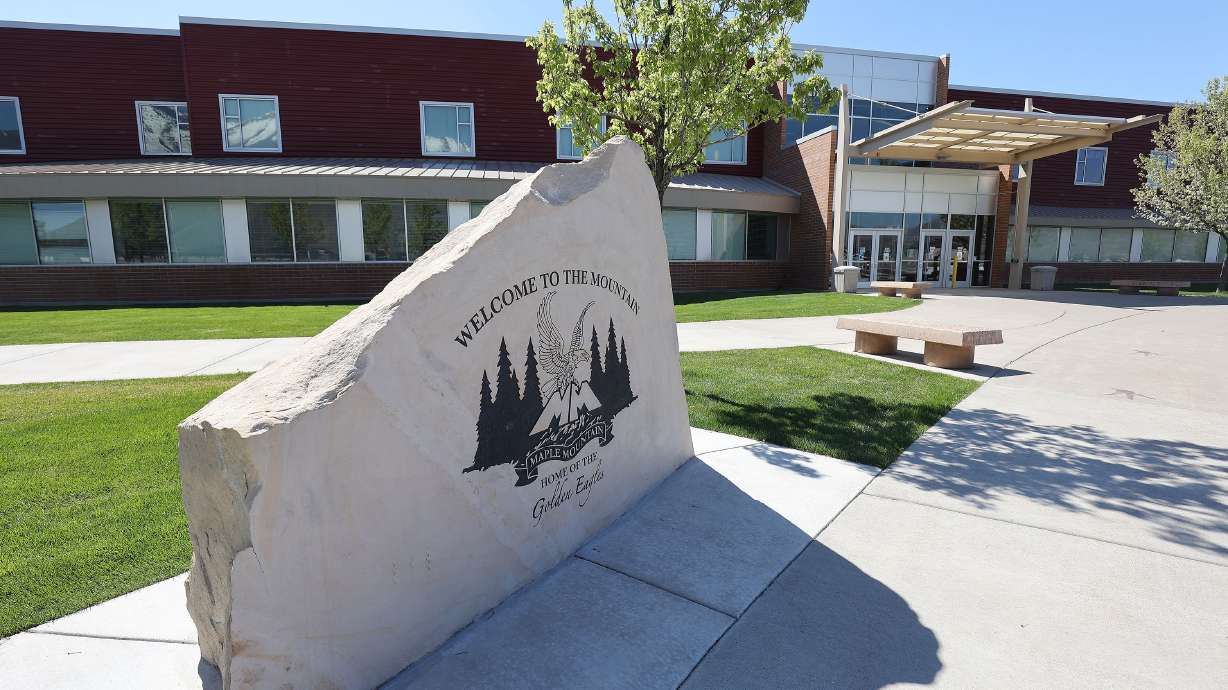
In a disturbing case that has rocked the Utah community, Benjamin Beau Brady, a 27-year-old assistant basketball coach at Maple Mountain High School, faces serious criminal charges for allegedly exploiting teenage girls. The accusations paint a picture of a trusted authority figure abusing his position to engage in illegal and predatory behavior. Brady, from Mapleton, was charged on Monday in the 4th District Court with multiple felonies and misdemeanors, including forcible sodomy and providing alcohol to minors.
This incident highlights ongoing concerns about the safety of students in school environments and the responsibilities of educators. As details emerge, the case has prompted swift action from the school district and law enforcement, underscoring the need for vigilance in protecting vulnerable youth. While the legal process unfolds, the community grapples with the implications of such allegations against someone in a role meant to mentor and guide young athletes.
The Allegations and Charges Against Brady
The charges against Benjamin Beau Brady stem from a series of events that allegedly involved him using alcohol as a lure to coerce sexual acts from underage girls. According to court documents, Brady is facing two counts of forcible sodomy, classified as a first-degree felony, which carries severe penalties under Utah law. Additionally, he has been charged with four counts of forcible sexual abuse, a second-degree felony, and two counts of providing alcohol to a minor, a class A misdemeanor. These accusations reflect a pattern of behavior that prosecutors argue violated the trust placed in him as a coach.
The case’s gravity is amplified by Brady’s background. As an assistant basketball coach at Maple Mountain High School, he had regular access to teenagers, many of whom looked up to him as a role model. The charges suggest he exploited this dynamic, targeting girls who were 17 years old at the time—still minors under the law. The fact that Brady’s father was a judge in Utah’s 4th District Court adds another layer of complexity, leading to the swift transfer of the case to the 3rd District Court due to potential conflicts of interest from judicial recusals.
Prosecutors have built their case around evidence from Snapchat communications and witness statements, which detail how Brady initiated contact. This digital trail is crucial in modern investigations, where social media often serves as a gateway for such illicit interactions. The charges emphasize not just the sexual offenses but also the provision of alcohol, which is illegal for anyone under 21 in Utah. This combination of crimes points to a deliberate strategy to impair the judgment of the victims, making them more susceptible to abuse.
Legal experts note that first-degree felonies like forcible sodomy can result in lengthy prison sentences, potentially up to life, depending on the circumstances and any aggravating factors. Second-degree felonies carry sentences of 1 to 15 years, while the misdemeanors could add fines and shorter jail time. Brady’s defense will likely hinge on claims of consent, as hinted in his police interview, but the ages of the victims complicate this argument, given statutory protections for minors.
Read : Chinese Cemetery in Thailand Hosts Unique Movie Night for Dead, Arranging Rows of Empty Seats
This case is part of a broader national conversation about sexual misconduct in schools. Statistics from organizations like the U.S. Department of Education indicate that educator-student boundary violations occur more frequently than reported, often involving grooming tactics similar to those alleged here. In Utah, where high school sports are a cornerstone of community life, such scandals can erode public confidence in educational institutions. The charges against Brady serve as a stark reminder that no position of authority is immune to scrutiny, and they underscore the importance of robust background checks and training for school staff.
Details of the Incident and Police Investigation
The incident that led to Brady’s arrest unfolded in early November, beginning with a Snapchat message that set off a chain of events. Charging documents reveal that on November 1, Brady reached out to a 17-year-old girl, offering to buy alcohol for her and her similarly aged friend in exchange for meeting him in a parking lot and engaging in sexual acts. This proposition was explicit, according to the records, and while one girl agreed, her friend reportedly did not want to participate but accompanied her anyway.
The three met in a Provo parking lot, where they entered the back of Brady’s truck. The charges allege that Brady then sexually abused both teens, committing acts that form the basis of the sodomy and sexual abuse counts. After the encounter, he provided them with alcohol and departed, leaving the girls to process what had happened. This transaction-like nature of the event—alcohol for favors—highlights the exploitative element, treating the minors as commodities rather than individuals.
Read : Valencia CF Coach Fernando Martín and Three Children Die in Indonesia Boat Accident
About a week later, on November 8, Provo police were notified of the incident, prompting an investigation. Detectives interviewed Brady, who used the alias “Carson” to separate his “private life” from his professional one. During questioning, as detailed in the police booking affidavit, Brady admitted to meeting the one juvenile multiple times and her friends on several occasions. He vaguely recalled an event in Provo involving the two victims but refused to provide specifics, insisting that everything in the truck was consensual. When pressed further, he invoked his right to a lawyer, halting the interrogation.
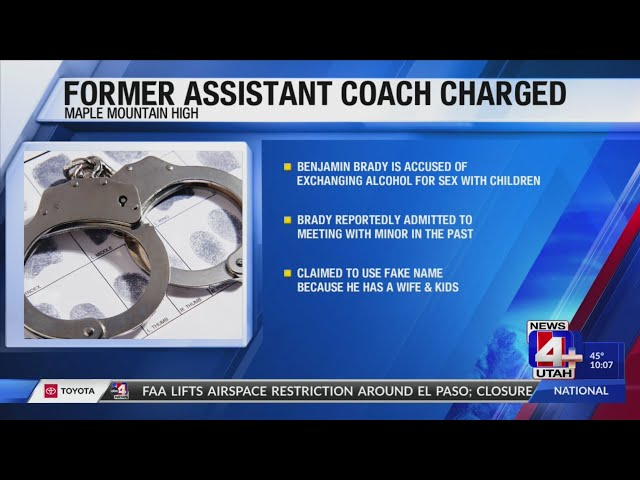
This police interaction is telling. Brady’s reluctance to elaborate and his attempt to have the officer describe the events first suggest an awareness of the seriousness of the situation. The use of an alias also indicates premeditation in keeping his actions hidden, possibly to avoid detection by colleagues, family, or authorities. Investigators likely relied on digital forensics from Snapchat, which can preserve messages even if deleted, along with victim statements to corroborate the timeline.
The location in Provo, a city known for its university and family-oriented community, adds irony to the case, as it contrasts with the alleged misconduct. Parking lots, often seen as neutral public spaces, become sites of vulnerability in such narratives, emphasizing how predators can operate in plain sight. The victims’ ages—17—place them just below the age of majority, but Utah law is clear on protections against exploitation, especially when alcohol is involved, which can negate consent.
The investigation moved quickly, leading to charges by mid-February. This efficiency reflects improved protocols in handling sexual assault cases, including trauma-informed interviewing techniques that prioritize victim well-being. However, challenges remain, such as encouraging reporting in tight-knit communities where fear of stigma or retaliation can silence survivors.
Response from the School District and Community Impact
Upon learning of the allegations, the Nebo School District acted decisively. A spokesman, Seth Sorensen, confirmed to local media that Brady was terminated on February 5, immediately after the district became aware of the claims. This prompt firing aligns with district policies aimed at safeguarding students, demonstrating a zero-tolerance approach to misconduct.
Read : Garfield High School Basketball Coach Brandon Roy Dismissed After Championship Success
Maple Mountain High School, part of the Nebo District, serves a student body focused on academics and athletics. Basketball programs, in particular, foster team spirit and personal development, making the betrayal by a coach especially jarring. Parents and students have expressed shock, with many calling for enhanced oversight of coaching staff. The district’s response includes reviewing hiring practices and possibly implementing more stringent social media monitoring for employees.
The community impact extends beyond the school. In Mapleton and surrounding areas, where Brady resided, the case has sparked discussions about trust in local figures. His father’s judicial role in the 4th District Court, which necessitated the case transfer, raises questions about nepotism and impartiality in the legal system. While no wrongdoing is alleged on the father’s part, the recusal ensures transparency.
Broader societal implications include the role of alcohol in facilitating abuse. Providing liquor to minors is not only illegal but also a common tactic in grooming, lowering inhibitions and creating dependency. Advocacy groups like those focused on teen safety advocate for education on recognizing red flags, such as adults offering prohibited items in exchange for favors.
As the case proceeds in the 3rd District Court, Brady awaits arraignment and potential trial. If convicted, he could face significant prison time, registration as a sex offender, and lifelong consequences. For the victims, support services are crucial, including counseling to address trauma. This incident serves as a catalyst for change, pushing schools and communities to prioritize prevention over reaction.
In conclusion, the charges against Benjamin Beau Brady expose vulnerabilities in systems meant to protect youth. While the legal process will determine guilt, the allegations alone demand reflection on how to better safeguard teenagers from those in power. As Utah residents follow the developments, the hope is for justice and stronger protections moving forward. (Word count: 1,028)