

Columbia University has once again found itself at the center of controversy and change as its interim president, Katrina Armstrong, stepped down just a week after announcing sweeping policy reforms.
The resignation comes amid a politically charged atmosphere, intensified by the Trump administration’s decision to revoke $400 million in federal funding over campus protests.
Katrina Armstrong, who took on the interim role in August following the resignation of Minouche Shafik, faced immense pressure navigating the institution through one of the most tumultuous periods in its history.
Her departure signals deeper struggles within the university as it grapples with internal dissent, federal scrutiny, and the broader ideological battle over free speech and campus governance.
Sweeping Policy Changes and Federal Pressure
Columbia University recently announced a series of new policies aimed at addressing concerns raised by the Trump administration, which accused the institution of allowing antisemitic protests and failing to take a firm stance against discrimination.
These changes include stricter restrictions on demonstrations, heightened disciplinary measures for student groups, expanded authority for campus police to make arrests, and increased oversight over the university’s Middle East curriculum.
The policy overhaul was widely seen as a concession to federal demands, following the administration’s decision to cut off research funding in response to campus protests.
Three federal agencies—the Department of Health and Human Services, the Department of Education, and the General Services Administration—responded positively to the changes, describing them as a “positive first step.”
Read : Columbia University Agrees to Ban Masks on Campus After $400M Funding Freeze by Trump
This acknowledgment raised hopes that federal funding could be reinstated, but Columbia’s internal community remained divided over the university’s response.
Read : Colombia: Embarking on an Odyssey Through the Land of Eternal Spring
Katrina Armstrong, in her statement accompanying the policy changes, emphasized that the measures were designed to address concerns about discrimination, harassment, and antisemitic incidents that had reportedly increased after the October 7, 2023, Hamas attack on Israel.
She acknowledged the challenge of balancing academic freedom with the need to maintain a safe and inclusive campus environment. However, many students and faculty viewed the new policies as an infringement on free speech and academic independence, intensifying internal conflicts within the university.
Backlash from Faculty and Students
Katrina Armstrong’s resignation followed intense criticism from faculty members, students, and civil rights organizations who saw Columbia’s policy changes as capitulation to government pressure.
Many faculty members expressed frustration that the university appeared to be sacrificing its principles in exchange for federal funding, undermining its reputation as a beacon of free thought and inquiry.
Over the weekend before her resignation, Katrina Armstrong reportedly met with faculty members to rally support for the new policies. According to The Wall Street Journal, she warned that six federal agencies were investigating the university and could withdraw additional funding if compliance measures were not met.
She highlighted the potentially devastating financial consequences, particularly for students who relied on federal aid and research grants. Despite her appeals, faculty members remained deeply divided.
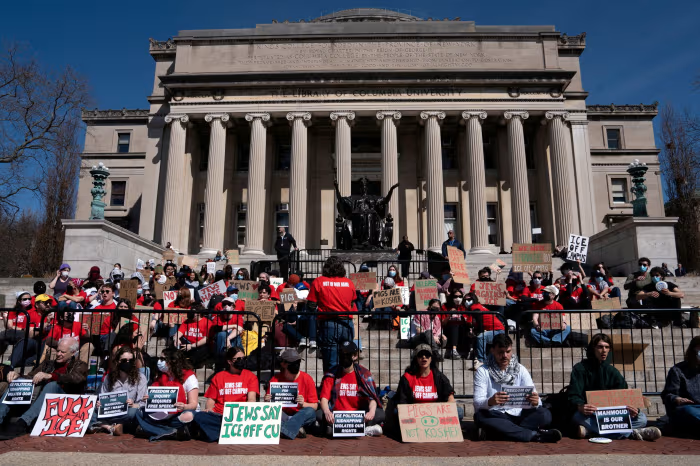
Some supported the measures as necessary to protect the university from further federal penalties, while others argued that they compromised Columbia’s academic mission. Professors from various departments voiced concerns about the increased policing of student activism, the restrictions on curriculum, and the perceived suppression of free speech.
Labor unions representing educators and professors responded by filing a lawsuit against the Trump administration, arguing that the withdrawal of federal funds constituted an attempt to suppress speech on campus. The lawsuit claimed that the administration was leveraging financial pressure to force Columbia into adopting policies that restricted the expression of political views—particularly regarding the Israel-Hamas conflict.
Student groups, particularly pro-Palestinian activists, also condemned the policy changes. Many feared that the new restrictions on demonstrations and disciplinary actions against student organizations would disproportionately target their activism.
Columbia’s campus had been at the heart of nationwide protests, with encampments, counterprotests, and police interventions dominating the previous academic year. The heightened tensions made it clear that the policy changes would not be implemented without significant opposition.
Columbia’s Future Amid Growing Uncertainty
With Katrina Armstrong stepping down, Columbia University must now navigate an uncertain future under new leadership. The Board of Trustees has appointed Claire Shipman, a longtime board member and journalist, as acting president until a permanent replacement is found.
Shipman’s appointment comes at a critical juncture, as Columbia faces ongoing legal battles, internal discord, and the challenge of regaining federal funding without compromising its commitment to academic freedom.
The university’s administration will need to address pressing concerns from both external regulators and internal stakeholders. Questions remain about how the announced policy changes will be implemented, whether faculty and student opposition will lead to further protests, and how Columbia will maintain its status as a premier institution of higher learning in the face of political pressure.
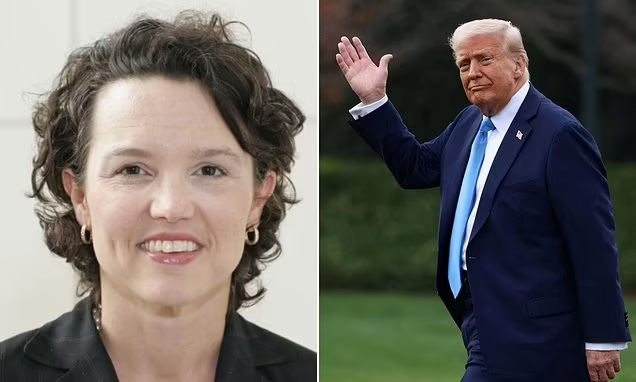
Columbia’s response to these challenges will set a precedent for how universities across the United States handle similar federal interventions. The Trump administration’s move to cut funding over alleged tolerance of antisemitism has sparked debates about the balance between government oversight and institutional autonomy.
Many observers are closely watching Columbia to see whether it will double down on its policy shifts or attempt to find a middle ground that satisfies both federal agencies and its academic community.
The situation at Columbia also raises broader questions about the role of universities in fostering open dialogue on contentious issues. Can institutions of higher learning maintain their commitment to free speech while addressing concerns about discrimination and harassment?
How should universities navigate political pressures that threaten their financial stability? These are the complex dilemmas that Columbia’s next president will have to confront.
For now, Katrina Armstrong’s resignation serves as a reminder of the immense pressures facing university leaders in today’s politically charged climate. Her departure underscores the difficulty of balancing external demands with internal values, a challenge that Columbia—and many other universities—will continue to grapple with in the years ahead.