
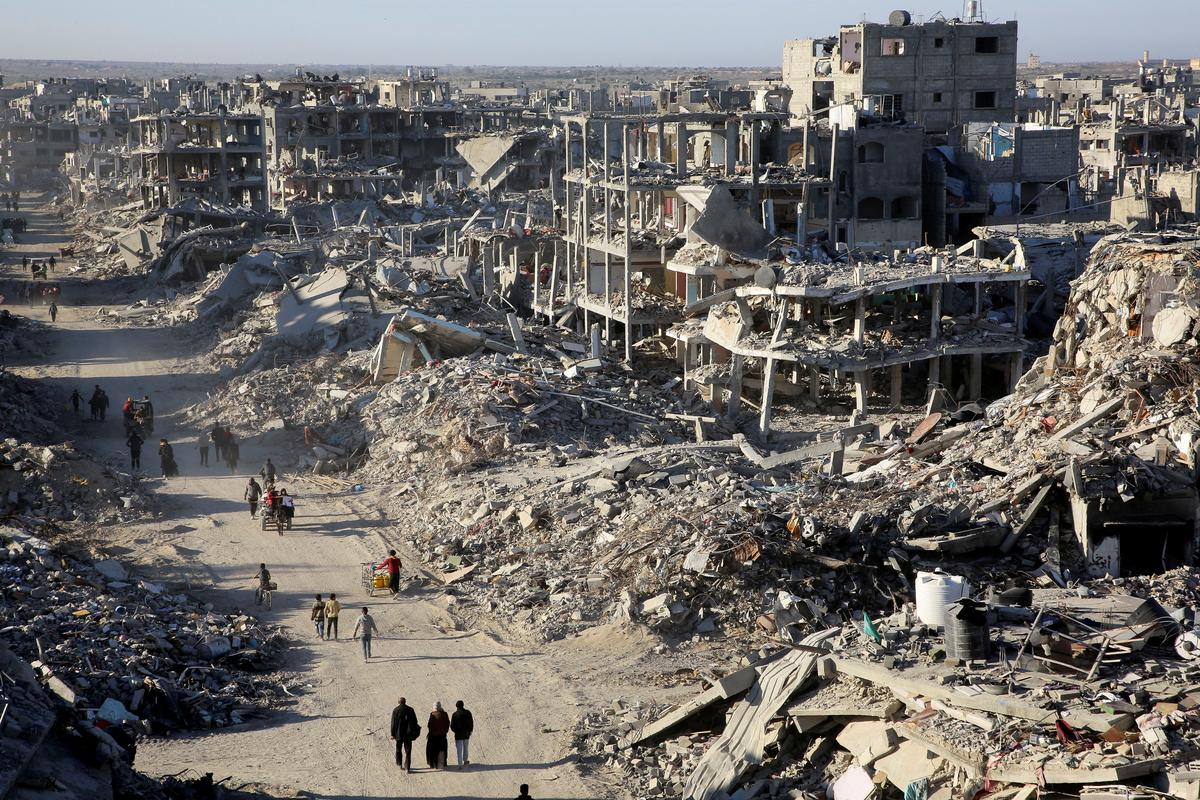
The aftermath of conflict in Gaza has left a scar on the landscape that will take decades to heal. According to a recent United Nations damage assessment, clearing the over 50 million tonnes of rubble from the devastated region could take up to 21 years and cost up to $1.2 billion.
This stark outlook sheds light on the monumental task faced by the international community, local authorities, and the people of Gaza as they strive to rebuild their lives amidst the ruins of war.
The Scale of Destruction
The sheer volume of debris in Gaza is a testament to the intensity of the conflict. Over the course of the hostilities, an estimated two-thirds of Gaza’s pre-war structures, encompassing over 170,000 buildings, have been either damaged or completely destroyed.
This includes residential homes, schools, hospitals, and critical infrastructure, leaving a landscape where every corner tells a story of loss.
The rubble isn’t just a physical obstruction; it’s laden with dangers. Unexploded ordnance, asbestos from older constructions, and the tragic presence of human remains beneath the debris make this cleanup effort not only massive but also fraught with peril.
The Palestinian Ministry of Health has reported that approximately 10,000 bodies are still missing under the rubble, turning the act of clearing into a deeply respectful and painful process.
Read : 19-Year-Old Palestinian Man Stabbed Israeli Man on Levontin Street: Shot Dead By Civilian
Moreover, the environmental impact of such destruction is profound. The debris contains hazardous materials like asbestos, which poses long-term health risks to those involved in the cleanup and the future inhabitants of these areas.
Read : Israel: Exploring the Land of Ancient Treasures
The contamination of soil and water sources with these materials could lead to public health crises, further complicating the recovery process.
The Challenge of Reconstruction
Rebuilding Gaza is not just about removing rubble; it’s about reconstructing an entire society. The UN’s assessment paints a picture where the reconstruction will not only be costly but will stretch over decades.
An official from the United Nations Development Programme highlighted that the conflict has set back Gaza’s development by 69 years, erasing decades of progress in a matter of months.
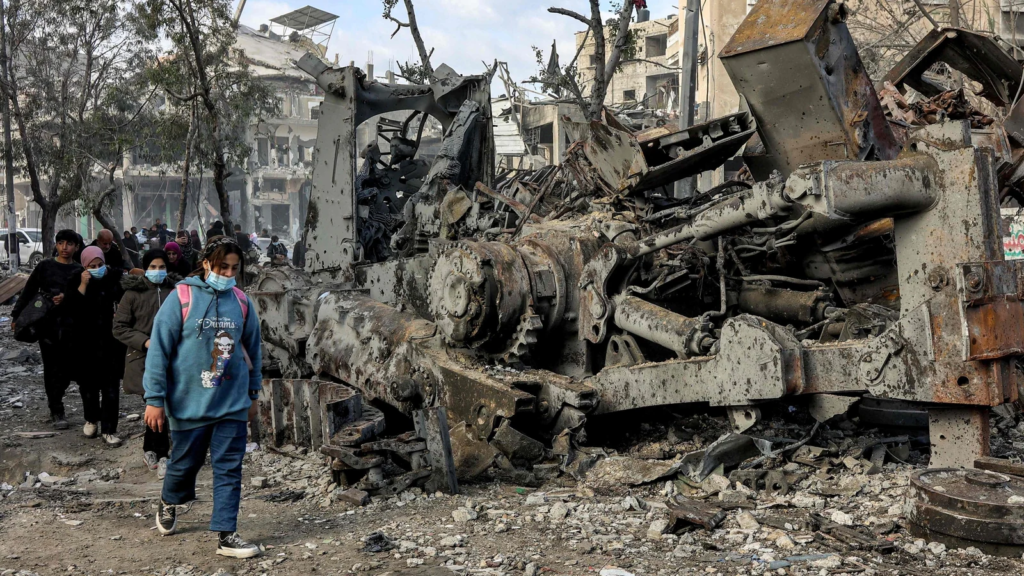
The logistics of such an operation are daunting. The need for specialized equipment like bulldozers and cranes, the training of personnel in dealing with hazardous materials, and the establishment of safe disposal sites all add layers of complexity.
The UN has estimated that even with an aggressive approach, rebuilding homes alone could extend until 2040, with the total cost of reconstruction potentially reaching $40 billion.
The blockade and restrictions on imports have historically slowed down reconstruction efforts in Gaza, particularly concerning materials like concrete, timber, and steel, which are seen as dual-use items that could potentially be used for military purposes.
This blockade, coupled with the need for international cooperation and funding, means that the timeline for recovery could be significantly extended beyond the UN’s estimates if current restrictions persist.
The Path to Recovery
The path to recovery for Gaza is not just physical but also deeply psychological and social. The scale of destruction has left many residents homeless, with families living in temporary shelters or with relatives, yearning for normalcy.
The psychological toll of living amidst such devastation, coupled with the uncertainty of when or how their homes will be rebuilt, adds another layer to the recovery process.
International aid and cooperation are crucial. The UN and various NGOs are already on the ground, providing immediate relief like food, medical aid, and temporary shelter. However, the long-term recovery demands a sustained international commitment.
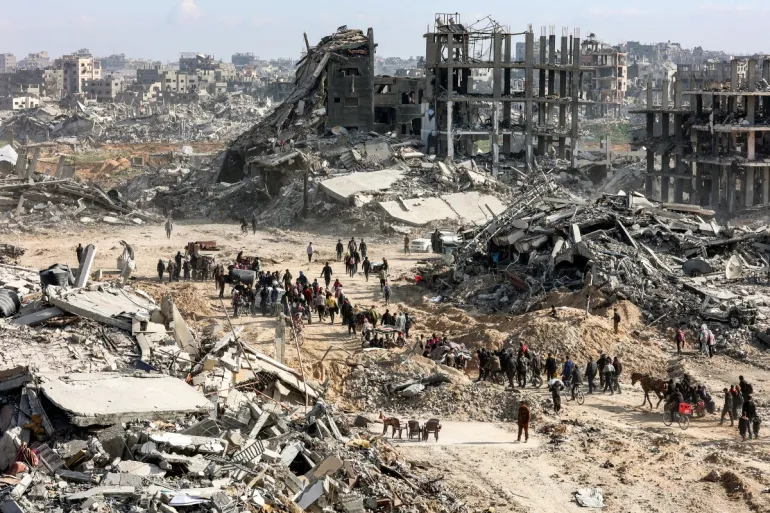
Countries and organizations worldwide need to come together not only to fund the physical rebuilding but also to support initiatives aimed at healing the community, providing education, and fostering economic opportunities.
The voices of Gazans themselves are essential in this process. Local input in planning and decision-making can ensure that reconstruction efforts meet the real needs of the community, respecting cultural norms and addressing the specific challenges faced by the population. Empowering local governance and civil society will be key to sustainable recovery.
Moreover, this situation calls for a broader reflection on conflict resolution and peace-building in the region. The cycle of destruction and rebuilding must be broken through diplomatic efforts that aim for lasting peace. Without addressing the root causes of the conflict, any reconstruction effort might only be a temporary fix.
In conclusion, the task of clearing 50 million tonnes of rubble in Gaza is emblematic of the broader challenges of post-conflict recovery. It’s a reminder of the human cost of war and the enduring spirit of those who remain to rebuild.
The international community must rise to the challenge, not just with financial aid but with a commitment to peace, justice, and the right to rebuild a life with dignity for all Gazans. The road ahead is long, but with concerted effort and goodwill, the vision of a rebuilt Gaza can become a reality.