
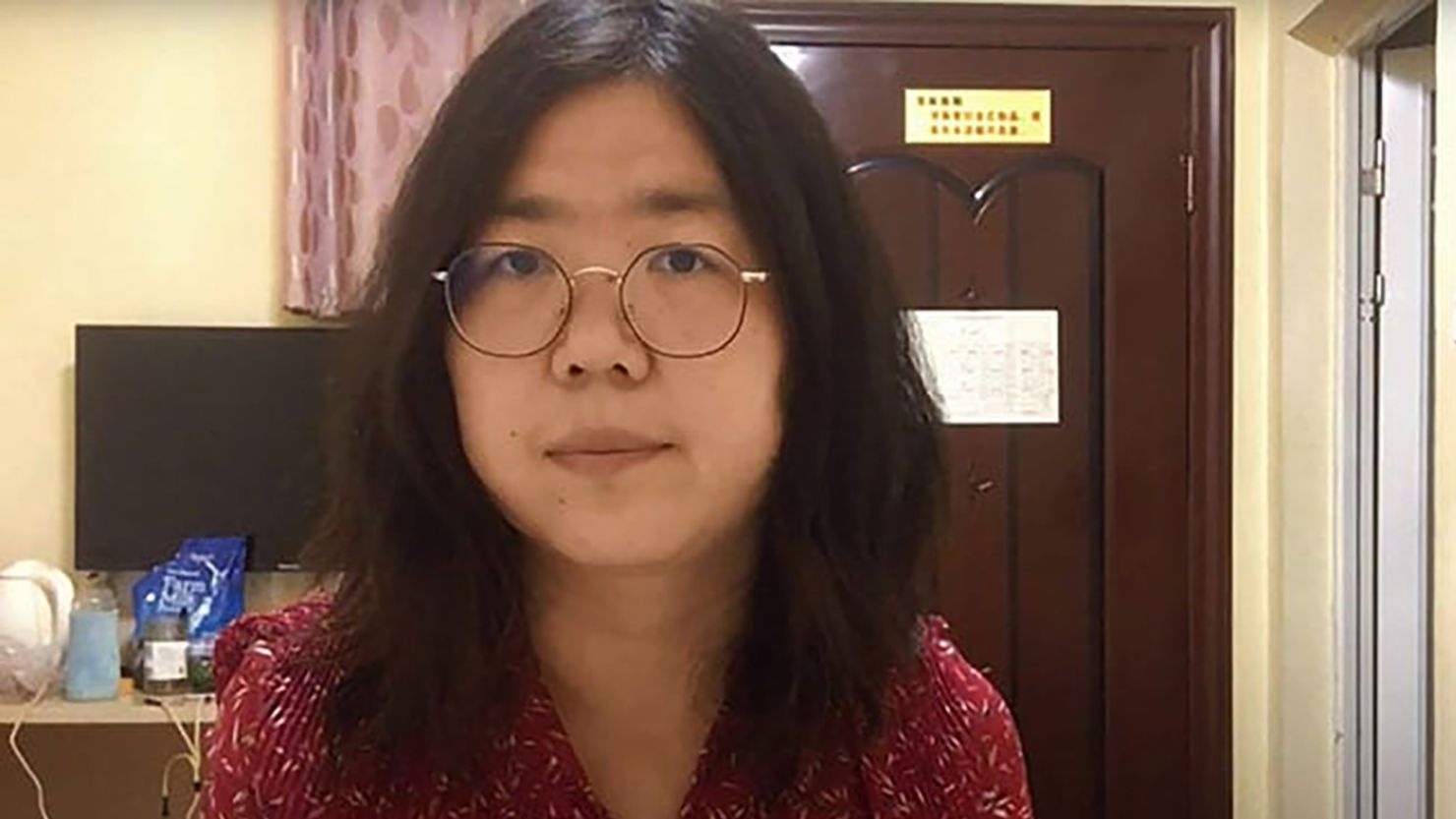
In a chilling escalation of China’s crackdown on independent journalism, citizen journalist Zhang Zhan has been sentenced to an additional four years in prison. This marks the second time the 42-year-old whistleblower has been targeted with the vague charge of “picking quarrels and provoking trouble,” a legal tool often wielded against dissidents and truth-tellers. Zhang Zhan first gained global attention for her raw, on-the-ground reporting from Wuhan during the early days of the COVID-19 pandemic, exposing the chaos and censorship that defined the outbreak’s origins.
Her recent re-arrest and conviction underscore a broader pattern of retaliation against those who dare to document human rights abuses under the Chinese Communist Party’s rule. As the world reflects on the fifth anniversary of the pandemic’s global spread, Zhang’s case serves as a stark reminder of the high cost of free speech in an authoritarian state. Zhang’s journey from a former lawyer to a fearless reporter began long before the virus emerged. Born in 1983, she trained as a legal professional but grew disillusioned with the system’s constraints on justice.
By the late 2010s, she had pivoted to citizen journalism, using social media platforms to amplify stories of injustice that mainstream outlets shied away from. Her work often focused on marginalized voices, from forced evictions to labor exploitation, earning her a reputation as a tenacious advocate for the voiceless. The turning point came in late 2019 and early 2020, when whispers of a mysterious pneumonia-like illness began circulating in Wuhan, Hubei’s bustling industrial hub.
As Chinese authorities downplayed the threat—initially labeling it a minor cluster and censoring doctors who raised alarms—Zhang saw an opportunity to bear witness. In February 2020, she traveled to the city on her own dime, armed only with a smartphone and an unyielding commitment to transparency. Over the next few months, she posted a series of videos and dispatches that painted a far grimmer picture than the official line.
Zhang’s footage captured overflowing hospitals where patients gasped for air in hallways, exhausted medical staff in makeshift protective gear, and desolate streets enforced by draconian lockdowns. She interviewed desperate families separated by quarantines, crematorium workers overwhelmed by the death toll, and ordinary citizens grappling with food shortages and fear.
One particularly haunting clip showed her navigating a ghost town-like neighborhood, her voice steady as she questioned why the government was silencing whistleblowers like ophthalmologist Li Wenliang, whose early warnings had been rebuked as “rumor-mongering.” Zhang Zhan didn’t just report facts; she critiqued the opacity, arguing that censorship was exacerbating the crisis and eroding public trust. Her posts, shared on platforms like Weibo and YouTube, garnered hundreds of thousands of views before censors scrubbed them.
#ZhangZhan is jailed for reporting the truth about COVID19's spread. Rather than criminalizing journalism and free speech, the PRC must release her unconditionally, particularly as her health is declining because of repeated hunger strikes protesting her arbitrary detention. pic.twitter.com/oNo9tay8xN
— China Commission (@CECCgov) September 17, 2025
Yet, in the pre-vaccine era of global panic, her work pierced the Great Firewall, alerting international audiences to the scale of the unfolding disaster. Analysts later credited citizen journalists like Zhang Zhan with filling voids left by state-controlled media, providing evidence that contradicted Beijing’s claims of swift containment. For many, she embodied the raw courage of independent reporting in the digital age— a lone figure against a vast machinery of suppression.
A First Conviction and the Fight for Survival
Zhang Zhan’s bravery came at an immediate price. In May 2020, as her reports gained traction, she was detained in Shanghai without formal charges. Held incommunicado for months, she endured solitary confinement and psychological pressure. Authorities accused her of spreading “false information” that could “disturb social order,” but the real offense was her unfiltered portrayal of governmental failures.
On December 28, 2020, in a closed-door trial at Shanghai’s Pudong New Area People’s Court, Zhang Zhan was sentenced to four years in prison under Article 293 of China’s Criminal Law—the infamous “picking quarrels and provoking trouble” statute. This catch-all provision, critics argue, is a cudgel for punishing anything from online dissent to peaceful protests, with convictions often based on scant evidence. In Zhang’s case, prosecutors cited her social media posts as “provocative,” claiming they incited unrest, though no specific victims or harms were identified.
Read : Brother-Sister Duo in China Lose Lives After Being Stung Hundreds of Times by Wasps
The courtroom scene was surreal. Zhang Zhan, frail from prior detention, delivered a defiant statement: “I believe I am being persecuted for exercising my freedom of speech.” Her lawyer, Ren Quanniu, later revealed that she viewed the trial not as justice but as political theater. Supporters gathered outside, only to be dispersed by police, while international observers decried the lack of transparency.

Prison life tested Zhang Zhan’s resolve like never before. Just a month into her sentence, she launched a hunger strike to protest the injustice, refusing food and water in a bid to draw attention to her plight. Guards responded brutally, strapping her to a bed and force-feeding her through a nasal tube—a method documented in court filings as causing severe pain and health deterioration. Over the next four years, she endured multiple such strikes, losing significant weight and suffering from chronic illnesses like anemia and gastrointestinal issues. Amnesty International and Human Rights Watch reported on her deteriorating condition, with leaked letters from Zhang pleading for medical care that was routinely denied.
Despite the isolation, Zhang Zhan’s spirit shone through smuggled messages. In one note to supporters, she wrote, “Truth is my weapon; silence is their fear.” Her case became a rallying cry for press freedom advocates worldwide. The Committee to Protect Journalists (CPJ) named her a “missing” reporter in 2020, and by 2021, petitions bearing millions of signatures urged her release. Even as COVID-19 ravaged the globe—claiming over seven million lives by official counts—Zhang’s reporting was vindicated by investigations like the World Health Organization’s, which highlighted delays in transparency as a key factor in the pandemic’s spread.
Through it all, Zhang remained a symbol of resilience. Her initial term was set to end in May 2024, and upon release, she emerged gaunt but unbroken, vowing to continue her work. Brief glimpses of her post-prison life showed a woman reconnecting with family, attending church services—Zhang is a devout Christian—and quietly planning her next exposés. But freedom proved fleeting.
The New Sentence: Retaliation for Unyielding Journalism
Zhang Zhan’s reprieve lasted only three months. In August 2024, she was rearrested in Shanghai, this time for what authorities vaguely termed “illegal activities.” Detained initially without charge, she was transferred to the notorious Pudong Detention Center, where access to lawyers and family was severely restricted. Diplomatic efforts to monitor her trial were rebuffed; on September 19, 2025, foreign journalists and envoys were barred from the proceedings, fueling suspicions of a predetermined outcome.
The verdict, handed down on Friday, September 19, 2025, was as predictable as it was punitive: another four years on the same “picking quarrels and provoking trouble” charge. Reporters Without Borders (RSF), citing sources close to the case, confirmed the sentence, noting it stemmed directly from Zhang Zhan’s recent reporting on human rights violations. In the interim period after her release, she had turned her lens to broader abuses—documenting forced labor in Xinjiang, crackdowns on religious minorities, and the lingering scars of zero-COVID policies that locked down cities for months on end. Her posts on overseas platforms like Twitter (now X) and YouTube evaded domestic censors but caught the eye of state security.
Her former lawyer, Ren Quanniu, publicly contested the charges on social media, arguing that Zhang Zhan’s comments abroad did not constitute provocation under any reasonable interpretation of the law. “If this isn’t innocence, what is?” he posted, offering to testify on her behalf. Chinese officials, true to form, offered no public details, maintaining a wall of silence that only amplified global outrage.

The timing adds a layer of irony. Just a week prior, China’s National People’s Congress passed legislation ostensibly aimed at bolstering public health responses, empowering citizens to report emergencies directly and sidestepping bureaucratic red tape. Yet here was Zhang, punished anew for doing precisely that—reporting on crises that demanded urgent attention. Critics see this as emblematic of Beijing’s dual strategy: projecting reform abroad while stifling dissent at home.
Zhang Zhan’s health, already fragile from years of incarceration, now hangs in the balance. At 42, she faces the prospect of spending her prime years in a system RSF describes as the world’s largest jail for journalists, with at least 124 media workers imprisoned as of 2025. China’s ranking of 178th out of 180 in the RSF World Press Freedom Index paints a dire picture, where “trouble” is whatever threatens the narrative.
A Global Call to Action Amid Sinking Press Freedom
Zhang Zhan’s repeated sentencing is not an isolated tragedy but a bellwether for the erosion of press freedoms in China and beyond. The European Union swiftly condemned the verdict, with spokesperson Anitta Hipper demanding her “immediate and unconditional release,” while the United Nations Human Rights Office echoed calls for justice, highlighting the charge’s arbitrary nature. Advocacy groups like the CPJ and Amnesty International have mobilized campaigns, urging diplomats to pressure Beijing during upcoming bilateral talks.
Beh Lih Yi, CPJ’s Asia-Pacific director, captured the sentiment succinctly: “This is the second time Zhang Zhan has faced trial on baseless charges that amount to nothing more than a blatant act of persecution for her journalism work. Chinese authorities must put an end to the arbitrary detention of Ms. Zhang, drop all charges, and free her immediately.” RSF’s advocacy manager, Aleksandra Bielakowska, expressed shock on social media, emphasizing that Zhang “should be celebrated globally… not trapped in brutal prison conditions.”
As a Christian and self-proclaimed “child of God,” Zhang has framed her ordeal in spiritual terms, drawing parallels to biblical prophets who spoke truth to power. Her story resonates with a global community weary of misinformation and authoritarian overreach, especially as authoritarian regimes worldwide—from Russia to Myanmar—echo China’s playbook in jailing reporters.
What can be done? Individuals can amplify her voice through social media, support organizations like RSF, and contact policymakers. Zhang’s legacy, forged in Wuhan’s shadows, reminds us that journalism’s true power lies in persistence. Five years after she first risked everything, her light endures, challenging us to demand a world where whistleblowers are heroes, not hostages.