
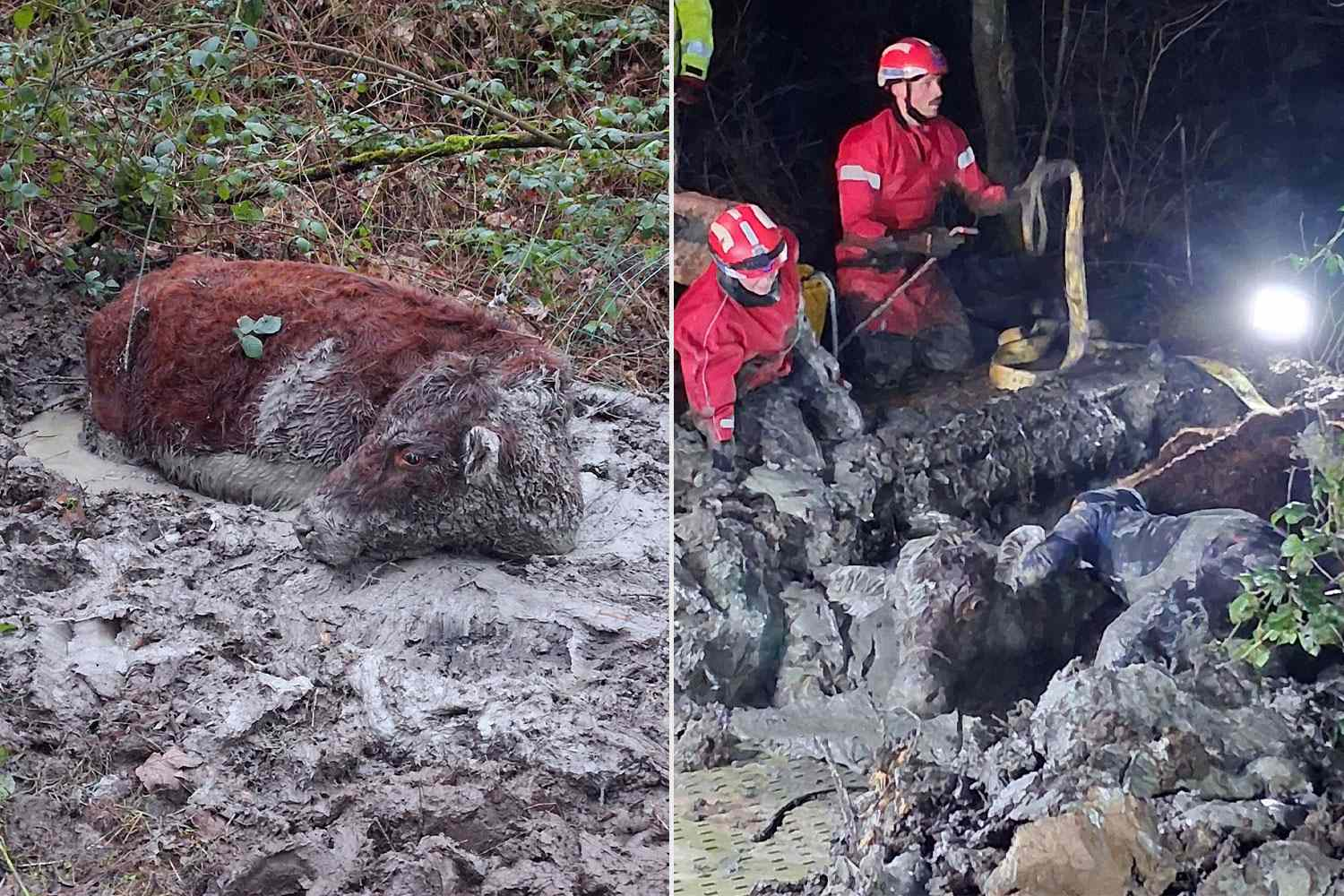
A routine Saturday afternoon in the Hampshire countryside turned into an unusual rescue operation when a young Hereford cross cow became trapped deep in thick mud. The incident, which unfolded in Bordon on March 7, required the coordinated response of specialist firefighters trained in animal rescue. The cow had sunk into mud up to her shoulders, leaving her unable to move or free herself.
Concern for the animal’s safety prompted a call for assistance, bringing together crews equipped with specialist rescue gear and experience in handling situations involving large animals. By the end of the operation, the cow was safely lifted from the mud and returned to her owner, marking a successful outcome for both firefighters and the animal involved.
Emergency Response to an Unusual Rural Rescue
The rescue operation began when emergency services received a call reporting that a cow had become stuck in a muddy area in Bordon. At approximately 3:30pm on Saturday afternoon, an on-call crew from Liphook was dispatched to the scene. Given the nature of the incident and the challenges associated with rescuing a large farm animal from deep mud, additional support was quickly mobilized.
Animal rescue teams from Overton and Winchester also responded to the call, bringing with them specialized training and equipment designed for livestock rescue. Situations involving animals trapped in mud or water can be particularly difficult because the animal’s weight and panic can worsen the situation. Mud creates suction that can hold an animal firmly in place, making it impossible for the animal to escape without external assistance.
When firefighters arrived, they found the young Hereford cross cow stuck up to her shoulders in the thick mud. The animal had likely wandered into the muddy ground and gradually sunk deeper as she struggled to move. Without intervention, such situations can quickly become dangerous for livestock. Prolonged entrapment can lead to exhaustion, dehydration, or even injury if the animal continues to struggle.
Read : Sudan: The Country with More Pyramids Than Egypt
Fire crews assessed the situation carefully before beginning the rescue. Their training in animal handling and rescue procedures helped ensure that the operation could be carried out safely for both the cow and the rescuers. Firefighters must often adapt their emergency response skills to unusual situations like this, and rural incidents involving livestock are not uncommon in farming areas.
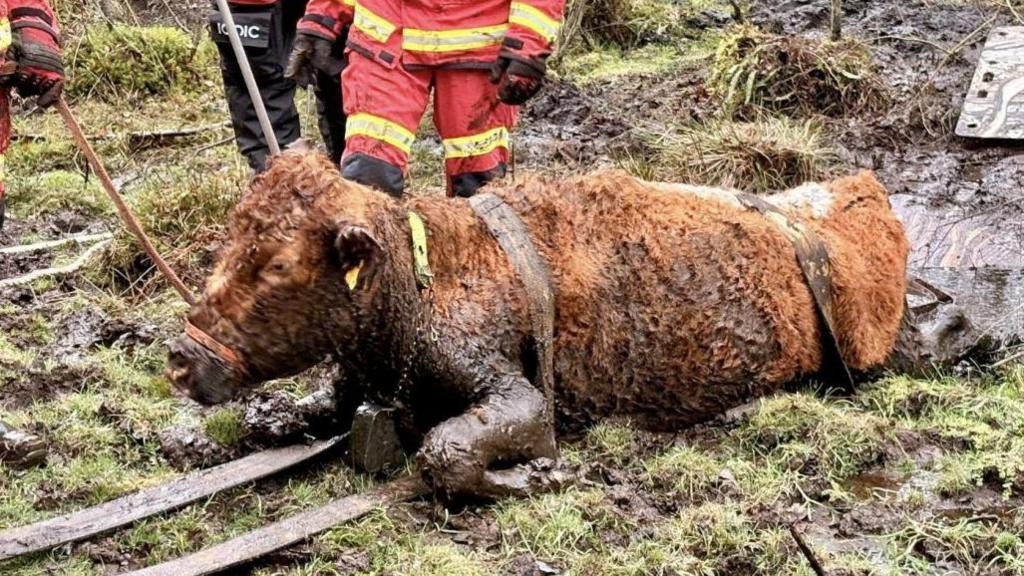
Once the firefighters had evaluated the scene, they prepared to use specialist equipment to free the trapped animal. Rescue teams often carry gear designed specifically for large animal rescues, including straps, strops, and lifting devices that can safely support the weight of livestock without causing harm. In this case, firefighters used strops to carefully secure the cow before attempting to lift and pull her from the mud. Strops are strong, flexible straps that can be placed around an animal’s body to provide support during lifting operations.
Read : Shalanda Williams Accused of Accessing Coworker’s Account to Redirect Her Paycheck
The equipment allows rescuers to distribute the animal’s weight evenly and reduce the risk of injury. The team worked methodically to position the straps and ensure that the cow remained as calm as possible during the rescue. Animals that are frightened or stressed can make the process more difficult, so rescuers aim to move slowly and carefully while minimizing distress. The firefighters also needed to account for the powerful suction created by the mud, which can make it extremely difficult to remove an animal once it has sunk deeply.
With the strops securely in place, the firefighters began the process of pulling and lifting the cow free from the mud. The operation required coordination among the rescue teams, as well as careful monitoring of the cow’s condition throughout the process. Gradually, the animal was lifted out of the thick mud that had trapped her. The successful extraction demonstrated the effectiveness of the specialized equipment and training used by animal rescue teams. Without the proper tools and expertise, freeing a large animal from deep mud could be extremely challenging and potentially dangerous.
Safe Return to Owner After Successful Rescue
After the cow was freed from the mud, firefighters ensured that she was stable and able to stand safely. Being trapped in mud for an extended period can leave animals exhausted, so rescue teams typically take a moment to observe the animal’s condition before concluding the operation. Fortunately, the young Hereford cross cow appeared to recover quickly once she was back on solid ground. Covered in mud after what firefighters described as an “unplanned mud bath,” the animal was nonetheless safe and able to return to her owner.
According to a spokesperson from Hampshire and Isle of Wight Fire and Rescue Service, the teams involved used specialist rescue equipment, including strops, to pull and lift the cow to safety. The spokesperson confirmed that the animal was handed back to her owner following the rescue. The entire operation lasted roughly an hour and a half. Firefighters arrived at around half past three in the afternoon and completed the rescue shortly before 5pm. Once the cow was safely returned to her owner, the crews packed up their equipment and returned to their stations.
Incidents like this highlight the wide range of situations firefighters may encounter beyond traditional fire emergencies. Animal rescues are an important part of many fire services’ responsibilities, particularly in rural communities where livestock farming is common. These operations require patience, careful planning, and specialized skills to ensure that both animals and rescuers remain safe.
For the teams involved in this rescue, the outcome represented a successful example of teamwork and preparedness. The combined efforts of firefighters from Liphook, Overton, and Winchester ensured that the trapped cow was safely freed and able to return home without injury.