
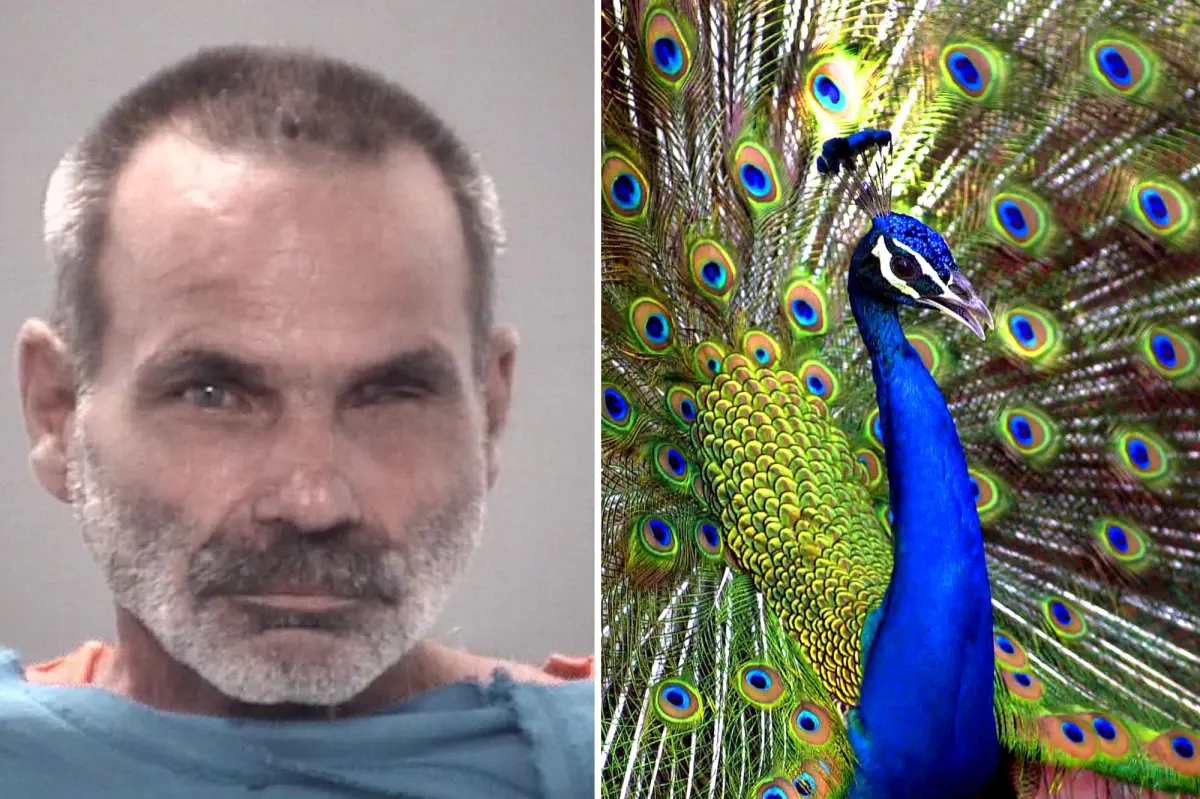
In a shocking escalation of a neighbourhood dispute, a 61-year-old Florida man has been arrested on charges of aggravated animal cruelty after admitting to killing and consuming two of his own pet peacocks. Craig Vogt, from Hudson in Pasco County, faces a third-degree felony charge following an incident that has left local authorities and residents reeling. The case, which unfolded on 23 September 2025, highlights the sometimes explosive tensions that can arise between neighbours over seemingly innocuous matters, such as feeding wandering animals.
According to court documents, Vogt’s actions were driven by frustration over his neighbour’s persistent habit of providing food to the birds, which he claimed were his property. This incident, while isolated, underscores broader concerns about animal welfare and community relations in suburban America. The events leading to Vogt’s arrest began on the evening of 23 September, when deputies from the Pasco County Sheriff’s Office responded to a call at a residential address in Hudson, a quiet community on Florida’s Gulf Coast.
The complainant, a female neighbour whose identity has not been disclosed, reported finding a disturbing letter in her mailbox. The note, penned by Craig Vogt, explicitly stated that he had killed two of his pet peacocks “because she continued feeding them”. The woman told officers that she and Vogt had a history of verbal disagreements over the peacocks, which roamed freely in his yard and occasionally ventured onto neighbouring properties. She admitted to regularly leaving out food for the birds, viewing it as a harmless act of kindness, but this had evidently provoked Vogt to extreme measures.
Deputies arrived at the scene around 9pm and immediately spoke with the neighbour, who handed over the incriminating letter. The document not only confessed to the killings but also served as a stark warning: Vogt wrote that he would continue to slaughter his remaining peacocks if the feeding persisted. This threat, combined with the graphic details of the act, prompted officers to approach Craig Vogt at his nearby home.
What followed was a confession that has since formed the basis of the criminal complaint against him. Craig Vogt, showing no immediate remorse, admitted to the deputies that he had indeed killed the two birds “out of spite”. He described the method in chilling detail: using a knife to slit the peacocks’ necks, allowing them to bleed out, and then cooking the carcasses in a frying pan before eating them. “I did it to prove a point,” he reportedly told investigators, emphasising that the letter was intended to deter his neighbour from any further interference.
Hudson, a small town in Pasco County with a population of around 12,000, is known for its laid-back coastal vibe and family-oriented neighbourhoods. However, like many American suburbs, it is not immune to the frictions that can build between residents sharing close quarters. Peacocks, while exotic and visually striking, are not uncommon in parts of Florida, where they have been introduced as ornamental birds since the early 20th century.
These non-native species often wander freely, drawn to open spaces and easy food sources, which can lead to disputes over property boundaries and animal care. In Vogt’s case, the peacocks were his personal pets, kept in his yard without formal enclosures, allowing them to interact with the wider community. The neighbour’s feeding, though well-intentioned, appears to have been the flashpoint. Court affidavits note that previous arguments had centred on Vogt’s insistence that the birds were his alone to care for, while the woman maintained that they were strays in need of sustenance.
Read : 21 Benefits of Keeping Peacock Feathers Inside Your Home
Local authorities have moved swiftly in response to the complaint. Vogt was taken into custody without incident on the night of 23 September and charged under Florida Statute 828.12, which prohibits the intentional infliction of unnecessary pain or suffering on animals. As a third-degree felony, aggravated animal cruelty carries potential penalties of up to five years in prison and fines of $5,000. At his first court appearance shortly after the arrest, Vogt was ordered held on a $25,000 bond. Court records indicate that he informed the judge of his inability to afford private legal representation and requested a public defender. As of 30 September, he remains in Pasco County Jail, with an arraignment scheduled for early October.
Neighbour’s Complaint Triggers Swift Police Response
The chain of events that led to Craig Vogt’s arrest illustrates the critical role played by prompt reporting in animal cruelty cases. The neighbour, alerted by the letter’s contents, did not hesitate to contact the Pasco County Sheriff’s Office, providing officers with both the physical evidence and a clear timeline of the dispute. According to the arrest affidavit, the woman had been feeding the peacocks for several months, viewing the birds as part of the neighbourhood’s informal wildlife. Vogt, however, saw this as an intrusion, repeatedly asking her to stop during heated exchanges. The letter, delivered on 23 September, marked a dangerous turning point, transforming a verbal spat into a documented act of violence.
Upon arrival, deputies secured the letter as evidence and conducted a preliminary interview with the complainant. Her account was corroborated by the note’s handwriting, which matched samples from Vogt’s residence. When questioned, Vogt offered no denial, instead elaborating on his actions with a level of candour that shocked investigators.
He confirmed killing both peacocks on the same day, using the same method for each: a swift cut to the throat followed by exsanguination. The cooking and consumption occurred shortly thereafter, with Vogt stating that the meat was prepared simply in a frying pan. This admission not only confirmed the cruelty but also raised questions about the birds’ welfare prior to the incident. The affidavit notes that Vogt expressed no concern for the peacocks’ suffering, framing the killings as a necessary deterrent.
In the immediate aftermath, the neighbour sought additional protections. On 29 September, she filed for and was granted a temporary restraining order against Vogt, barring him from contacting her or approaching within 500 feet of her property. This measure, authorised by a Pasco County judge, reflects the perceived ongoing threat, particularly given Vogt’s stated intention to eliminate his remaining birds upon release. Sheriff’s Office spokespeople have emphasised that the order is in place to ensure community safety, though they have downplayed broader risks, describing the feud as confined to the two parties involved.
Legal Charges and Broader Implications for Animal Welfare
Vogt’s case has drawn significant attention to Florida’s animal cruelty laws, which treat peacocks as domestic non-native animals rather than protected wildlife. Under state regulations, these birds are subject to the same anti-cruelty statutes as household pets, prohibiting acts that cause “unnecessary pain or suffering”. The felony classification stems from the intentional and malicious nature of the killings, as evidenced by Vogt’s admissions and the threatening letter. Prosecutors will likely argue that the consumption of the birds does not mitigate the cruelty, given the gratuitous violence involved.
As Vogt awaits trial, the focus has shifted to the fate of his surviving peacocks. The exact number is unclear—affidavits mention “his pet peacocks” in plural without specifics—but Vogt’s threats have prompted animal welfare advocates to call for intervention. The Pasco County Sheriff’s Office has stated that, should Craig Vogt be unable to care for the birds post-release, authorities may seize them under welfare provisions. Groups such as the Humane Society of the United States have expressed interest in rehoming any remaining animals, highlighting the incident as a cautionary tale about unchecked neighbour disputes.
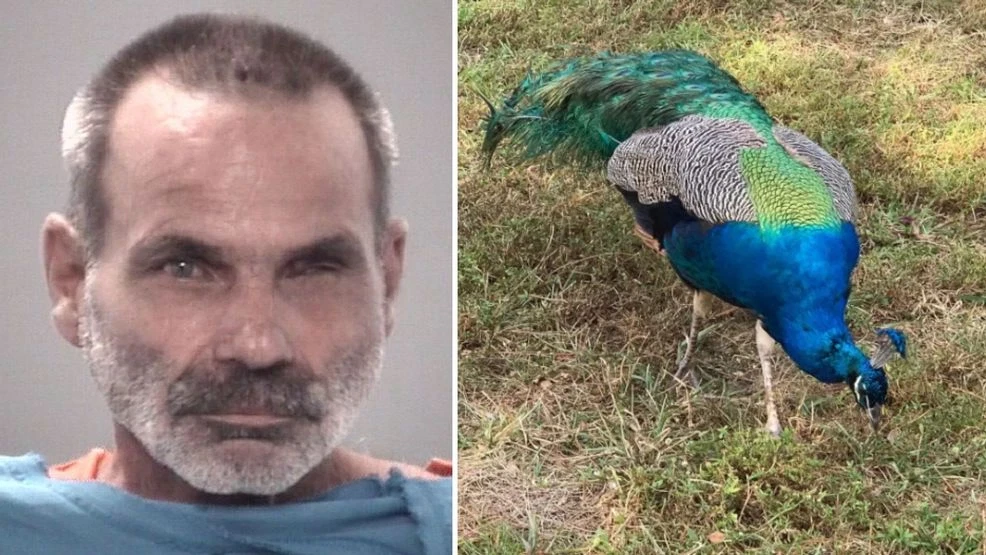
This case also prompts reflection on the psychological underpinnings of such acts. Experts in criminology note that escalating conflicts over property or animals can signal deeper issues, including isolation or unresolved grievances. In Hudson, community leaders have urged residents to seek mediation through local channels before situations deteriorate. The Sheriff’s Office has reiterated its commitment to investigating all cruelty reports thoroughly, encouraging anonymous tips via their hotline.
Community Fallout and Lessons from Hudson
The ripple effects of Craig Vogt’s arrest extend beyond the immediate parties, stirring unease in Hudson’s close-knit community. Neighbours have expressed a mix of horror and sympathy, with some decrying the needless loss of life and others acknowledging the frustrations of living alongside free-roaming animals. Social media posts from local residents describe the peacocks as beloved fixtures, their vibrant plumage a daily highlight in an otherwise ordinary suburb. One anonymous Hudsonian told reporters, “Those birds brought a bit of magic to the street—who knew it could end like this?”
Authorities have assured the public that this remains an isolated incident, with no evidence of wider threats. Nonetheless, it has sparked discussions on property rights versus communal care. Florida’s permissive stance on exotic pets allows individuals like Craig Vogt to keep peacocks without stringent oversight, but incidents like this may fuel calls for tighter regulations. Animal rights organisations are already lobbying for amendments to ensure better tracking of non-native species.
For Craig Vogt, the road ahead is uncertain. His public defender will likely challenge aspects of the prosecution’s narrative, perhaps arguing diminished capacity or provocation. Yet, the weight of the evidence—his own words and the letter—presents formidable hurdles. As the case progresses, it serves as a stark reminder of how petty disputes can spiral into tragedy, urging communities to prioritise dialogue over destruction.
xc4ano