
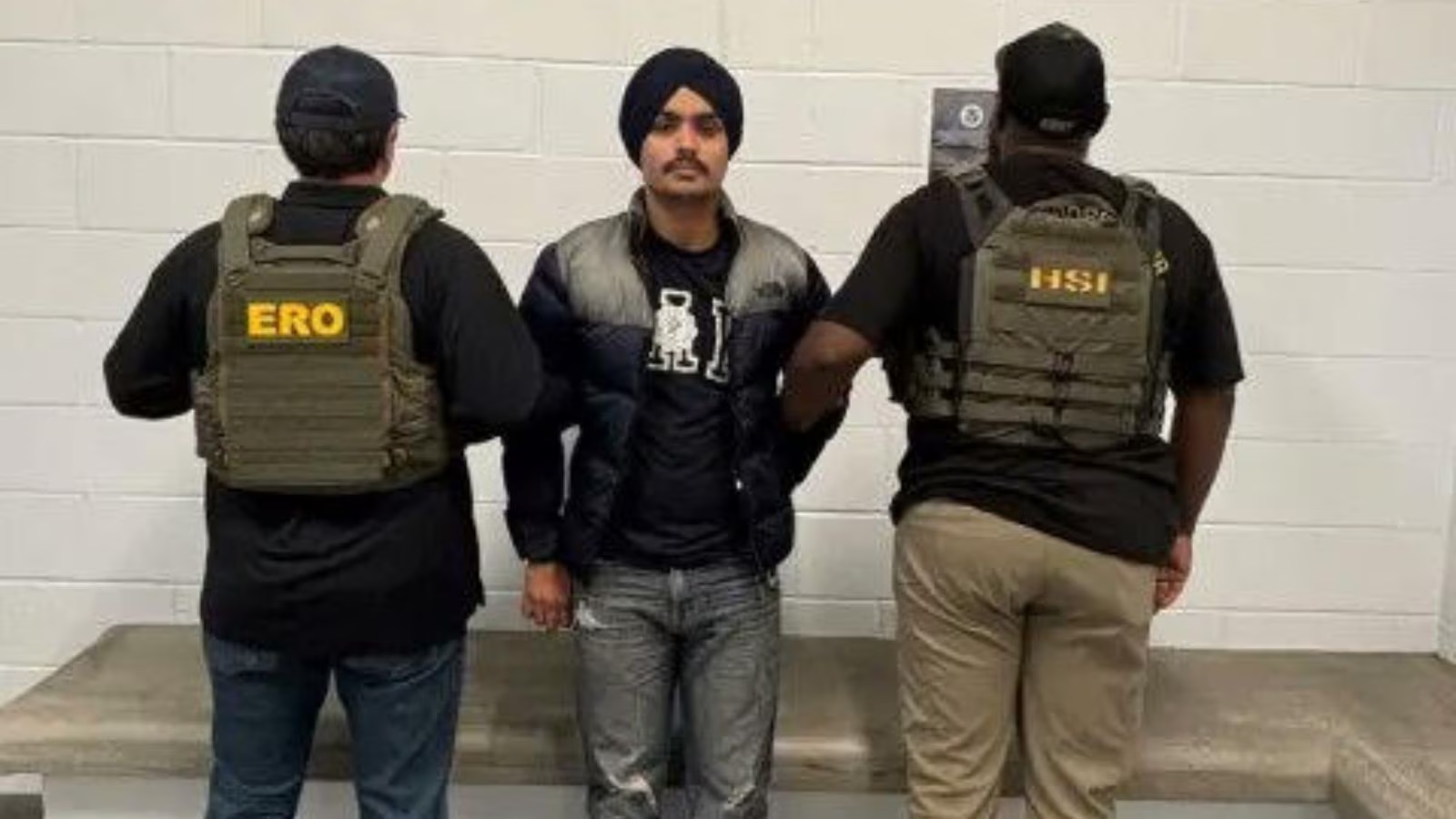
In a case that has ignited fierce debates over immigration policies and road safety, U.S. authorities have arrested an Indian national for his role in a devastating multi-vehicle crash in California. The incident, which occurred over a year ago, left 5-Year-Old Dalilah Coleman fighting for her life and her family grappling with unimaginable loss. This tragedy underscores the human cost of unchecked border crossings and lax state licensing practices, drawing sharp criticism from federal officials toward local governance.
The crash not only shattered one family’s dreams but also highlighted systemic vulnerabilities in how undocumented immigrants integrate into American society, particularly in high-stakes industries like commercial trucking. With Singh now in federal custody awaiting deportation proceedings, questions swirl about accountability, prevention, and the broader implications for communities nationwide.
The Fateful Collision: A Chain Reaction on California Highways
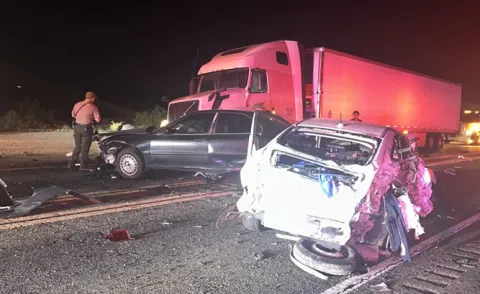
The accident unfolded on June 20, 2024, along a bustling stretch of California highway, where construction zones demanded heightened caution from drivers. Partap Singh, operating an 18-wheeler commercial truck, was cited by the California Highway Patrol (CHP) for driving at an unsafe speed and failing to stop for traffic signals in the construction area. According to the CHP Traffic Crash Report, Singh’s truck barreled into stopped vehicles, triggering a violent multi-car pileup that sent shockwaves through the afternoon commute.
Eyewitness accounts described a scene of chaos: metal twisting, glass shattering, and screams piercing the air as the massive rig plowed through the congestion. The impact was immediate and severe, with multiple vehicles mangled beyond recognition. Emergency responders arrived swiftly, but the damage was already done. Among the victims was five-year-old Dalilah Coleman, who was riding in a car with her family when Singh’s truck struck. Airlifted to a nearby trauma center, Dalilah’s condition was listed as critical from the outset.
Singh, who had no prior record of violations in the state, was not injured in the crash. He faced initial charges related to reckless driving but was released pending further investigation. At the time, his immigration status remained undisclosed, allowing him to continue working as a trucker. Federal authorities later revealed that this oversight was just the beginning of a series of lapses that enabled the tragedy.
Read : Indians Become Third-Largest Buyers of Luxury Homes in Dubai: Sotheby’s Realty
The Federal Motor Carrier Safety Administration (FMCSA) launched a probe into the incident shortly after, focusing on compliance with commercial driving regulations. Their preliminary findings pointed to inadequate oversight of out-of-state licenses, a issue that would later fuel national discourse. As the investigation deepened, it uncovered Singh’s background, transforming a routine traffic case into a high-profile immigration enforcement action.
Dalilah Coleman’s life was forever changed when an illegal alien driving an 18-wheeler slammed into her and her family. The crash resulted in her inability to walk, talk, eat orally, or attend kindergarten as planned. She was in a coma for three weeks and required six months of… pic.twitter.com/8oG3IrUiwP
— Homeland Security (@DHSgov) September 25, 2025
This wasn’t an isolated mishap; it was the culmination of decisions made far from the highway—starting at the U.S.-Mexico border. Singh’s path to that fateful day began over 18 months earlier, when he crossed into the country without authorization, slipping through the porous southern frontier amid a surge in migrant encounters.
Partap Singh’s Journey: From Punjab to the Border and Beyond
Partap Singh, hailing from Punjab, India, represents a growing demographic of undocumented migrants from South Asia seeking opportunities in the United States. In October 2022, amid the Biden administration’s handling of record border crossings, Singh illegally entered the U.S. through the southern border. Apprehended shortly after, he was processed under catch-and-release policies, which allowed him to be released into the interior with a notice to appear for future hearings. Critics of the system argue that such measures overwhelm immigration courts, leading to years-long backlogs and de facto amnesty.
Once inside the country, Singh made his way to California, a state known for its sanctuary policies and robust job market for truck drivers. Despite his status, he obtained a commercial driver’s license from the California Department of Motor Vehicles (DMV) under Governor Gavin Newsom’s administration. This license, which requires proof of legal residency in some states but not California, enabled Singh to secure employment hauling freight across the state. For nearly two years, he navigated the trucking industry undetected by federal authorities, logging thousands of miles on public roads.
The Department of Homeland Security (DHS) described Singh as a “dangerous alien” in their public statement, emphasizing that his presence in the U.S. was entirely unauthorized. “Singh illegally crossed the southern border in October 2022—and was RELEASED into the country by the Biden administration,” DHS noted, framing the arrest as a direct consequence of federal leniency. ICE agents took Singh into custody last month, following a tip from local law enforcement piecing together his identity post-crash. He now faces immigration proceedings that could result in swift deportation, alongside any outstanding traffic-related penalties.
Singh’s story mirrors that of many Punjabi migrants who view trucking as a pathway to economic stability. Punjab, a region plagued by agricultural distress and unemployment, has seen a spike in families sending sons abroad via risky overland routes through Mexico. Human smugglers charge tens of thousands of dollars for the perilous journey, promising green cards that rarely materialize. For Singh, the gamble ended in handcuffs, but not before his actions upended innocent lives.
This case is not unique; it’s the second involving an undocumented Indian trucker this year. In August, Harjinder Singh, another Punjabi national, caused a fatal crash in Florida that killed three people. Like Partap, Harjinder held a California-issued commercial license despite his illegal status. These parallels have amplified calls for reform, turning personal tragedies into political lightning rods.
A Child’s Stolen Future: The Heartbreaking Toll on Dalilah Coleman and Her Family
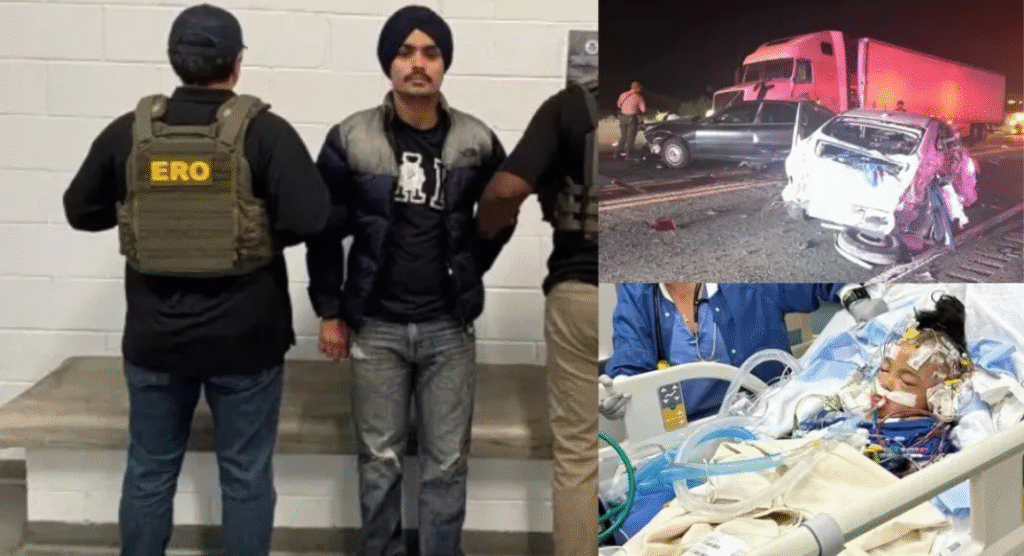
No element of this story tugs at the heartstrings more than the plight of five-year-old Dalilah Coleman, whose young life was irrevocably altered in an instant. Prior to the crash, Dalilah was a vibrant kindergartener-to-be, full of curiosity and energy, eagerly anticipating her first day of school. The collision robbed her of that milestone and so much more. Airlifted from the scene with catastrophic injuries, including a broken femur, multiple skull fractures, and severe traumatic brain injury, Dalilah spent three agonizing weeks in a coma.
Medical teams fought to stabilize her, performing a craniectomy to relieve pressure on her swelling brain—a procedure that left her without half her skull for four months. Discharged after six months of intensive care, Dalilah returned home a shadow of her former self. Today, she cannot walk, talk, or eat orally, relying on a feeding tube for sustenance. Diagnosed with diplegic cerebral palsy and global developmental delay, she faces a lifetime of therapies, surgeries, and adaptive equipment just to navigate basic daily functions.
Her father, Marcus Coleman, has become a vocal advocate, sharing glimpses of Dalilah’s struggle to raise awareness. “Dalilah’s life was forever changed when an illegal alien driving an 18-wheeler slammed into her and her family,” DHS echoed in their statement, capturing the raw grief that permeates the family’s narrative. “This tragedy was entirely preventable.” Marcus describes sleepless nights monitoring her vitals, the endless doctor visits, and the emotional void where playdates and school stories should be. Dalilah’s stepfather, Michael Krause, also sustained injuries in the crash, requiring hospitalization and ongoing rehabilitation. Other family members and motorists involved suffered varying degrees of trauma, from whiplash to emotional distress.
The financial burden is staggering: mounting medical bills, lost wages, and home modifications for accessibility have strained the Colemans’ resources. A community fundraiser has provided some relief, but the road ahead remains daunting. Dalilah’s inability to start kindergarten symbolizes a broader loss—the innocence stolen not just from her, but from every child who witnesses such stories. Families like the Colemans embody resilience, channeling pain into purpose, but their ordeal serves as a stark reminder of how one driver’s negligence can ripple through generations.
As Dalilah learns to communicate through assistive devices, her parents hold onto hope. Yet, the permanence of her disabilities underscores the irreplaceable value of prevention. This crash didn’t just bend metal; it fractured futures, leaving scars that no policy debate can fully heal.
Policy Reckoning: Blame, Reforms, and the Road Ahead
The arrest of Partap Singh has thrust immigration and transportation policies into the spotlight, with DHS openly blasting California Governor Gavin Newsom for issuing licenses to undocumented individuals. “This tragedy was entirely preventable,” the agency declared, pointing to the state’s DMV as an enabler of risks on the roads. Newsom’s administration defends the practice as a public safety measure, arguing that unlicensed drivers pose greater threats, but federal officials counter that it circumvents national security.
DHS’s involvement signals a tougher stance under evolving enforcement priorities, with ICE vowing to prioritize public safety threats. The FMCSA’s ongoing investigation could lead to stricter federal oversight of commercial licenses, potentially mandating immigration status checks nationwide. Advocacy groups on both sides have mobilized: immigration reform advocates decry the “criminalization” of migrants, while victims’ rights organizations demand accountability.
For the trucking industry, already strained by driver shortages, this case exposes vulnerabilities in vetting processes. Companies employing Singh face scrutiny, with calls for enhanced background checks. Broader border security debates intensify, as encounters with Indian nationals have surged, driven by economic desperation back home.
References:
Solstice arena
References:
https://to-portal.com/sisterlocust3
References:
First steroid cycle reddit
References:
https://fancybox.qa/2026/03/18/legal-raw-steroids-for-research-only/