
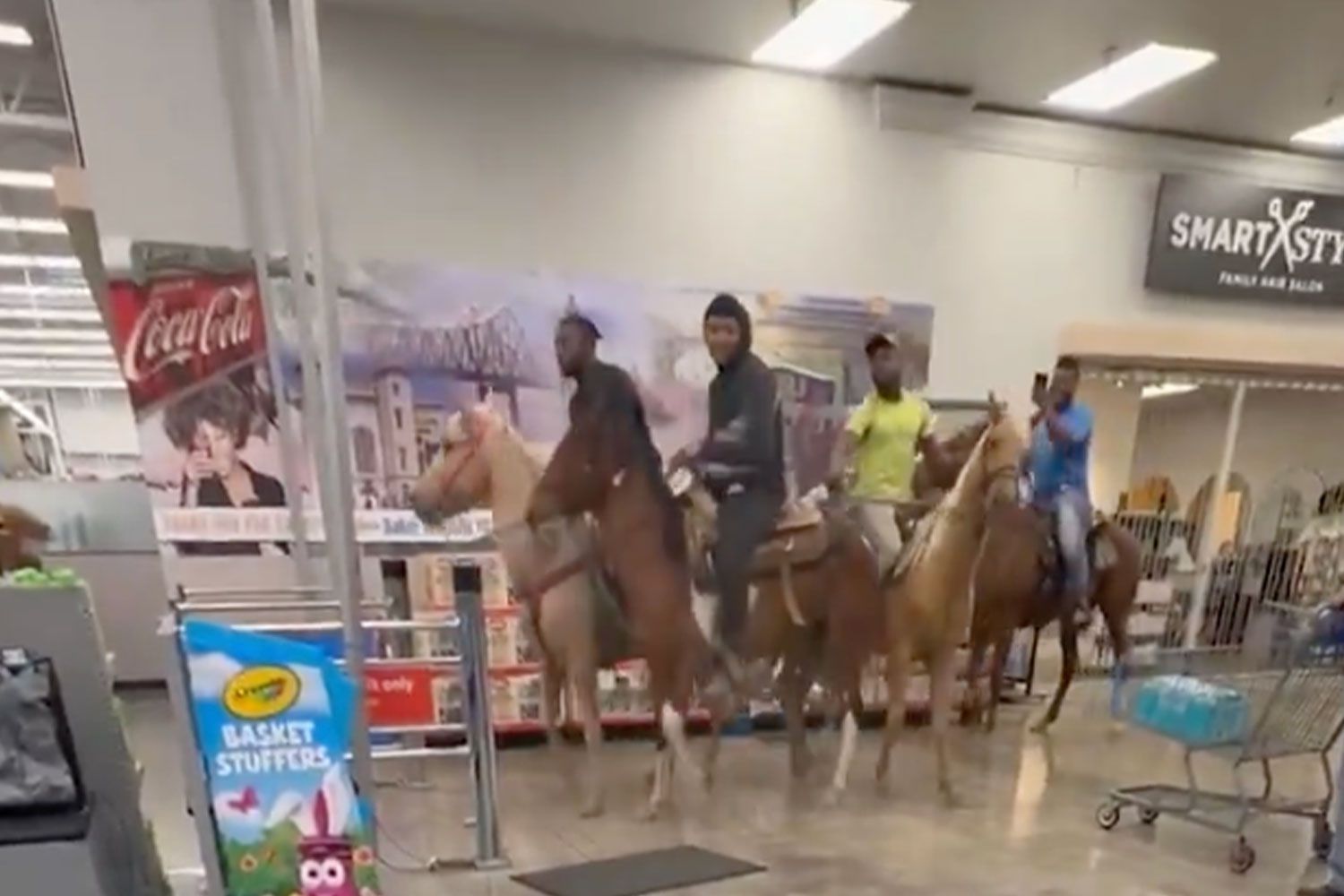
On April 8, 2025, a bizarre spectacle unfolded in Baker, Louisiana, when four young men, calling themselves the “Cutthroat Cowboys,” rode horses through the aisles of a Walmart, startling shoppers and sparking a viral sensation. The stunt, captured on social media with the tune of Big & Rich’s “Save a Horse (Ride a Cowboy)” blaring, led to their arrest days later.
Brendon Bridgewater, 24, Patrick Derozan, 22, Mason Webb, 18, and a 16-year-old juvenile now face misdemeanor charges, raising questions about the line between harmless pranks and reckless behavior in public spaces.
A Viral Stunt Gone Wrong
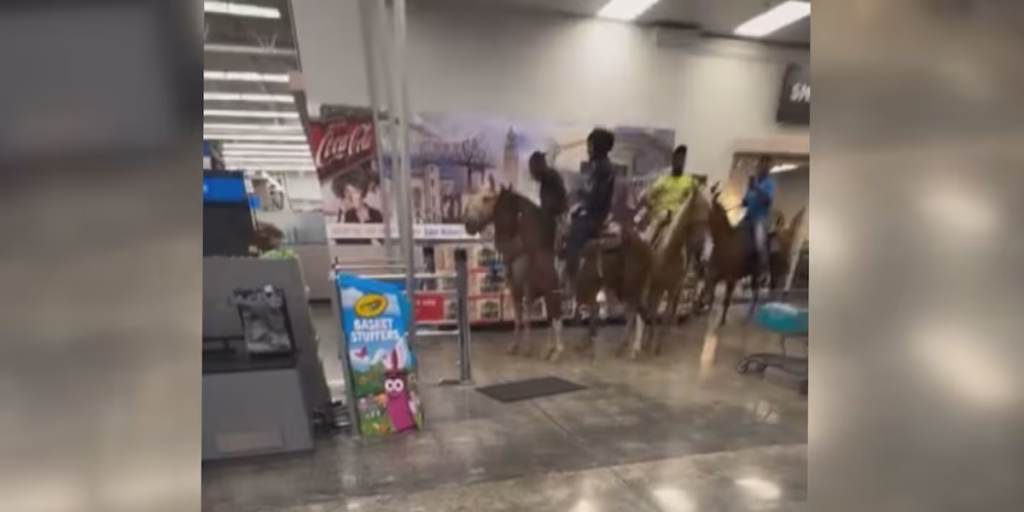
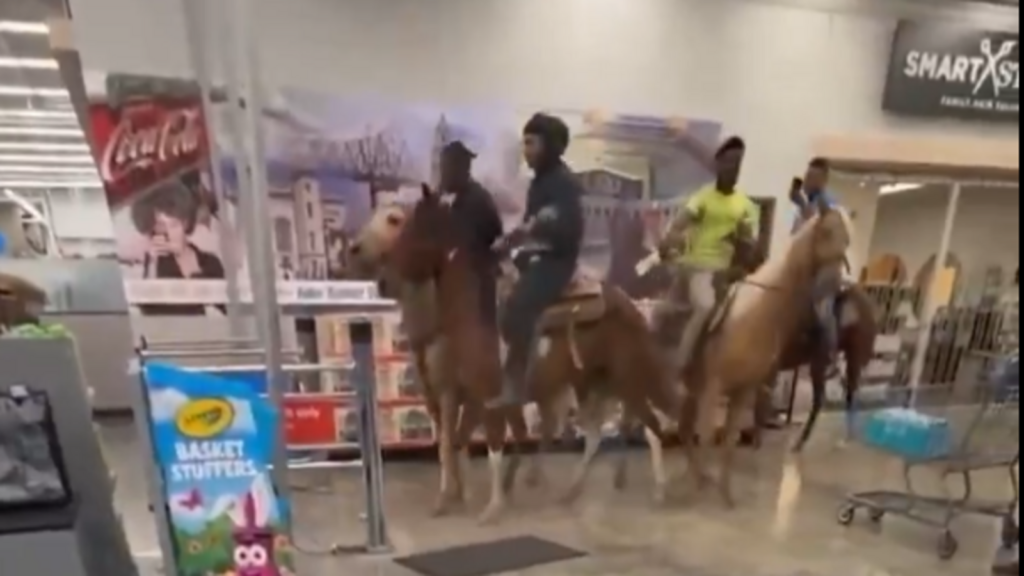
The incident occurred at the Walmart on Groom Road in Baker, a small city just north of Baton Rouge. Videos posted to TikTok, X, and Facebook show the four horsemen trotting past cash registers and down aisles, with bewildered customers reacting in real-time.
One clip, filmed from a rider’s perspective, captures the chaos as bystanders mutter expletives or laugh nervously. A Walmart employee is heard joking before suggesting police be called, noting the group might “scare the s— out of somebody.” The riders, undeterred, recorded themselves, seemingly reveling in the attention.
The Baker Police Department was alerted after the videos spread online, amassing thousands of views. By April 10, authorities had identified the culprits and issued warrants. On April 11, all four turned themselves in: Bridgewater, Derozan, and Webb as adults, and the unnamed juvenile.
They were charged with entering and remaining after forbidden, disturbing the peace, and unlawful posting of criminal activity for notoriety and publicity—a Louisiana law targeting those who share crime footage for clout. Each faces potential fines of up to $500 and jail time ranging from 90 days to six months per charge.
Read : 8-Year-Old Girl and Horse Killed After DUI Driver Collided with a Buggy in Michigan
Mason Webb, speaking to WBRZ, defended the stunt as a spur-of-the-moment lark. “It was fun, we were famous. That’s all,” he said, claiming the group often rides horses around Baker and decided to take it indoors “that day.” He jokingly called his horse an “emotional support animal,” likening it to debates over pets in stores.
Baker police seeking to ID horse riders who paraded through Walmarthttps://t.co/e3TVsxEqFH pic.twitter.com/BrUgSVljbv
— WBRZ News (@WBRZ) April 9, 2025
But Baker Police Chief Carl Dunn wasn’t amused, warning that the prank “could’ve been real bad for other citizens.” Michael Frazier, a local horse caretaker, echoed this, noting that startled horses in a crowded store could have injured people or themselves.
The “Cutthroat Cowboys” moniker, coined by Webb, framed the group as playful rebels, but their actions tapped into a broader trend of social media-driven stunts. While they insisted no harm was intended, the arrests underscore the legal risks of chasing viral fame, especially when it disrupts public safety.
The Risks of Retail Rodeo
Beyond the spectacle, the incident highlights real dangers. Walmart’s crowded aisles, filled with shoppers and shelves, are no place for horses, which can spook easily. Frazier, who manages over 50 horses at Frazier’s Homestead, told WAFB the animals “handled the situation pretty good,” but stressed the unpredictability: “If they react bad, somebody’s gonna get hurt.”
A panicked horse could trample customers, knock over displays, or injure itself on slick floors or sharp edges. The riders’ decision to film while riding only heightened the recklessness, diverting their focus from controlling their mounts.
The legal consequences reflect these concerns. The charge of “entering and remaining after forbidden” addresses unauthorized access to private property—Walmart didn’t greenlight the stunt. “Disturbing the peace” captures the disruption caused, from startling shoppers to diverting store resources.
The “unlawful posting” charge, enacted in 2008, targets the modern twist: leveraging crime for likes and views. By uploading their antics, the Cowboys handed police self-incriminating evidence, a hallmark of what critics call “doing it for the Gram.”
This isn’t Walmart’s first equine encounter. In 2017, two men rode horses through a Houston store, and in 2022, a Dallas Cowboys fan trotted into an Arlington Walmart to buy a bucket for his horse, Sheriff, after a game.
Neither faced charges as severe, suggesting Baker’s case stands out for its scale—four riders—and brazen publicity. The arrests signal a crackdown on such stunts, especially as social media amplifies their reach and potential to inspire copycats.
Public reaction has been mixed. Some online comments found humor in the absurdity, with one X post calling it “peak Louisiana chaos.”
Others criticized the group’s disregard for safety, pointing to elderly or disabled shoppers who could’ve been endangered. The viral videos, while entertaining to some, fueled debate about accountability in the age of instant fame. As one local told The Advocate, “It’s not just about fun—it’s about thinking of others.”
Social Media, Stunts, and the Law
The “Cutthroat Cowboys” saga fits a larger pattern of young people pushing boundaries for online clout. From TikTok challenges to YouTube pranks, the quest for views often blurs ethical and legal lines. Louisiana’s “unlawful posting” law, one of few targeting this behavior, reflects growing concern over social media’s role in glorifying petty crime.
Similar incidents—like a 2023 case of teens filming vandalism in New Orleans—have led to arrests under the same statute, suggesting police are leaning on it to deter attention-seekers.
For the Cowboys, the fallout may extend beyond fines or jail. A criminal record, even for misdemeanors, can affect job prospects or college admissions, especially for the 16-year-old. Community service or probation could be options, but the public shaming—ironic given their fame-seeking—may hit hardest.
Webb’s “emotional support” quip, while tongue-in-cheek, also nods to broader debates about animals in public spaces. Unlike service dogs, horses lack legal protections as support animals, and experts like Frazier doubt they’d cope well in retail chaos.
The incident also puts Walmart in a tricky spot. Known for quirky customer antics, the chain must balance openness with safety. A statement to WAFB called the stunt “unacceptable,” and store policies likely tightened post-incident.
Yet, as Dunn noted, the responsibility lies with individuals to “think of others before we act.” The Cowboys’ stunt, while bold, ignored the ripple effects on shoppers, staff, and their own horses.
As the legal process unfolds, Baker’s “Cutthroat Cowboys” have ridden into infamy, their 40-second clip a cautionary tale. The arrests close one chapter, but the broader story—of youth, risk, and the allure of going viral—gallops on. For now, Walmart shoppers can breathe easier, knowing the aisles are back to carts, not hooves.