

The deadly New Year’s Eve fire at Le Constellation nightclub in the Swiss resort town of Crans-Montana has become one of the country’s worst peacetime tragedies, claiming 40 lives and injuring more than 100 people. Amid the grief, anger and ongoing criminal investigation, one name has emerged at the center of a bitter and highly controversial debate: Cyane Panine, a 24-year-old waitress who died in the inferno and has since been blamed by the club’s owners for sparking the blaze.
What was meant to be a celebration welcoming the new year turned into chaos and horror when fire tore through the packed venue shortly after midnight. As survivors recount desperate attempts to escape and families mourn loved ones lost, the focus has shifted to questions of responsibility, negligence and safety failures. The decision by the bar’s owners to publicly attribute blame to a young employee who also perished has shocked the public and intensified scrutiny of their actions before and during the disaster.
Cyane Panine’s Life and Work at Le Constellation
Cyane Panine was 24 years old and working as a waitress in Crans-Montana, a well-known Alpine ski resort that attracts large crowds during the winter holiday season. Friends and relatives have described her as spontaneous, radiant and full of warmth, someone who enjoyed working with people and bringing energy to her surroundings. Like many young hospitality workers in resort towns, she took on service jobs during peak seasons, often in fast-paced and demanding environments.
On the night of December 31, Le Constellation was packed with hundreds of revelers, many of them teenagers and young adults celebrating New Year’s Eve. Panine was among the staff serving champagne to guests as the countdown to midnight passed. According to investigators and witness accounts, she was carrying champagne bottles fitted with pyrotechnic “magic fountain” sparklers, a visual flourish commonly used in clubs despite known fire risks in enclosed spaces.
During one of these deliveries, Panine was wearing a black motorcycle helmet and had climbed onto a co-worker’s shoulders while holding two flaming bottles. The act was intended to lift the sparklers above the crowd and enhance the celebratory spectacle. Moments later, flames reached the low ceiling, which was covered with soundproofing material that investigators believe was highly flammable. The fire spread rapidly, filling the basement venue with smoke and heat and leaving many people trapped.
Read : Peacocking: The Art of Standing Out in Modern Fashion and Social Scenes
Panine died in the blaze along with dozens of patrons. She had no chance to escape, and there is no evidence that she was aware of the extreme danger posed by the stunt. Her family has stated that she had been sent from another restaurant, was instructed to stay on the ground floor, and was not trained to handle pyrotechnics or fire-related risks.
Owners’ Claims, Courtroom Statements and Family Rebuttal
The public reaction intensified after Jacques Moretti and his wife Jessica Moretti, the owners of Le Constellation, appeared in court and addressed questions about responsibility for the fire. Facing charges including homicide by negligence, bodily harm by negligence and arson by negligence, the couple reportedly told prosecutors, “It’s not us, it’s the others.”
Read : Who Are Jacques and Jessica Moretti, Owner of the Le Constellation Bar That Destroyed in Fire?
Jacques Moretti specifically pointed to Panine’s actions, saying she had climbed onto a colleague’s shoulders while holding flaming champagne bottles and that he had not forbidden her from doing so. He admitted in court that he did not give her safety instructions and did not warn her of any danger, adding that she enjoyed performing and loved doing the show. Jessica Moretti echoed this, claiming that Panine liked delivering the bottles and did so of her own accord, and that in ten years of running the business she had never imagined such a stunt could pose a serious risk.
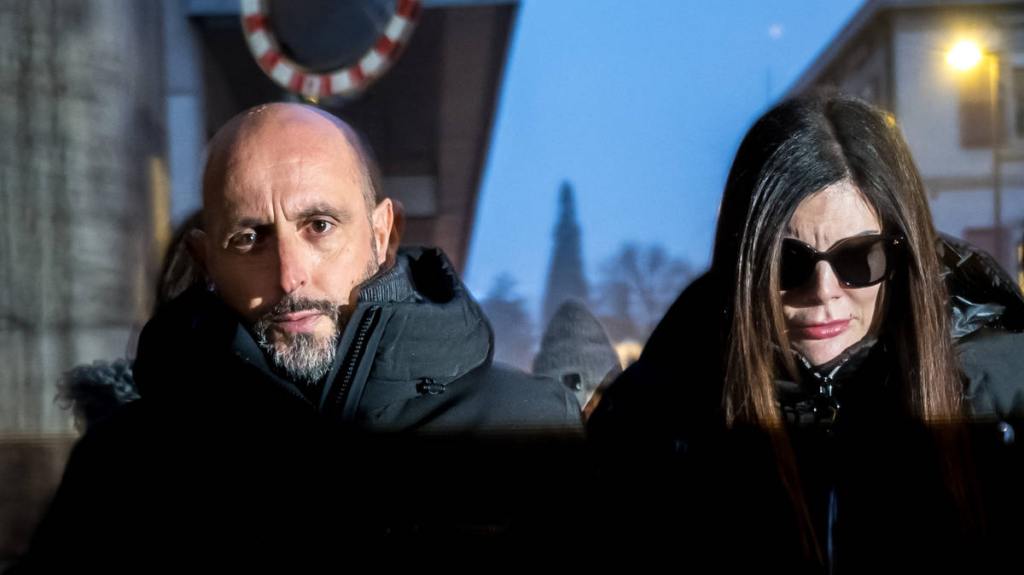
These statements sparked outrage across Switzerland and beyond. Critics argued that admitting a lack of safety instructions and awareness of danger only reinforced claims of negligence. For many, blaming a deceased employee who had no authority over safety policies was seen as an attempt to shift responsibility away from management.
Panine’s family has forcefully rejected the owners’ version of events. Her parents said she trusted the people who employed her and paid the ultimate price for that trust. They insist she was not acting independently, that she was sent from another restaurant by the owners, and that she was not supposed to be involved in elevated or risky performances. They also disputed the idea that she chose to wear the helmet or perform the stunt without direction.
Survivors and relatives of other victims have backed up these claims, alleging that the stunt was encouraged by management and that the helmet and pyrotechnic bottles were provided by the bar. Several witnesses have said such displays were not unusual at Le Constellation and were part of the club’s atmosphere, raising questions about whether this was an isolated decision or a normalized practice.
Investigation, Accountability and the Meaning of Her Death
As Swiss prosecutors continue their investigation, attention has turned to broader safety and regulatory failures surrounding the tragedy. Authorities have acknowledged that fire safety inspections at Le Constellation had not been conducted for several years. Investigators are examining whether the venue complied with basic requirements such as fire-resistant materials, adequate emergency exits and proper risk assessments for indoor pyrotechnics.
Read : Le Constellation Bar Co-Owner Jacques Moretti Detained Over Deadly New Year’s Fire That Killed 40
The January 1 fire killed 40 people, most of them young, and injured more than 100 others, many of whom suffered severe burns or smoke inhalation. The speed with which the fire spread has been attributed to the ceiling’s soundproofing material and the confined nature of the space. Experts have noted that even a small flame can become deadly in such conditions if preventive measures are absent or ignored.

If convicted, the Morettis could face up to 20 years in prison. Legal experts have emphasized that under Swiss law, responsibility does not rest solely on who physically ignited the fire but on who allowed dangerous conditions to exist. Allowing or encouraging the use of pyrotechnics indoors, failing to train staff and neglecting inspections all factor into determinations of negligence.
For many observers, Cyane Panine’s story has come to symbolize the vulnerability of young service workers in nightlife and hospitality settings. She had no control over the venue’s safety standards, building materials or emergency planning. Yet her name has been publicly associated with blame, even as she herself was among the victims.
Her family and supporters argue that she should be remembered not for the moment the fire started but for who she was: a young woman with a future, working to support herself, trusting her employers to provide a safe environment. The backlash against the owners’ statements reflects a wider demand for accountability and a refusal to accept narratives that place responsibility on those with the least power.
As Switzerland mourns the victims of the Crans-Montana fire, the case continues to raise uncomfortable questions about spectacle versus safety, employer responsibility and how societies respond when tragedy strikes. Cyane Panine’s death, and the controversy surrounding it, has become a stark reminder that behind every headline and court filing is a human life lost, deserving of dignity, truth and justice.