
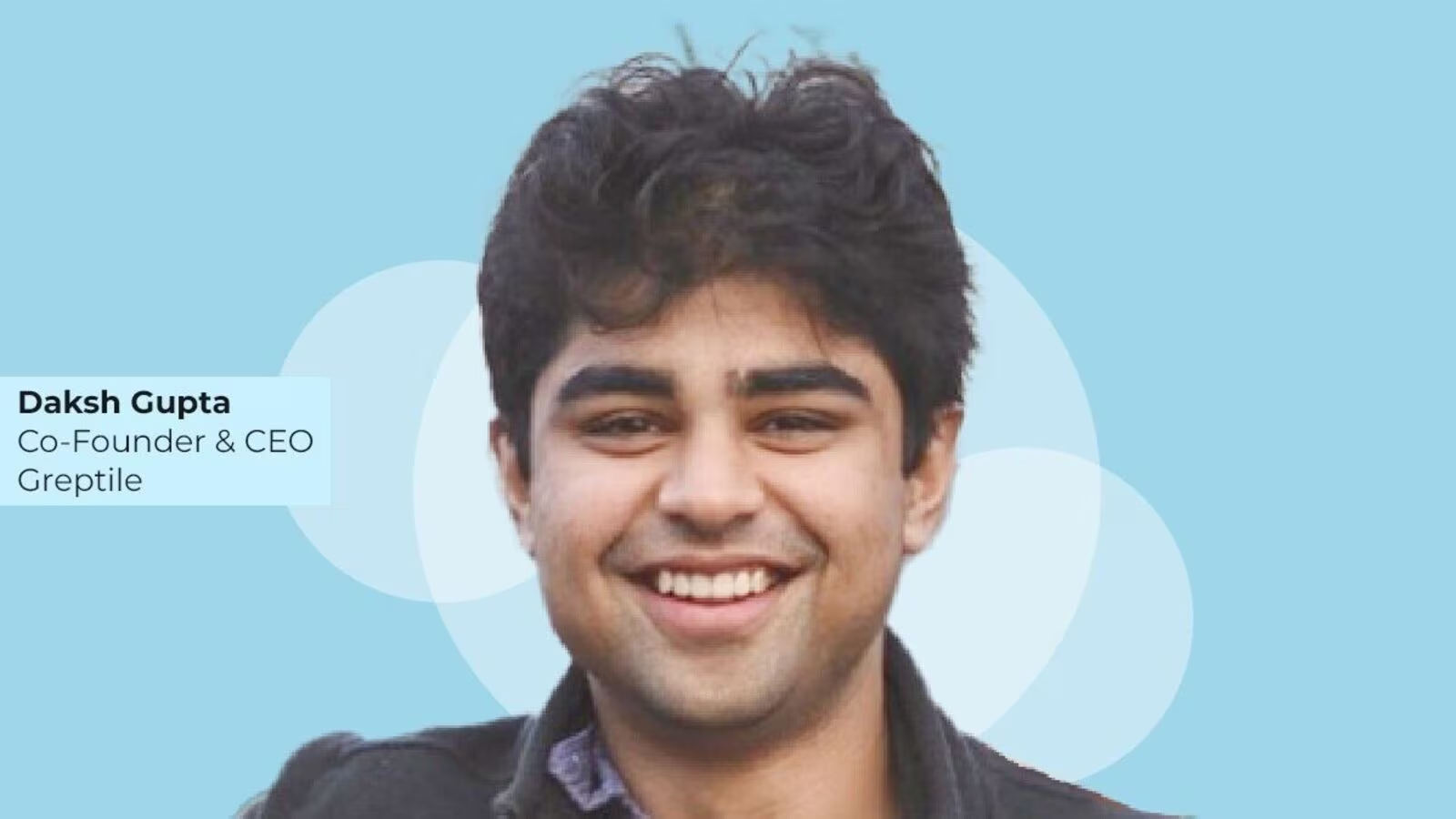
Daksh Gupta, a 23-year-old Indian-origin CEO, has emerged as a polarizing figure in the tech world, sparking heated debates about work culture, ambition, and the sustainability of startup life. As the co-founder and CEO of Greptile, a San Francisco-based artificial intelligence startup, Gupta gained widespread attention in 2024 and 2025 for his outspoken advocacy of an intense work schedule, including a 72-hour workweek and, at times, an even more demanding 84-hour workweek. His unapologetic stance on prioritizing discipline and hard work over work-life balance has made him a lightning rod for both criticism and admiration.
From Delhi to Silicon Valley: Daksh Gupta’s Journey
Daksh Gupta’s path to becoming a prominent figure in Silicon Valley is rooted in a blend of academic excellence and entrepreneurial ambition. Born and educated in Delhi, India, Gupta displayed an early aptitude for technology. He pursued a Bachelor’s degree in Computer Science at the prestigious Georgia Institute of Technology, graduating in 2019. During his time at Georgia Tech, Gupta honed his technical skills and gained valuable industry experience through internships at major tech companies like Qualcomm and Amazon Web Services.
These early roles provided him with a strong foundation in software engineering and exposure to the fast-paced demands of the tech industry. In 2023, Daksh Gupta co-founded Greptile with Vaishant Kameswaran and Soohoon Choi, focusing on building AI-powered tools to help developers detect bugs in code. The startup, initially launched as Onboard AI, was rebranded to Greptile in January 2024.
Based in San Francisco’s iconic Transamerica Pyramid, Greptile has attracted significant attention, raising $5.3 million in seed funding from prominent investors such as Y Combinator, Initialized Capital, Paul Graham, and SV Angel. Daksh Gupta’s entrepreneurial journey began even earlier, in March 2022, when he and his co-founders secured a $100,000 investment from billionaire Christopher Klaus, a Georgia Tech alumnus, for a project aimed at scraping product reviews from Reddit to aid consumer decision-making. Although that project was discontinued, it laid the groundwork for Gupta’s pivot to AI-focused innovation with Greptile.
i have nothing against having work-life balance. in fact, i recommend it to all our competitors. pic.twitter.com/I6jUtmgvfg
— Daksh Gupta (@dakshgup) November 21, 2024
Daksh Gupta’s move to San Francisco in 2023 marked a significant turning point. In a blog post on Greptile’s website, he described arriving in Silicon Valley as a “struggling new grad startup founder,” drawn to the region’s vibrant ecosystem of ambitious entrepreneurs. He emphasized the value of being surrounded by like-minded founders who push each other to work harder and learn faster. This immersion in San Francisco’s startup culture shaped Gupta’s intense work ethic, which he attributes to his environment rather than his Indian heritage, a point he has repeatedly clarified in response to critics who stereotyped his approach based on his background.
The 72-Hour Workweek Controversy: A “Rocket Launch” Approach
Daksh Gupta’s rise to viral fame began with a post on X in November 2024, where he candidly outlined Greptile’s grueling work culture. He revealed that he informs job candidates during their first interview that Greptile offers “no work-life balance,” with typical workdays running from 9 a.m. to 11 p.m. or later, six days a week, and occasional work on Sundays.
This translates to an 84-hour workweek, though more recent discussions in 2025 have highlighted his endorsement of a slightly less intense 72-hour workweek, characterized as a “9-9-6” schedule (9 a.m. to 9 p.m., six days a week). Gupta described this high-stress environment as having “zero tolerance for poor work” and likened the intensity to a “rocket launch,” emphasizing that extraordinary effort is required to achieve “escape velocity” in the early stages of a startup.
Read : MrBeast Receives Custom Play Button from CEO Neal Mohan After Subscribers Reach 400 Million
The post, which amassed over 1.6 million views, ignited a firestorm of controversy. Critics accused Gupta of promoting a toxic work environment, with some labeling his approach as “modern-day slavery” and warning of the risks of burnout and mental health challenges. Others questioned whether such a model could attract diverse talent or sustain long-term productivity.

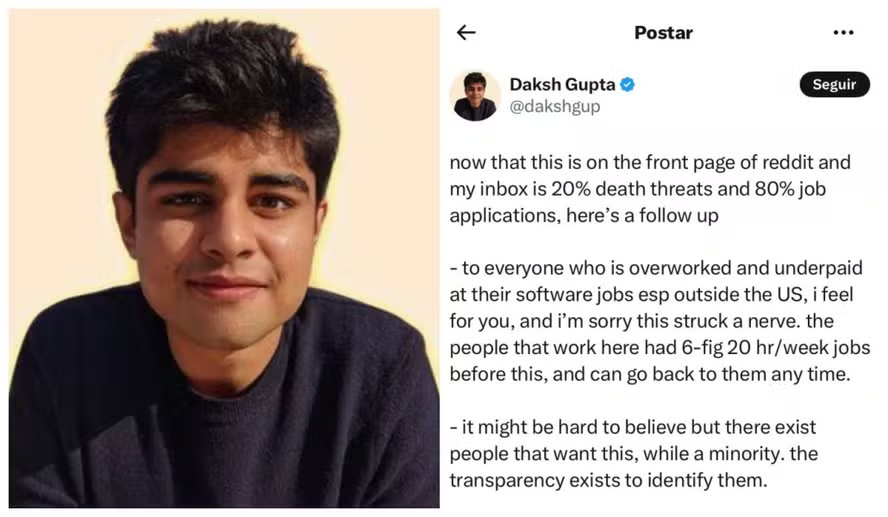
Daksh Gupta reported receiving death threats, with his inbox comprising “20% death threats and 80% job applications,” highlighting the polarized reactions to his philosophy. Despite the backlash, he doubled down on his stance in interviews, arguing that hard work is a critical factor in a competitive industry where “the one that works harder and is luckier wins.” Gupta has consistently emphasized transparency, stating that he prefers candidates to know upfront about Greptile’s demanding expectations rather than being blindsided on their first day.
He acknowledges that the intense schedule is not for everyone and that many successful companies thrive while prioritizing work-life balance. In a nod to his competitors, he quipped, “I recommend work-life balance to all our competitors,” underscoring his belief that Greptile’s approach gives it a competitive edge. Gupta also clarified that the extreme hours are a temporary necessity during the startup’s formative years, not a permanent model, as he anticipates adapting to a more sustainable schedule as the company matures.
The “Grindcore” Culture and Its Broader Implications
Daksh Gupta’s advocacy of a “grindcore” work culture, as described by The San Francisco Standard, has positioned him as a poster child for a new wave of Silicon Valley entrepreneurs who prioritize discipline and sacrifice over traditional notions of balance. In a 2025 interview, he articulated a lifestyle ethos for ambitious young professionals, stating, “The current vibe is no drinking, no drugs, 9-9-6, lift heavy, run far, marry early, track sleep, eat steak and eggs.” This disciplined approach, which includes rejecting events like Burning Man in favor of fitness and productivity, reflects a broader shift among some young tech workers in San Francisco’s Bay Area.
Greptile’s work environment is structured to support its intense schedule. Employees typically arrive at the office between 8:45 and 9:15 a.m., starting with a team huddle to set daily goals. Lunch is often provided, with Gupta picking up meals from nearby MIXT Salads, and the team eats together to foster collaboration.
Afternoons are dedicated to “deep work” with minimal distractions, while evenings feature music, such as Charli XCX’s “Boiler Room” set or lo-fi beats, to maintain energy. Perks like free lunch, dinner, transportation, healthcare, and a 401k match complement competitive salaries, with junior employees earning $140,000 to $180,000 annually plus equity, and senior engineers earning $240,000 to $270,000.
The debate surrounding Gupta’s philosophy raises critical questions about the sustainability and ethics of startup culture. Supporters argue that his transparency attracts a niche group of driven individuals willing to trade short-term comfort for rapid career growth and equity-based rewards.
Gupta himself compares his passion for enterprise software to an athlete’s dedication to their sport, suggesting that a small minority thrives in such high-pressure environments. Critics, however, warn that glorifying overwork risks normalizing burnout and excluding talent with family responsibilities or different priorities. The backlash also highlights cultural tensions, with some attributing Gupta’s approach to his Indian heritage, a claim he refutes by emphasizing his San Franciscan identity.
Gupta’s stance echoes broader discussions in the tech industry and beyond, particularly in India, where Infosys co-founder Narayana Murthy’s advocacy for a 70-hour workweek sparked similar debates. Gupta’s unapologetic embrace of hustle culture challenges conventional wisdom about workplace wellness, forcing a reckoning with the trade-offs of ambition in hyper-competitive fields like AI.
As Greptile grows, with plans to expand its five-member team to seven, Gupta’s model will be tested. Can a startup sustain such intensity without compromising employee well-being or innovation? Will Gupta’s transparency attract the talent needed to compete with industry giants? Only time will tell whether his “rocket launch” approach propels Greptile to success or burns out its brightest stars.
In conclusion, Daksh Gupta’s journey from a Delhi-educated computer science graduate to a viral Silicon Valley CEO reflects both the promise and peril of startup culture. His advocacy for a 72-hour workweek, rooted in a belief that hard work is a controllable factor in the race to success, has sparked a global conversation about ambition, sacrifice, and the human cost of innovation.
While Gupta’s transparency and discipline have earned him both death threats and job applications, his story underscores the complexities of building a company in an era where work-life balance is increasingly valued. As Greptile continues to grow, Gupta’s legacy will likely be defined not only by his company’s achievements but also by the broader impact of his polarizing vision on the future of work.